The Economic Reality Behind Shabbar Zaidi’s …
By Ali Haider
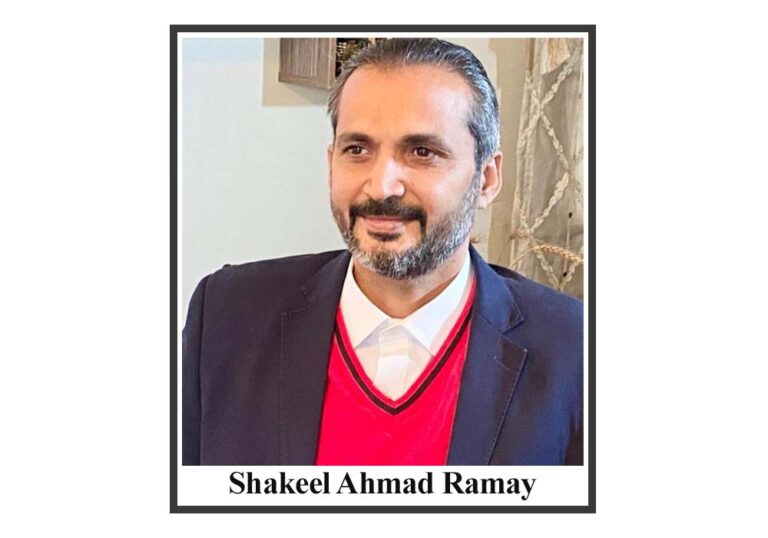
In a statement, former FBR Chairman Shabbar Zaidi said that Pakistan’s economy would improve if it severed trade ties with China. He asserted that China has inflicted more damage on the Pakistani economy than the United States ever did. He further stated that he had opposed CPEC from day one, noting that the public was misled by the “game changer” narrative while the country was driven to ruin through the implementation of exorbitantly expensive power projects.
The total trade volume between Pakistan and China during the 2024-25 fiscal year stood at approximately $25.23 billion. Of this, Pakistan imported goods worth $20.43 billion from China and exported products valued at $2.84 billion. Additionally, Pakistan makes annual payments of around $1 billion to China for services, loan repayments, and profit repatriations related to CPEC projects. Consequently, Pakistan’s overall trade deficit with China stands at approximately $18 to $19 billion, a figure exceeding the total funding Pakistan receives under a full IMF program. Since over 90 percent of trade between Pakistan and China is conducted in US dollars, this deficit has a direct impact on the country’s foreign exchange reserves.
Pakistan sources approximately 28 percent of its total imports from China. In 2025, China remained Pakistan’s largest trading partner. Major imports from China include machinery, electrical machinery, organic chemicals, textile raw materials , and solar panels. Conversely, just four items account for 60 percent of Pakistan’s exports to China: cotton yarn, rice, seafood, and leather products. In other words, our exports are not only limited in scope but also consist primarily of raw materials and agricultural commodities.
Trade with any country is beneficial only when exports exceed imports, or at the very least, match them. However, in Pakistan’s case, for every dollar of exports, we are importing goods worth 7.2 dollars from China. This trade imbalance becomes even more critical when Pakistan imports goods from China that are already being manufactured domestically.
The textile and garment sector serves as the prime example of this; although Pakistan is among the world’s major cotton producing nations, a large portion its clothing imports, including both summer and winter garments, comes from China. This situation is primarily driven by the exorbitant rise in electricity tariffs in Pakistan. Currently, the cost of a single commercial electricity unit exceeds 60 rupees, and high gas prices further exacerbate the situation; consequently, the production cost of a standard jacket made in Pakistan reaches 10,000 rupees. In contrast, a Chinese made jacket of comparable quality is sold in the market at or even below that production cost. Due to this uneven playing field, dozens of garment units in Karachi, Lahore, and Faisalabad have shut down. Between 800 and 1,200 textile mills have closed over the last decade; Kasur, which was Asia’s largest leather industry hub in 2001, now lies desolate, as 40 percent of its tanneries have completely shut down and another 30 percent have become seasonal operations.
The footwear industry has also suffered severe damage; in Punjab alone, there were over 350 large shoe manufacturing factories, of which 20 percent have shut down and 15 percent have seen a decline in production. This is largely because Chinese shoes, slippers, and sandals available in the market are not only cheaper but also more appealing to young generation in terms of design. Consequently, local manufacturers report that their production has dropped by 40 percent over the past three years.
The steel sector is also grappling with this same challenge. Following the closure of Pakistan Steel Mills, the country imports 70 percent of its steel requirements. In 2025, steel and iron products worth $1.5 billion were imported from China alone; these included construction rebar, sheets, and pipes. Although Pakistan possesses reserves of iron and coal, high electricity costs prevent local production from competing effectively in this tough market.
Another concerning aspect is the import of machinery. In 2025, Pakistan imported industrial machinery worth $2.6 billion from China; however, this import was not accompanied by investment. Chinese companies profit from selling the machinery and then leave, without opting to set up manufacturing plants within Pakistan. If the government were to mandate that every major machinery import be coupled with a requirement for the Chinese company to establish a factory in Pakistan with a 30 percent equity stake, it would generate employment and enable Pakistan to achieve self-reliance in technology.
It is simply not possible for Pakistan to completely halt trade, as a significant portion of solar panels, mobile phone components, pharmaceutical raw materials, and agricultural machinery is imported from China. If these imports were halted tomorrow, many factories would shut down, and inflation could surge by 30 to 40 percent. It would take the economy at least ten years to fully recover from such a shock.
The solution lies in “smart protection.” The first step is to impose phased regulatory duties on goods currently being manufactured in Pakistan. Protection can be immediately extended to three sectors: clothing, footwear, and certain types of construction steel. The second step is to make the import of machinery conditional upon investment. The third and most critical step is to reduce production costs; until electricity and gas become cheaper, “Made in Pakistan” products will not be able to compete with Chinese goods.
On the other hand, the government must also work on boosting exports. Pakistan’s total exports increased by 48.7 percent during the first five months of 2026, with copper, rice, and halal meat playing a significant role. Access to the Chinese market can be expanded by incorporating agriculture, IT, and minerals into the second phase of CPEC. The target should be to increase exports to China from $3 billion to $10 billion over the next three years.
Amidst all these issues, it is crucial to understand that China is not Pakistan’s enemy; it is the world’s largest manufacturing hub, producing goods tailored to the purchasing power of every nation. The real problem lies in imbalanced trade and high production costs. Pressure on foreign exchange reserves will not ease unless this deficit is reduced. Shabbar Zaidi has articulated this very concern; the need now is for the government to devise a solution through a balanced policy—one that avoids plunging the country into further crises while simultaneously providing protection to local industry.