79th independence day

79th Independence Day – Quaid’s lost d…

Many Pakistanis, especially the youth in colleges and universities, while celebrating Independence Day every year (August 14, 2026, marks seventy-ninth), express bafflement as to how a state purportedly created in the name of ‘Islam’ is juxtaposed with the term ‘Republic.

They wonder how a Parliament, where majority is not that of theologians, working under Westminster model, retains, amends and enacts mainly Anglo-Saxon laws and yet claims that Shariah is supreme. In Europe and the United States and elsewhere, the term republic connotes a State that precludes monarch and clergy. In our context, the predominant view (though totally misconceived) is that divorced from religion, politics is “changezee” (chaos, anarchy and disorder).

جلالِ بادشاہی ہو کہ جمہوری تماشا ہو

جدا ہو دیں سیاست سے تو رہ جاتی ہے چنگیزی

What poet Dr. Muhammad Iqbal emphasizes in the couplet, Jallah badshahi ho ya jamhori tamasha ho; Juda hon deen siyasat se, to reh jati hai changezee, is that ethics contained in holy Quran should be part and parcel of governance. The majority misconstrue deen (Quranic term seerat-e-mustaqeemright path) as conventional mazhab (religion).

By reading the second stanza in isolation, the clergy interprets and insists that politics should only be in the name of their brand of conventional (orthodox) religion. They and many others conveniently ignore the first stanza of the couplet. The couplet unambiguously conveys that whether it is monarchy or democracy, governance sans ethical framework of deen is changezee.

With conventional mazhab comes Shariah that is a contentious issue since the adoption of Objectives Resolution of 1949. In a fragmented society marred by sectarian hatred (not merely genuine differences over interpretation of Islamic laws) it has becomes a permanent source of conflicts with claims and counter claims on how to run the State.

Ziauddin Sardar (born in Lahore and who left Pakistan in 1960 at the age of nine, now author of not less than fifty books with world-wide acclaim of a public intellectual specialising in Muslim thought) says that if you equate Islam with state, then religion becomes a reason of the state and that state becomes the power of religion. Basically you produce a totalitarian system”.

Ziauddin elaborates that the very idea that “Islam is equal to state is a totalitarian equation. We dont have to go very far; we just have to see recent history. Wherever Islam has been equated with state, we have produced totalitarian systems, like Iran, Saudi Arabia, Sudan, Afghanistan, you name it”. Of course, Saudi Arabia is now drifting away from influence of clergy, but not monarchy.

According to critics of Objectives Resolution, it was a departure from the ideals of Quaid-e-Azam, Muhammad Ali Jinnah, of equality for all citizens and his principles of fair governance. Using it as a ploy, they say that all governments, both military and civilians, managed to convert Pakistan into an exploitative State where ultimately the Shariat Court held land reforms against Islam. According to them, Quaid-e-Azam did not want to make Pakistan a theocratic but certainly an egalitarian state.

Objectives Resolution, passed by the first Constituent Assembly on March 12, 1949 under Liaquat Ali Khans leadership is undoubtedly one of the most important documents in the constitutional history of Pakistanit served as preamble for the Constitutions of 1956, 1962 and eventually became part of the 1973 Constitution when the Eighth Amendment was passed in 1985.

The proponents of Objectives Resolution claim that it confirms the true genesis of Pakistan by reiterating, Sovereignty of the entire Universe belongs to Allah alone and authority should be delegated to the State through its people under the rules set by Allah”. Therefore, it has become a blend of Islam and Western democracy.

Liaquat Ali Khan explained the context of the resolution in his speech delivered in the Constituent Assembly on March 7, 1949 claiming it to be “the most important occasion in the life of this country, next in importance only to the achievement of independence”.

He said that we as Muslims believe that authority is vested in Allah Almighty and it should be exercised in accordance with the standards laid down in Islam. He added that this preamble had made it clear that the elected persons would exercise the authority, which is the essence of democracy, and it eliminates the dangers of theocracy. The events that followed proved him wrong as clergy started asserting its own authority instead of that of Allahs by saying religion is what we interpret”.

The logical outcomes of the Objectives Resolution were: (a) movement against Ahmadis, (b) clergys campaign against Ayub Khans regime in the name of Islam, (c) support of religious parties and right wing to military crackdown in East Pakistan culminating into dismemberment of the country and (d) Zulfikar Ali Bhuttos compromises with religious leaders.

The matter did not end there. It paved the way for an 11-year dictatorial and nightmarish rule [1977-1988] of General Ziaul Haq. Zias legacy was reflected in the formative political years of Mian Nawaz Sharif, three time elected Prime Minster of Pakistan.

Military dictator late General Pervez Musharraf who deposed Nawaz Sharif on October 12, 1999, and all others who followed him failed to undo Zias legacyunfortunately since 1977, religious bigotry is haunting us. The militants and terrorists derive their ideological strength from the notion that real authority rests with Allah and they are waging jihad to make Pakistan a true Islamic polity.

The Objectives Resolution, being part of our Constitution, though emphasizes existence of a Muslim State based on the principles of justice and equity for all, yet contradicts the concept of a secular State free of any religious obligations. Shariah as body of laws cannot be free of sectarian biases, thus, one cannot reconcile the two conflicting ideas.

For example, in Indonesia, the debate whether you can have an Islamic state was a long drawn one with much depth, and they finally reached the conclusion that Islam and politics are linked, not through the state but through a civic society.

It means that if you are a socially-conscious Muslim, you ought to bring your own moral and ethical outlook, express it openly in a civic context, debate and discuss it. Obviously, this has nothing to do with declaring Islam as State religion with legal obligations. The idea of Islamic state has to be construed innovatively to create a civic society and not a state religion through constitutional command as done by us through Objective Resolutions.

Dr. Iqbal Hussain Qureshi, known as. I.H. Qureshi, chief author of the Objectives Resolution, a well-known academic historian admitted, Resolution was quickly prepared and passed ‘in a snap’ at a meeting of the Muslim League Party”. At the time of presentation of Objectives Resolution, Pakistan was not Islamic Republic. Its structure was republican fully in line with the Indian Independence Act of 1947.

After becoming Islamic Republic, we have miserably failed to reconcile these two conflicting objectives. The concept of an Islamic State” logically calls for decision-making in the hands of “pious ones”, so certified by the clergy!

We must learn from Bangladesh. One of the unique features of the Constitution of Peoples Republic of Bangladesh is that it pledges to conserve secularism (Article 12) while also declaring Islam as its state religion (Article 2A).

A five-member bench of Supreme Court of Bangladesh in 2023 dismissed an appeal by the countrys largest Islamist party [Jamaat-e-Islami] seeking to overturn a 2013 ruling that barred it from participating in elections for violating the constitutional provision of secularism, but not from political activities. The historic context of this decision vis-à-vis constitutional and political evolution of Bangladesh is available in an article by Dr. Arshi Saleem Hashmi. The final judgement of the highest court of Bangladesh, while reconfirming State as secular pluralistic constitutional democracy, barred use of religion in politics.

The dismemberment of Pakistan in 1971 exploded the myth that the real purpose behind creation of Pakistan was establishment of an Islamic State. The two-nation theory, based on the foundation of religious divide of Hindus and Muslims, received irrecoverable setback when the Bengalis were maltreated by the ruling elite of West Pakistan that ultimately led to the division of the Stateproving that socio-economic factors, and not religion, play the decisive role in politics.

Late Dr. Ajeet Jawed in Secular and Nationalist Jinnah has brilliantly documented that Quaid-i-Azam wanted a secular Pakistan. Throughout his political career, he struggled against both Hindu and Muslim extremists. After independence, the feudal class with the help of its croniesbureaucrats, clergymen and men in khaki—managed to hijack the new state and converted it into Islamic Republic (sic)a mere nomenclature whereas the system remains Anglo-Saxon. Holy Quran does not permit class society and concentration of wealthits main stress is on the empowerment of have-nots.

Even in the very beginning, the vested interest tried to tamper with the famous speech of the Quaid of August 11, 1947, but failed to do so. Dr. Ajeet revealed in her book (available in Urdu as well): “It was allowed to be published in full only after Dawn’s editor, Altaf Hussain, threatened those who were trying to tamper with it to go to Jinnah himself if the press advice was not withdrawn”.

For building a secular Pakistan, Dr. Ajeet writes, Quaid sought the help of Khan Abdul Ghaffar Khan, because, as he said in his letter to Badshah Khan, he was “surrounded by thieves and scoundrels” through whom he could do nothing. With substantial evidence, Dr. Ajeet has established that Quaid remained a secularist and nationalist up to the last moment of his life. Thus attempts to make Pakistan an Islamic Republic is a great betrayal.

Late I. A. Rehman, exceptional journalist and public intellectual, summed up the entire debate aptly in his article, Jinnahs new Pakistan is possible, Those who wish to save or reconstruct Jinnahs Pakistan will do well to avoid following the Quaids actions that were determined by time and circumstance… in order to progress Pakistan must continue to be defined by a firm commitment to constitutionalism and the model of a welfare state, sovereignty of the people, and equal rights for women and members of minority communities…it is necessary to retain Jinnahs vision of Pakistan, subject, of course, to changes in details demanded by contemporary realities.all those interested in building this Pakistan must realise that they will not be successful without going beyond the August 11 speech and that state-building cannot be done by think tanks alone”.

___________________________________________________________

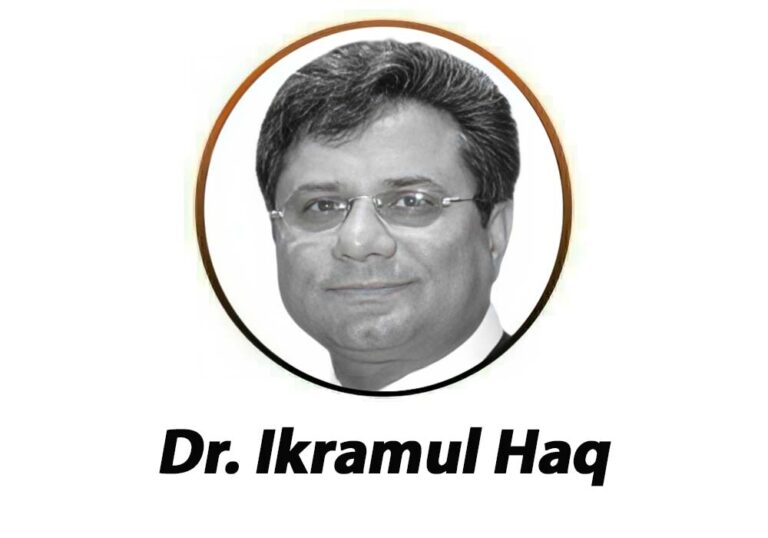
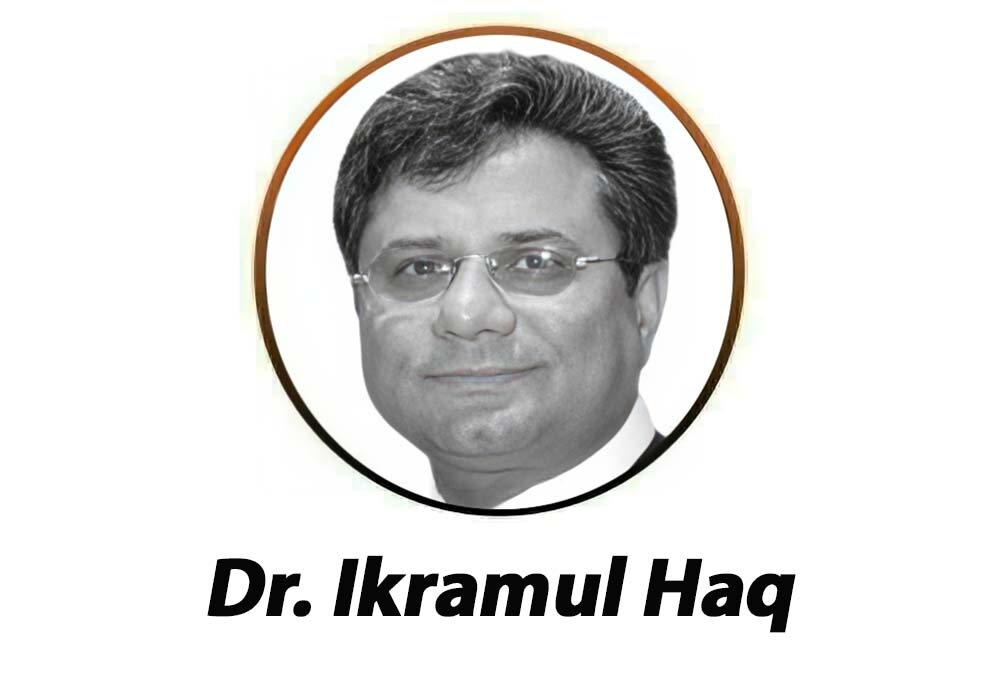
Dr. Ikramul Haq, Advocate Supreme Court, specializes in constitutional, corporate, media, environment, ML/CFT related laws, IT, intellectual property, arbitration and international tax laws. He holds an LLD in tax laws with specialization in transfer pricing. He was full-time journalist from 1979 to 1984 with Viewpoint and Dawn. He served Civil Services of Pakistan from 1984 to 1996.

Similar Posts

  • Road to the East

    Kashi with its rich culture is becoming a hub of tourism, industry. Despite being very close to Pakistan border with Kashi, the aerial trade is being very limited. We are not making a full use of our land link with China. That is not passing a positive impact for the regional economy. Our natural reserves for mines and minerals are one of the biggest resource that we can exchange with China; such as an export for the raw material using the land route, what more specifically if our gov is very vigilant, they can invite the Chinese investors from this region specifically, to extract mines and minerals, but thing that can change the economy of this entire region mainly depends if we can convince Chinese investors to invest in this particular region of Gilgit for the purification of metals. Vice President Pakistan-China Joint Chamber The other best way is the tourism and the hospitality. We need to engage the tourism groups who can be helpful to attract the Chinese people who want to cross over Khunjarab pass to Pakistan. I have noticed many people of this region very much interested to cross the Khunjarab pass to get an access to Pakistan side. Further I want to make you sure that the plateau of the Pakistan side is considered to be one of the most beautiful natural plateau in the world. Culturally this area have been preserved very well, including the ancient buildings such as centuries old. Food is one of the best attraction and the delicacies, it is commonly believed that Ice cream originally started from this region. Similarly, there is a long route which is called the inner wall of the city have a long cue of traditional restaurants with hundreds of options. Paya the lamb foot, is named the same in Kashi language same as pulao, naan, kabab, and many other words. I have never seen a variety of naans in all over sub continent. The same i saw only in Kashi. They also produced a qeema naan (meat) which is one of the delicacy of this region. I conceived an idea that the concept of pizza and spaghettis was stolen by Marco Polo in the 13th century from this region and was taken to Italy. That is why till today spaghettis and pizza is one a famous dish in Italy. But nowhere else in Europe. Bar b que globally I have been to many countries but the best natural taste of bar b que is in this region. Mostly they use lamb, sheep, and beef to make this bar b que. Similarly, pulao was originated from Xinjiang in this region. So, it traveled all the way to subcontinent. The pulao I tasted in Kashi, was one of the best delicacy. It added up with dried grapes. They also love to serve it with the yogurt. Kabab, shawarma have many kind of faces, the region have a lot of shapes for kabab mostly by the meat of sheep. These people like to eat the fats more often Ly than our region. The weather of this area is very harsh as it climbs p to 40 degrees in hot season while drop down to minus -25 in the cold season. Because of this harsh weather the living condition of the normal people have totally been changed. This harsh weather physically converted theses people as a very tough nation. But the other impact of this weather is that this area is mostly dry and even the mountains are mostly barren. Tea is one of a natural product of this area with many kind of teas to be offered. Flower tea is one of the famous tea from this area which is commonly believed to keep a face fresh. But there are multiple kind of teas available in this region. Walking through the streets of Kashi there are hundred of shops, as I mentioned dry fruits are one of the basic product of this region, I have never seen the variety of dry fruits that I found in Kashgar, is indescribable. They are genuine dry fruit lovers providing of hundreds of kinds of dry fruit. The way they preserve it and roast it with the honey, this technology we may need to learn from them. The use of metal and handicrafts especially in the form of brass I have observed are the best in the whole world. Where the use of art work by hand was even more inspiring. Alladin was one of the story that we listen from our childhood, actually this story was also originated in this region. Same as Alibaba, which is one of the oldest tale we always listening from centuries. And who can forget the famous stories of Ali baba with forty thieves. These all stories were originated from the same region. The beauty of this area along with the traditional dresses of the girls that are still very popular in subcontinent. There were a lot of tea houses with a history of more than a hundred years traditionally serving their local tea. Most of the tea houses have the people playing their traditional music and that is so fascinating that you can spend hours to listens that music. The rhythm will really mesmerize you. In my next article I will describe about the traditional restaurants and their dances as performance. To be continued..

  • Justice delayed & wrongdoers’ profitability

    A recent five-member judgment of the Supreme Court has settled an important question of Pakistani company law. It has also exposed a deeper weakness in our justice system: even when fraud is ultimately defeated, the victim may receive no meaningful compensation for the years consumed in recovering what was unlawfully taken. In Abdul Razzaq v Registrar of Companies, Securities and Exchange Commission of Pakistan and others, Civil Appeal No. 125 of 2025, decided on April 22, 2026, the Court held that the passage of time could not protect a fraudulent entry in a company’s register of members. The ruling affirms Naila Naeem Younus v Indus Services Limited (2022 SCMR 1171), under which a petition for rectification of the register under section 126 of the Companies Act, 2017 is not barred by limitation where shares have been taken through fraud. The decision is legally compelling. The register of members determines who owns shares, receives dividends, votes at meetings and exercises corporate control. A fraudulent alteration is therefore not a technical defect. It can amount to stealing ownership through manipulation of the company’s official record. The Court has rightly refused to allow deception to become title merely because it remained concealed for several years. Fraud is usually designed to remain undiscovered. Applying a rigid limitation period in favour of the person concealing it would reward the very conduct that the law is meant to prevent. The judgment also resolves the uncertainty arising from Bentonite Pakistan Limited v Bankers Equity Limited (2023 SCMR 1353), in which observations had suggested that Article 181 of the Limitation Act could apply to company-law proceedings. The larger bench has clarified that a rectification petition is not an “application” governed by that provision. This doctrinal clarity is welcome. The harder question is what justice means after the fraud has lasted for years. A person fraudulently deprived of shares may lose dividends, voting rights, managerial control and participation in rights or bonus issues. The wrongdoer may meanwhile control the company, use its assets and finance the litigation from benefits derived through the disputed shareholding. After 10 or 20 years, an order restoring the shares may correct the register. It does not necessarily compensate the victim. This problem extends far beyond company law. In Pakistan, fraudulent possession and prolonged litigation often operate together. Land, inheritance, commercial assets and corporate rights are appropriated through false documents or manipulated records. Once challenged, the beneficiary denies everything, seeks adjournments, produces further documents and carries the matter through every available forum. Delay becomes a business strategy. The wrongdoer retains the asset while the victim pays to recover it. Even after losing, the wrongdoer may be required only to return property that never lawfully belonged to him. Nominal costs do little to alter this calculation. A rational legal system must ensure that fraud and frivolous litigation are economically unattractive. Otherwise, the expected gain from wrongdoing remains greater than its expected cost. Pakistan needs to move towards a genuine cost-based justice system. This does not mean obstructing access to courts or punishing honest litigants who fail to prove a bona fide claim. It means distinguishing genuine disputes from proceedings maintained through deliberate falsehood, concealment, forged documents or tactical delay. The Code of Civil Procedure, 1908 provides for costs, and the federal Costs of Litigation Act, 2017 recognises actual, adjournment and special costs in specified circumstances. The larger principle should be applied far more effectively: an innocent litigant should not be forced to finance the other side’s abuse of judicial process. Where fraud is established, courts should ordinarily consider restoration of all benefits obtained from the disputed property, interest for the period of deprivation, realistic legal expenses and enhanced costs where false or vexatious pleas prolonged the case. In corporate cases, this could include an account of dividends, bonus and rights shares, remuneration obtained through control, and other measurable benefits flowing from the fraudulent entry. Section 126(4) also permits referral of fraudulent conduct for proceedings under section 127. Such referrals should be made where the evidence warrants them. The constitutional dimension should not be ignored. Article 10A of the Constitution guarantees fair trial and due process, while Articles 23 and 24 protect property. A right restored after decades, without compensation for its prolonged deprivation, is only partially vindicated. The Supreme Court has correctly ruled that fraud cannot shelter behind the calendar. Our jurisprudence must now adopt the accompanying principle that fraud cannot profit from the judicial calendar either. Justice must do more than correct an entry after years of litigation. It must remove the financial benefit of wrongdoing, compensate the victim as far as reasonably possible and impose realistic costs on those who misuse courts to preserve the proceeds of fraud. Only then will delayed justice cease to be an investment for the wrongdoer. _______________________________________________________________________   Dr. Ikramul Haq, Advocate Supreme Court, Adjunct Faculty at Lahore University of Management Sciences (LUMS), member Advisory Board and Visiting Senior Fellow of Pakistan Institute of Development Economics (PIDE), holds an LLD in tax laws. He was full-time journalist from 1979 to 1984 with Viewpoint and Dawn. He also served Civil Services of Pakistan from 1984 to 1996.

  • Circular debt: claims collapse, liabilities return

    The government’s claims of containing power-sector circular debt have not survived the test of its own year-end figures. During the fiscal year (FY) 2025–26, another Rs. 364 billion was added to the flow of circular debt. This happened despite the provision of Rs. 302 billion in subsidies and repeated assurances that operational improvements, tariff adjustments, negotiations with independent power producers and financial restructuring had brought the problem under control. According to the latest report, the gross addition of Rs. 364 billion was Rs. 319 billion, or 709 percent, higher than in the preceding year. After using Rs. 302 billion of public money to reduce the accumulated liability, the reported stock still increased by about Rs. 61 billion from its June 2025 level of Rs.1.614 trillion. These numbers expose the difference between managing the recorded stock and stopping the recurring flow. A subsidy can reduce the amount appearing in the circular-debt account on a particular date. It cannot remove the inefficiencies, payment defaults, regulatory delays and governance failures that create new liabilities every month. The Power Division had taken a very different position earlier. Responding to reports that circular debt had risen during July–November 2025, it described the increase as seasonal and maintained that such variations normally reversed during the second half of the financial year. Its official rebuttal predicted that the circular-debt position would be fully contained by June 2026, with no net addition to the overall stock. The financial year has ended with a gross flow of Rs. 364 billion and a net increase even after a large fiscal injection. The promised reversal did not take place. The language of containment concealed continued deterioration in the financial operations of the power sector. The reported composition of the increase is equally disturbing. Inefficiencies of power distribution companies caused losses of Rs. 262 billion, only Rs. 3 billion less than in the preceding year. Lower recovery of electricity bills added Rs. 64 billion. Interest charges contributed another Rs. 14 billion, while delays in tariff adjustments added Rs. 75 billion. A further Rs. 194 billion arose from non-payment by K-Electric, reportedly connected with the delay in determining its multi-year tariff. This cannot be classified as an unavoidable commercial loss. It represents a failure of regulation, contract administration and timely governmental decision-making. When tariff determinations, subsidy decisions or payment settlements are delayed, the resulting liability does not disappear. It moves through the electricity chain until it is recorded as circular debt and passed to taxpayers or consumers. The reported components and adjustments must be examined carefully when the complete official statement is released. The latest report available on ministry’s website is of April 2026. The Power Division has not placed even its one-page circular-debt reports from May to July 2026 on its website. Public discussion is consequently being conducted based on figures reported in the press. The government cannot demand acceptance of its success narrative while withholding the underlying data required testing it. The Rs. 302 billion subsidy used to contain the closing stock was nearly half of the approximately Rs. 630 billion collected in income tax from salaried persons during the same year. This comparison shows the real social cost of power-sector failure. Citizens who have no role in managing distribution companies, finalising tariffs or settling inter-company disputes are required to finance the consequences through taxation. They also pay through electricity tariffs, surcharges, fuel-price adjustments and declining service quality. Honest consumers are charged for theft, poor recoveries, technical losses and delayed official decisions. As tariffs rise, more households and businesses with adequate resources shift to rooftop solar systems. The grid is left with a shrinking base of paying consumers and a large stock of fixed capacity costs. Tariffs must then be raised further to recover those costs from fewer units sold. The policy response itself deepens the financial problem. For more than a decade, governments and the International Monetary Fund (IMF) have relied heavily on tariff increases, periodic adjustments, withdrawal of subsidies and additional surcharges. These measures may narrow the accounting gap temporarily, but they do not establish commercial discipline within distribution companies or personal accountability for persistent losses. The IMF reportedly allowed up to Rs. 400 billion to be added to the circular-debt flow during FY 2025–26, while requiring the government to neutralise the addition through budgetary subsidies. This approach turns circular debt into an exercise in fiscal presentation. A liability generated inside the electricity system is paid from the federal budget and then described as contained. The loss has not been eliminated. Its location has changed. The same problem arises with the Rs. 1.225 trillion circular-debt settlement plan. Refinancing expensive liabilities at more favourable rates can reduce financing costs and provide immediate liquidity. It does not constitute retirement of debt in any economic sense when the replacement financing has to be repaid over six years through charges imposed on electricity consumers. Pakistan will be servicing yesterday’s circular debt while the unreformed system continues creating fresh liabilities. Financial engineering is being presented as reform because it postpones recognition of the full fiscal burden. Liquidity becomes a substitute for correcting the institutions responsible for the crisis. The proposed privatisation of the distribution companies also requires closer scrutiny. The government has started with Faisalabad, Gujranwala and Islamabad electricity supply companies, which are among the relatively better-performing entities. Selling profitable or manageable companies while retaining those responsible for the largest losses will not remove the structural deficit. It may deprive the public sector of its stronger revenue-generating assets while leaving taxpayers responsible for the weakest companies. Privatisation can improve performance where there is transparent valuation, effective regulation and genuine transfer of commercial risk. It cannot succeed if private investors acquire the sound operations while the state remains responsible for accumulated liabilities, political interference, theft-prone areas and unrecoverable receivables. That would amount to privatisation of gains and socialisation of losses. A credible reform programme must begin with full disclosure. Monthly circular-debt reports should identify, company by company, transmission and distribution losses, recovery ratios, unpaid

  • When Will Childhood Be Safe?

    The true measure of a society is not its skyscrapers, motorways, economic statistics or political slogans. It is revealed by something much simpler: how safe its children are. If a child cannot feel safe at home, in the neighbourhood, at a madrassa, at school or even on the street, then all our claims of progress deserve to be questioned. The growing number of cases of child abuse in Pakistan is not merely a matter of crime statistics. It reflects our collective indifference, weak institutions and a social culture that too often chooses silence over justice. Behind every reported case is a childhood that has been stolen, a family that has been shattered and an innocent mind carrying wounds that may never fully heal. According to the material available for this article, 1,914 cases of child abuse were reported across Pakistan during the first six months of 2026. Meanwhile, Sahil’s report recorded 3,630 cases of child abuse across the country in 2025, an increase of eight per cent over 2024. These figures were compiled from reports published in 81 newspapers across the four provinces, Islamabad, Azad Jammu and Kashmir and Gilgit-Baltistan. According to the report, more than nine children were subjected to some form of abuse every day in 2025. But is this the complete picture? Probably not. These figures represent only the cases that were reported. Countless incidents never reach the police or the courts because of fear, social stigma, family pressure, financial difficulties and the long, exhausting process of seeking justice. The reported numbers, therefore, should not be mistaken for the full scale of the problem. There is also a widespread assumption that children are mainly at risk from strangers. The reality is far more complicated. Long-term analyses of child abuse cases have repeatedly shown that a significant number of incidents involve people known to the child or the family. This is an uncomfortable truth, but one that parents must acknowledge. Teaching children simply to avoid strangers is no longer enough. They must also be taught that if a relative, teacher, neighbour, family acquaintance or influential person makes them uncomfortable or pressures them into doing something they do not want to do, they have the right to speak up. They should know that they can tell their parents or another trusted adult without fear of being blamed or punished. Such education is not about frightening children. It is about giving them confidence.Perhaps the most painful aspect of this crisis is that danger sometimes comes from the very place that should be a child’s safest refuge. Home is a child’s first shelter. The family environment is supposed to provide love, security and protection. But if that space becomes unsafe, where does a child go? Parents also need to pay close attention to sudden and unexplained changes in a child’s behaviour. Fear of a particular person, refusing to go to school, unusual silence, anger, withdrawal or a sudden change in behaviour may sometimes be warning signs. Not every behavioural change means that a child has been abused, but ignoring every unusual change is certainly not wise. Pakistan does not lack laws relating to child protection. The Zainab Alert, Response and Recovery Act 2020, the Juvenile Justice System Act 2018 and various provincial laws and policies provide a legal framework for protecting children. The real problem, however, is not the absence of laws. It is the failure to translate those laws into effective action. During a hearing at the Islamabad High Court in June 2026 concerning the implementation of the Zainab Alert law, the court was informed that some important provisions, including the practical operation of an immediate alert mechanism for missing children, had yet to be implemented as intended. The court was also told that 562 criminal cases relating to missing children and child abuse had been registered in Islamabad between 2022 and 2025. These figures raise a fundamental question: how seriously do we monitor the implementation of laws after passing them? The National Assembly’s Standing Committee on Human Rights also expressed concern in February 2026 over the performance of government institutions responsible for child protection and the lack of coordination between departments. It pointed out that several policies appeared to remain largely confined to official documents. We also need to understand that registering an FIR is not justice. It is merely the beginning of the process. If a child is abused, a case is registered and the accused is arrested, but the trial continues for years, witnesses come under pressure, evidence becomes weaker and the family eventually loses hope, then where is the justice despite the existence of laws? Cases involving children require a particularly sensitive approach to investigation and prosecution. Making a child repeatedly recount a traumatic incident, subjecting them to unnecessary questioning or taking their statement in an intimidating environment can deepen the trauma. Every district should therefore have properly trained child protection units where police officers, prosecutors, social workers and psychologists can work together. Specially trained investigators and prosecutors should deal with child abuse cases, while unnecessary delays in trials must be eliminated. We teach our children mathematics, science, English and computers. But do we teach them what to do if someone touches them inappropriately? Do they know that they have the right to say no? Do they understand that they are not obliged to obey an adult when something is wrong? Do they know whom to approach if someone threatens or intimidates them? Age-appropriate child safety education is no longer a luxury. It is a necessity. The purpose of such education should not be to frighten children but to give them a basic understanding of personal boundaries, appropriate and inappropriate touch, online risks and ways of seeking help. Parents and teachers also need training because children often communicate distress through changes in behaviour rather than directly asking for help. The dangers facing children today are not confined to streets, schools and neighbourhoods. Mobile phones and the internet have created another world in which children can

  • DG ISPR’s Press Conference: Strategic Signal…

    The recent press conference by ISPR Director General Lieutenant General Ahmed Sharif Chaudhry was presented as a significant and comprehensive briefing outlining Pakistan’s strategic direction, national priorities, and approach to security, governance, economic stability, terrorism, and external interference. Lasting more than two hours in Rawalpindi, the briefing went beyond a routine security update by addressing sensitive national issues in detail and providing operational information supported by data, charts, and presentations. It emphasized transparency, offered the military’s perspective on the country’s security environment, and sought to provide clarity on the state’s actions and long-term plans. The conference highlighted the breadth of the challenges facing Pakistan and outlined what was described as a unified path forward, while emphasizing the armed forces’ commitment to national security and sovereignty. A central theme of the address was that good governance is essential for Pakistan’s long-term security and stability, with the argument that military operations alone cannot eliminate terrorism and extremism without stronger administrative and institutional capacity. The DG ISPR described security and governance as closely interconnected and cited the National Action Plan (NAP) as a consensus framework requiring effective implementation through measures such as countering extremist narratives, disrupting terror financing, and strengthening institutions. Referring to Pakistan’s population of around 240 to 250 million, he suggested reviewing whether the existing four-province administrative structure adequately serves the goal of good governance and said that, if an administrative reset is considered necessary, it should be decided by the country’s political leadership through constitutional and legal processes reflecting the will of the people. He also underscored the distinction between the military’s responsibility for security and the authority of civilian institutions over political and administrative reforms, reaffirming that such decisions should remain within the constitutional framework. A significant portion of the press conference was dedicated to providing a stark and detailed update on the country’s counterterrorism efforts, presenting an overwhelming amount of operational data. The DG ISPR revealed that security forces have conducted a staggering 40,348 intelligence-based operations (IBOs) across Pakistan so far in 2026, which averages to nearly 200 operations every single day. This relentless operational tempo is a testament to the proactive and aggressive posture adopted by the security forces to root out militancy from every corner of the country, leaving no safe haven for terrorists to operate. Of these, the majority—over 31,000—were carried out in Balochistan, underscoring the province’s central role in the national security strategy and the immense efforts being invested to bring stability to that region. He reported that a total of 3,145 terrorism incidents had taken place in the country in 2026, with 1,971 reported from Khyber Pakhtunkhwa, 1,148 from Balochistan, and 26 from other parts of the country. The results of these operations, he stated, have been significant, with 2,084 confirmed terrorists eliminated. This, he emphasized, translates to an average of 10 terrorists being killed every day, which he described as the highest operational ratio ever achieved in the country’s history. This high kill ratio is indicative of the intelligence-led nature of the operations, where precise targeting minimizes collateral damage and maximizes the impact on terrorist networks. However, he also acknowledged the heavy price paid for this peace, revealing that 819 Pakistanis have embraced martyrdom this year in the fight against terrorism. This somber figure includes 303 Pakistan Army personnel, 194 police and other law enforcement officials, and 322 innocent civilians. The sacrifice of these brave individuals, he noted, is a debt that can never be fully repaid, but it underscores the determination of the nation to prevail against the scourge of terrorism. He also disclosed that 28 suicide bombings have occurred nationwide, the majority of which, he alleged, were carried out by Afghan nationals. This disclosure highlighted the nexus between cross-border terrorism and the instability in Afghanistan, a point he elaborated on to stress the need for effective border management and regional cooperation. In a crucial clarification that resonated deeply with the public, the DG ISPR addressed the concept of a “hard state,” dispelling any misconceptions about its meaning. He explained that a “hard state” does not refer to military rule, nor does it imply a repressive or authoritarian regime. Instead, he defined it as a country where the Constitution and the rule of law are enforced equally for every individual without any discrimination or elitism. It is a system where all matters are resolved through constitutional and legal mechanisms, and where every citizen is equal before the law, regardless of their social or political standing. This vision of a “hard state” is fundamentally about strengthening the state’s institutions and legal frameworks to ensure justice and accountability for all, thereby creating a more stable and prosperous society where the rights of every citizen are protected. He used this definition to counter the narratives of those who fear a strong state, arguing that a “hard state” is the ultimate guarantor of democracy and individual freedoms, as it prevents the strong from exploiting the weak and ensures that the law is the supreme authority. Turning his focus to the complex security situation in Balochistan, the DG ISPR adopted a nuanced approach that combined a firm security stance with a clear commitment to development and public engagement. He firmly rejected the narrative that the security situation in the province is deteriorating, calling it a deliberate and coordinated campaign to create a false perception. He alleged that certain elite groups and tribal leaders (sardars) have historically opposed social progress to preserve their own power structures, and he stressed the need to empower the people of Balochistan instead of these traditional power brokers. The state’s priority, he declared, is to resolve the genuine grievances of the province’s residents while continuing decisive operations against militant groups who seek to disrupt the peace. He outlined a comprehensive development agenda for the province, detailing that the state would engage directly with the people of Balochistan rather than with disruptive elements. To this end, he highlighted that billions of rupees are being invested in socio-economic development projects across the province.

  • Beyond Public Finance: Towards Constitutional Poli…

    Taxation, constitutional legitimacy & fiscal justice The previous Part VII of this series traced the contributions of Abu Yusuf, Al-Ghazali, Ibn Taymiyyah, Al-Maqrizi and Ibn Khaldun to public finance and political economy. Their works differed in purpose and historical setting, but a common normative framework emerged: justice in public burdens, accountability of authority, consultation in collective decisions, protection against arbitrary appropriation, honest exchange, responsible administration of public resources, wider circulation of wealth and protection of vulnerable citizens. These principles do not provide a ready-made tax code for a modern federation. They offer something more fundamental: standards by which taxation, expenditure and public authority may be judged. The same standards find expression in the constitutional order of Pakistan. Taxation is not legitimate merely because money is required by the state or because a provision has been inserted into a Finance Act. Parliament possesses wide legislative authority, but it is a creature of the Constitution and not its master. It cannot validly enact what the Constitution prohibits, invade a field constitutionally assigned elsewhere or destroy rights and limitations that bind every organ of the state. The proposition appears elementary. Pakistan’s fiscal practice repeatedly ignores it. Article 77 of the Constitution provides that no federal tax shall be levied except by or under the authority of an Act of Parliament. This embodies the historic principle of no taxation without representation. Revenue cannot be extracted through executive preference, administrative instruction or unstructured discretion. Legislative authority must exist. Article 77 is a necessary condition for lawful taxation, not a complete test of constitutional legitimacy. A tax enacted by Parliament must also conform to the distribution of legislative powers, equality before law, due process, protection of property and other constitutional guarantees. Parliamentary form cannot cure substantive constitutional defect. Otherwise, the requirement of constitutional supremacy would be reduced to the proposition that Parliament may do anything so long as it records the command in statutory language. Pakistan is not governed under parliamentary sovereignty in the British sense. It is governed under a written and supreme Constitution. Legislative authority is not unlimited authority The Constitution divides taxing powers between the Federation and provinces. Parliament cannot convert a provincial subject into a federal one merely by changing its label. A levy upon capital value cannot automatically become income tax because it is placed in the Income Tax Ordinance, 2001. A tax upon services cannot be extended to transactions lacking the character of a service merely because additional revenue is desired. The true nature, subject matter and effect of the levy remain decisive. This is particularly important because fiscal pressures create incentives to stretch legislative entries beyond their constitutional purpose. Governments confronting debt servicing, defence expenditure and programme targets naturally seek accessible revenue. Constitutional limitations exist precisely because necessity, convenience and expediency cannot be allowed to determine the boundaries of public power. A Constitution does not become less binding when the treasury is empty. The Supreme Court’s jurisprudence has recognised that Parliament’s taxing competence, though broad, is not without constitutional limits. In Elahi Cotton Mills, the Court accepted substantial legislative latitude in taxation, including the use of legal fictions, classifications and presumptive methods. It also made clear that the legislature cannot tax as “income” something that cannot rationally possess the character of income. The breadth of a legislative entry does not eliminate its essential subject matter.  The same discipline must govern every fiscal enactment. Equality is not arithmetical uniformity Article 25 guarantees equality before law and equal protection of law. Equality does not require every person, transaction or source of income to be taxed identically. Legislatures may classify taxpayers and activities where a real distinction exists and the classification bears a rational relationship to the purpose of the law. The power to classify cannot become a licence to privilege. Pakistan’s tax system contains numerous distinctions based upon source, status, sector, documentation and bargaining power. Salary, dividends, profit on debt, business income, contracts, imports, property income and capital gains are frequently subjected to different rates and regimes. Some differentiation may be justified by collection realities or constitutional allocation. Much of it has emerged through political accommodation rather than coherent principle. A constitutional analysis must therefore ask whether similarly situated persons are treated alike, whether distinctions correspond to genuine economic differences, and whether the burden imposed is reasonably connected with the stated objective. Higher transactional taxes upon “non-filers”, for example, are presented as instruments of documentation. Their constitutional and economic legitimacy becomes doubtful when they operate indefinitely as revenue measures without determining actual income, establishing liability or bringing the person into a genuine assessment system. A temporary incentive to file cannot become a permanent substitute for income taxation. Due process in fiscal administration Article 4 protects the right of every person to be dealt with in accordance with law. Tax administration must consequently involve more than statutory authority to demand money. Liability must be determined through fair procedures, relevant evidence, a meaningful opportunity to respond and access to independent adjudication. Automated notices, coercive recovery, attachment of accounts, blocked refunds and repeated demands without proper examination undermine this constitutional relationship. Technology does not suspend due process. Digital systems can improve matching, risk identification and transparency. They cannot transform an algorithmic suspicion into established liability. The taxpayer must know the basis of the demand, confront the material relied upon and obtain a reasoned determination from a legally competent authority. A revenue system that collects first and examines legality later converts constitutional administration into fiscal compulsion. The Supreme Court’s judgment in Mustafa Impex also reinforced the constitutional identity of executive authority. Statutory powers assigned to the Federal Government cannot automatically be exercised by an individual minister, division or official unless the constitutional and statutory framework permits it. Fiscal measures made through notifications and delegated authority must remain within the limits imposed by the parent legislation and the constitutional structure of government.  Delegation may supply machinery. It cannot create a new taxable event, enlarge the charge or transfer essential legislative choices to the executive. Property,

Leave a Reply

Your email address will not be published. Required fields are marked *