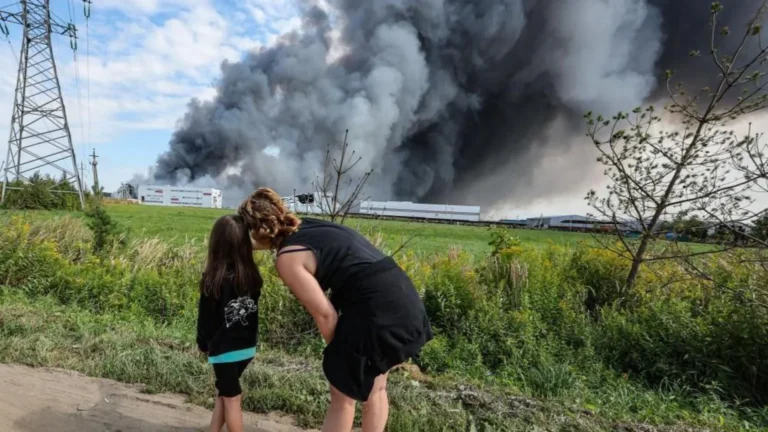
indian soldier accused
|

Indian soldier accused of killing wife while on leave in Punjab


PUNJAB, INDIA: An Indian Border Security Force (BSF) personnel has allegedly killed his wife while he was home on leave in Punjab, with the incident taking place in Hoshiarpur district, according to Indian media reports.

The BSF personnel has been accused of murdering his wife and allegedly attempting to conceal the circumstances surrounding her death by claiming that she had accidentally fallen from the roof of their house.

According to reports, the couple had been married for around 12 years and had two children. Family members reportedly said that tensions between the husband and wife had been frequent because of the man’s alleged behaviour. The victim’s family has accused him of repeatedly subjecting her to physical abuse during their marriage.

In an application submitted to the police, the victim’s family alleged that the accused reached home on August 13 and severely assaulted his wife shortly after arriving. The family claimed that the incident resulted in serious injuries to the woman.

According to the complaint, the victim’s parents were informed the following morning that their daughter was in critical condition and had been taken to a hospital. They immediately went to the hospital, where they were reportedly informed that she had succumbed to her injuries.

The victim’s family said they observed multiple severe marks of physical assault on her body. Based on the condition of the body and the family’s previous concerns about the couple’s relationship, they raised suspicions about the explanation that she had fallen from the roof.

The victim’s father accused his son-in-law of having an extremely aggressive and violent temperament. He alleged that the accused had physically abused his daughter repeatedly since their marriage and had subjected her to violence on several occasions.

The father further alleged that the accused beat his wife to death and then attempted to avoid arrest and legal consequences by portraying the incident as an accidental fall from the roof.

Following the complaint, police registered a case against the accused husband as well as his uncle and aunt. The BSF personnel has been arrested in connection with the case, while the other two named suspects are reportedly absconding. Police teams are conducting searches to locate and arrest them.

The authorities are investigating the circumstances surrounding the woman’s death and are expected to examine evidence collected from the scene, statements from family members and other relevant material. The allegations made by the victim’s family will also be subject to investigation and legal proceedings.

The case has drawn attention to concerns surrounding domestic violence and the difficulties victims and their families can face when allegations of repeated abuse are involved. The victim’s family has maintained that the woman’s death was not an accident and has demanded legal action against those responsible.

The investigation will determine whether the injuries were caused by an assault and whether the accused deliberately attempted to misrepresent the circumstances of his wife’s death.

Police have not yet announced the final findings of the investigation. The arrested BSF personnel will face further legal proceedings as authorities continue investigating the case, while efforts remain underway to locate the two other suspects named in the complaint.

Similar Posts

  • |

    Southern and central China prepare for floods as Typhoon Noul moves inland

    The remnants of Typhoon Noul continued to move deeper into China on Tuesday, raising concerns over widespread flooding across several southern and central provinces. Although the storm has weakened since making landfall, weather experts warned that it could remain over inland areas longer than expected, increasing the threat of heavy rain and related disasters. China’s National Meteorological Center said intense rainfall is expected to continue until Thursday across Fujian, Guangdong, Jiangxi, Hunan, Hubei, Henan and Guangxi. The downpours are being strengthened by the southern monsoon, creating conditions that could trigger floods, landslides and other emergencies in many parts of the country. Officials are particularly concerned because the storm is moving north through mountainous regions where heavy rain can quickly destabilize slopes and send large amounts of water rushing into rivers and towns. State media warned that the combination of steep terrain and prolonged rainfall could increase the risk of landslides, mudslides and flash floods before the storm eventually weakens. Typhoon Noul rapidly gained strength before striking Guangdong province over the weekend. According to state broadcaster CCTV, it was the strongest typhoon to hit China so far this year. Even though the storm has now lost much of its original power, authorities believe the danger is far from over because its remaining rain bands continue to bring significant rainfall over a wide area. The Chinese government has stepped up emergency preparations as the country faces the overlap of typhoon season and its annual flood season. Emergency management and housing authorities have instructed local governments to strengthen flood prevention efforts, inspect roads, bridges, reservoirs and other important infrastructure, and move rescue teams and emergency supplies into areas considered most vulnerable. Officials have also ordered safety inspections at industries that could face additional risks during severe weather, including mining operations and factories dealing with hazardous chemicals and fireworks. China experiences most of its typhoons between July and September, with August usually being the busiest period. Every year, powerful storms threaten coastal provinces before moving inland, where they often bring days of heavy rainfall that can cause serious damage far from the coastline. Other parts of the country are also facing weather related challenges. Provinces including Gansu, Sichuan and Yunnan have been placed on high alert after repeated periods of heavy rain increased the likelihood of geological disasters. In Gansu, authorities issued their highest level warning for landslides and mudslides late Monday after rocks and large boulders fell from mountain slopes onto roads in several areas, creating dangerous conditions for residents and travelers. Meanwhile, rescue efforts are continuing in Chongqing following a deadly mountain collapse earlier this month. On July 17, part of a mountainside gave way and crashed onto buildings in a riverside township. Search teams are still looking for around 50 people who remain missing as authorities continue recovery operations in the affected area. The latest severe weather is expected to make those efforts even more challenging while increasing the risk of further disasters in already vulnerable regions.

  • |

    Escalating clashes in northern Ethiopia spark mass displacement across Sudanese border

    Hundreds of displaced Ethiopian citizens from the Tigray region have fled into neighboring Sudan following intense military engagements between regional forces and the Ethiopian national army, raising international concerns over a potential resurgence of full-scale civil war. The recent outbreak of violence centered around Shererina, a strategically sensitive locality near the border with Sudan, marking the most severe military confrontation in the region since the conclusion of the 2020–2022 conflict. Eyewitnesses and regional representatives reported sustained exchanges involving heavy artillery shelling and aerial drone strikes across the weekend. The renewed hostilites follow growing instability surrounding the incomplete execution of the 2022 African Union-mediated peace agreement, alongside the Tigray People’s Liberation Front (TPLF) regaining control over regional administrative institutions. Regional analysts have also expressed concern that the border area could become entangled in the wider Sudanese conflict through external proxy alignments. Both sides have traded blame for initiating the offensive. Officials representing the Tigray regional administration accused federal forces of launching an unprovoked military assault aimed at suppressing the region. Conversely, federal minister Abraham Belay accused TPLF leadership of instigating the skirmishes, warning of severe repercussions while urging both parties to seek a negotiated diplomatic resolution to prevent further devastation. While formal casualty figures remain unconfirmed, Sudanese medical teams and local authorities verified that civilians alongside wounded combatants continue to seek asylum across the border.

  • |

    UK vows to stand by Ukraine as Russia warns of “Consequences” over British drone support

    UK Prime Minister Andy Burnham has reaffirmed Britain’s commitment to supporting Ukraine, saying the country will continue to stand firmly with Kyiv despite warnings from Moscow over Britain’s involvement in the conflict. Burnham said the UK would remain a reliable supporter of Ukraine and would continue providing assistance as the war continues. His comments came after Russia criticised Britain’s role following confirmation that British-made drones had been used in recent Ukrainian attacks inside Russian territory. “We are not fair-weather friends,” Burnham said, stressing that Britain would remain with Ukraine during what he described as its “hour of need”. He added that the UK’s position was to provide Ukraine with the support necessary to defend itself. The Russian embassy in the UK responded by accusing Britain of deliberately increasing tensions surrounding the war. It warned that the greater Britain’s involvement in the conflict became, the greater the consequences could be for the UK. The embassy said London’s actions would eventually have consequences for which Britain would have to take responsibility. However, it did not provide specific details about what form those consequences might take. The latest dispute follows an increase in Ukrainian attacks against targets deep inside Russia. Ukrainian forces have recently focused on areas including Moscow and other parts of the country, with oil refineries, logistics facilities and other strategically important sites among the reported targets. One company affected by the attacks is Wildberries, a major Russian online retailer. Its logistics infrastructure has reportedly been damaged during recent Ukrainian drone strikes. Asked about Moscow’s warning, Burnham defended the UK’s policy of assisting Ukraine. He said Britain was providing support to enable Ukraine to protect itself and argued that this had been the country’s position throughout the conflict, including under previous British prime ministers. The UK has been one of Ukraine’s strongest international supporters since Russia launched its full-scale invasion in February 2022. Britain has supplied Kyiv with military equipment, training and technology, including drone capabilities and Storm Shadow missiles. The UK’s Ministry of Defence has also reiterated its commitment to supplying Ukraine with the equipment it needs to defend itself against Russian forces and what it described as President Vladimir Putin’s illegal invasion. Russia currently occupies around one-fifth of Ukraine, but Russian troops have made limited progress along the front line in recent months. Despite the lack of major advances, however, attacks and casualties continue to occur far from the main battlefield. United Nations officials have reported a sharp increase in civilian casualties. At least 437 civilians were killed in Ukraine last month, making it the country’s deadliest month for civilians since May 2022. More people were killed in the latest Russian attacks on Tuesday. Seventeen Ukrainians reportedly died in different parts of the country. Ten people were killed in the north-eastern village of Pechenihy after two missiles struck the area. Residential buildings, a cafe and a post office were among the places damaged. Other deaths were reported in Sumy, Zaporizhzhia and Kherson, with three people killed in Sumy and two each in Zaporizhzhia and Kherson. Meanwhile, Moscow’s latest warning came after a series of Ukrainian strikes inside Russia. Five people were reportedly killed in a residential area of Russia’s Rostov region during attacks over the weekend. Ukraine has also launched hundreds of drones towards the Moscow region in recent days. Regional governor Andrey Vorobyov said on Tuesday that a 10-year-old girl was injured and a Wildberries warehouse was damaged. Alongside foreign-made equipment, Ukraine has increasingly relied on its own defence industry. Ukrainian forces have recently used domestically developed drones and missiles, including the FP-5 Flamingo cruise missile. The latest developments demonstrate the increasingly long-range nature of the conflict and the growing risks faced by countries supporting Ukraine. Despite Moscow’s warnings, Britain maintains that helping Ukraine defend itself remains a central part of its policy.

  • Dr. Fauci Invokes 5th Amendment in Senate Hearing Refuses to Answer Questions

    WASHINGTON, D.C. – Former Chief Medical Advisor Dr. Anthony Fauci invoked his Fifth Amendment right against self-incrimination during a Senate hearing on Wednesday. Lawmakers questioned Fauci about his handling of the COVID-19 pandemic and accused him of lying about virus research in Wuhan, China. Dr Fauci stated he took this step under legal advice to […]

  • | |

    Gaza funeral held for 112 bodies retrieved from ru…

    Palestinians in Gaza held funeral prayers on Tuesday for 112 people whose remains were recovered from the rubble of homes destroyed during the war between Israel and Hamas. Thousands of mourners gathered for the funeral in Gaza City’s Sabra neighborhood, where the bodies, draped in Palestinian flags, were laid out near the ruins of the destroyed homes before the procession began. The victims are set to be buried afterward at the Baptist Cemetery in the Zeitoun neighborhood, south of Gaza City. The dead belonged to the Al Hasayneh and Abu Sharia families, who were killed when their homes were bombed while they were sheltering inside on November 23, 2023. Given the scale of the casualties, the funeral ranks among the largest recorded in Palestinian history. Civil defense teams recovered the bodies from the rubble on Saturday. A Civil Defence statement said the victims included 40 children, 38 women and seven people with disabilities. Civil Defence official Mohammad Abu Dan said search teams have so far been unable to locate 157 additional bodies still believed to be buried under the rubble. More than 73,000 people have been killed and over 174,000 injured in Gaza since the war began in October 2023, according to local health authorities. Despite a ceasefire agreement that took effect on October 10, 2025, Israeli forces have continued carrying out attacks across the territory, killing 1,250 Palestinians and injuring 4,110 others since the truce began, Gaza’s Health Ministry said. Palestinian authorities estimate that around 9,500 people remain missing under the rubble of buildings destroyed across the territory. A day earlier, at least 19 Palestinians were killed by Israeli fire over a 24 hour period, pushing the overall death toll since October 2023 to 73,375, according to the Health Ministry. Officials said the toll included 18 people killed directly by Israeli forces and one person who died from wounds sustained in an earlier attack. The ministry reported that 35 additional injured people were taken to hospitals during the same period, bringing the total number of injuries to 174,220. The ministry said Saturday that 152 people were killed in Gaza during July, the highest monthly death toll recorded since the start of the year, despite the ceasefire that took effect in October 2025. The truce followed nearly two years of war that began on October 8, 2023, and caused widespread destruction across the territory, affecting an estimated 90 percent of civilian infrastructure. The United Nations has put the cost of reconstruction at approximately 70 billion dollars, underscoring the scale of rebuilding that lies ahead even as sporadic violence continues despite the formal end of large scale hostilities.

  • |

    China launches Arctic route to bypass global shipping chokepoints

    China is preparing to open a regular container shipping route through the Arctic as disruptions at major maritime chokepoints continue to affect global trade. The new service will operate through Russia’s Northern Sea Route along the Arctic coast. It is being presented as an alternative route between Asia and Europe. Chinese shipping company Sea Legend is expected to launch its first regular service on the route. The service will connect Ningbo in China with Felixstowe in the United Kingdom. The route has been described as the “Ice Silk Road”. It is designed to provide faster access to European markets. It could also improve trade links with Turkey and North Africa. The Arctic route could significantly reduce sailing times between China and Europe. The journey between Ningbo and Felixstowe normally takes around 40 days by traditional routes. The Northern Sea Route could cut the travel time by roughly half under suitable conditions. The route has gained attention as shipping companies look for alternatives to heavily congested and politically sensitive waterways. The Strait of Hormuz and the Bab al-Mandab have become major areas of concern for international shipping. Rising tensions in these regions have increased risks for vessels and raised costs for shipping companies. Marine risk experts say the Arctic is attracting greater interest from shipowners because it can offer shorter journeys and reduce exposure to geopolitical conflict zones. The Northern Sea Route is divided into 28 sections. Different rules and operating requirements apply along the route. Ships generally need permission from the Northern Sea Route administration, which is controlled by Russia’s state nuclear energy company Rosatom. Interest in the Arctic route is not new. Several international shipping companies have previously tested the Northern Sea Route. However, many European operators later avoided regular use of the route because of worsening relations with Russia. Concerns over the potential environmental impact of increased shipping in the fragile Arctic ecosystem have also remained a major issue. The changing climate has added another dimension to the debate. Shrinking sea ice has made some Arctic routes more accessible during parts of the year. The Arctic is now becoming an increasingly important area of competition among major powers. Russia considers the region strategically important for its economy and national security. It also views the Northern Sea Route as a major trade corridor. China has described itself as a “near-Arctic state” and has promoted the concept of a “Polar Silk Road”. Beijing sees greater Arctic access as an opportunity to expand trade and strengthen its global supply chains. The United States, meanwhile, has opposed efforts that could give Russia and China excessive control over Arctic routes. Washington has repeatedly supported freedom of navigation and greater international access to the region. The growing use of the Arctic shipping corridor could therefore have implications beyond commercial trade. For China, the route offers a potential way to reduce dependence on traditional maritime passages. For Russia, it could strengthen the economic importance of its Arctic coastline.

Leave a Reply

Your email address will not be published. Required fields are marked *