irans revolutionary guard
|

Iran’s revolutionary guard claims destruction of US military aircraft and casualties during “Operation Nasr II

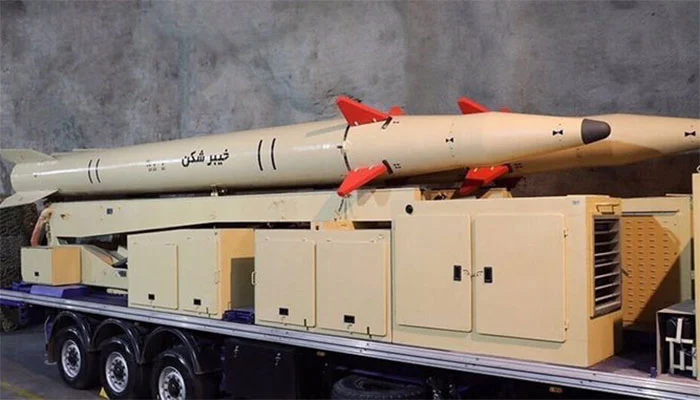
Iran’s Islamic Revolutionary Guard Corps (IRGC) has claimed that it destroyed 11 fighter aircraft at US military bases and killed 200 American personnel within 15 days during what it described as “Operation Nasr II.” The claims were made by IRGC spokesperson Brigadier General Hossein Mohebi during an interview, in which he discussed Iran’s reported military operations against American targets.

According to the IRGC spokesperson, the US defense system had become significantly weakened, allowing Iranian drones and missiles to reach their intended targets without facing major obstacles. He claimed that Iran’s military capabilities had successfully challenged American defense mechanisms and demonstrated the effectiveness of its missile and drone technology.

Brigadier General Mohebi stated that Iran targeted eight military deployment centers during attacks on US positions. He further claimed that, at one location, 20 shelters were destroyed as part of the operations. However, the details and figures presented by the IRGC have not been independently verified.

The IRGC spokesperson also issued warnings to Israel, stating that if it became involved in the conflict again, it should be prepared to face serious consequences. He said that any renewed Israeli participation in military operations would result in a strong response from Iran.

In his remarks, Mohebi also addressed the United Kingdom, warning that a bomber aircraft had recently taken off from a British air base. He stated that if Britain cooperated with the United States in military actions against Iran, British interests could become legitimate targets from Iran’s perspective.

The IRGC official called on the US government to allow journalists to visit the damaged military facilities in order to assess the actual scale of destruction and casualties. He argued that allowing independent media access would reveal the real impact of Iran’s reported attacks.

The statements come amid heightened tensions between Iran, the United States, and their regional allies. Military confrontations and threats between these countries have repeatedly increased concerns about the possibility of wider conflict in the Middle East.

Iran has frequently emphasized its missile and drone capabilities as a key part of its defense strategy. Iranian officials have often stated that their military strength enables them to respond to threats and protect national interests. Meanwhile, the United States and its allies have continued to monitor Iran’s military activities and have expressed concerns about regional security.

The claims made by the IRGC spokesperson represent Iran’s official account of the reported military operation. At the same time, independent confirmation of the number of aircraft destroyed, casualties reported, and damage caused has not been provided.

International observers have warned that continued military exchanges and aggressive statements from involved parties could increase instability in the region. Diplomatic efforts have repeatedly been encouraged as a way to reduce tensions and prevent further escalation.

The situation remains closely watched by governments and security analysts around the world, as any direct confrontation involving major military powers could have significant regional and international consequences. Further developments are expected to determine the accuracy of the claims and the future direction of relations between Iran, the United States, and their allies.

Similar Posts

  • |

    Peru and Mexico resume diplomatic relations after political dispute

    The diplomatic break occurred when Mexico granted political asylum to former Peruvian Prime Minister Betssy Chavez, who faced conspiracy charges regarding former President Pedro Castillo’s 2022 attempt to dissolve Congress. As part of the bilateral agreement to restore relations, Peru granted Chavez safe-conduct guarantees under the 1954 Caracas Convention on Diplomatic Asylum, enabling her to leave the Mexican Embassy in Lima and travel to Mexico. Peruvian Foreign Minister Carlos Espa confirmed she departed in good health. The Peruvian Ministry of Foreign Affairs maintained that no political persecution exists in the country and stated that granting safe-conduct does not waive Peru’s legal right to request Chavez’s extradition in the future. The diplomatic rapprochement follows commitments made by newly elected Peruvian President Keiko Fujimori ahead of her inauguration to normalize ties with Mexico, an initiative welcomed by Mexican President Claudia Sheinbaum.

  • |

    Family in India welcomes first baby Girl after 52 years

    A family’s long-awaited dream came true in India when the birth of a baby girl after 52 years brought immense joy and celebration to their home. The heartwarming moment, captured on video, has gone viral across social media, touching the hearts of millions and drawing congratulatory messages from people around the world. According to media reports, the remarkable event took place in Indore, a city in the central Indian state of Madhya Pradesh. The family had reportedly gone more than five decades without the birth of a daughter, making the arrival of the newborn girl a truly historic and emotional occasion for everyone involved. The birth of the baby girl marked a memorable milestone for the family, ending a 52-year wait for a daughter. Relatives described the occasion as one of the happiest moments in the family’s history, with generations gathering to welcome the newest member with immense love and excitement. A video of the celebration quickly spread across social media platforms, capturing the emotional reactions of family members. In the footage, relatives can be seen embracing one another, shedding tears of joy, and celebrating the newborn’s arrival with smiles, laughter, and heartfelt affection. The family’s emotional response reflected just how significant the moment was after decades of waiting. The newborn was welcomed with great enthusiasm, and the family made every effort to make the occasion unforgettable. The atmosphere in the home was filled with happiness as loved ones gathered to celebrate the little girl’s arrival. Family members expressed their gratitude and excitement, describing the birth as a blessing that had brought new hope and joy into their lives. The touching video resonated strongly with social media users, many of whom praised the family’s celebration of the birth of a daughter. Thousands of people shared congratulatory messages, wishing the baby a healthy, happy, and successful life. Many users also expressed appreciation for the family’s obvious affection and excitement, noting that the video served as a positive reminder of the importance of valuing daughters. The viral clip sparked widespread discussion online, with users commenting on how emotional and uplifting the celebration was. Many highlighted the changing attitudes toward the birth of girls in South Asia, where awareness campaigns over the years have encouraged greater appreciation for daughters and emphasized gender equality. Several commenters said the family’s joyful reaction reflected a positive social message and inspired hope for a future where every child, regardless of gender, is equally celebrated. Although the family’s story is unique because of the unusually long gap before the birth of a daughter, it has become a symbol of happiness, love, and togetherness. The overwhelming response on social media demonstrated how stories of genuine family joy can unite people across cultures and borders. As the video continues to gain attention online, the newborn girl has become the center of countless prayers and good wishes from strangers and well-wishers alike. People have expressed hope that she will grow up surrounded by love, opportunities, and good health. The emotional celebration not only marked a historic moment for one family in Indore but also served as a heartwarming reminder of the joy that the arrival of a new life can bring to an entire community.

  • | |

    Pezeshkian rejects pressure as Iran seeks path to de-escalation

    Iranian President Masoud Pezeshkian has said Tehran will not surrender to external pressure or compromise its military and defensive capabilities, while stressing that Iran remains open to diplomacy if it can help protect the country’s interests. In a televised interview marking the second anniversary of his presidency, Pezeshkian said Iran would resist any attempt to force it into submission. He maintained that Tehran had the right to preserve its defence capabilities and would not accept demands aimed at weakening its military strength. The Iranian president described his country’s response during the latest conflict with the United States and Israel as an act of self-defence. He praised Iran’s armed forces, including the Army, Islamic Revolutionary Guard Corps and Aerospace Forces, for their performance during the fighting. Pezeshkian also accused Washington and Tel Aviv of attempting to bring Gulf countries together against Iran. He said Tehran was working to prevent further regional divisions and maintained that Muslim countries should cooperate regardless of sectarian differences. He rejected claims that Iran sought territorial expansion or intended to attack neighbouring states. According to Pezeshkian, Iran wanted peaceful relations with countries in the region and had no plans to seize territory or expand its borders. The president also questioned why some regional countries allowed their territories to be used for attacks against Iran. He said Tehran did not seek confrontation with those states but would respond against locations from which it was attacked. Meanwhile, senior US military officials are reportedly pushing for a path toward de-escalation as concerns grow over the effectiveness and sustainability of further military action against Iran. According to a report, Chairman of the Joint Chiefs of Staff Gen Dan Caine has privately urged senior Trump administration officials to explore options for ending the conflict. The discussions reportedly involved senior figures including CIA Director John Ratcliffe, Secretary of State Marco Rubio and Vice President JD Vance. US officials are said to believe that continued air operations alone may not be enough to force Tehran to accept Washington’s demands. There are also concerns about Iranian retaliation against US allies and regional energy infrastructure. The report further indicated that shortages of some US weapons, including air-defence interceptors and precision munitions, could make a prolonged conflict increasingly difficult. Despite the concerns, US officials reportedly believe American forces could still inflict significant damage on Iran if President Donald Trump orders further escalation. At the same time, Washington is examining diplomatic options that could allow Trump to present an agreement as a political achievement. A possible agreement between Iran and Oman could provide a major breakthrough in efforts to reopen the Strait of Hormuz, according to a US official. Washington expects Tehran and Muscat to reach an understanding that would allow commercial shipping and oil traffic to resume through the strategic waterway. The United States has indicated that it could lift its blockade of Iranian ports once commercial shipping is restored and Iran fulfils its commitments. The Strait of Hormuz is one of the world’s most important energy routes, with a significant share of global oil supplies traditionally passing through it. Disruptions caused by the conflict have contributed to higher energy prices and increased inflationary pressure. The latest diplomatic activity follows several previous claims that a deal over the strait was close, although Iranian officials have repeatedly denied that formal negotiations were taking place. Regional tensions have also prompted Pakistan, Saudi Arabia and Türkiye to strengthen military cooperation through a joint defence agreement signed in Makkah. Under the agreement, an armed attack against any one of the three countries would be treated as an attack against all three. The countries said the pact was intended to strengthen collective deterrence and protect regional security. Türkiye stressed that the agreement was defensive and was not directed against any particular country. However, the deal comes amid heightened tensions involving Iran and growing concerns about the conflict spreading across the Gulf and wider Middle East. Meanwhile, diplomatic efforts are continuing on the Lebanon front, where officials are discussing arrangements for monitoring the potential disarmament of Hezbollah under a US-backed framework. Pezeshkian has also defended diplomatic engagement with Washington despite opposition from Iranian hardliners. The Iranian president argued that dialogue could be useful if it allowed Tehran to safeguard its national interests and secure its rights.

  • | | |

    Iran claims drone strike on US base in Kuwait

    Iran’s Islamic Revolutionary Guard Corps (IRGC) says it will continue military operations aimed at responding to what it describes as acts of aggression against the country. Iranian authorities have also claimed that their forces carried out drone strikes against Camp Doha, a US military facility located in western Kuwait. According to Iran’s Tasnim news agency, the strikes targeted weapons storage facilities and logistical equipment used by US ground forces at the base. The Iranian military said the operation came in response to what it called repeated acts of aggression by the United States. Tehran has maintained that its military actions are intended to deter further attacks and demonstrate its readiness to respond to any threats against Iran. In a statement, Iran’s armed forces said they remain fully coordinated and prepared to confront any new military moves or hostile actions. The statement warned that Iran would deliver what it described as a strong and decisive response to any further aggression. Iranian officials described Camp Doha as an important regional support facility for US military personnel and equipment. The base has historically played a role in supporting American military operations and logistics in the Gulf region. The latest claims come amid heightened tensions in the region, with Iran and the United States continuing to exchange warnings and accusations. Any confirmed attack on a US military facility in Kuwait could further increase security concerns across the Gulf and raise fears of a broader escalation in the region. The claims regarding the reported drone strikes have been attributed to Iranian sources, and independent confirmation of the details was not provided in the original report.

  • |

    20,000 flee as fast-moving wildfire engulfs British Columbia

    VANCOUVER: More than 20,000 people have been forced to leave their homes in British Columbia as a fast-moving wildfire tore through communities around Okanagan Lake, prompting provincial authorities to declare a state of emergency. The Bald Range wildfire exploded in size within hours, driven by hot, dry and windy conditions, sending residents scrambling for safety and creating an increasingly dangerous situation for firefighters and emergency crews. The blaze had expanded to roughly 9,500 hectares (23,500 acres) by Saturday, according to Reuters. Premier David Eby announced the state of emergency on Saturday as more than 100 wildfires were burning across the province. The emergency declaration gives authorities additional powers to restrict travel, coordinate resources and secure accommodation for people displaced by the fires. Thousands ordered to evacuate The communities of Summerland and Peachland were among those heavily affected. Summerland, home to around 12,000 people, was placed under an evacuation order, while thousands more residents in surrounding areas were also told to leave. Officials have warned that conditions remain extremely dangerous, with rapidly changing winds and intense flames making it difficult to assess the full extent of the damage. A number of homes and other properties have already been destroyed, although authorities have yet to determine the total number of structures lost because some affected areas remain inaccessible. The wildfire has also disrupted essential services. Power outages have been reported, while Summerland issued a boil-water advisory after untreated water entered part of the system. Highway 97, an important transportation route through the region, was also closed as the fire threatened nearby communities. Residents rescued by helicopter The rapidly spreading flames left some residents trapped after escape routes became unsafe. Emergency crews used helicopters to reach people who could no longer evacuate by road, while search-and-rescue teams continued checking areas behind the fire lines for anyone who may have been left behind. The intensity of the fire has created exceptionally dangerous conditions. Officials said the blaze generated its own weather, including lightning, making firefighting operations even more challenging. Authorities are also investigating a possible wildfire-related death near Summerland. The Royal Canadian Mounted Police said hazardous conditions were making it difficult to confirm details immediately. Why the situation is so severe British Columbia entered the 2026 wildfire season with significant concerns about drought and unusually warm conditions. The BC Wildfire Service had warned earlier this summer that much of the province could experience elevated wildfire activity because of persistent drought, below-average snowpack and warmer-than-normal temperatures. The Okanagan was among the areas facing above-average drought conditions. The District of Peachland had already raised its local fire danger rating to extreme in July, warning that dry forests and grasslands could allow any new fire to spread rapidly. A growing national wildfire crisis The emergency in British Columbia is part of a wider wildfire crisis affecting Canada this summer. Thousands of firefighters are battling blazes across multiple provinces, while smoke from major fires has repeatedly affected air quality and visibility. For residents forced from their homes, the immediate priority remains safety as emergency crews work to contain the Bald Range fire. With flames moving quickly and weather conditions remaining difficult, officials continue to urge residents in threatened areas to follow evacuation orders and avoid returning until authorities declare it safe. For British Columbia, the latest disaster is another stark reminder of how quickly a wildfire can transform from a remote blaze into a community-wide emergency.

  • | | |

    Bangladeshi muslims India crackdown: Deportation d…

    A growing controversy over undocumented migrants in India’s West Bengal has drawn attention after authorities launched a crackdown targeting people accused of illegal entry from Bangladesh. The move has created uncertainty among many migrant families and sparked debate over immigration policies, legal procedures, and human rights. In border areas such as Hakimpur, families who migrated from Bangladesh in search of better economic opportunities say they are now facing an uncertain future. Many claim they came to India years ago to find work and support their families but are now worried about detention and possible deportation. India shares a long border with Bangladesh, and movement of people between the two regions has a complex historical background. Communities on both sides have long-standing cultural, linguistic, and economic connections, particularly in border states such as West Bengal and Assam. Authorities supporting the crackdown say action is being taken against people who do not have valid documents to remain in India. Officials argue that the country has laws for dealing with undocumented foreign nationals and that proper procedures are being followed. However, human rights organizations have raised concerns about whether individuals are being given sufficient legal protection before removal. Rights groups have emphasized that anyone facing deportation should have access to legal representation and a fair process to verify their citizenship status. The issue has also increased diplomatic sensitivity between India and Bangladesh. Dhaka has called for established verification procedures to be followed before any person is sent across the border, while Indian officials maintain that deportation procedures are carried out according to existing laws. For many migrant families, the dispute is not only about documents and borders but also about their livelihoods and future. Some workers who spent years building lives in India say they now fear losing their homes, jobs, and social connections. The controversy has also fueled wider discussions about identity, religion, and politics in India. Critics argue that vulnerable communities should not become victims of political disputes, while supporters of stricter immigration controls say governments have the right to protect their borders. As authorities continue their actions, the situation remains a sensitive issue involving immigration policy, regional relations, and the rights of individuals caught between two countries.

Leave a Reply

Your email address will not be published. Required fields are marked *