irans revolutionary guard
|

Iran’s revolutionary guard claims destruction of US military aircraft and casualties during “Operation Nasr II

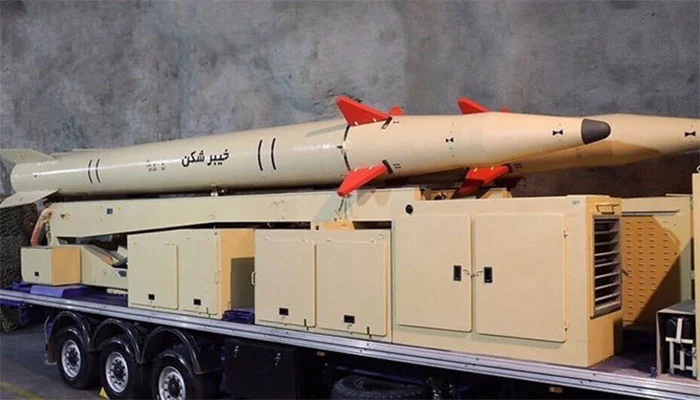
Iran’s Islamic Revolutionary Guard Corps (IRGC) has claimed that it destroyed 11 fighter aircraft at US military bases and killed 200 American personnel within 15 days during what it described as “Operation Nasr II.” The claims were made by IRGC spokesperson Brigadier General Hossein Mohebi during an interview, in which he discussed Iran’s reported military operations against American targets.

According to the IRGC spokesperson, the US defense system had become significantly weakened, allowing Iranian drones and missiles to reach their intended targets without facing major obstacles. He claimed that Iran’s military capabilities had successfully challenged American defense mechanisms and demonstrated the effectiveness of its missile and drone technology.

Brigadier General Mohebi stated that Iran targeted eight military deployment centers during attacks on US positions. He further claimed that, at one location, 20 shelters were destroyed as part of the operations. However, the details and figures presented by the IRGC have not been independently verified.

The IRGC spokesperson also issued warnings to Israel, stating that if it became involved in the conflict again, it should be prepared to face serious consequences. He said that any renewed Israeli participation in military operations would result in a strong response from Iran.

In his remarks, Mohebi also addressed the United Kingdom, warning that a bomber aircraft had recently taken off from a British air base. He stated that if Britain cooperated with the United States in military actions against Iran, British interests could become legitimate targets from Iran’s perspective.

The IRGC official called on the US government to allow journalists to visit the damaged military facilities in order to assess the actual scale of destruction and casualties. He argued that allowing independent media access would reveal the real impact of Iran’s reported attacks.

The statements come amid heightened tensions between Iran, the United States, and their regional allies. Military confrontations and threats between these countries have repeatedly increased concerns about the possibility of wider conflict in the Middle East.

Iran has frequently emphasized its missile and drone capabilities as a key part of its defense strategy. Iranian officials have often stated that their military strength enables them to respond to threats and protect national interests. Meanwhile, the United States and its allies have continued to monitor Iran’s military activities and have expressed concerns about regional security.

The claims made by the IRGC spokesperson represent Iran’s official account of the reported military operation. At the same time, independent confirmation of the number of aircraft destroyed, casualties reported, and damage caused has not been provided.

International observers have warned that continued military exchanges and aggressive statements from involved parties could increase instability in the region. Diplomatic efforts have repeatedly been encouraged as a way to reduce tensions and prevent further escalation.

The situation remains closely watched by governments and security analysts around the world, as any direct confrontation involving major military powers could have significant regional and international consequences. Further developments are expected to determine the accuracy of the claims and the future direction of relations between Iran, the United States, and their allies.

Similar Posts

  • |

    Afghan fathers struggle as girls remain barred from secondary schools

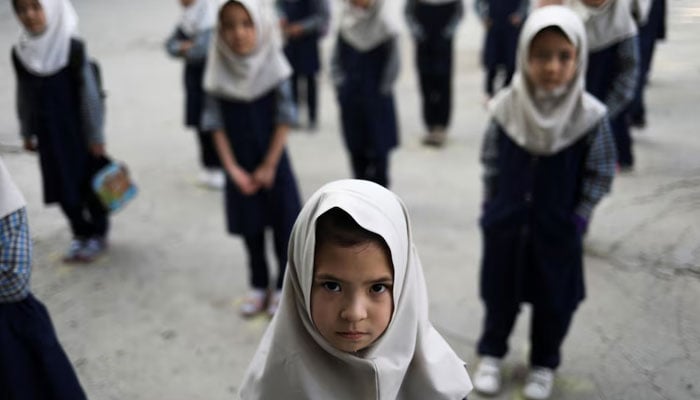
    KABUL: Afghan fathers are facing growing distress as their daughters remain unable to continue their education beyond primary school under restrictions imposed by the Taliban authorities. Families across Afghanistan say the education ban is creating deep emotional and financial pressure. Some fathers are openly questioning the policy, despite their religious beliefs and support for other government measures. The Taliban administration has defended the restrictions as temporary and based on its interpretation of religious principles. However, many Afghan men say they cannot understand why girls should be prevented from receiving secondary education. A United Nations survey conducted last year found that about nine out of 10 Afghan men considered it important for girls to attend secondary school. Nearly two-thirds also viewed supporting a daughter’s education as a religiously commendable act. Girls were barred from secondary schools after the Taliban returned to power in 2021. Women were later also prohibited from attending universities. The restrictions have affected a large number of young Afghan women and girls. For many families, the approaching end of primary education has become a source of fear. Fathers worry that their daughters will lose their chance to pursue higher education and build professional careers. One father, identified as Ahmad, said he had never imagined that his daughters could be forced to stop studying. His wife is a mathematics teacher who is also unable to continue teaching secondary-level students. Ahmad said his eldest daughter is approaching the end of primary school. The family has considered private and underground educational options, but the cost is difficult to manage. Another father, a doctor identified as Mohammad, said he had always wanted his daughters to attend leading universities. He believes women are essential to Afghanistan’s development and should have opportunities beyond household responsibilities. His daughters are approaching the age when they will be forced to leave formal schooling. The family has considered sending them abroad, including to Pakistan, but changing regional circumstances have made that option difficult. Some families have turned to private schools that secretly provide general education alongside religious studies. These institutions often charge high fees and may not provide recognised graduation certificates. Parents also fear that authorities could take action against schools operating outside official restrictions. This leaves families caught between protecting their children and trying to continue their education. Another father from Kandahar said his young daughter has a strong interest in astronomy. She asks questions about the solar system, gravity and science. The girl reportedly asked her father how she could continue learning if she could not study beyond the sixth grade. Her question has become a painful reminder of the limited opportunities available to girls. Some families have moved to Kabul in search of better educational opportunities. Others are relying on online courses, home schooling and secret classes. The restrictions are also affecting children emotionally. Parents say many girls feel frustrated, isolated and uncertain about their future. One father said his teenage daughter often stays at home and becomes deeply upset when she thinks about her education. He said he sometimes leaves the room because he cannot control his emotions and ends up crying privately. Another family has created a home-schooling routine using old secondary-school textbooks. The parents try to maintain a school-like schedule so their daughters can continue learning. However, the parents say home education cannot fully replace a formal school environment. They worry about the lack of recognised qualifications, social interaction and access to trained teachers. Some girls have also begun attending secret classes. Their families remain concerned about possible consequences if the authorities discover them. The prolonged restrictions have created uncertainty for an entire generation of Afghan girls. Parents fear that years without formal education will limit their daughters’ future opportunities

  • | |

    Shein turns to China as Hong Kong IPO nears

    Fast-fashion giant Shein is preparing to make its stock market debut in Hong Kong after years of efforts to list in the United States and Britain, marking a significant shift in how the company presents its relationship with China. The company is expected to raise around $1.7 billion through its Hong Kong initial public offering, with a valuation of about $26.5 billion. That figure is considerably below the company’s valuation in 2022. Shein had previously sought to establish itself as a global company. It moved its headquarters to Singapore in 2021 and promoted plans to expand manufacturing and operations in countries including Brazil, Türkiye and parts of Europe. However, its attempts to secure a Western listing faced regulatory and political obstacles. Chinese authorities were also reportedly involved in blocking earlier efforts to list in New York and London. After shifting its focus to Hong Kong in 2025, Shein founder Sky Xu increased his engagement with Chinese officials and became more involved in regulatory and capital-market discussions inside the country, according to people familiar with the matter. Xu also made a rare public appearance at a business forum in Guangdong earlier this year, where he announced plans for Shein to invest $1.5 billion in the province. He said the company would deepen its presence in Guangdong and develop its smart supply-chain system while contributing to the region’s fashion industry. Shein also opened a research and development centre in Nanjing, the eastern Chinese city where the company was founded in 2012. These moves helped reinforce the company’s economic links with China at a time when Beijing has been paying close attention to companies with major overseas operations. Officials in Guangdong also reportedly highlighted Shein’s contribution to employment and domestic economic activity when engaging with central authorities. The company has sought to emphasise that its main business is overseas rather than in China. Shein does not market its extremely low-priced products to Chinese consumers, allowing it to distance itself from the intense competition among domestic e-commerce platforms. Shein has instead argued that its international operations benefit China by generating foreign currency and supporting Chinese manufacturing and supply chains. The company’s Hong Kong prospectus describes China as the foundation of its global logistics and fulfilment network. Nearly 80 per cent of Shein’s workforce is based in mainland China. The shift comes after growing difficulties in Western markets. In the United States, lawmakers raised concerns over Shein’s supply chains and called for stronger assurances that its products were not linked to forced labour. The company has also faced scrutiny in Europe over competition, product safety and items offered through its online marketplace. At the same time, changes to low-value import rules in the US and Europe have created additional challenges for Shein’s business model, which relies heavily on inexpensive shipments directly to consumers. Analysts say the company’s experience demonstrates how geopolitical tensions are increasingly influencing corporate decisions and stock-market listings.

  • | | |

    Why is the risk of an India-China clash rising in …

    Tensions along the India-China border remain a major security concern, particularly in Arunachal Pradesh despite recent efforts by both countries to improve relations and maintain peace along their disputed frontier. India’s National Security Adviser Ajit Kumar Doval and Chinese Foreign Minister Wang Yi recently held talks in Beijing on the long-running border dispute. The meeting marked the 25th round of discussions between the two countries special representatives on the boundary issue. Following the talks China’s Ministry of Foreign Affairs said Wang Yi emphasized the importance of stable relations between China and India. He described the two countries as important neighbours and emerging economies arguing that improved and stable bilateral relations are in the fundamental interests of both populations. According to the Chinese statement Wang called for a strategic and long-term approach to bilateral relations stronger communication and efforts to reduce differences. He also urged both sides to remove obstacles and promote cooperation as good neighbours and friendly partners. Doval also struck a conciliatory tone during the discussions. According to the Chinese statement he said India and China are ancient civilizations with large populations and important economies adding that the two countries should be viewed as partners rather than rivals. Doval reportedly said that under the guidance of the leadership of both countries India-China relations had returned to the right track. He also said overall peace had been maintained in border areas and that exchanges and cooperation in several fields were making progress. However, the disputed border remains a sensitive issue. Arunachal Pradesh is particularly important because China claims large parts of the Indian-administered territory and refers to the region as “Zangnan” or southern Tibet. India firmly rejects China’s territorial claims and considers Arunachal Pradesh an integral part of the country. The two sides have previously experienced serious confrontations along the Line of Actual Control making border management and military deployments highly sensitive. During the latest talks both sides discussed advancing negotiations on boundary demarcation strengthening border management mechanisms improving procedures and expanding cross-border cooperation. Although the latest diplomatic engagement indicates that both countries are seeking to prevent further escalation unresolved territorial claims and military activity continue to create the possibility of confrontation. The key challenge for India and China will be to maintain dialogue while managing their competing territorial claims and preventing local disputes from developing into a broader military crisis.

  • |

    Police file case against Meta India chief over Modi videos

    Police in the southern Indian city of Hyderabad have registered a criminal case against the head of Meta India over videos shared on Facebook that allegedly portrayed Prime Minister Narendra Modi in an abusive manner. Officials said the cybercrime unit has initiated legal proceedings and is preparing to issue a formal notice to Meta Platforms as part of the investigation. The notice had not been served as of Friday. Authorities have not disclosed further details about the videos but said the case relates to content published on Facebook that allegedly violated Indian laws. Meta did not immediately comment on the development. The latest case adds to growing friction between the Indian government and the social media company over content involving Prime Minister Modi. Earlier this week, India’s Ministry of Electronics and Information Technology summoned Meta representatives after Facebook briefly restricted one of Modi’s posts. The government sought an explanation from the company, calling for accountability over the incident. Meta later stated that the restriction was the result of an unintended error and restored the post. The message was Modi’s first public response to nationwide student protests that eventually led to the resignation of India’s education minister. In recent weeks, the Indian prime minister has faced intense criticism on social media, with users sharing protests, satire, and political commentary related to the ongoing unrest.

  • | |

    Egypt could join expanding Mecca Agreement, says E…

    Turkish President Recep Tayyip Erdogan has said Egypt could become part of the Mecca Agreement in the future, describing the framework as open to participation by additional countries. Speaking to Arab media, Erdogan said the agreement provides for collective action if any participating member comes under external attack. He suggested that the inclusion of Egypt could further broaden the scope of the regional arrangement. Erdogan also said Turkey’s immediate priority is not the European Union, arguing that Europe is currently facing serious shortcomings. He further stressed the need to reopen the Strait of Hormuz, warning that keeping the strategic waterway closed for an extended period would serve no country’s interests.

Leave a Reply

Your email address will not be published. Required fields are marked *