human rights organizations
|

Human rights organizations file federal lawsuit challenging Trump administration sanctions on ICC

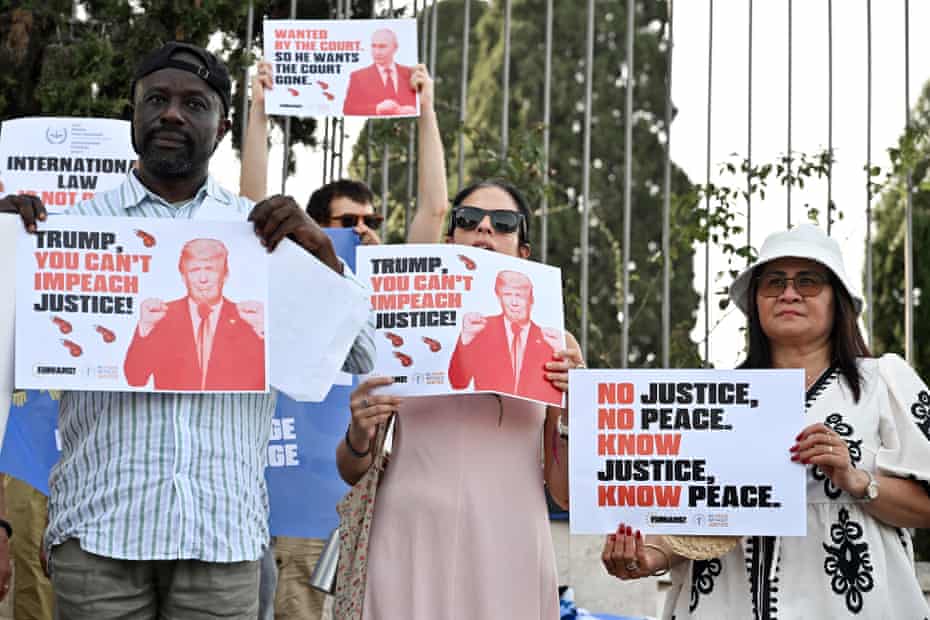
Four prominent non-governmental organizations filed a joint federal lawsuit contesting executive sanctions imposed by the Trump administration on the International Criminal Court, arguing the penalties unlawfully disrupt global war crimes prosecutions.

The legal challenge, brought by Human Rights Watch, the Center for Constitutional Rights, the Open Society Institute, and the American Friends Service Committee, targets an executive order enacted in February 2025. The presidential directive established financial sanctions and travel bans against ICC officials, judges, and affiliated advocacy groups involved in investigating alleged war crimes in Palestinian territory, including cases involving senior Israeli officials.

Attorneys representing the civil rights organizations contend that the broad scope of the sanctions violates First Amendment protections regarding free speech and association. The suit asserts that the threat of severe civil and criminal penalties has effectively forced US-based legal advocates to suspend representation of victims before the tribunal, while halting formal collaborations with sanctioned international rights groups.

The filing marks the latest in a series of legal challenges against the administration’s broader push to limit the jurisdiction of the Hague-based court. Representatives for the US Department of State and Department of Justice did not immediately issue formal statements regarding the lawsuit.

Similar Posts

  • | |

    Jamaat-e-Islami announces nationwide sit-ins on Au…

    Jamaat-e-Islami Pakistan chief Hafiz Naeemur Rehman has announced that his party will hold simultaneous sit-ins across all four provinces on August 16, as part of its campaign against what he described as injustice and oppressive policies. Speaking about the planned demonstrations, Naeemur Rehman said a sit-in would be held outside the Punjab Chief Minister’s House in Lahore. In Khyber Pakhtunkhwa, Sindh and Balochistan, party workers will stage protests outside the respective Governor Houses. The Jamaat-e-Islami chief said the demonstrations would be held at the same time across the country. He called on the rulers to stop what he termed oppression and injustice, saying the government must pay attention to the concerns of the people. Naeemur Rehman said his party would continue raising its voice on issues affecting citizens. He maintained that the government should take practical steps to address public grievances instead of ignoring them. The announcement comes as Jamaat-e-Islami continues its political activities and prepares to mobilise workers in different parts of the country. The party is expected to organise demonstrations in provincial capitals and other major areas as part of its campaign. The JI chief also welcomed the recent defence agreement signed by Pakistan, Türkiye and Saudi Arabia. He described the agreement as a positive development and said stronger cooperation among the three countries could contribute to regional security and closer ties.

  • | |

    14 newborns die after fire erupts in PIMS gynaecol…

    ISLAMABAD: At least 14 newborns have died after a fire erupted in the nursery of the gynaecology ward at the Pakistan Institute of Medical Sciences (PIMS) in Islamabad on Wednesday, according to rescue officials. Initial information suggests that the blaze broke out after an air-conditioning compressor reportedly exploded inside the nursery, rapidly spreading fire and smoke through the facility. Emergency response teams rushed to the hospital and launched an operation to bring the fire under control. Rescue personnel also worked to evacuate patients and secure the affected area. The incident has caused deep concern at the major public-sector hospital, while authorities are expected to investigate the circumstances surrounding the fire and determine whether safety measures and emergency protocols were adequately followed. Further details regarding the victims, the extent of the damage and the official findings are awaited.

  • |

    India’s Independence Day faces protests and boycotts

    NEW DELHI: India’s Independence Day celebrations were met with protests, shutdowns and boycott calls in several regions on Saturday, including Indian Illegally Occupied Jammu and Kashmir (IIOJK) and parts of the country’s northeast. Several political, community and regional groups called for strikes and non-participation in official celebrations, with some organisations observing the day as a “Black Day”. In IIOJK, boycott and shutdown calls were reported ahead of the celebrations. Security was significantly increased in Srinagar, with additional personnel deployed around key locations and routes leading to the main Independence Day venue. The protests and boycott calls were also reported in several northeastern states, including Assam, Nagaland, Manipur and Arunachal Pradesh. In Nagaland, Naga nationalist groups observed August 14 as their own Independence Day, recalling the Naga National Council’s declaration of independence in 1947. The groups continue to emphasise their separate political identity and longstanding demand for self-determination. Naga leader Thuingaleng Muivah reiterated that his group would not compromise on its demands concerning sovereignty, a separate flag and constitution. The Naga Students’ Federation also opposed the mandatory singing of Vande Mataram, citing concerns related to religious freedom and freedom of conscience. In Manipur, several organisations called a 12-hour general strike and shutdown. Black flags were reportedly displayed in parts of the state as groups urged people to stay away from official celebrations. Similar boycott calls were issued in Assam and neighbouring areas. Security forces were placed on alert around sensitive locations and border regions amid concerns over possible disruptions. The developments came as India held nationwide celebrations marking its Independence Day, with Prime Minister Narendra Modi leading the main ceremony in New Delhi. Meanwhile, India’s opposition also remained divided over the official celebrations. Congress president Mallikarjun Kharge and Leader of the Opposition Rahul Gandhi did not attend Modi’s ceremony. Their absence was linked to continuing political differences, including disagreements over seating arrangements and protocol.

  • |

    Kuwait keeps bottled water purchase limit to prevent panic buying

    Kuwait’s Ministry of Social Affairs has confirmed that restrictions on bottled water purchases will remain in place as part of efforts to discourage panic buying and ensure supplies remain available for everyone. Under the current rules, shoppers can buy no more than five cartons of bottled water per invoice at central markets and cooperative society branches across the country. The ministry said all cooperative societies are required to enforce the purchase limit without exception. Officials have instructed the Union of Consumer Cooperative Societies to make sure every branch follows the directive and prevents customers from making unusually large purchases. Authorities believe the measure will help stop unnecessary stockpiling that could leave other shoppers without access to essential supplies. According to officials, the restriction is purely a precaution and should not be seen as a sign of a shortage. The ministry stressed that bottled water production remains stable and factories continue to operate at full capacity. Regular deliveries are being made to markets and cooperative stores, ensuring that supplies remain sufficient to meet consumer demand. Officials explained that the temporary limit is designed to promote fair distribution and prevent panic buying during the current situation. They said excessive purchasing by a small number of customers can quickly create empty shelves, increase crowding at stores and trigger unnecessary public concern even when supplies remain adequate. The ministry also confirmed that it is closely monitoring the implementation of the policy. Cooperative societies that fail to follow the instructions or violate the regulations could face action from the authorities. Officials urged retailers to strictly apply the purchase limit so that bottled water remains available to all consumers. Residents have been encouraged to buy only the amount they genuinely need and avoid hoarding. The ministry also warned against spreading unverified information or rumors that could create unnecessary fear and encourage panic buying among the public. Officials emphasized that responsible purchasing will help maintain steady supplies and prevent disruption in the market. In a separate development, Kuwait’s Ministry of Commerce and Industry has introduced a new legal framework for e-commerce platforms to improve consumer protection and regulate the country’s rapidly growing online marketplace. The regulations were introduced under Ministerial Resolution No. 109 of 2026 and officially came into force on July 8. They apply to all digital platforms involved in selling, ordering and delivering products within Kuwait. The new rules clearly define the responsibilities of online platforms, merchants, delivery companies and consumers. Officials said the regulations are intended to create a more transparent business environment while encouraging fair competition and supporting future investment in the digital economy. Under the updated framework, companies operating electronic platforms must obtain the required licences and comply with existing laws. They are also required to strengthen cybersecurity measures and protect their digital systems and customer information from cyberattacks, data breaches and misuse. Authorities believe the updated regulations will help build greater public confidence in online shopping while ensuring higher standards of safety and accountability across Kuwait’s expanding e-commerce sector.

Leave a Reply

Your email address will not be published. Required fields are marked *