myanmars min aung
|

Myanmar’s Min Aung Hlaing criticizes ASEAN, sets out government agenda

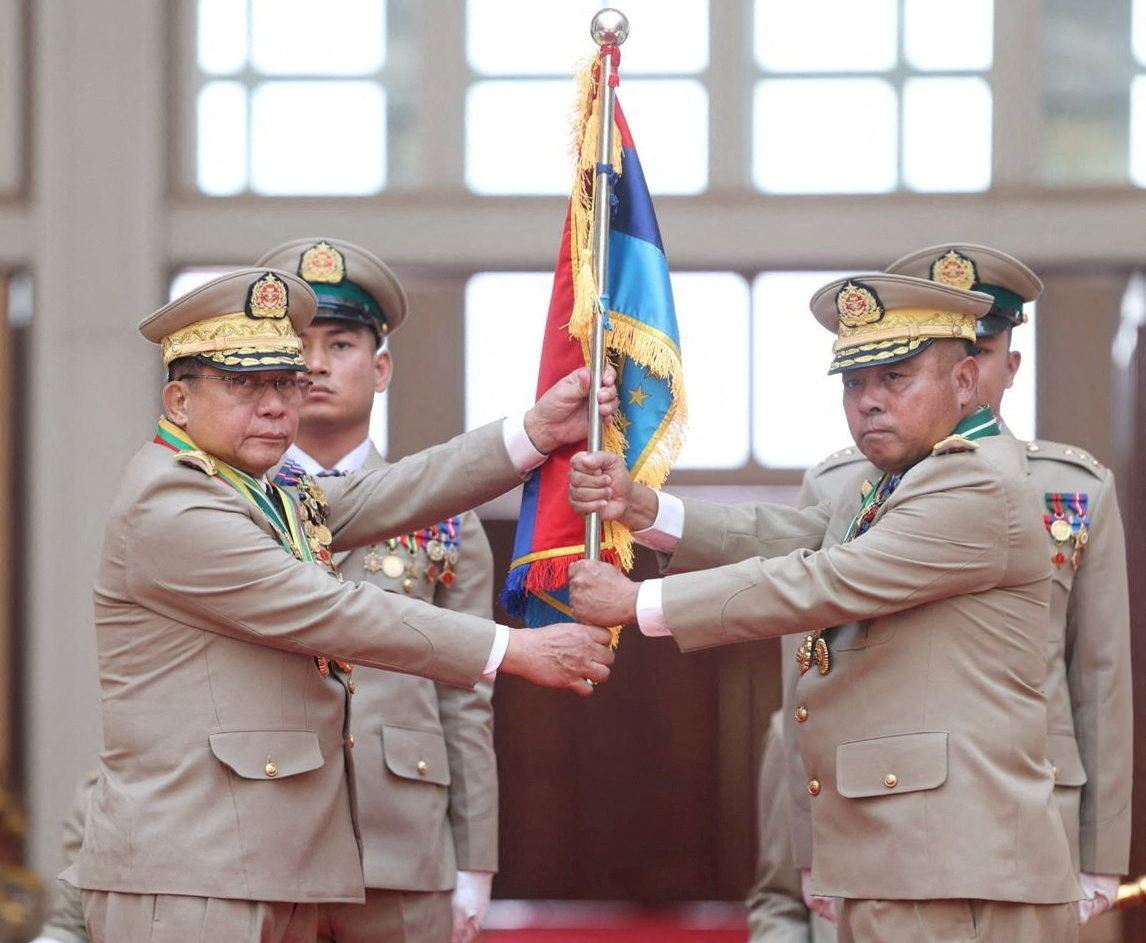
Nearly four months after taking office, Myanmar’s junta chief turned president Min Aung Hlaing on Friday, July 31, criticized the regional ASEAN bloc’s peace plan and outlined his government’s plans for the war-torn Southeast Asian country.

Myanmar was plunged into turmoil in February 2021 when the military ousted an elected government led by Nobel Peace Prize winner Aung San Suu Kyi, sparking protests that expanded into a protracted civil war, killing some 100,000 people and displacing millions.

At the turn of this year, the military engineered a widely criticized election won by an army-backed party that allowed Min Aung Hlaing to transition into a civilian role.

Following are some key points from his speech to parliament:

  • Dismissing ASEAN’s peace plan — known as the “Five Point Consensus” — Min Aung Hlaing said the 11-member bloc has discriminated against Myanmar.
  • “We have been patient. We will respond to non-constructive actions on a case-by-case basis,” he said, without referring to any specific member of the Association of Southeast Asian Nations.
  • His administration will hold by-elections in 2027 in 172 constituencies unable to vote during the December-January polls because of the ongoing unrest.
  • The government will enhance the capacity of the military and police, while continuing to implement a conscription law, he said.
  • His administration has invited rebel groups for talks without preconditions and, so far, has met with 13 ethnic armed organisations (EAOs).
  • The government is working to stop money laundering and arms smuggling by EAOs as well as cracking down on drug trafficking and online scam centres, Min Aung Hlaing said.
  • The government is prioritizing the 1,400-km (870-mile) India-Myanmar-Thailand trilateral highway project, as well as the 410-km (254-mile) Mandalay-Muse railway project to reach the border with China.
  • “The goal is to export goods to international markets in a short time at low cost,” Min Aung Hlaing said.
  • The government is currently working on 10 power generation projects, including the controversial Myitsone dam, and efforts are also underway to build a nuclear power plant.
  • His government will allocate 10% of the national budget for the education sector in the next fiscal year and up to 15% in the 2028-2029 fiscal year.
  • The government is focusing on the tourism and agriculture sectors, and aims toboost domestic cotton production via loans and technical assistance for farmers, he said.
  • Large numbers of young people, aged between 18 and 34, have been leaving the country, impacting economic development, he said.
  • The military’s conscription law is a major factor for this exodus, Reuters has previously reported.
  • “I will take two years to build momentum for constructing a new nation,” he said. “I will also take three years to execute this build-up at full speed.”

Rappler.com

Similar Posts

  • |

    North Korean hackers develop AI tools for cyberattacks

    SEOUL: A North Korean-linked hacking group has reportedly expanded its use of artificial intelligence to strengthen cyberattacks, automate operations and analyse stolen data. The group, identified as Kimsuky, has developed and collected a range of AI-related tools that could help its operators conduct attacks more efficiently, according to a South Korean cybersecurity company. The company said it discovered infrastructure linked to Kimsuky containing several programs designed to run and manage artificial intelligence models locally. These included Ollama, GPT4All and Msty. The hackers also appeared to be using retrieval-augmented generation technology. The system can help AI models search and process large collections of documents. Researchers said the use of locally operated AI models could allow the group to analyse sensitive information without sending data to external AI services. This could give hackers greater control over stolen material and reduce their reliance on third-party platforms. The investigation also uncovered AI agent development frameworks, speech-to-text software and an AI-assisted coding tool called Cursor. According to the cybersecurity firm, the findings indicate that Kimsuky may be moving beyond the simple use of generative AI for creating phishing messages. The group could now be seeking to integrate existing AI models into different stages of its cyber operations. These may include malware development, stolen-data analysis and attack automation. Researchers also identified documents related to finance and cryptocurrency on the infrastructure. Some of the files appeared to have been generated using artificial intelligence. The documents were designed to look like legitimate investment reports and other professional workplace material. Such files could potentially be used as decoys or to make malicious campaigns appear more credible. The findings have not been independently verified. However, cybersecurity researchers and government agencies have repeatedly linked North Korean state-backed groups to international cyber operations. North Korean cyber units have been accused of conducting espionage campaigns, stealing money and targeting cryptocurrency-related assets. Authorities in the United States and South Korea have previously warned about the activities of such groups. Kimsuky has long been associated with cyber-espionage operations targeting governments, organisations and individuals. The group has also been accused of gathering intelligence to support North Korea’s strategic interests. The latest findings point to a growing role for artificial intelligence in cyber operations. Security researchers have warned that AI tools can make phishing campaigns more convincing and help attackers process information and develop malicious software more quickly.

  • |

    Antarctic cold blast grips New Zealand’s South Island

      A powerful cold wave sweeping north from Antarctica has engulfed New Zealand’s South Island, bringing freezing temperatures, fierce winds, and unusually heavy snowfall that has severely disrupted daily life across the region. The city of Dunedin has been among the hardest hit, experiencing strong icy winds accompanied by significant snowfall. Residents woke up to streets, rooftops, and vehicles covered in several inches of snow, creating hazardous conditions for both pedestrians and motorists. The unusual weather has transformed the city into a winter landscape, while also causing widespread travel disruptions. Authorities reported that the heavy snowfall has blanketed roads, making many routes dangerous and, in some areas, impassable. Snowplows and emergency crews have been deployed to clear major highways and ensure safe access for emergency services. However, officials have urged residents to stay indoors unless travel is absolutely necessary, warning that icy roads and reduced visibility could lead to accidents. Public transportation has also been significantly affected. All bus services in Dunedin were suspended due to unsafe road conditions, leaving commuters stranded and forcing many schools, businesses, and public institutions to adjust their schedules. Local authorities continue to monitor the weather closely before deciding when transportation services can safely resume. The severe weather has also disrupted travel between New Zealand’s North and South Islands. Ferry services connecting the two islands have been suspended because of dangerous sea conditions caused by the powerful Antarctic storm system. Strong winds and rough waves have made navigation unsafe, affecting both passenger and freight transport. The suspension of ferry operations is expected to delay the movement of goods and impact travel plans for thousands of people. Meteorologists say the cold outbreak originated from Antarctica and pushed unusually frigid air across southern New Zealand. Such weather systems are capable of producing intense snowfall, especially when cold Antarctic air interacts with moisture over the surrounding oceans. While snowfall is common during winter in parts of the South Island, the intensity of this storm has been described as exceptional for several areas. Emergency management agencies have advised residents to prepare for continued freezing conditions. People have been encouraged to keep emergency supplies at home, avoid unnecessary travel, dress warmly, and check on elderly neighbors or vulnerable family members who may require assistance during the cold spell. The harsh weather has also raised concerns for farmers, who are working to protect livestock from freezing temperatures and strong winds. Agricultural authorities have urged farmers to provide adequate shelter and food for animals until conditions improve. Forecasters predict that the Antarctic cold blast may continue to affect parts of the South Island over the coming days, with additional snowfall and icy conditions possible in higher elevations. Officials remain on high alert as they assess the impact of the storm and work to restore essential services. Residents are advised to stay informed through official weather updates and follow safety instructions until the severe weather subsides.

  • | |

    FIFA bans Argentina players following World Cup final clash with Spain

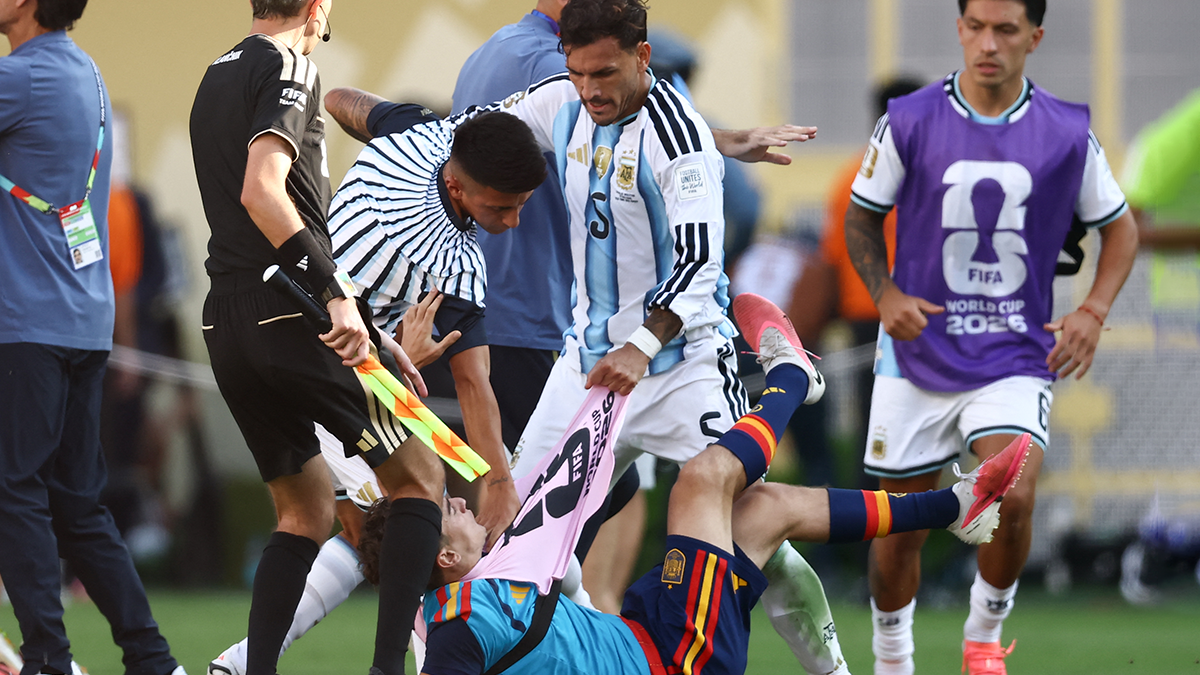
      FIFA has imposed lengthy suspensions and heavy fines on several Argentina players following a heated confrontation with Spain players after the World Cup final, the world football governing body announced on Friday. Argentina have also been ordered to play their next two home international matches behind closed doors. However, FIFA has suspended one of those two matches, meaning the full punishment will only be enforced if the team commits another disciplinary offence during the relevant period. The most severe punishment has been handed to Argentina midfielder Leandro Paredes. The Boca Juniors player has been suspended for 10 international matches and fined $90,000 for his involvement in the post-match altercations. Paredes was accused of grabbing Spain defender Eric Garcia by the throat during the confrontation. He was also involved in an incident with Spain midfielder Gavi, whom he wrestled to the ground while holding the substitute player’s bib. His actions contributed to the escalation of tensions following the final. Spain defeated Argentina 1-0 in the World Cup final at MetLife Stadium in New Jersey on July 19, securing the title after a closely contested encounter. The post-match celebrations, however, were overshadowed by clashes involving members of both teams. Argentina defender Nahuel Molina has also received a significant punishment. He has been banned for seven international matches and fined $90,000 for his role in the incidents. His teammate Thiago Almada received a comparatively lighter sanction, with FIFA suspending him for one international match and imposing a $30,000 fine. Spain midfielder Gavi has also been punished for his involvement in the confrontation and received a similar one-match suspension and financial penalty. The disciplinary action against Argentina extends beyond individual players. The Argentine Football Association (AFA) has been fined approximately $321,000 for several violations of FIFA’s disciplinary regulations. These include using a sporting event to make demonstrations of a non-sporting nature, team misconduct, and discriminatory chants and gestures by supporters. The controversy also relates to an incident during Argentina’s World Cup semi-final against England. After Argentina secured a 2-1 victory in a tense encounter, several players displayed a banner carrying the message, “The Falklands are Argentine.” The gesture referred to the disputed Falkland Islands, known as the Islas Malvinas in Argentina. The Falklands War began in 1982 after Argentine forces invaded the British-controlled territory in the South Atlantic. Then-British Prime Minister Margaret Thatcher ordered a military task force to retake the islands. The 74-day conflict, which lasted from April to June 1982, resulted in the deaths of 655 Argentine and 255 British servicemen, while three islanders were also killed. The AFA has rejected the disciplinary measures and confirmed that it plans to appeal the suspensions and fines imposed by FIFA. The appeal could determine whether the punishments remain unchanged or are reduced following further review.

  • | | |

    Ravi Valecha reveals childhood abuse during his ti…

    Former child actor Ravi Valecha has opened up about a painful chapter of his childhood revealing that he experienced sexual abuse while working in the Indian film industry. Valecha became known for portraying younger versions of Amitabh Bachchan’s characters in several popular Hindi films. Speaking to Indian media, Valecha said the incidents began when he was around eight years old. He recalled that the abuse happened three times and said it was extremely difficult for him to tell anyone what he was experiencing. Valecha described one incident that allegedly took place at a dubbing studio. He said an older person associated with the film industry behaved inappropriately toward him. He also recalled another distressing experience involving a young secretary when he was around 11 or 12 years old. The former child actor said fear kept him silent for years. He was worried about speaking out because his work required him to continue travelling with people connected to the industry. He also feared that his parents might not believe him if he told them what had happened. As a result, Valecha carried the memories and emotional pain into adulthood. He said the anger connected to those experiences eventually affected his personal life and made it difficult for him to move beyond the past. After years of struggling with the trauma, Valecha sought professional help. He said he underwent six months of therapy, which helped him process his childhood experiences and begin recovering emotionally. Valecha was a well-known child performer during the 1970s and 1980s. He reportedly appeared in around 300 films made in different Indian languages. During his career he frequently played childhood versions of characters portrayed by Amitabh Bachchan. His film credits include Coolie, Amar Akbar Anthony, Mr. Natwarlal, Fakira, Tumhare Bina, Khud-Daar, Nastik, Parichay, Yaadon Ki Baaraat, Karz, Seeta Aur Geeta and Desh Premee. His appearance in Coolie, released in 1983, remains one of the notable highlights of his childhood acting career. Working alongside major Bollywood stars made Valecha a familiar face to audiences at a young age. Despite his extensive work in films Valecha eventually left acting. His recent decision to speak publicly about his experiences has brought attention to the challenges faced by children working in the entertainment industry. His account also highlights the importance of creating safe working environments for young performers and ensuring that children have trusted adults and professional support available when they experience abuse or exploitation. Valecha’s story serves as a reminder that childhood fame and professional success do not necessarily protect young performers from difficult experiences behind the scenes. By discussing his past after many years he has also encouraged greater awareness of the emotional impact that childhood trauma can have later in life.

  • |

    Representative Max Miller defies Republican pressure to remain on Ohio ballot despite abuse allegations

    Republican Representative Max Miller has confirmed he will remain in the race for Ohio’s 7th Congressional District after letting Saturday evening’s withdrawal deadline pass, ignoring widespread calls from fellow party leaders to step down amid abuse allegations. Miller has repeatedly denied accusations raised by his former wife, Emily Moreno. A spokesperson for the congressman confirmed on Sunday that he intends to proceed as a candidate in the upcoming November 3 midterm election. The ongoing controversy threatens Republican efforts to secure a congressional seat long considered a GOP stronghold. Party officials had privately lobbied Miller to abandon his campaign out of concern that the scandal could harm Republican prospects in the region. Allies of President Donald Trump also advised the former president to intervene and urge Miller to exit the contest. Prominent Ohio Republicans have publicly disavowed Miller’s candidacy. US Senator Bernie Moreno, Miller’s former father-in-law, stated that Miller should not serve in Congress, describing him as a danger to his daughter. Ohio Senator Jon Husted also called on Miller to withdraw from the ballot and resign his current seat immediately. Miller acknowledged in a statement last week that Trump characterised his re-election battle as tough, but maintained he would stay in the race to clear his name. The political fallout deepened after Miller released hundreds of private text messages, photos, and video files intended to bolster his defence. His legal team subsequently acknowledged that the archive inadvertently contained sensitive family information. Miller will face Democratic nominee Brian Poindexter, a local ironworker, in the November 3 election.

Leave a Reply

Your email address will not be published. Required fields are marked *