set propose ban
| | | | |

EU is set to propose ban on social media and AI chatbots for under-15s

BRUSSELS, Belgium – The European Union will propose a ban restricting under 15s from social media, video sharing platforms, AI chatbots, and online games, in the most sweeping plan yet to protect children from online dangers, a European Commission document seen by Reuters shows.

Concerns have mounted globally about the impact on children’s health and safety of major outlets, including Meta’s Facebook and Instagram, TikTok, Google’s, YouTube and ChatGPT.

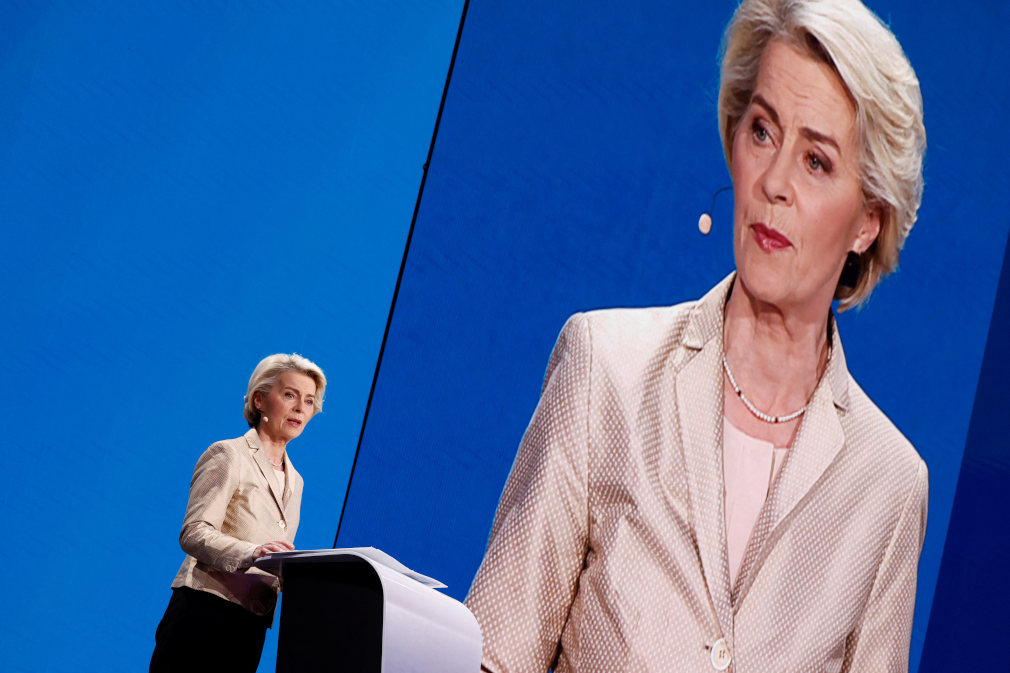
The EU proposal is part of an EU Kids Act that European Commission President Ursula von der Leyen and EU tech chief Henna Virkkunen will present on Thursday, September 17. The former may announce some details in her State of the Union address on upcoming EU policy on Wednesday.

“The Union’s approach should allow minors to benefit from the huge potential of digital services, while protecting them from abuse and exploitation. It needs to limit the access of tech companies to our children, and not the other way around,” the document said.

The Commission’s proposal, which will also cover video gaming platforms, allows for gradual access to the various services according to age, while the obligations imposed on the companies will depend on the type of service and the age of the children.

The Commission declined to comment.

Companies would have to pay a supervisory fee

According to the document, companies will have to pay a supervisory fee to fund regulators’ enforcement and supervision.

Children from 15 onwards can set up their own accounts under the proposal, while children between 13 and 14 can ask parents to open introductory accounts for social media and video-sharing platforms under parental control and with limited contacts and strict time limits.

Accounts for children between 3 and 12 will be fully controlled by parents and will only be for child-friendly services with strict safety standards, the document said. Under-3s would have no access to the services.

Details may still change ahead of the announcement.

The Commission will need to work out the draft with EU countries and the European Parliament in the coming months before it can become law.

The draft seen by Reuters sets out requirements for companies, including avoiding addictive designs and harmful feeds.

They would also have to provide tools to enable children to easily report harmful content and effective parental control tools.

Social media and video-sharing platforms will be required to verify children’s age when a user opens a new account while online games platforms will have to verify children’s age before they can download games.

The companies say they take precautions and many set a minimum age of at least 13 to sign up to social media platforms. – Rappler.com
Similar Posts

  • | | | |

    Trump reveals why Secret Service changed his plane

    WASHINGTON: US President Donald Trump has confirmed that his surprise plane switch during his departure from Turkey last month was carried out on the advice of the Secret Service, amid concerns over a potential threat linked to Iran. Trump said the aircraft he had initially been expected to travel on could have faced a “greater risk,” adding that he does not trust Iran. His remarks came after reports revealed that his departure from Ankara following the NATO summit involved an elaborate security operation. According to reports, Trump publicly boarded Air Force One in front of cameras, creating the impression that he would fly out of Turkey on the presidential aircraft. However, he was later secretly transferred to a smaller C-32A military aircraft. The move was reportedly carried out using an airport catering truck to conceal his transfer. Journalists and some White House staff reportedly remained under the impression that Trump was aboard Air Force One. Reporters were also instructed to keep their window shades closed, adding to the secrecy surrounding the operation. Trump said he followed the Secret Service’s instructions when the aircraft change was made and did not challenge the security decision. The unusual operation reportedly stemmed from heightened concerns over Iranian threats against the US president. Trump’s latest comments have now confirmed key details of the previously undisclosed flight arrangement. The episode has drawn attention because of the extraordinary measures used to conceal the president’s movements. It also highlights the heightened security concerns surrounding Trump amid continuing tensions between Washington and Tehran. For a president whose movements are normally tracked closely by the media and security officials, the covert transfer from one aircraft to another remains one of the most unusual presidential travel episodes of the year.

  • |

    Youth protests challenge Modi’s image ahead of key state elections

    A growing youth protest movement in India has delivered one of the biggest political setbacks to Prime Minister Narendra Modi’s government in recent years, raising questions about the ruling Bharatiya Janata Party’s appeal among younger voters ahead of crucial state elections. What began as demonstrations over alleged examination paper leaks has developed into a wider expression of frustration over unemployment, education and economic uncertainty. The protests were led by the Cockroach Janta Party, or CJP, a youth movement that quickly gained massive attention on social media. Within days of launching its campaign in May, the group attracted around 22 million followers on Instagram, most of them from Generation Z. The movement demanded the resignation of Education Minister Dharmendra Pradhan after allegations that a medical entrance examination had been compromised. As protests spread across India, thousands of students gathered in central Delhi despite heavy police action. In an effort to calm public anger, Prime Minister Modi posted a rare selfie video on Instagram, saying he understood the concerns of young people and promising action to address their grievances. However, the message failed to ease the demonstrations. Days later, Education Minister Pradhan resigned, fulfilling the protesters’ main demand and handing the movement a significant political victory. The resignation is considered unusual because Modi’s government has generally resisted removing senior ministers in response to public pressure. Political observers say the outcome has encouraged many young Indians who believe their voices can influence government decisions. Analysts say the protests extend far beyond the issue of examination leaks. Many young people are increasingly worried about unemployment, rising competition for limited jobs and the possible impact of artificial intelligence on employment opportunities, particularly in India’s large information technology and business services sectors. While the exam controversy sparked the demonstrations, experts believe it exposed much deeper concerns among the country’s youth. Political analyst Amitabh Tiwari said the paper leak became a symbol of wider frustration felt by many young Indians who are anxious about their future. He noted that disappointment over employment prospects and economic opportunities has created growing dissatisfaction that cannot be ignored. Senior government officials have acknowledged these concerns. Defence Minister Rajnath Singh said the government remains committed to understanding students’ problems and ensuring that their concerns are addressed. However, critics argue the ruling party has struggled to connect with younger generations, particularly on social media platforms where political discussions are rapidly evolving. Demographic trends also highlight the challenge facing India’s political establishment. People between the ages of 18 and 40 make up roughly 40 percent of the country’s population but hold only a small share of seats in the lower house of Parliament. The average age of members of the federal cabinet remains above 60, leading some analysts to argue that younger voices are underrepresented in national decision making. Although the CJP is not officially a political party, opposition groups have openly supported the student protests and attempted to capitalize on growing public dissatisfaction. The first major political test could come during next year’s state elections in Uttar Pradesh, Punjab and Gujarat. The BJP currently governs both Uttar Pradesh and Gujarat, making those contests particularly important. Some analysts believe the movement could have an even greater impact if it eventually enters electoral politics before the 2029 national election. CJP founder Abhijeet Dipke has said no decision has been made about transforming the movement into a political party, but its rapid popularity has already attracted widespread attention across the political spectrum. Observers also believe political campaigning in India is changing. For years, the BJP built a strong digital presence on platforms such as X and Facebook. However, younger audiences have increasingly shifted to Instagram, where authenticity and informal communication often attract greater engagement than carefully managed political messaging. While the BJP has around 10 million Instagram followers, the CJP gained more than twice that number in only a few days. Modi personally continues to command a much larger audience across multiple social media platforms, but analysts say younger users are responding differently to newer forms of political communication. Writers and political commentators argue that Generation Z is less influenced by traditional political authority and more willing to openly question established leaders. They believe successful politicians will increasingly need to engage directly with young voters rather than relying on conventional campaign strategies. For Modi, the protests represent a reminder that public expectations are changing. During much of his time in office, he built a reputation as a decisive leader who rarely reversed government decisions. Political analysts now say that demonstrating a willingness to listen and respond to public concerns may become increasingly important as India moves toward another cycle of state and national elections.

  • Persona 5 Can Now Cross Over With Warhammer 40k and Invincible

    It’s always fun to see two of your favorite franchises cross over, whether that be in the realm of games, comics, TV, or film, and we’ve had the chance to see some truly wild combinations over the past few years. Whether that’s Power Rangers and Teenage Mutant Ninja Turtles, DC and Marvel, or Godzilla and […]

  • |

    Trump aide impersonator texts UK PM, sparking security scare

    A security mystery has emerged after an individual posing as White House Chief of Staff Susie Wiles reportedly exchanged text messages with UK Prime Minister Andy Burnham. The communications have raised concerns in both Britain and the United States. Officials are examining how the impersonator was able to establish contact with the British prime minister. According to reports, Burnham received a limited number of messages from the individual while he was campaigning for office. The communication reportedly continued for a short period after he became prime minister. Sources familiar with the matter said the messages were ultimately considered to be of no significant consequence. However, the incident triggered concerns because the impersonator claimed to represent a senior White House official. The matter was serious enough for the British embassy in Washington to raise the issue directly with the White House. British officials initially considered the possibility that the real Susie Wiles’ phone, contact information or communications may have been compromised. Authorities therefore examined whether the incident involved a wider security breach. The identity of the person behind the impersonation remains unclear. The incident has highlighted the growing risks posed by sophisticated impersonation scams. High-profile political figures are increasingly being targeted by individuals who attempt to gain their trust by pretending to be senior officials or influential public figures. Similar incidents have previously involved prominent American politicians and business leaders. In such cases, scammers have used false identities and digital communications to establish contact with their targets. The latest case has attracted particular attention because of the positions held by the people involved. Wiles is a senior figure within the White House, while Burnham is the UK prime minister. Despite the security concerns, there is currently no indication that sensitive information was exchanged during the messages. Sources described the content of the communications as having no significant impact. Downing Street has declined to discuss the specific details of the incident. British officials have maintained that national security matters are not normally discussed publicly. The White House has also declined to comment on the reported communications or the identity of the impersonator. The incident nevertheless raises questions about how the individual obtained access to Burnham and successfully presented themselves as a senior White House official. Officials are expected to examine the communication trail and other available evidence to determine how the impersonation occurred. The case also highlights the challenges faced by governments in verifying digital identities. Text messages and other online communications can make it easier for individuals to impersonate senior officials, particularly when they use convincing names, photographs or other identifying details. For now, the mystery surrounding the impersonator’s identity remains unresolved. Authorities have not publicly identified the person responsible or confirmed whether the incident was part of a broader campaign.

Leave a Reply

Your email address will not be published. Required fields are marked *