set propose ban
| | | | |

EU is set to propose ban on social media and AI chatbots for under-15s

BRUSSELS, Belgium – The European Union will propose a ban restricting under 15s from social media, video sharing platforms, AI chatbots, and online games, in the most sweeping plan yet to protect children from online dangers, a European Commission document seen by Reuters shows.

Concerns have mounted globally about the impact on children’s health and safety of major outlets, including Meta’s Facebook and Instagram, TikTok, Google’s, YouTube and ChatGPT.

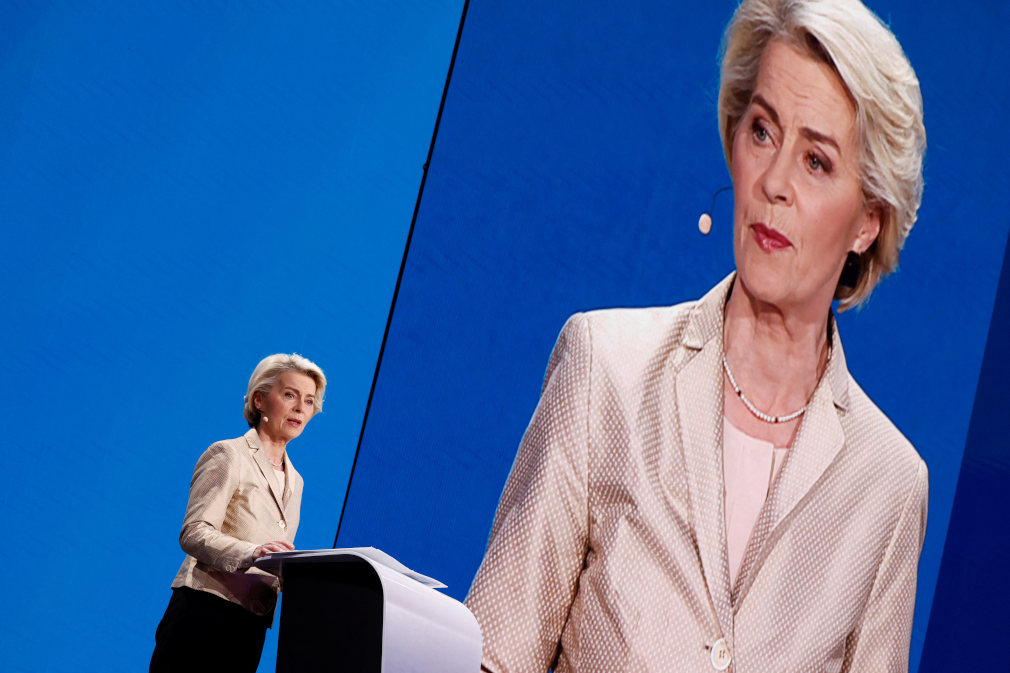
The EU proposal is part of an EU Kids Act that European Commission President Ursula von der Leyen and EU tech chief Henna Virkkunen will present on Thursday, September 17. The former may announce some details in her State of the Union address on upcoming EU policy on Wednesday.

“The Union’s approach should allow minors to benefit from the huge potential of digital services, while protecting them from abuse and exploitation. It needs to limit the access of tech companies to our children, and not the other way around,” the document said.

The Commission’s proposal, which will also cover video gaming platforms, allows for gradual access to the various services according to age, while the obligations imposed on the companies will depend on the type of service and the age of the children.

The Commission declined to comment.

Companies would have to pay a supervisory fee

According to the document, companies will have to pay a supervisory fee to fund regulators’ enforcement and supervision.

Children from 15 onwards can set up their own accounts under the proposal, while children between 13 and 14 can ask parents to open introductory accounts for social media and video-sharing platforms under parental control and with limited contacts and strict time limits.

Accounts for children between 3 and 12 will be fully controlled by parents and will only be for child-friendly services with strict safety standards, the document said. Under-3s would have no access to the services.

Details may still change ahead of the announcement.

The Commission will need to work out the draft with EU countries and the European Parliament in the coming months before it can become law.

The draft seen by Reuters sets out requirements for companies, including avoiding addictive designs and harmful feeds.

They would also have to provide tools to enable children to easily report harmful content and effective parental control tools.

Social media and video-sharing platforms will be required to verify children’s age when a user opens a new account while online games platforms will have to verify children’s age before they can download games.

The companies say they take precautions and many set a minimum age of at least 13 to sign up to social media platforms. – Rappler.com

Similar Posts

  • |

    13 migrants missing after boat sinks off Tunisia

    TUNIS: At least 13 Tunisians are missing after a migrant boat sank off the country’s coast while attempting to reach Italy, according to a migrant rights official. Two people were rescued following the incident, but one of them was reported to be in critical condition. The head of the Tunisian Observatory for Human Rights, Mostafa Abdelkebir, said the boat had departed early Thursday. One of the survivors told rescuers that the passengers had spent hours stranded at sea after the vessel overturned. Rescue efforts were launched after the boat sank, but the whereabouts of the missing migrants remained unknown. The incident highlights the continuing dangers faced by migrants attempting to cross the Mediterranean in overcrowded or poorly equipped vessels. Tunisia has been a major departure point for migrants seeking to reach Europe, particularly Italy. However, the number of departures from the country has declined significantly over the past two years as authorities have strengthened maritime surveillance and border controls. The tighter measures have received financial and technical support from European countries, particularly Italy, as part of efforts to curb irregular migration across the Mediterranean. The European Union’s migration cooperation with Tunisia has also faced criticism from international rights organisations. Human Rights Watch, Amnesty International and other humanitarian groups recently accused the EU-Tunisia arrangement of contributing to serious abuses against migrants and asylum seekers. The organisations have urged the EU to suspend funding for migration and border-control operations involving Tunisian security forces. Tunisian authorities have defended their position, saying the country is facing intense pressure from the growing number of migrants attempting to use its territory as a route towards Europe. The central Mediterranean remains one of the most dangerous migration routes in the world. Migrants from African and Middle Eastern countries frequently attempt the journey in boats that can be overcrowded, poorly maintained or unsuitable for long sea crossings.

  • 5 Most Impressive Games Created by a Single Developer & #1 Is Still Getting Updates

    The video game industry is seeing a massive rise in indie games, with some of the greatest titles being created by small teams. What makes this even more impressive is that some of these games are created by a single individual. Compared to AAA gaming, which features teams of hundreds or even thousands of artists, […]

  • |

    Tipu Usman seeks closer media engagement to strengthen Pakistan’s UK diaspora outreach

    LONDON: Pakistan’s High Commissioner to the United Kingdom, Tipu Usman, has called for closer engagement with Pakistani media in the UK to strengthen outreach to the Pakistani diaspora and ensure the community remains informed about initiatives and reforms aimed at facilitating overseas Pakistanis. The High Commissioner made the remarks during an introductory meeting with representatives of Pakistani media houses working in London. Tipu Usman appreciated the positive role played by Pakistani media in the UK during Marka-e-Haq, particularly its contribution to keeping the Pakistani diaspora informed about important national developments and issues affecting the community. He said the Pakistan High Commission in London remained committed to working closely with Pakistani media representatives to enhance outreach and effectively communicate initiatives and reforms that would facilitate members of the Pakistani diaspora across the UK. The High Commissioner stressed the importance of effective communication and engagement with the Pakistani community, saying the media could play an important role in ensuring that information about government initiatives and services reaches overseas Pakistanis in a timely and effective manner. The representatives of Pakistani media houses welcomed Tipu Usman on assuming his responsibilities as Pakistan’s High Commissioner to the UK and conveyed their best wishes for his tenure. During the interactive session, media representatives shared various suggestions aimed at improving the High Commission’s outreach to the Pakistani diaspora and strengthening efforts for the welfare of the Pakistani community residing across the United Kingdom. The participants discussed the importance of maintaining regular engagement between the High Commission and Pakistani media to improve communication with the community and provide greater awareness of initiatives, services and reforms relevant to overseas Pakistanis. The meeting provided an opportunity for an open exchange of views on ways to further strengthen coordination between the Pakistan High Commission, Pakistani media and the wider Pakistani diaspora in the UK. The High Commissioner welcomed the suggestions put forward by the media representatives and reaffirmed the High Commission’s readiness to work collaboratively with the media for more effective engagement with the Pakistani community across Britain.

  • |

    CBI charges husband, mother-in-law in Bhopal woman’s suicide case

      The Central Bureau of Investigation (CBI) has filed a chargesheet against the husband and mother-in-law of 31-year-old Tewisha Sharma, who died by suicide at her in-laws’ home in Bhopal, India, just months after her marriage. The agency has accused the two of subjecting her to continuous mental harassment and abetting her suicide. Tewisha was found hanging at her in-laws’ residence in the Katara Hills area of Bhopal on May 12. Her family had alleged that she was being harassed over dowry and had claimed that she may have been murdered. Tewisha and her husband, Samarth Singh, had married by choice after meeting through a dating application in 2024. They got married in December 2025. In its 30-page chargesheet submitted to the court on August 14, the CBI named Samarth Singh and his mother, Giri Bala Singh, as accused. According to the investigation, the couple allegedly subjected Tewisha to sustained emotional and psychological abuse. The agency alleged that her husband used derogatory language while referring to her past relationships, while her mother-in-law allegedly supported her son and ignored Tewisha’s complaints. The chargesheet states that Tewisha sent a WhatsApp message to her sister-in-law only hours before her death, asking her to let her die peacefully. A few minutes later, CCTV footage reportedly showed her walking towards the roof of the house. At around 9:41 p.m., Tewisha called her father while crying. According to the chargesheet, she told him that her husband had become extremely aggressive and violent and that she was frightened. She asked her parents to come to her immediately. She later spoke to her mother on the phone, but the call was disconnected. At approximately 10:23 p.m., CCTV footage allegedly showed Samarth and his mother going towards the roof. Tewisha was subsequently brought downstairs and taken to AIIMS Bhopal, where she was declared dead at around 10:55 p.m. The CBI also alleged that Tewisha had shares worth approximately INR 2 million in her demat account. According to the chargesheet, her husband and mother-in-law were pressuring her to transfer the money into a joint bank account. Tewisha allegedly refused, saying the money belonged to her father. Several WhatsApp messages were also included in the chargesheet. In them, Tewisha reportedly described her life as a “hell” and asked her mother to take her away. In another message, she said she felt suffocated at home and could not see a future in the marriage. The CBI said Tewisha had complained to her mother a day before her death that she was being blamed for her temperament and alleged drug use, while her husband’s alleged emotional neglect of her was being ignored. An initial post-mortem concluded that she died from asphyxia caused by hanging. After her family challenged the findings, the Madhya Pradesh High Court ordered a second post-mortem by a medical board at AIIMS Delhi. The second examination also concluded that the cause of death was asphyxia due to hanging and classified the death as suicide. No significant injuries indicating physical assault were reportedly found on her body. The CBI clarified that its case is not that Tewisha was physically murdered. Rather, it alleges that prolonged mental harassment and emotional abuse drove her to take her own life. A forensic psychological assessment also reportedly found signs of hopelessness, persistent mental distress and a lack of emotional support.

Leave a Reply

Your email address will not be published. Required fields are marked *