tipu usman seeks
|

Tipu Usman seeks closer media engagement to strengthen Pakistan’s UK diaspora outreach

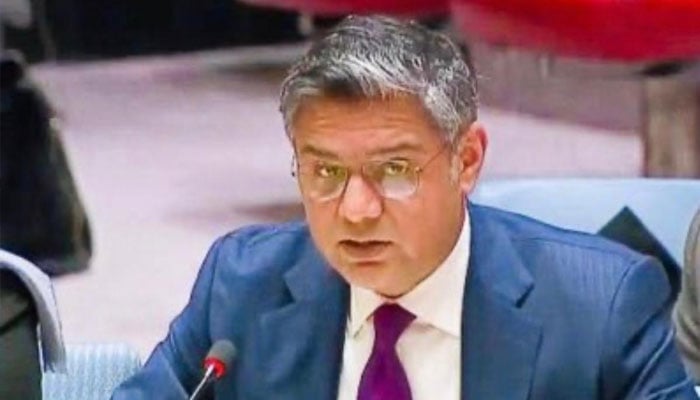
LONDON: Pakistan’s High Commissioner to the United Kingdom, Tipu Usman, has called for closer engagement with Pakistani media in the UK to strengthen outreach to the Pakistani diaspora and ensure the community remains informed about initiatives and reforms aimed at facilitating overseas Pakistanis.

The High Commissioner made the remarks during an introductory meeting with representatives of Pakistani media houses working in London.

Tipu Usman appreciated the positive role played by Pakistani media in the UK during Marka-e-Haq, particularly its contribution to keeping the Pakistani diaspora informed about important national developments and issues affecting the community.

He said the Pakistan High Commission in London remained committed to working closely with Pakistani media representatives to enhance outreach and effectively communicate initiatives and reforms that would facilitate members of the Pakistani diaspora across the UK.

The High Commissioner stressed the importance of effective communication and engagement with the Pakistani community, saying the media could play an important role in ensuring that information about government initiatives and services reaches overseas Pakistanis in a timely and effective manner.

The representatives of Pakistani media houses welcomed Tipu Usman on assuming his responsibilities as Pakistan’s High Commissioner to the UK and conveyed their best wishes for his tenure.

During the interactive session, media representatives shared various suggestions aimed at improving the High Commission’s outreach to the Pakistani diaspora and strengthening efforts for the welfare of the Pakistani community residing across the United Kingdom.

The participants discussed the importance of maintaining regular engagement between the High Commission and Pakistani media to improve communication with the community and provide greater awareness of initiatives, services and reforms relevant to overseas Pakistanis.

The meeting provided an opportunity for an open exchange of views on ways to further strengthen coordination between the Pakistan High Commission, Pakistani media and the wider Pakistani diaspora in the UK.

The High Commissioner welcomed the suggestions put forward by the media representatives and reaffirmed the High Commission’s readiness to work collaboratively with the media for more effective engagement with the Pakistani community across Britain.

Similar Posts

  • | |

    Israel raises concerns over Trump’s Gaza plan

    Israel has raised concerns with the United States over a Gaza peace plan praised by President Donald Trump after Hamas reportedly agreed to discuss disarmament. Prime Minister Benjamin Netanyahu’s office said Israel had shared its objections with US officials and stressed that the publicly released version of the proposal did not reflect its position. Israeli officials also accused Hamas of rebuilding its military capabilities and recruiting fighters since a ceasefire announced by Trump in October. Israel has continued carrying out strikes in Gaza despite the truce, while the conflict has seen a reduction in overall violence. Trump described Hamas’s reported agreement as a “major milestone” in efforts to end the war and claimed that Israel welcomed the development. However, Netanyahu’s office said Hamas’s alleged military preparations showed that the group could still pose a serious threat to Israel. It argued that any long-term agreement must include the complete, verifiable and irreversible disarmament of Hamas. An Israeli official said Israel would not withdraw its forces from Gaza under the proposed framework until it could confirm that Hamas had fully surrendered its weapons. Meanwhile, Israeli strikes continued after the Hamas announcement. Palestinian authorities said Israeli attacks on Sunday killed at least 13 people. According to Palestinian authorities, more than 73,000 Palestinians have died in Israel’s military campaign in Gaza since October 7, 2023.

  • | |

    Terrorist killed in joint operation in Bannu

    A terrorist was killed during a joint intelligence-based operation in Bannu, Khyber Pakhtunkhwa, police said on Monday. The operation was carried out by district police, the Counter-Terrorism Department, the Quick Response Force and security forces. The operation took place in the Miryan area after intelligence reports indicated the presence of suspected terrorists. Security personnel conducted searches in Khani Kalay, Barakzai and nearby areas. The areas fall within the jurisdiction of Miryan police station. An exchange of fire took place during the operation. One unidentified terrorist was killed. Police said the identity of the deceased was being established. A Kalashnikov was recovered from the scene. Three magazines and a bandolier were also found in the possession of the killed terrorist. Security personnel later conducted search operations in surrounding areas. Several suspected individuals were detained for questioning. Bannu District Police Officer Captain (retd) Muhammad Furqan Bilal praised the personnel who participated in the operation. He described the security and police personnel fighting terrorism as the country’s real heroes. The DPO said intelligence-based operations would continue across Bannu. He said the objective was to eliminate terrorism and crime from the district. He also urged local residents to cooperate with law-enforcement agencies. Citizens were asked to report suspicious individuals and activities to police. The latest operation is part of intensified security efforts in Bannu. The district has witnessed several terrorist incidents and counterterrorism operations in recent months. On July 20, another joint intelligence-based operation was conducted in Bannu. Police said one suspected terrorist was killed and eight others were detained during that operation. The operation involved district police, the Elite Force, CTD personnel and Pakistan Army troops. Security forces had also established checkpoints and cordoned off the area during the operation. Police said the killed suspect was allegedly attempting to plant an improvised explosive device. A Kalashnikov, magazines and ammunition were recovered. Security concerns in Bannu have increased following several attacks targeting police and security installations. On July 15, terrorists attacked the Miryan police station using an explosives-laden vehicle. A prolonged exchange of fire followed the attack. Six police officers and four civilians were injured in the incident. The attackers also damaged a bridge leading to the police station. Authorities believed the move was intended to slow the arrival of reinforcements. The wider security situation in Khyber Pakhtunkhwa has remained challenging. Balochistan has also witnessed an increase in militant activity. Security forces have responded with intelligence-based operations against suspected militant networks. Authorities have repeatedly stressed the need for public cooperation to counter terrorism. Officials have also raised concerns about militant groups operating from across the Afghan border. The latest operation in Bannu reflects the continued efforts of law-enforcement and security agencies to prevent further attacks.

  • | |

    Mufti Muneeb-ur-Rehman criticizes Pakistan’s…

      Renowned Islamic scholar Mufti Muneeb-ur-Rehman has strongly criticized Pakistan’s judicial and economic systems, stating that a justice system that fails to deliver justice even after forty years cannot be considered a true system of justice but rather a system of oppression. He made these remarks while addressing a public ceremony in Karachi, where he spoke about the country’s pressing legal and economic challenges. During his speech, Mufti Muneeb-ur-Rehman expressed concern over the prolonged delays in the judicial process. He argued that when people have to wait decades for justice, the very purpose of the legal system is defeated. According to him, justice delayed for such an extended period effectively becomes justice denied, leaving citizens frustrated and deprived of their fundamental rights. He emphasized that a judicial system should provide timely and fair decisions so that public confidence in the rule of law remains intact. The scholar also urged those in positions of authority to focus on resolving Pakistan’s domestic problems instead of concentrating solely on international issues. He remarked that while government leaders often discuss and engage with global affairs, the country’s internal challenges require immediate attention. He specifically called upon policymakers and those holding power to prioritize the welfare of the people by addressing the nation’s economic difficulties. One of the major issues highlighted by Mufti Muneeb-ur-Rehman was the problem of Independent Power Producers (IPPs). He appealed to the government to find a practical and sustainable solution to the IPP issue, which has been widely debated due to its impact on electricity prices and the country’s financial stability. According to him, resolving this matter would help reduce the economic burden on both the government and ordinary citizens. Speaking about the national economy, Mufti Muneeb-ur-Rehman painted a concerning picture of Pakistan’s financial condition. He stated that after distributing the constitutionally allocated shares to the provinces and making payments on interest obligations, the federal government is left with very limited financial resources. This situation, he suggested, reflects the severity of the country’s fiscal challenges and highlights the urgent need for comprehensive economic reforms. He stressed that policymakers should adopt measures that promote financial stability, reduce unnecessary expenditures, and improve revenue generation without placing excessive burdens on the public. The event also featured an address by Maulana Bashir Farooqi, who criticized the government’s approach toward eliminating the interest-based financial system. He argued that the authorities are not demonstrating sufficient seriousness in transitioning toward an Islamic banking framework. According to him, meaningful reforms require not only policy changes but also practical steps to prepare financial institutions for such a transformation. Maulana Bashir Farooqi announced that his organization is willing to provide training for approximately 100,000 employees working in conventional banks. He explained that this initiative aims to equip banking professionals with the knowledge and skills necessary to operate within an interest-free Islamic banking system if the government decides to pursue such reforms. He maintained that the availability of trained professionals would facilitate a smoother transition and strengthen the implementation of Islamic financial principles in the country’s banking sector. The speeches delivered at the Karachi ceremony underscored concerns regarding Pakistan’s judicial efficiency, economic management, and financial policies. Both religious leaders called on the government to prioritize domestic reforms, strengthen public institutions, address long-standing economic challenges, and work toward a system that better serves the interests of the people.

  • |

    Tadej Pogacar returns to Vuelta a España, eyes first career title

    MONACO: Cycling superstar Tadej Pogacar is set to return to the Vuelta a España for the first time since 2019, as the Slovenian aims to capture the only Grand Tour title missing from his glittering career. His team, UAE Team Emirates, confirmed on Monday that the reigning Tour de France champion will compete in this year’s Vuelta, which begins on August 22. The announcement has immediately made the 27-year-old the overwhelming favourite for the prestigious 21-stage race, as he looks to add another milestone to an already remarkable career. Pogacar last competed in the Vuelta in 2019, where he finished an impressive third overall and claimed three stage victories, performances that introduced him to the global cycling stage. “I’m excited to say I’m going back to La Vuelta,” Pogacar said in a statement released by his team. “It was my first-ever Grand Tour back in 2019 and an amazing experience. Spain is a country I love to visit and race in, and I think the time is right to go back.” The Slovenian added that his motivation remains high following another successful Tour de France campaign and described the Vuelta as one of his biggest goals for the remainder of the season. Pogacar heads into the race with history within reach. Having already won the Tour de France this year and previously claimed the Giro d’Italia in 2024, victory in Spain would complete his collection of all three Grand Tours. He could also become only the fourth cyclist in history to win both the Tour de France and the Vuelta a España in the same season. With UAE Team Emirates expected to field a strong supporting squad, Pogacar will be determined to end the year on another high and further strengthen his reputation as one of cycling’s greatest riders of the modern era. The Vuelta is expected to feature many of the sport’s leading names, but all eyes will be on Pogacar as he chases another historic achievement and bids to complete one of cycling’s rarest career accomplishments.

  • | |

    Electricity bills to increase this month under new…

    The National Electric Power Regulatory Authority (NEPRA) has announced a 75-paisa per unit increase in electricity prices for consumers across Pakistan, including domestic users of K-Electric. The revised tariff will be reflected in electricity bills issued during August 2026, according to an official notification released by the regulator. The increase has been approved under the monthly fuel cost adjustment (FCA) for June 2026, a mechanism through which electricity tariffs are periodically revised to account for changes in fuel generation costs. The adjustment applies to electricity consumers served by power distribution companies nationwide, including those receiving electricity from K-Electric in Karachi. According to the notification, consumers will pay an additional Rs0.75 per unit in their August electricity bills. The fuel cost adjustment is a routine regulatory measure designed to recover fluctuations in the cost of electricity generation caused by varying fuel prices and the overall energy mix used by power producers. NEPRA stated that the revised charges are part of the monthly adjustment process and are intended to align electricity tariffs with the actual cost of power generation during the relevant period. The authority regularly reviews requests submitted by power distribution companies before approving any changes in consumer tariffs. The latest increase comes as electricity consumers across Pakistan continue to face higher utility costs amid rising inflation and increasing household expenses. The adjustment will affect millions of residential, commercial, and industrial consumers, although the exact financial impact will depend on individual electricity consumption levels. Domestic consumers in Karachi supplied by K-Electric will also be subject to the revised tariff, ensuring that the increase is implemented uniformly across the country. The notification confirms that the additional charges will be included in the current billing cycle for August. Fuel cost adjustments are separate from the base electricity tariff and may result in either increases or reductions in monthly bills depending on changes in fuel prices and electricity generation costs. In recent years, these periodic revisions have become a regular feature of Pakistan’s electricity pricing system as regulators seek to recover actual power generation expenses. Consumers are advised to review their upcoming electricity bills carefully to understand the impact of the latest tariff adjustment and any other applicable charges included in the monthly billing statement.

  • |

    Government reviews splitting LESCO, MEPCO before privatisation

    The Ministry of Privatisation has established a high-level Technical Committee to examine the feasibility of dividing the Lahore Electric Supply Company (LESCO) and Multan Electric Power Company (MEPCO) into two or three smaller power distribution companies before their proposed privatisation, according to informed sources. The move is part of the government’s broader strategy to reform Pakistan’s power distribution sector and make state-owned electricity companies more attractive for private investment. LESCO and MEPCO currently serve the largest geographical areas and consumer bases among the country’s distribution companies (DISCOs), prompting officials to assess whether restructuring them into smaller entities could improve operational efficiency and facilitate the privatisation process. Technical Committee Constituted The committee is headed by Sajid Akram, Adviser (Power) at the Privatisation Commission. Other members include Ghulam Rasool, Joint Secretary at the Privatisation Commission; Imran Hafeez, Additional Director Tariff at the National Electric Power Regulatory Authority (NEPRA); and Abid Lodhi, Managing Director of the Power Planning and Monitoring Company (PPMC). The committee has been tasked with conducting a comprehensive review of the proposal and submitting recommendations to the government after evaluating its technical, operational and strategic implications. Weak Performance Raises Concerns Officials familiar with the matter said that both LESCO and MEPCO have consistently faced operational challenges, particularly in controlling electricity theft, reducing transmission and distribution losses, and improving bill recovery. These issues have affected their financial performance and have remained a major concern for policymakers pursuing reforms in the power sector. Recent audit reports for the fiscal year 2024-25 also highlighted unsatisfactory performance by both companies, reinforcing the need for structural reforms before moving ahead with the privatisation programme. MEPCO: Pakistan’s Largest Distribution Company MEPCO was incorporated in 1998 as a public sector company and operates under a permanent electricity distribution licence issued by NEPRA. The company is wholly owned by the Government of Pakistan through the Ministry of Energy. Serving nearly 8.76 million consumers across 13 districts of southern Punjab, MEPCO is the country’s largest electricity distribution company in terms of customer base. Its extensive network includes more than 82,000 kilometres of distribution lines and over 780 grid stations, supplying electricity across a vast region bordering three provinces. The company has initiated several modernisation projects, including the deployment of Advanced Metering Infrastructure (AMI), commonly known as smart metering, and digital billing systems aimed at improving transparency, reducing losses and enhancing customer services. LESCO Serving Over Seven Million Consumers LESCO also began operations in 1998 and supplies electricity to approximately 7.05 million consumers across Lahore, Kasur, Sheikhupura, Nankana Sahib and Okara. Its consumer base includes domestic, commercial, industrial, agricultural and bulk supply customers. The company’s operational network is divided into eight circles supervised by Superintending Engineers and 41 divisions managed by Executive Engineers to oversee field operations. In recent years, LESCO has accelerated efforts to modernise its infrastructure through the installation of smart meters, with plans to convert its entire consumer base to the Advanced Metering Infrastructure by 2029. However, the company continues to face significant operational hurdles, including shortages of transformers and electricity meters, resulting in delays in providing new connections and replacing faulty equipment. These issues have drawn criticism from regulators and consumers alike. Committee’s Terms of Reference According to the approved Terms of Reference (ToRs), the Technical Committee will: Assess the feasibility of splitting LESCO and MEPCO into two or three smaller distribution companies. Examine the potential advantages and disadvantages of such restructuring in line with the National Electricity Plan, the government’s Power Policy and the ongoing privatisation programme. Review whether similar committees were constituted in the past and analyse their findings, recommendations and implementation status. The committee’s recommendations are expected to play an important role in determining whether the government proceeds with restructuring the two major DISCOs before offering them for privatisation.

Leave a Reply

Your email address will not be published. Required fields are marked *