hong kong leader
|

Hong Kong leader apologizes for deadly Tai Po fire, pledges reform

HONG KONG – Hong Kong leader John Lee apologized on Thursday, October 29, for the deadly blaze that killed 168 people in the city last November, as he released an independent report that held four government departments partially responsible for a fire that erupted after more than a year of safety complaints.

Lee promised swift but extensive reforms to the city’s building industry and regulatory system. The more than 1,000-page report by the judge-led panel detailed governance and supervisory failings, including widespread bid rigging.

“The fire has been put out, but the reform has only just begun,” the report stated.

“The Committee finds that no Government department took effective ownership of various fire safety issues and complaints about fire hazards fell into a vacuum.”

The blaze ripped through seven 31-story tower blocks at the Wang Fuk Court residential complex, which was undergoing renovation work in the northern Tai Po district and shrouded in dust netting and scaffolding.

Residents had repeatedly raised safety concerns over the work for more than a year before the fire, which the report said was most likely started by a “glowing source…likely a cigarette.”

It was the deadliest in the city since 1948. Thousands of residents were displaced after their homes became uninhabitable.

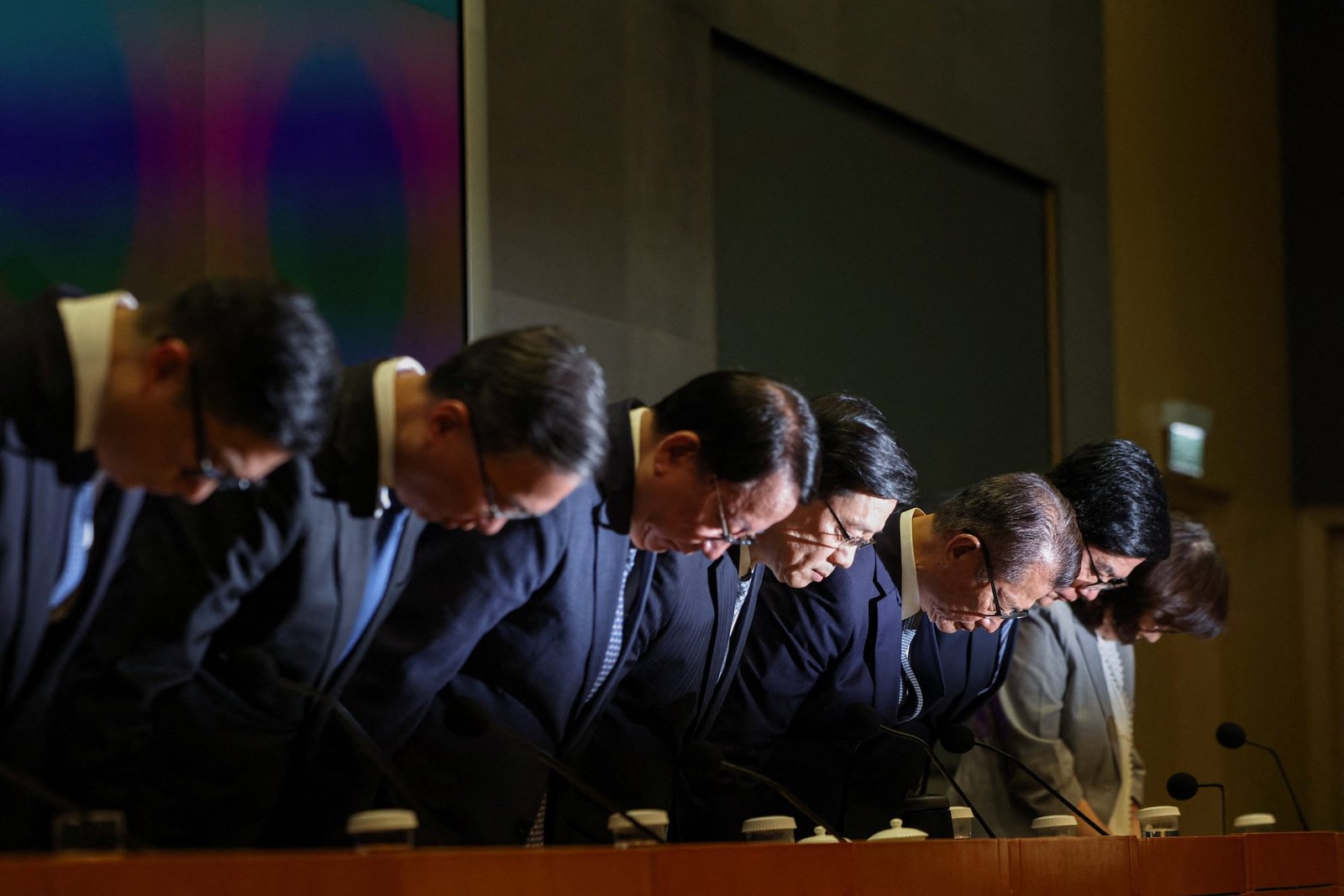
“As chief executive and head of the government, I am deeply saddened,” Lee said before bowing with seven other officials in a rare show of official contrition.

“On behalf of the SAR government, I offer my apologies to the victims and the public at large.”

Lee also announced the resignation of Hong Kong’s Housing Secretary Winnie Ho — the first official to resign over the inferno.

Disciplinary action

Wang Fuk residents and other critics have in recent months expressed anger at a perceived lack of government accountability.

The Hong Kong government has set up an independent team to investigate which officials should be held accountable and to outline disciplinary actions.

Lee, whose five-year term ends next June, did not directly respond to press questions over whether he would seek another term, saying “implementing the reforms is the goal” rather than personal matters.

Lee said Hong Kong’s Chief Secretary Eric Chan will now head a steering committee to oversee reforms advocated in the report, which will include laws to criminalise bid rigging across the construction industry with fines of up to HK$10 million and 10 years’ imprisonment.

The committee report said contractor Prestige Construction & Engineering Co Ltd and project consultant Will Power Architects Co Ltd should bear primary responsibility.

At least 25 criminal charges related to the Wang Fuk Court fire have been made against Prestige, Will Power and seven individuals, including manslaughter, conspiracy to defraud, money laundering and tax evasion.

But the report also went further, outlining widespread unlawful and dubious construction practices as a “corrupt eco-system.”

The rigging of bids in the industry involved many different parties, some linked to triad organized crime gangs, it said.

The committee held 30 hearings this year with 80 witnesses, including residents, property management and renovation personnel, engineering and fire experts, government officials and regulators. It evaluated more than one million files and submissions as it investigated the cause of the fire and reviewed oversight of building renovations.

Before the report’s release, critics had said the committee lacked the statutory powers of a full public inquiry, which could potentially limit its ability to establish the full facts and accountability.

Some groups in the Asian business hub have called for more transparency and accountability, amid warnings from authorities that any attempts to politicise the disaster would be severely punished. – Rappler.com

Similar Posts

  • |

    North Korea’s fake remote workers rake in $800m a year

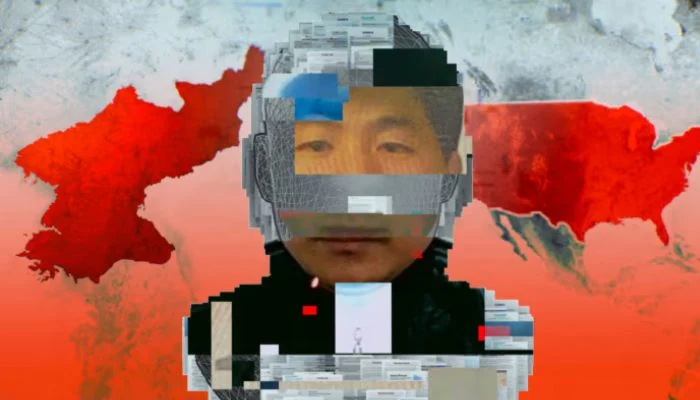
    North Korean operatives have quietly built a hidden workforce inside American companies. They are using stolen identities, AI tools and fake profiles to secure remote jobs. The money earned through this scheme is funneled straight back to North Korea. Investigators say it could be channeling millions of dollars annually to Kim Jong Un’s regime. A new investigation pieced together leaked data, interviews and previously unseen videos to expose how the operation actually works. The findings offer a rare, detailed look at how Pyongyang’s undercover workers get recruited and placed. According to the investigation, a single tracked operative applied to more than 1,000 companies in just three months. That volume points to a highly organized, large-scale effort rather than isolated cases. Investigators also found that AI tools played a direct role in helping operatives write convincing cover letters and resumes. Screen recordings reportedly captured workers reading answers straight from ChatGPT during live hiring interviews. North Korea’s IT operatives typically rely on stolen American identities to pass candidate screening and background checks. Many are said to juggle multiple jobs simultaneously, all operating under the same stolen name. Some of these workers reportedly earn as much as $300,000 a year through these remote positions. The US Treasury Department has found that up to 90% of those earnings get funneled directly back to the regime. Officials estimate the overall operation generates as much as $800 million annually for North Korea. That scale has made it one of the more lucrative sanctions-evasion schemes uncovered in recent years. Investigators traced the flow of funds through a wider network involving North Korean IT workers and affiliated cybercriminals. That trail eventually led to a company being sanctioned by the US, reportedly tied to Pyongyang’s broader defence development program. The findings highlight how North Korea has adapted its sanctions-evasion tactics for the remote work era. By blending stolen identities with AI-assisted job applications, the regime has found a modern, low-visibility way to bypass international restrictions on its economy. As remote hiring becomes more common globally, cases like this are raising fresh questions about how companies verify who they’re actually hiring.

  • |

    US official insists Gaza peace plan remains active despite Netanyahu’s rejection

    A Board of Peace official confirmed on Monday that US President Donald Trump’s Gaza peace framework remains operative, despite public pushback from Israeli Prime Minister Benjamin Netanyahu. Netanyahu rejected any withdrawal of Israeli forces until the Palestinian militant group Hamas is genuinely disarmed. His remarks came as the Israeli military  halted offensive operations in Gaza following pressure from Washington. The Board of Peace official emphasized that the initiative relies on phased implementation and verification on the ground, ensuring Israel makes no irreversible security concessions prior to confirmed compliance. Under the plan announced last month, Israeli forces would withdraw as Hamas disarms, paving the way for an International Stabilisation Force to partner with a newly formed Palestinian police unit. Negotiation roadmaps are being coordinated between the Board of Peace and Hamas while bilateral discussions with Israeli leadership continue.

  • |

    Armed gunmen kill 12 and abduct women in Nigerian village raid

    Armed gunmen launched a hours-long night-time raid on the village of Lajinge in northwestern Nigeria’s Sokoto state, killing at least 12 people and abducting several women and children. The assailants set fire to homes during the assault, causing six members of a single family to burn to death inside their residence. Local residents reported that four additional individuals sustained injuries while the attackers also rustled significant amounts of livestock. Sokoto state police forces confirmed an ongoing investigation into the assault, which follows a similar attack that left 24 farmers dead in neighbouring Zamfara state just a week prior.

  • | |

    Greek police arrest boxer over death of Scottish c…

    Greek authorities have arrested a 26 year old former boxer in connection with the death of a Scottish aid worker whose body was discovered in a suitcase in Athens, according to a British broadcaster. The suspect, identified as Sharif Ahmadzai, was taken into custody after officers found the remains of 38 year old Elisabeth Jane Ross in an abandoned building in the Kypseli district of the Greek capital on July 18, several days after she had been reported missing. Ahmadzai is scheduled to appear in court in Athens on Wednesday. Ahmadzai was born in Afghanistan and later became a champion boxer before settling permanently in Greece, where he currently lives with his American wife and their child. He left Afghanistan as a teenager after losing both parents to the conflict there. His father, who served as a commander in the Afghan army, was shot dead, while his mother and siblings died in a suicide bombing in Kabul when he was 15 years old. According to a video account published by the International Federation of Red Cross and Red Crescent Societies, Ahmadzai made his way to Greece by traveling through Iran and Turkey before eventually reaching a refugee camp on the island of Lesbos. It was there that he is understood to have met his future wife and converted to Christianity. The couple went on to found a charity called Love Every Nation Athens, which works to support other refugees arriving in the country. Police say Ross, who was from Edinburgh and known to friends and family as Lisa, entered Greece on June 26 and initially stayed in the Kertasini area of Piraeus until July 10. She had traveled to volunteer with an Athens based refugee support organization. She later told friends in Greece that she planned to travel to Kypseli on July 15 to meet up with American acquaintances. A police union in Greece said investigators confirmed that Ahmadzai held a key to the apartment where Ross had been staying. The union also said officers verified surveillance footage that appears to show him carrying a suitcase believed to have contained her body. Data from a location sharing application used by Ahmadzai’s wife reportedly placed the suspect at an address on Rethymnou Street, the location where Ross is believed to have died, in the days leading up to her death. Authorities said the suspect also used the victim’s bank cards to withdraw cash after her death. The building where her body was ultimately found sits roughly twenty minutes away from the area where Ross had originally been staying during her time in the city. Mourners have since left flowers at the site where her remains were discovered. One handwritten note left among the tributes expressed hope that her memory would live on and that she would not be forgotten. In Edinburgh, Pastor Peter Anderson said Ross had belonged to the congregation at City on a Hill church for two decades. He described her as someone with a strong commitment to missionary work who had traveled widely to help others. Speaking in a video shared on the church’s social media page, Anderson called her a deeply valued member of the community and said her loss had been felt profoundly by those who knew her. During a search of Ahmadzai’s residence, police said officers seized a replica pistol along with a knife. Authorities have also fast tracked a toxicology examination in an effort to determine the exact cause of Ross’s death. Investigators say they are additionally trying to locate the American friends Ross had mentioned to acquaintances shortly before her disappearance. The case has drawn significant attention both in Greece and in the United Kingdom, where Ross’s church community and friends have publicly mourned her loss while the investigation into the circumstances surrounding her death continues.

  • | | |

    Global oil prices drop 12% in three days, Pakistan…

    Pakistani consumers have yet to benefit from a sharp decline in global oil prices, despite international petroleum markets recording a fall of up to 12% over the past three days. The continued high fuel prices have added to the financial burden on households already struggling with rising inflation. Over the last 12 days, fuel prices in Pakistan have increased significantly, with diesel becoming Rs. 65.08 per litre more expensive and petrol rising by Rs. 25.10 per litre. The increases followed the federal government’s decision on July 17 to introduce a daily fuel price adjustment mechanism in line with international market trends. On July 17, petrol was priced at Rs. 310.71 per litre, while high-speed diesel was available at Rs. 323.30 per litre. As of July 29, petrol is being sold at Rs. 335.81 per litre, whereas diesel has climbed to Rs. 388.38 per litre, marking one of the steepest short-term increases in recent years. Although consumers witnessed two minor reductions in petrol prices during this period, the relief was limited. Petrol prices were cut by Rs. 0.35 per litre on July 21 and by Rs. 1.00 per litre on July 27. Diesel prices, however, have not been reduced since the daily pricing mechanism came into effect. International oil markets experienced a sustained upward trend after July 17, contributing to higher domestic fuel prices. However, between July 25 and July 28, global petroleum prices fell sharply, with reports indicating a decline of approximately 12% across major international benchmarks. Despite this significant drop in global prices, Pakistani consumers have not yet received any corresponding reduction at the pump. The absence of immediate relief has sparked concerns among motorists and businesses, particularly those heavily dependent on transportation and logistics, where fuel costs directly affect operating expenses. Economists note that lower international oil prices, if sustained, could create room for a reduction in domestic fuel prices in the coming days. Any adjustment, however, will depend on several factors, including exchange rate movements, government taxes and levies, freight costs, and the pricing formula adopted by the authorities. With inflation continuing to squeeze household budgets, many consumers are hoping the recent decline in global oil prices will soon translate into lower petrol and diesel prices in Pakistan, easing transportation costs and reducing pressure on the overall cost of living.

Leave a Reply

Your email address will not be published. Required fields are marked *