king harald norways
| | |

King Harald V, Norway’s reform-minded head of state, dies at 89

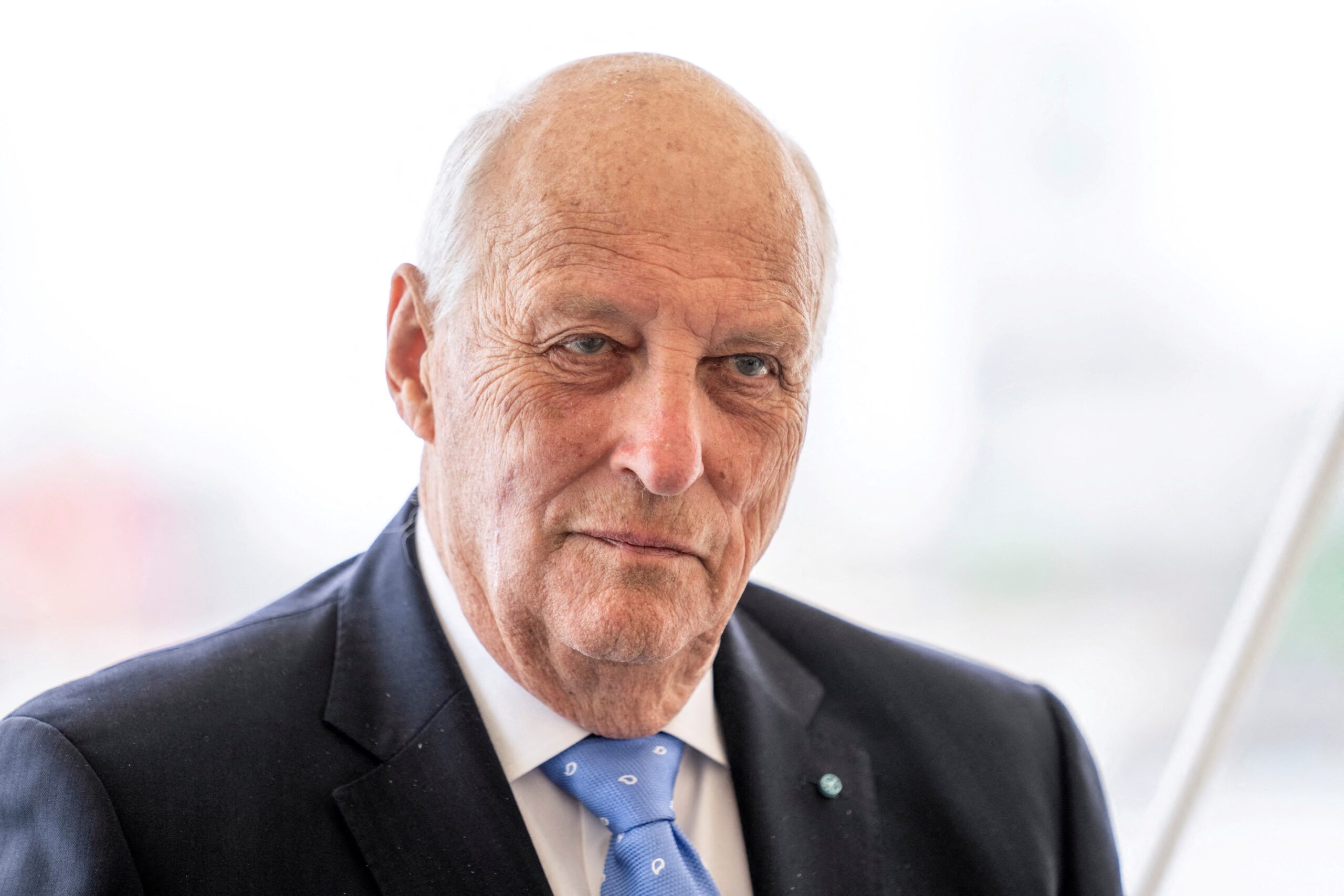
OSLO, Norway – Norway‘s King Harald, a reformer who emerged from the shadow of his well-loved, extrovert father over more than three decades on the throne, died on Friday, August 28, at the age of 89, the royal palace said, at a time of multiple crises for the Norwegian royal family.

“King Harald passed away peacefully at Oslo University Hospital on Friday 28 August, 0635 (local time, 0435 GMT),” the royal palace said on its website.

Harald, who was Europe’s oldest living monarch, was taken to hospital on August 17. The palace said he was being treated for a bacterial infection in his blood.

In 2024, he had been hospitalized for an infection while on holiday in Malaysia and received a temporary pacemaker at a hospital there. He was flown back home by the Norwegian armed forces and later fitted with a permanent device.

That same year, Harald, Norway’s ceremonial head of state since 1991, said he would reduce the number of official engagements in which he took part but ruled out abdication, insisting that his oath as king was for life.

Multiple challenges

Harald’s death comes at a tumultuous time for the royal family.

Crown Princess Mette-Marit, married to Harald’s son Crown Prince Haakon, is facing intense scrutiny for her friendship with the late sex offender Jeffrey Epstein, a relationship for which she has apologized.

Her son Marius Hoiby, born from a relationship predating her marriage to Haakon, was found guilty in June of ​two out of four counts of rape and one count of domestic violence and sentenced to four years in prison after a seven-week trial. Both he and the prosecution have appealed the sentence.

Two days after Marius was convicted, the palace said Mette-Marit had undergone a successful lung transplant, without specifying when the procedure took place.

After several weeks of recovery in hospital, she returned home and celebrated her silver wedding anniversary with Haakon in August.

Support for the monarchy dropped to 60% in February 2026, from 70% the previous month, according to a Norstat poll published by public broadcaster NRK, rising slightly to 64% in May.

Harald had constantly remained popular with Norwegians. According to the February poll, he was the royal who best represented the Norwegian royal family, with a note of 9.2, on a scale of 1 to 10.

A descendant of Queen Victoria

A great-great-grandchild of Britain’s Queen Victoria, Harald acceded to the throne in 1991 and slowly introduced modern touches that brought a ceremonial post seen mainly as a symbol of national independence into the 21st century.

The popular king played a crucial role comforting the nation in times of mourning.

When far-right, anti-Islam fanatic Anders Behring Breivik killed 77 people in 2011 in Oslo and on Utoeya island, the king consoled the nation with a powerful televised speech. His voice trembling with emotion, he said that “freedom is stronger than fear.”

After floods, storms and other disasters, he would travel to the scene wearing rubber boots and a well-worn jacket to meet those who had lost homes or loved ones.

Late in life he spoke up for tolerance, declaring in a 2016 speech that Norwegians could have many backgrounds, beliefs and sexual orientations.

In November 2005, Harald and his wife, Sonja Haraldsen, invited 550 Norwegians to a ball to celebrate the centenary of the country’s independence from Sweden.

Harald said in an interview at the time that Europe’s royal families should not be tempted to reverse moves towards openness and retreat to their palace towers.

“If you’ve opened the gate it’s very difficult to close it again,” he told Reuters. “I’m not sure I’d want to close it. So far so good, as far as I’m concerned.”

Like his father Olav, Harald was a sports and automotive enthusiast and often drove his own car, particularly to informal events.

A sailor, he captained his boat to win a world championship title and competed in several Olympics, but failed to repeat his father’s feat of winning Olympic gold.

Harald also took a great interest in the preservation of nature. He realised a lifelong dream when, aged 76, he spent four days deep in the Amazon jungle of Brazil, living with the Yanomami people and sleeping in a hammock.

Birth and reign

Harald’s birth on February 21, 1937, was cause for national celebration — he was the first royal heir to be born in Norway in almost 570 years. Danish and Swedish monarchs had ruled over the Scandinavian nation for centuries, until 1905.

Just three years after Harald was born, Nazi Germany invaded the country. King Haakon and then-Crown Prince Olav fled to Britain, where they led Norway’s government-in-exile, while the 3-year-old Harald went with his mother, Crown Princess Märtha, to neutral Sweden, then to the United States.

After living briefly at the White House, and then for five years in Bethesda, Maryland, Harald, his older sisters Ragnhild and Astrid and their mother met frequently with US President Franklin D. Roosevelt, whom Harald years later described as like a grandfather.

When he returned to Norway after the war ended in 1945, Harald attended state schools rather than the private lessons his father had received.

His marriage in 1968 to a commoner broke with tradition and followed a nine-year stand-off with his father that ended only after Harald threatened never to marry rather than give up Sonja.

Later years

In 1998, the king faced an unprecedented wave of public criticism over press reports that he had accepted a 4-million-crown ($400,000) yacht from a group of industrialists as a birthday present, and that palace repairs had cost the government 500 million crowns.

Around the same time, his former deputy private secretary suggested that Harald should abdicate at the egalitarian country’s normal retirement age of 67.

Opinion polls gave the king firm backing to stay on for life, however, and the criticism subsided. A year later, in another Reuters interview, Harald joked that he would remain on the throne for life unless he went mad.

“There is no tradition in Norway for that (abdication). But you never know. If you go completely bonkers,” he said. Queen Sonja laughed and said: “But who will ever tell you that?”

Harald’s son Haakon, 53, will be Norway’s fourth king since the country gained independence from Sweden in 1905, with Mette-Marit, also aged 53, as his queen. – Rappler.com

Similar Posts

  • | | | |

    US launches strikes on Iran after attack on Jordan base

    WASHINGTON/TEHRAN: Tensions between the United States and Iran have sharply escalated after Washington launched strikes against Iranian targets following a ballistic missile attack on a US military base in Jordan. US Central Command said its forces began the strikes at around 8pm Eastern Time on Wednesday. CENTCOM described the operation as a “powerful response” to attempted attacks against American forces in the Middle East. The strikes came after Iran’s Islamic Revolutionary Guard Corps claimed responsibility for operations targeting US military assets in Jordan. The IRGC said it had targeted an airbase and a command centre. US President Donald Trump had earlier warned that Iran would face a strong military response. Trump said the United States would hit Iran “very hard” after the attack, despite reports that US forces had intercepted the missiles. The latest developments have raised fears of a wider regional conflict. Military activity has also been reported across southern Iran. Iranian state broadcaster IRIB reported explosions in Bushehr province, home to the country’s only nuclear power plant. Several explosions were also reported on Qeshm Island. Iranian media said a missile may have struck a residential area, although details about casualties were not immediately available. Other explosions were reported at several locations in southern Iran following the launch of the US operation. The conflict has also intensified around Iraq. Baghdad condemned US and Saudi strikes that reportedly killed members of Iraq’s Popular Mobilisation Forces. The group said at least 20 of its fighters were killed and 32 others were wounded. Iranian media separately reported that four Iranian advisers were killed in the strikes. The situation around the Strait of Hormuz has also become increasingly tense. Iran’s Revolutionary Guard said its naval forces targeted three oil tankers that were allegedly approaching the strategic waterway using routes not approved by Tehran. Iran has rejected an Omani proposal concerning shipping routes through the Strait of Hormuz. Tehran has also discussed imposing charges on vessels using the strategically important passage. Iranian officials have insisted that mine-clearing operations in the waterway should be carried out by Iranian forces. Tehran has warned that any European involvement could turn those forces into potential targets. The latest escalation comes only days after Trump said Washington was holding what he described as positive talks with Iran. He had also warned that military action could resume if Tehran failed to show seriousness in negotiations. Analysts have warned that continued retaliation could create a dangerous cycle of escalation. They say repeated strikes could eventually expand beyond military targets and increase the risk to civilians and critical infrastructure.

  • | |

    Renowned mountaineer Nirmal Purja among 10 killed …

    British Nepali mountaineer Nirmal Purja has died along with nine other climbers in an avalanche on Broad Peak in Pakistan, according to his expedition company. Elite Expeditions confirmed the death of the 43 year old climber on social media, saying the news came with profound sadness and heartbreak following Thursday’s avalanche. Purja, who was born in Nepal and later served in the British army, had earned global recognition for climbing the world’s 14 highest peaks in just over six months in 2019. Pakistani officials had earlier reported the recovery of the bodies of three other climbers from the same expedition, identified as American Mallory Geis, Nadhira Ahmed Abdullah Al Harthy from Oman and Pur Bahadur Gurung from Nepal. Nepal’s Prime Minister Balendra Shah also confirmed Purja’s death, saying the loss of six Nepali climbers and four foreign climbers, including world record holder Purja, in Pakistan’s Karakoram range had shocked the nation. Shah said the climbers’ courage and contributions would continue to inspire others. Naila Kiani, a spokesperson for the Alpine Club of Pakistan, which is coordinating rescue operations, told a British broadcaster that Purja had led numerous expeditions she had personally taken part in and described him as an extremely experienced and fearless climber with strong leadership skills. Kiani said the Alpine Club would only formally confirm his death once his body has been recovered, though she acknowledged rescuers fear all members of the group have died. She said search teams have spotted some bodies but have not yet been able to reach them. Rescue teams in Pakistan have been searching for the missing climbers on the world’s 12th highest peak following the avalanche, which struck the 8,047 meter summit in the Karakoram mountain range. Purja was leading the multinational climbing group at the time. Also known as Nims, Purja rose to international fame in 2019 after climbing all 14 of the world’s peaks above 8,000 meters in 189 days, breaking the previous record by more than seven years. His achievement later became the subject of a Netflix documentary titled 14 Peaks: Nothing Is Impossible. At the time of his historic climb, he described the effort as grueling but humbling, and said he hoped to show that determination, self belief and positivity could make anything possible. Purja served in the British military for 16 years, including a decade in the special forces, and received an MBE from the late Queen in 2018 in recognition of his extreme high altitude mountaineering achievements. He lived in Hampshire in southern England with his wife and three year old daughter, and was also known as the first Gurkha soldier to climb Everest while still serving in the British military. In his final social media post, shared on Monday, Purja wrote that he had not originally planned to climb Broad Peak. He said his trip had initially been focused solely on Gasherbrum II, another peak in the Karakoram range, but that he realized shortly before departing for Pakistan that summiting Broad Peak as well would leave him needing just one more mountain to become the first person in history to climb all 14 peaks above 8,000 meters twice without supplemental oxygen. He described the added goal as something that emerged unexpectedly rather than as part of a plan, writing that opportunities tend to present themselves quietly to those already putting in the work. He added that he was asking Broad Peak for nothing more than safe passage up and back down, saying he never took any mountain for granted. Broad Peak is widely regarded as one of the more difficult peaks for climbers to summit. The mountain was first successfully climbed in 1957 by an Austrian expedition, and while many climbers have reached its summit since then, dozens have died attempting the ascent. One of its deadliest recorded years was 2013, when at least six climbers lost their lives on the mountain.

  • |

    Thousands storm Spain’s Ceuta border

    Thousands of migrants gathered overnight in the Moroccan town of Fnideq near the border with the Spanish enclave of Ceuta, creating fresh pressure on one of Europe’s busiest migration routes. The large movement of people came despite a major security operation launched by Moroccan and Spanish authorities to stop illegal border crossings. Security forces strengthened patrols and reinforced checkpoints around the border. However, many migrants continued searching for ways to reach Ceuta. Some walked along the coastline looking for gaps in the border fence, while others prepared to swim across the sea in hopes of entering Spanish territory. According to Spanish media reports, between 2,000 and 3,000 migrants managed to cross into Ceuta on Thursday. Most of the successful crossings reportedly took place before security measures were tightened later in the day. Ceuta, along with the nearby Spanish enclave of Melilla, is the European Union’s only land border with Africa. The two territories have long served as major entry points for migrants hoping to begin a new life in Europe. Spain responded to the latest migration surge by sending additional military personnel and police officers to Ceuta. Authorities in the enclave also confirmed that nine bodies had been recovered following the crossing attempts, although officials have not released further details about the victims. Moroccan authorities deployed water cannon vehicles and additional security personnel at the border. Officers repeatedly pushed back groups attempting to force their way through the crossing points. Despite the heavy presence, migrants continued gathering throughout the night. Violence broke out near the border as tensions escalated. Several vehicles, including a bus and seven other vehicles, were set on fire during clashes. Burnt-out vehicles remained on the roadside after the unrest, highlighting the intensity of the confrontation. Many migrants described scenes of panic and confusion. One migrant said he became trapped in a stampede as people rushed toward a narrow coastal route. He said he feared for his life as people pushed and stepped on one another while trying to reach the border. Traffic into Fnideq remained heavily congested as more migrants continued arriving from different parts of Morocco. Some travelled along highways on foot, while others used mountain paths to avoid police checkpoints. Many spent the night waiting for another opportunity to cross. The crowds included men, women and children from Morocco as well as several countries in sub-Saharan Africa. Many families remained stranded near the border after repeated attempts to enter Ceuta were blocked. Among them was 23-year-old Fatima Mahli from the Moroccan city of Tetouan. She said she had travelled with her two daughters hoping to cross into Ceuta with her husband. According to her, her husband left before dawn to try to swim across after they realised the border crossing was effectively closed.

  • |

    Israeli lawmaker smashes Palestinian memorial

    Israeli far-right lawmaker Tzvi Succot smashed a memorial listing the names of Palestinians killed in Madama, a village south of Nablus in the occupied West Bank, Israeli media reported Tuesday. Succot, a member of the Religious Zionism party, shared a photo on X showing him using a large hammer to destroy the memorial. He said he had repeatedly urged the Israeli army to remove what he called “terror memorials” across the area. Video footage circulating online also showed Succot damaging the monument while Israeli soldiers stood nearby. According to Israeli newspaper Yedioth Ahronoth, Succot had sought permission more than a month earlier to visit Palestinian villages, and authorities approved his request several days before the visit. The lawmaker spent about 30 minutes in Madama and damaged the memorial during his visit. The Israeli army said it had not received prior notice that Succot planned to destroy the monument. Meanwhile, attacks by Israeli settlers across the occupied West Bank rose sharply during the first seven months of the year, according to the Palestinian Wall and Settlement Resistance Commission. The commission recorded 4,113 attacks from January through July, compared with 2,524 during the same period last year, marking a 63% increase. It linked the rise to the expansion of illegal settlement outposts, particularly pastoral settlements, along with the increased arming of settlers and their integration into security formations. The commission also pointed to Israeli military protection and a lack of accountability. The agency warned that weak international action had allowed settler attacks to grow from isolated incidents into a broader means of pressuring Palestinian communities and driving displacement.

  • | |

    Israel rejects Trump’s 15-point Gaza plan

    Israeli Prime Minister Benjamin Netanyahu has rejected US President Donald Trump’s proposed 15-point plan for Gaza, insisting that Israel will not withdraw its forces until Hamas is fully and genuinely disarmed. Netanyahu made the statement during a cabinet meeting on Sunday. He said Israel would not accept any arrangement that allows Hamas to retain its weapons while Israeli troops are required to leave Gaza. “Israel rejects the 15-point document,” Netanyahu said, adding that the Israeli military would continue operating against threats to its forces and citizens. The dispute has created another obstacle for Trump’s efforts to establish a lasting ceasefire and political settlement in Gaza. Trump’s Board of Peace had previously announced that an agreement had been reached on the complete disarmament of Hamas and other armed groups operating in the territory. Hamas, however, has linked the handover of its heavy weapons to wider conditions. The group has demanded an end to Israeli military operations and a withdrawal of Israeli forces from Gaza. Netanyahu said disarmament must take place before any Israeli military withdrawal. He rejected the possibility of what he described as a symbolic or “fictitious” disarmament process. The Israeli premier said his government was discussing the next steps with US officials. He indicated that some American proposals were acceptable to Israel, while others remained unacceptable. “We know how to stand our ground on these matters,” Netanyahu said. The disagreement represents a major challenge for Trump’s Gaza initiative, which was presented as a framework for ending the conflict and creating conditions for reconstruction. The proposed plan includes the disarmament of Hamas, a phased Israeli military withdrawal and the rebuilding of Gaza. It also envisages the creation of an international Board of Peace to oversee implementation of the agreement. Hamas had previously signalled support for aspects of the disarmament framework. However, the group has maintained that weapons cannot simply be surrendered while Israeli forces remain in Gaza and military operations continue. Israel, meanwhile, has continued military strikes in Gaza despite the initial ceasefire agreement reached last October. Netanyahu is also facing political pressure at home. His far-right coalition partners have strongly opposed concessions that could allow Hamas to remain armed or secure a significant Israeli withdrawal. National Security Minister Itamar Ben Gvir has rejected the proposed framework and called it unacceptable. With Israeli elections approaching, Netanyahu faces pressure from both domestic allies and international partners. Any major concession on Gaza could create tensions within his governing coalition. The latest rejection therefore puts Trump’s peace initiative under renewed pressure. The central disagreement remains over the sequence of events: Hamas wants Israeli forces to withdraw and military action to end before completing disarmament, while Israel insists that Hamas must first surrender its weapons.

Leave a Reply

Your email address will not be published. Required fields are marked *