nvidia ceo huang

Nvidia, CEO Huang sued over disclosures related to suspected Chinese spy

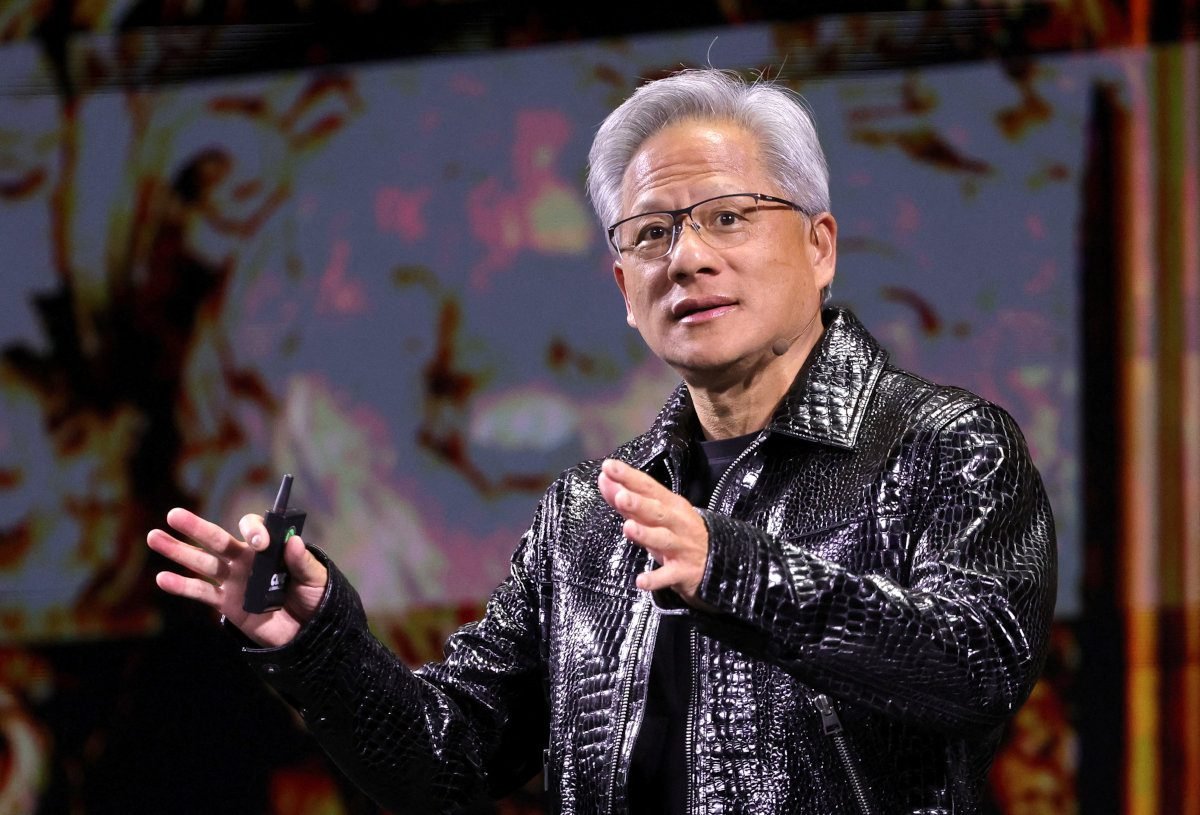
Nvidia and Chief Executive Jensen Huang were sued on Monday, November 9, in a proposed class action accusing them of defrauding shareholders by concealing Huang’s ties with a suspected Chinese spy.

According to a complaint filed in federal court in San Jose, California, the defendants misled shareholders about Huang’s alleged affair with Alice Huang, a former executive of Singapore-based Megaspeed who is not related to him, and did not disclose that the matter raised national security concerns that threatened Nvidia’s reputation and business prospects.

The New York Times reported last month about the alleged relationship, and that US authorities had concluded Alice Huang was a Chinese intelligence asset.

Must Read

Nvidia probes whether CEO Huang was target of foreign intelligence effort as he admits affair


Nvidia probes whether CEO Huang was target of foreign intelligence effort as he admits affair

Nvidia did not immediately respond to a request for comment.

Jensen Huang told Nvidia’s employees he had been unfaithful to his wife, without disclosing details of the alleged relationship.

He co-founded Nvidia, and has led the Santa Clara, California-based company as it became the world’s most valuable chipmaker and made him one of the world’s most prominent symbols of the artificial intelligence boom.

Nvidia announced a probe into the matter on Sunday. Its shares closed down 4.3% on Monday, reducing Nvidia’s market capitalization by approximately $190 billion. The lawsuit was filed five minutes after the US stock market closed.

It is common for shareholders to sue companies after unexpected share price declines. Nvidia shareholders led by Mark Kistenmacher are seeking unspecified damages from the defendants. – Rappler.com

Similar Posts

  • Apple expands Qwen AI integration for Mac users in China

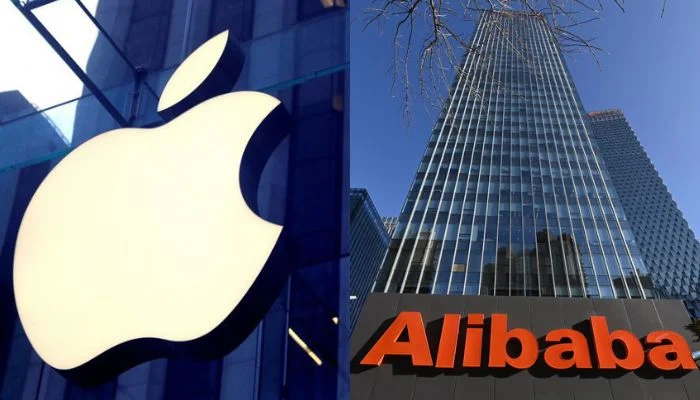
      Apple has quietly released a new Chinese-language support document explaining how eligible Mac users in mainland China can integrate Alibaba’s Qwen artificial intelligence models with features such as Siri and Writing Tools. The move represents another step in Apple’s China-focused artificial intelligence strategy following the regulatory approval of its partnership with Alibaba in July. According to Apple’s updated documentation, users who choose to activate the service will be able to receive more detailed and useful responses from Siri. The integration will allow Siri to analyze photographs and documents and provide information based on their contents. Users can also take advantage of Qwen through Writing Tools to generate written content and create images from descriptions or prompts. The new functionality comes with several requirements. Users must have a Mac running at least macOS 26.6, while they will also need to activate the feature and sign in with a new Qwen account. Apple’s documentation also states that Alibaba will not be permitted to use information obtained through the service to train its artificial intelligence models, addressing potential concerns surrounding user privacy and data usage. The partnership comes at a time when Apple is facing increasing competition in China’s personal computer market. According to research firm Omdia, Apple’s Mac shipments fell by approximately 9% year over year during the first quarter, reaching around 800,000 units. This gave Apple roughly 9% of China’s PC market. By comparison, Lenovo held the largest share at about 31%, with its Tianxi AI assistant playing an important role in the company’s AI-focused strategy. Huawei followed with approximately 16% of the market, supported by an artificial intelligence strategy closely connected to its HarmonyOS ecosystem. Integrating Qwen directly into Apple’s built-in software could therefore help Apple make its Macs more competitive in an increasingly AI-driven Chinese market. For Alibaba, the partnership provides an opportunity to expand Qwen’s presence beyond its own applications and cloud services. The company has previously indicated that Qwen is expected to support Apple Intelligence across Apple’s major product categories in China, including the iPhone, iPad, Mac and Vision Pro. However, Apple’s latest documentation currently focuses specifically on Mac computers. The development also arrives shortly after Alibaba introduced Qwen3.8-Max, a new model featuring 2.4 trillion parameters that the company describes as its most advanced AI system to date. Apple’s documentation, however, does not identify which specific Qwen model is being used to power the new Mac integration. Overall, the partnership highlights the growing importance of AI assistants in China’s technology market. By bringing Alibaba’s Qwen capabilities directly into Siri and Writing Tools, Apple can strengthen its AI offering while Alibaba gains access to millions of users through Apple’s established hardware and software ecosystem.

  • |

    AI builds 16 brand-new viruses in world-first genome experiment

    Artificial intelligence has designed 16 entirely new viruses that have never existed in nature before. Researchers in the US are calling it a genuine scientific breakthrough. According to the team behind the project, these newly designed viruses are fully functional and can replicate successfully in lab conditions. Scientists are describing the achievement as a major turning point for the field. This marks the first time AI has managed to design a complete viral genome from scratch. The viruses were specifically built to target bacteria, particularly drug-resistant strains of E. coli, and pose no risk to humans. The work was led by Dr Brian Hie and his team at Stanford University. They relied on genome language models, including systems called Evo1 and Evo2, trained using data from roughly two million bacteriophages. To keep the research safe, the team deliberately excluded any genetic data linked to viruses capable of infecting humans, animals or plants. That precaution was built into the training process from the very start. Hie explained that this represents a new level of complexity for what generative AI can design. He noted that building a complete, functional genome capable of replicating inside cells was completely uncharted territory for his team. Out of thousands of AI-generated designs, researchers narrowed the list down to around 300 for lab synthesis. After testing, only 16 of those proved effective at killing antibiotic-resistant E. coli. Scientists have framed the achievement as a potential breakthrough with real medical applications ahead. Tom Ellis, a synthetic genome expert at Imperial College London, called the work impressive but pointed out its current limitations. He noted that this particular genome remains one of the simplest and smallest to design successfully. Ellis added that concerns around AI-designed pathogens are often overstated compared to more realistic risks. He explained that modifying existing pathogens through gain-of-function techniques remains a far easier and more likely biosecurity threat. Still, some researchers in the wider scientific community remain cautious about where this technology could eventually lead. Experts at the Johns Hopkins Center for Health Security warned that proper oversight for this kind of AI-driven genome design doesn’t fully exist yet. Dr Filippa Lentzos from King’s College London argued that regulation needs to focus on multiple layers, including lab safety and DNA synthesis screening, rather than restricting AI models alone.

Leave a Reply

Your email address will not be published. Required fields are marked *