ocean can our
| | | | | |

The ocean can be our best bet vs climate change. It’s finally at the heart of COP31.

MANILA, Philippines – World leaders, lobbyists, and advocates are coming together in Antalya, Turkey, for the annual United Nations (UN) Climate Change Conference (COP31), which is being pegged as the “Blue COP” for its focus on the ocean.

Turkey is leading this year’s climate negotiations with Australia, pushing forward the concerns of Pacific Island countries vulnerable to rising seas, ocean warming, and acidification. Ocean action is also among Turkey’s top priorities, with the goal of “enhancing the climate resilience of coastal and marine ecosystems.”

Australian Minister for Climate Change and Energy Chris Bowen, the president of negotiations at COP31, called the ocean “nature’s greatest climate regulator.”

“COP31 is an opportunity to show what cooperation can deliver at this crucial time for both our climate and global energy security,” Bowen said in a statement Thursday, November 5.

“It will be about unlocking finance and investment, cheaper energy for households, accelerating electrification, and boosting action on the ocean, nature’s greatest climate regulator.”

The UN, meanwhile, called the ocean “the world’s greatest ally against climate change,” a great stabilizer of the Earth’s climate, but one that is suffering damage because of hotter global temperatures.

This year’s COP will also focus heavily on electrification — a response to the fuel supply shock and global energy crisis that upended economies. UN Climate Change Executive Secretary Simon Stiell took note that the summit “takes place against the backdrop of an ongoing fossil fuel cost crisis, which has sent energy and transport costs spiraling.”

fisherman
FISHING. A Filipino fisherman rows a boat during a trip near the disputed Scarborough Shoal, in Masinloc, Zambales province, Philippines, on July 18, 2022. File photo by Lisa Marie David/Reuters
A vast gap in climate talks

The ocean covers more than 70% of the world. It works as a buffer against the worst impacts of climate change by absorbing carbon dioxide emissions and heat from the atmosphere. Yet it has been historically absent in the climate negotiations.

Only in recent years has there been a growing momentum to actively integrate the ocean into climate talks.

Ocean-based actions can close the emissions gap — or help countries close the gap between their declared climate targets and the amount of emissions they are actually reducing — by up to 35%.

These “ocean-based actions” can take various forms: restoring marine ecosystems such as mangroves and seagrass beds, phasing out offshore oil and gas production, or cutting down emissions of maritime industries like shipping, coastal tourism, and aquatic food production.

Marine Lecerf, head of international policy at Ocean & Climate Platform, noted that the ocean was only first explicitly mentioned in the preamble of the Paris Agreement in 2015. This was followed by a mention of the ocean in a COP decision during COP25 in Madrid, where the Ocean and Climate Change Dialogue was also established.

In 2025, Brazil and France launched a global initiative called the “Blue NDC Challenge,” urging parties to the Paris Agreement to keep in mind the ocean when they update their climate commitments. (READ: 2026 NDC: Philippines promises to reduce more carbon emissions on its own)

“For too long, the ocean has been viewed primarily as a victim of climate change, rather than as a powerful part of the solution,” Lecerf told Rappler in an email. “It has also too often been treated as a separate agenda, when in fact it is central to delivering on countries’ broader climate and development priorities.”

Lecerf said the ocean is integral to energy transition and food security, adding that “the challenge now is to fully recognize and harness this potential.”

‘RAHUI.’ Fish swim at a coral reef inside a ‘Rahui’ or restricted area in Teahupo’o, Tahiti, French Polynesia, on August 4, 2024. File photo by Carlos Barria/Reuters

Other organizations holding significant influence in climate and environment discourse are also backing this ocean current at COP31.

“A stable climate depends on a healthy ocean,” the World Wide Fund for Nature (WWF) said in a paper, released in August, that outlines the organization’s expectations at COP31 for action. 

“COP31 should move ocean action from recognition to implementation by establishing it as a core delivery pathway for achieving the goals of the Paris Agreement,” WWF said. This includes, among others, making funding available for countries and communities who need it.

What this means for the Philippines

The Philippines is bound by the Philippine Sea, the West Philippine Sea, Celebes Sea, and the Sulu Sea. These waters provide livelihood, home, and transport routes to many Filipinos.

“From the Philippine perspective, the significance of an oceans-focused COP31 is immense,” John Leo Algo, a Filipino climate activist who has been present at many climate summits, told Rappler.

Algo said millions of fisherfolk are at the brunt of the climate crisis, facing the consequences of warmer waters and lower fish catch.

“Food systems and ecosystems alike will be highly exposed to the extreme heat and vulnerable to adverse impacts in at least the next few months,” said Algo.

According to Philippine Environment Undersecretary Analiza Rebuelta-Teh, who is part of the Philippine delegation in Turkey, the Philippines will be supportive of the ocean agenda.

“That is why we have included BMB (Biodiversity Management Bureau) in the delegation to monitor and support the ocean-climate agenda,” Rebuelta-Teh told Rappler in a message.

The Philippines has one of the longest coastlines in the world. It sits at the heart of the Coral Triangle, the global center of marine biodiversity.

In March 2026, the Philippines rolled out a national roadmap that outlined steps to protect and manage the country’s mangrove forests, seagrass beds, and coastal communities.

How this COP31 ocean agenda will translate for communities in the Philippines and other nations remains to be seen. – Rappler.com

This story was produced as part of the COP31 Climate Change Media Partnership, a journalism fellowship organized by Internews’ Earth Journalism Network, Informed Earth, and the Stanley Center for Peace and Security.

Similar Posts

  • | | |

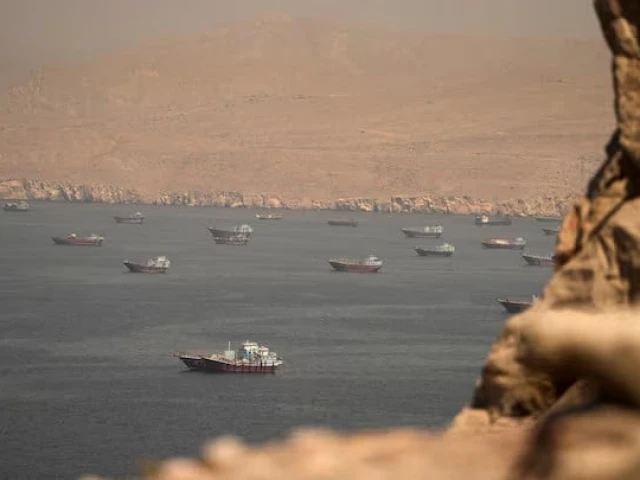
    Iran and Oman discuss temporary shipping corridor …

    Iran and Oman are discussing a proposal to establish a temporary joint shipping corridor through the Strait of Hormuz one of the world’s most important routes for oil and gas shipments. The proposal was discussed during a meeting in Tehran between Omani Foreign Minister Badr Al-Busaidi and Iranian Foreign Minister Abbas Araghchi. A joint statement described their talks as constructive and said both sides discussed developments surrounding the strategic waterway. The discussions come as tensions remain high between Iran and the United States. US President Donald Trump said Tuesday that mines had been removed or destroyed in international waters around the Strait of Hormuz. He warned that any vessel found placing new mines would face immediate military action. Trump also said the United States was closely monitoring the waterway and maintained a zero-tolerance policy toward further mine placement. The Strait of Hormuz is a crucial global energy route with roughly one-fifth of the world’s crude oil and liquefied natural gas flows passing through it before the conflict. Shipping activity has fallen sharply during the current crisis, with only two commodity vessels reportedly using the waterway on Monday. Iran has also communicated its position on the strait through Pakistan. Iranian officials reportedly want provisions of an earlier Islamabad memorandum to be implemented including arrangements requiring safe passage for commercial shipping and consultation with Oman over the waterway’s future management. Meanwhile, Washington has expanded economic pressure on Tehran. US Treasury Secretary Scott Bessent announced additional sanctions targeting Iranian individuals entities and vessels warning that countries continuing to support Iran’s economy could face consequences. China has criticized the new US measures saying unilateral sanctions could disrupt global economic and financial stability. Beijing is a major buyer of Iranian oil and has urged Washington and Tehran to return to negotiations. The United States has also warned that military action against Iran remains possible. Defence Secretary Pete Hegseth said Washington would use military force if necessary and did not rule out further strikes around Iran or the Strait of Hormuz. Iran, meanwhile, has promised to respond to the expanded sanctions and warned that threats to its infrastructure could trigger attacks against US interests and regional energy routes. The diplomatic discussions involving Iran, Oman and Pakistan could therefore become important for restoring commercial shipping through the Strait of Hormuz. However, continued military threats, sanctions and tensions between Tehran and Washington remain major obstacles to a lasting agreement.

  • |

    Philadelphia man indicted on federal civil rights charges in anti-Islamic arson attack

    Federal prosecutors have indicted 60-year-old Vincent Lang of Philadelphia for deliberately setting fire to the Northeast Philadelphia Islamic Center. A federal grand jury charged Lang with one count of malicious damage by fire to a building used in interstate commerce and one count of damage to religious real property. The Department of Justice confirmed that the indictment explicitly alleges Lang carried out the arson because of the religious character of the building, specifically targeting it because it was a Muslim place of worship. According to court documents and surveillance footage, the perpetrator approached the mosque on Tyson Avenue during the early hours of 5 July, ignited an improvised incendiary device, and threw it into the entryway. Local authorities reported that no injuries occurred during the blaze. Lang has remained in federal custody following his initial arrest on 16 July. If convicted on the federal civil rights charges, he faces a mandatory minimum of five years in prison and up to a maximum penalty of 40 years.

  • |

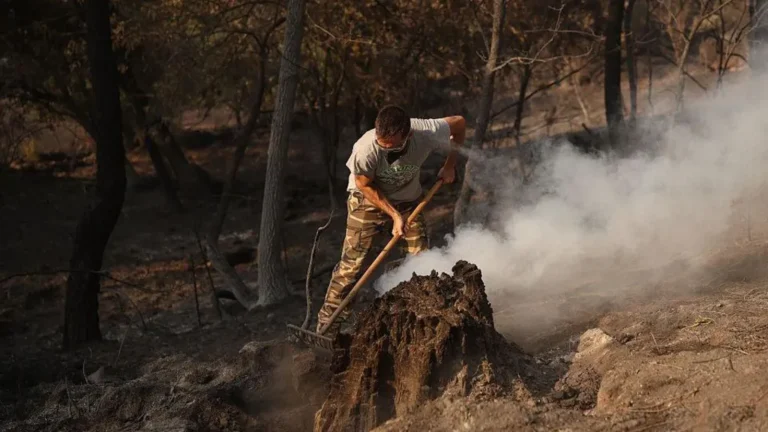
    Thousands return home in Spain as new heatwave heightens wildfire threat

    Thousands of residents have been allowed to return to their homes after authorities eased evacuation orders in several parts of Spain affected by devastating wildfires. However, officials are warning that a new heatwave expected to hit the country could reignite existing fires and create fresh emergencies as firefighters continue battling dangerous conditions. Restrictions have been lifted in areas across Toledo, Madrid, Ávila and Castellón, allowing many displaced families to go back home after days of uncertainty. In the Madrid region alone, around 24,000 people have been permitted to return, while lockdown measures affecting another 20,000 residents have also been removed. Despite the progress, several fires remain active. One of the biggest concerns is the wildfire near Burgohondo, about 150 kilometers west of Madrid, which has already burned more than 43,000 hectares of land. Authorities say it is now considered the largest wildfire ever recorded in Spain. Across the country, more than 207,000 hectares have been destroyed by wildfires so far this year. Spanish Prime Minister Pedro Sánchez said the coming hours would be critical as firefighters work to bring the remaining blazes under control. He noted that conditions had improved but warned that rising temperatures, low humidity and strong winds could quickly reverse the progress made in recent days. Emergency crews remain on high alert as Spain prepares for its fourth major heatwave of the summer. Fire officials said the Burgohondo blaze had not spread overnight, but they remain concerned that extreme weather could cause new flare ups. Firefighters are focusing on securing a perimeter stretching about 180 kilometers to prevent the flames from spreading into nearby communities and forests. Among those returning home are residents of the towns of Navas del Rey and Chapinería, who had been evacuated earlier in the week. Many families have found damaged homes, destroyed property and lost livelihoods. Chapinería Mayor Lucía Moya said the community faces a long recovery, with many residents needing support to rebuild their lives after the disaster. Some evacuees are still unable to return. Around 300 people displaced from the nearby Tiétar Valley continue to stay in temporary accommodation provided by local authorities. Officials have pledged to maintain support services until it is safe for everyone to go home. While no deaths have been reported in the fires near Madrid or Castellón, authorities confirmed that a woman injured in an earlier wildfire in Almería has died in hospital. The Almería fires, which occurred earlier this month, claimed the lives of 14 people, including citizens of the United Kingdom, Belgium, the United States, France and Spain. Wildfires are also creating challenges elsewhere in Europe. In neighboring France, firefighters continue to monitor large blazes in the Gironde region, where several flare ups have occurred despite efforts to stabilize the fires. Authorities have warned that temperatures could reach 41 degrees Celsius, with dry winds increasing the risk of further outbreaks. Special protection measures have also been introduced around defense and aerospace facilities located in the affected area. Portugal and Greece are facing similar threats. Emergency crews in northern Portugal are working to contain an active wildfire near Valpaços while protecting nearby infrastructure, including a water treatment plant and a gas storage facility. In Greece, firefighters are responding to blazes on the island of Paros and in the southern mainland region of Trifylia. Scientists continue to warn that climate change is contributing to longer and more intense heatwaves across Europe. Rising temperatures, prolonged dry conditions and stronger winds have increased the frequency and severity of wildfires, making firefighting operations more difficult and placing greater pressure on communities across the continent. Authorities are urging residents in high risk areas to remain cautious as extreme weather conditions are expected to continue in the coming days.

Leave a Reply

Your email address will not be published. Required fields are marked *