conditions supporting information
| |

Conditions supporting information integrity being challenged – WEF

The World Economic Forum’s (WEF) Global Future Council on Information Integrity released a report on Wednesday, November 11, outlining the challenges of maintaining an environment of reliable information in an age of artificial intelligence and disinformation proliferation, and possible responses that can help keep information integrity alive.

The report, titled, “The Future of Information Integrity: Charting a Global Path in a Fragmented World,” examines information integrity as a systemic challenge across four interconnected layers: creation, consumption, design and distribution, and ecosystem incentives.

Maria Ressa, Rappler CEO and co-chair of the Council, said in the report that information integrity is “the foundation of democracy and thriving societies.”

“A deficit in reliable information directly paralyzes our collective capacity to solve global challenges, from climate change to pandemics. Yet the conditions that have traditionally supported information integrity are being transformed and challenged at a scale and speed with few precedents,” Ressa said.

The report gives case studies and provides opportunities for various sectors— from governments and civil society to tech companies and creators of content — to learn and respond to the changing times, taking on complementary roles to keep the information ecosystem whole.

The creation layer

For the creation layer, the report notes how creators of different stripes approach information integrity differently and can be influenced by factors like monetization strategies and attention.

The report noted how there were gaps in sourcing in editorial verification among both non-traditional creators and established newsrooms.

While creator-led media isn’t necessarily unreliable, the report noted how “systems where editorial duties, training and accountability are unevenly distributed can reach large audiences.”

Generative and synthetic media add to the problem: By generating plausible information and packaging it as real, it can even make genuine material be dismissed as fake. Generative and synthetic media weaken the value of authentic recordings as evidence and makes accountability more complicated.

As regards platform incentives, the report said independent creators who rely on subscriptions or donations to make money off their content might also blur the boundary between reporting, commentary, promotion, and identity-based influence.

This issue becomes more pressing when platforms algorithmically prioritize promoting controversial or emotionally manipulative content, which incentivizes the creation of that type of content.

This sort of platform incentive also feeds into certain actions that can harm public participation, such as the spread of gender-based abuse, harassment, or threats against women, minorities, journalists and other targeted groups.

The consumption layer

The report said that people acquire information in a number of ways and from different sources, and this pluralism makes it difficult to know which institutions to trust with information.

Due to a decline in trust in governments and traditional media, people turn to alternative institutions or authorities for information, such as content creators, online communities, partisan outlets, or encrypted messaging channels — all with less accountability measures in place for disseminating bad information.

Because there is distrust in governments and traditional media, trying to rebuild that trust can also be weaponized, such as government-led initiatives to fact-check reports.

This coexistence of independent and state-affiliated information verification influences the environment of fact-checking. Fact-checks can thus be seen as both public-service journalism and tools for political control.

Further, gaps in access to information also make things more difficult as “gaps in access and usability become gaps in civic participation, which can create populations that are systematically less able to check claims, compare sources or benefit from corrections.”

The design and distribution layer

How information is transmitted — the technical infrastructure where information exists within — is also discussed, as different types of distribution infrastructure (such as forums, encrypted messaging, agentic AI, and others) can also influence the incentive models and the opportunities for stakeholders to intervene in keeping information integrity.

This layer, which includes distribution methods, also contains infrastructure gatekeepers.

From “technical blocking, telecommunications control, restrictive media and cybercrime laws, intimidation of journalists, domain seizures, surveillance and coordinated amplification of official narratives,” there are a range of ways for repressive governments to control information.

“The challenge,” the report states, “is to strike a balance between action and inaction so as not to restrict the right to seek and receive information while still limiting disinformation that fuels polarization, harms human rights and undermines trust in institutions that provide essential services such as public health.”

The ecosystem incentives layer

The ecosystem incentives layer deals with the issues surrounding how newsrooms and other sources of information survive.

With circulation and advertising revenue for news media and other forms of information-sharing — libraries, archives, civil society groups, and the like — drying up due to how information-sharing has changed, there is now a need to change how people view reliable information beyond just clicks and attention.

The report emphasizes that the value of such “information infrastructure” cannot be captured fully by clicks or short-term revenue.

Public service media (PSM), for example, can provide accessible news, education, and emergency information, but its contribution depends on editorial independence, sustainable funding, transparency, and the ability to reach audiences through digital channels. Meanwhile, open-knowledge projects can be vulnerable to political pressure, legal threats, and resource constraints such as funding issues.

The report suggests interventions that include various sectors — from government, philanthropy, and industry — supporting independent journalism, PSM, libraries, archives, open-knowledge projects, and local civil-society infrastructure “through sustainable, transparent and plural funding models,” among other recommendations.

These challenges can’t be resolved alone

Council co-chair Amanda Storey, who is also managing director of trust and safety at Google, said the report “approaches information integrity as a systemic challenge, examining interventions, case studies and future horizons across creation, consumption, design, distribution and ecosystem incentives.”

“Its central premise is that no single technology, institution or sector can resolve these challenges alone. Instead, the future of information integrity depends on whether governments, industry, media, civil society, researchers and communities choose to build an ecosystem in which trustworthy information can continue to thrive,” she added.

The full report from the WEF can be downloaded here. – Rappler.com

Similar Posts

  • |

    Spain tightens Italy border checks amid migration dispute

    Spain has resumed border checks on travellers arriving from Italy amid a growing disagreement between the two European countries over irregular migration. Spanish authorities inspected around 200 passengers on the first day of the measures, which were introduced at the country’s six busiest airports. The Interior Ministry said 199 people arriving on 12 flights from Italy were checked at airports in Madrid, Barcelona, Seville, Bilbao, Alicante and Valencia. The temporary controls began on Saturday and are scheduled to remain in place until September 7. The move follows Italy’s decision to introduce its own checks on travellers arriving from Spain. Rome suspended the usual Schengen arrangements with Spain from August 1, saying the decision was linked to concerns over a sharp increase in irregular migration. Italian authorities said their measures would remain in place at least until August 15. The dispute intensified after around 72,000 migrants reportedly reached Spain’s North African enclave of Ceuta on July 30, prompting renewed concerns over migration pressures and border security. Italy has stressed that its checks are targeted rather than a blanket restriction on European travellers. Officials said Spanish and other European Union citizens would not be affected by the measures, which focus mainly on non-EU nationals travelling from Spain by air or sea. Italian Foreign Minister Antonio Tajani said Rome hoped to remove the restrictions as soon as the perceived security risk had eased. The latest developments have raised concerns about tensions within the European Union’s passport-free travel system. The Schengen Area allows people to move across 29 European countries without routine internal border checks, although individual member states can temporarily restore controls in response to security threats, public-order concerns or exceptional circumstances.

  • |

    Israel’s influence in Washington weakens under Trump says former envoy

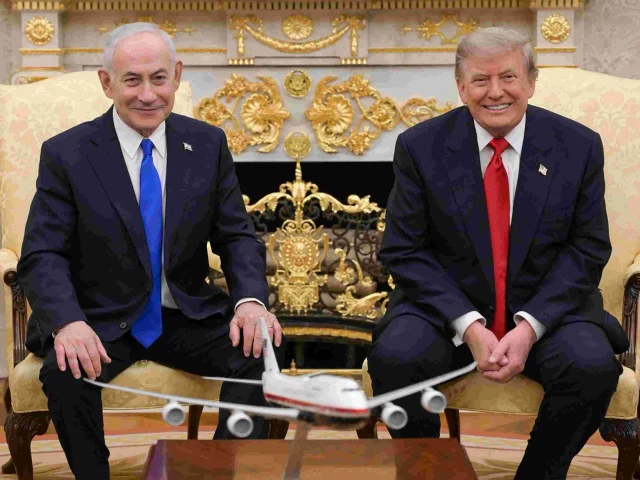
    Former Israeli ambassador to the United States Mike Herzog has said Israel’s ability to influence decisions in Washington has declined significantly during President Donald Trump’s current administration. He also warned that support for Israel among the American public has been steadily weakening, creating long term challenges for the country’s relationship with its closest ally. Speaking in an interview with Israeli radio station 103FM, Herzog said the close personal bond that once existed between Israeli Prime Minister Benjamin Netanyahu and Trump no longer appears as strong as before. While Netanyahu recently described his latest meeting with Trump at the White House as one of their best meetings, Herzog argued that the event should be viewed more carefully. In his opinion, the meeting lacked the warmth and personal interaction that previously defined the relationship between the two leaders. Herzog said one positive outcome for Netanyahu was that Trump avoided publicly criticising Israel or placing any visible demands on the Israeli government during the meeting. He suggested that this helped Netanyahu present the visit as a diplomatic success, particularly as Israel moves closer to national elections. According to Herzog, the prime minister had a political interest in showing that his ties with Trump remain strong despite growing speculation that relations between the two leaders have cooled. The former ambassador also pointed to several details surrounding the visit that, in his view, reflected a more distant relationship. Netanyahu entered the White House through a side entrance instead of receiving a more prominent arrival. There was no private one on one meeting between the leaders and media attention surrounding the visit remained limited. Herzog said these diplomatic signals suggested the White House wanted to avoid creating the impression that Trump was closely aligned with Netanyahu. He linked this cautious approach to political concerns in the United States following the conflict with Iran. Herzog said many Americans believe Israel played a major role in drawing the United States into the confrontation. Since the conflict has been unpopular with parts of the American public, he believes Trump is careful not to appear as though he acted under pressure from the Israeli leadership. Even so, Herzog said there are currently no major disagreements between Washington and Tel Aviv over Iran, although the relationship is no longer as close as it once was. Beyond the immediate political situation, Herzog warned that Israel’s overall standing in the United States has suffered lasting damage. He said changes in American society, political shifts, economic developments, international campaigns against Israel and policy decisions made by successive Israeli governments have all contributed to a steady decline in public support. He also acknowledged that the actions of Israel’s current government and the ongoing military campaign in Gaza have negatively affected how many Americans view the country. Netanyahu himself recently admitted that support for Israel has weakened in the United States, arguing that social media has played a major role in shaping public opinion. His comments came as recent polling showed a noticeable increase in negative attitudes toward both the Israeli government and the Israeli people. A survey conducted by the Pew Research Center found that public opinion has shifted over the past several years. The percentage of Americans holding unfavourable views of the Israeli people rose from 28 percent in 2019 to 42 percent in 2026. During the same period, favourable views of the Israeli government fell from 41 percent to 32 percent. International criticism of Israel has also intensified since the war in Gaza began in October 2023. In November 2024, the International Criminal Court issued arrest warrants for Prime Minister Netanyahu and former Defence Minister Yoav Gallant on allegations of war crimes and crimes against humanity linked to Israel’s military operations in Gaza. According to reported figures, more than 73,000 people have been killed during the conflict, which has continued despite a truce agreement reached in October 2025.

  • |

    Liberal democrats urge PM to intervene over EU entry-exit system disruptions

    The Liberal Democrats have called on Prime Minister Andy Burnham to directly contact European leaders and lobby for an immediate suspension of the EU’s Entry-Exit System (EES) until at least September. Speaking at Heathrow Airport, foreign affairs spokesperson Calum Miller criticised the biometric scheme as a “bungled, malfunctioning border system” that risks ruining summer holidays for millions of British citizens during peak travel periods. The call comes as approximately 2.2 million British holidaymakers prepare to travel abroad over the weekend following the start of school summer breaks across the UK. Spain, Greece, Portugal, Italy, and Turkey remain the primary destinations. While the EES requires non-EU citizens to undergo biometric registration, including photographs and fingerprinting, border police have retained discretion to relax checks during severe delays. Several European nations have already introduced temporary flexibilities or experienced tech issues, with automated border booths in France failing to function and Greece opting to exempt British nationals from additional biometric checks. Transport Secretary Heidi Alexander has held discussions with EU commissioners and French counterparts regarding cross-Channel concerns, particularly at French border posts situated in the UK, such as the Port of Dover. To mitigate severe queueing, French border police have temporarily suspended fingerprinting and photography for car passengers at ferry ports and the Eurotunnel terminal. Consequently, queue times at Dover have remained manageable, staying under 40 minutes despite heavy traffic volumes. Meanwhile, airlines such as easyJet are pressing the EU to extend border flexibility through the end of October to prevent further travel disruption.

  • | | |

    Iran demands Qatar probe over missing pilots

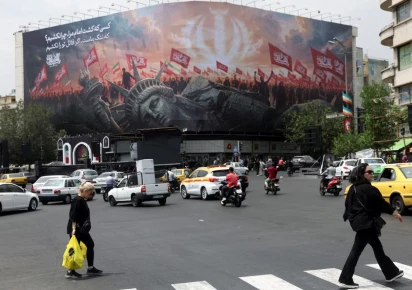
    TEHRAN: Iran has asked Qatar to allow an Iranian military fact-finding team to enter the country to investigate the fate of pilots Tehran says went missing after an incident involving Iranian aircraft, adding another layer of tension to already strained regional relations. Iranian military official Mohammad Baqerzadeh, commander of the Armed Forces General Staff’s Committee for the Search for Missing Persons, said an Iranian Air Force expert team had been waiting for months to travel to Qatar, according to Iranian media. Baqerzadeh accused Qatari authorities of repeatedly delaying the investigation and called on the International Committee of the Red Cross to intervene in the case. Qatar, however, has rejected Iran’s claim that it is holding Iranian pilots. Doha said its search-and-rescue teams recently recovered the remains of one pilot after Iranian aircraft entered Qatari airspace in March and failed to respond to repeated attempts to establish contact. Qatari authorities said they had contacted Tehran to coordinate the transfer of the remains and invited Iranian officials to examine details of the search-and-rescue operation. Qatar said it had not received a response. The dispute comes as Tehran continues to focus heavily on the security of the Strait of Hormuz, one of the world’s most important energy shipping routes. Iran says air defence capacity survived war Separately, an Islamic Revolutionary Guard Corps official claimed that more than 85 per cent of Iran’s air-defence production capacity survived the recent conflict. According to Iranian media reports, the official said attacks on military production facilities had not significantly reduced the production or delivery of missiles and air-defence systems. He also claimed that production in some areas had increased and that Iran’s operational air-defence capabilities were now stronger than at the beginning of the fighting. The claims could not be independently verified. Hormuz shipping talks continue Iran has also announced progress in negotiations with Oman over new shipping routes through the Strait of Hormuz. Foreign Ministry spokesman Esmaeil Baghaei said Tehran and Muscat had reached an agreement on a shipping-route map following weeks of technical discussions. The negotiations began after a memorandum of understanding was signed in June to develop safer navigation arrangements. Foreign Minister Abbas Araghchi stressed that the technical talks with Oman should not be confused with negotiations over reopening the waterway. He said existing maritime routes were no longer functional and that Iran and Oman were working on a temporary route that could eventually become permanent. Tehran links security to US actions Iranian officials continue to insist that the full restoration of security in the strait depends on an end to what Tehran describes as US military pressure, threats and a naval blockade. Deputy Foreign Minister Kazem Gharibabadi also declared that the Strait of Hormuz would remain under Iranian control, while accusing Washington of suffering strategic setbacks. The statements underline the widening gap between Iran and the United States over the strategic waterway, despite technical discussions between Iran and Oman aimed at facilitating maritime navigation. Hezbollah commander reportedly killed Meanwhile, tensions have also continued along Iran’s regional front. Israel’s military said it killed Abu Hassan Alaa, described as a senior Hezbollah commander, in a strike in southern Lebanon. The Israeli army said the attack targeted a Hezbollah headquarters in the Ansar area. Hezbollah had not immediately commented on the claim. The developments show how multiple disputes remain intertwined across the region, from missing military personnel and air-defence claims to the sensitive question of shipping through Hormuz. For Tehran, however, control and security of the strait remain central. While Iran and Oman appear to be making technical progress on navigation arrangements, Iranian officials continue to maintain that any broader reopening of the waterway will depend on wider political and security conditions.

  • |

    Gaza students overcome adversity for top results

    Thousands of students across the Gaza Strip achieved success in this year’s Tawjihi high school examinations despite months of conflict, displacement and severe disruptions to daily life, demonstrating remarkable determination to continue their education under extraordinary circumstances. The annual Tawjihi examinations, which play a decisive role in determining admission to universities and future careers, were completed by thousands of Palestinian students who prepared for the tests while living through prolonged instability, damaged infrastructure and limited access to educational resources. Among the success stories were three siblings from Khan Younis who earned outstanding grades after months of dedicated study. Despite facing repeated challenges during the academic year, the family celebrated their achievements, describing education as a source of hope and resilience. The students said the difficult conditions often made it emotionally exhausting to continue studying. However, they remained focused on their academic goals and credited their family for providing encouragement throughout the year. They said their success represented not only personal achievement but also a reward for months of perseverance. The family’s journey was particularly challenging because two of the siblings have physical disabilities, making regular attendance at private tuition difficult. Their parents arranged for teachers to conduct lessons at home, ensuring they could continue their studies despite mobility challenges and the difficult security situation. Their mother said years of continuous support, confidence and determination helped her children overcome obstacles. She expressed pride in their achievements, saying their success proved that dedication and family support can help students overcome even the most difficult circumstances. Education officials said nearly 89,000 students from the occupied Palestinian territories took the Tawjihi examinations this year, while thousands of Palestinian students living abroad also participated. Authorities added that more than 36,000 students from Gaza alone sat for the examinations despite the ongoing humanitarian crisis. Officials also noted the heavy impact of the conflict on the education sector. Hundreds of schools have reportedly been damaged, while many educational institutions remain unusable because of destruction. In many areas, students attended lessons inside temporary shelters, tents or partially damaged buildings where classrooms lacked desks, chairs and basic learning facilities. Teachers continued providing instruction despite the challenging conditions. Many educators said they had to support students emotionally as well as academically because many had lost family members or been forced to leave their homes during the conflict. One mathematics teacher said students often arrived carrying emotional trauma, making psychological support just as important as classroom instruction. She explained that teachers tried to encourage students, helping them remain focused on their studies despite the hardships surrounding them. Several students also shared deeply personal stories of loss. One student who lost multiple close family members during the conflict said completing her examinations became both an emotional struggle and a tribute to her loved ones. Although she celebrated passing the exams, she said the moment was bittersweet because many family members were no longer alive to witness her achievement.

Leave a Reply

Your email address will not be published. Required fields are marked *