conditions supporting information
| |

Conditions supporting information integrity being challenged – WEF

The World Economic Forum’s (WEF) Global Future Council on Information Integrity released a report on Wednesday, November 11, outlining the challenges of maintaining an environment of reliable information in an age of artificial intelligence and disinformation proliferation, and possible responses that can help keep information integrity alive.

The report, titled, “The Future of Information Integrity: Charting a Global Path in a Fragmented World,” examines information integrity as a systemic challenge across four interconnected layers: creation, consumption, design and distribution, and ecosystem incentives.

Maria Ressa, Rappler CEO and co-chair of the Council, said in the report that information integrity is “the foundation of democracy and thriving societies.”

“A deficit in reliable information directly paralyzes our collective capacity to solve global challenges, from climate change to pandemics. Yet the conditions that have traditionally supported information integrity are being transformed and challenged at a scale and speed with few precedents,” Ressa said.

The report gives case studies and provides opportunities for various sectors— from governments and civil society to tech companies and creators of content — to learn and respond to the changing times, taking on complementary roles to keep the information ecosystem whole.

The creation layer

For the creation layer, the report notes how creators of different stripes approach information integrity differently and can be influenced by factors like monetization strategies and attention.

The report noted how there were gaps in sourcing in editorial verification among both non-traditional creators and established newsrooms.

While creator-led media isn’t necessarily unreliable, the report noted how “systems where editorial duties, training and accountability are unevenly distributed can reach large audiences.”

Generative and synthetic media add to the problem: By generating plausible information and packaging it as real, it can even make genuine material be dismissed as fake. Generative and synthetic media weaken the value of authentic recordings as evidence and makes accountability more complicated.

As regards platform incentives, the report said independent creators who rely on subscriptions or donations to make money off their content might also blur the boundary between reporting, commentary, promotion, and identity-based influence.

This issue becomes more pressing when platforms algorithmically prioritize promoting controversial or emotionally manipulative content, which incentivizes the creation of that type of content.

This sort of platform incentive also feeds into certain actions that can harm public participation, such as the spread of gender-based abuse, harassment, or threats against women, minorities, journalists and other targeted groups.

The consumption layer

The report said that people acquire information in a number of ways and from different sources, and this pluralism makes it difficult to know which institutions to trust with information.

Due to a decline in trust in governments and traditional media, people turn to alternative institutions or authorities for information, such as content creators, online communities, partisan outlets, or encrypted messaging channels — all with less accountability measures in place for disseminating bad information.

Because there is distrust in governments and traditional media, trying to rebuild that trust can also be weaponized, such as government-led initiatives to fact-check reports.

This coexistence of independent and state-affiliated information verification influences the environment of fact-checking. Fact-checks can thus be seen as both public-service journalism and tools for political control.

Further, gaps in access to information also make things more difficult as “gaps in access and usability become gaps in civic participation, which can create populations that are systematically less able to check claims, compare sources or benefit from corrections.”

The design and distribution layer

How information is transmitted — the technical infrastructure where information exists within — is also discussed, as different types of distribution infrastructure (such as forums, encrypted messaging, agentic AI, and others) can also influence the incentive models and the opportunities for stakeholders to intervene in keeping information integrity.

This layer, which includes distribution methods, also contains infrastructure gatekeepers.

From “technical blocking, telecommunications control, restrictive media and cybercrime laws, intimidation of journalists, domain seizures, surveillance and coordinated amplification of official narratives,” there are a range of ways for repressive governments to control information.

“The challenge,” the report states, “is to strike a balance between action and inaction so as not to restrict the right to seek and receive information while still limiting disinformation that fuels polarization, harms human rights and undermines trust in institutions that provide essential services such as public health.”

The ecosystem incentives layer

The ecosystem incentives layer deals with the issues surrounding how newsrooms and other sources of information survive.

With circulation and advertising revenue for news media and other forms of information-sharing — libraries, archives, civil society groups, and the like — drying up due to how information-sharing has changed, there is now a need to change how people view reliable information beyond just clicks and attention.

The report emphasizes that the value of such “information infrastructure” cannot be captured fully by clicks or short-term revenue.

Public service media (PSM), for example, can provide accessible news, education, and emergency information, but its contribution depends on editorial independence, sustainable funding, transparency, and the ability to reach audiences through digital channels. Meanwhile, open-knowledge projects can be vulnerable to political pressure, legal threats, and resource constraints such as funding issues.

The report suggests interventions that include various sectors — from government, philanthropy, and industry — supporting independent journalism, PSM, libraries, archives, open-knowledge projects, and local civil-society infrastructure “through sustainable, transparent and plural funding models,” among other recommendations.

These challenges can’t be resolved alone

Council co-chair Amanda Storey, who is also managing director of trust and safety at Google, said the report “approaches information integrity as a systemic challenge, examining interventions, case studies and future horizons across creation, consumption, design, distribution and ecosystem incentives.”

“Its central premise is that no single technology, institution or sector can resolve these challenges alone. Instead, the future of information integrity depends on whether governments, industry, media, civil society, researchers and communities choose to build an ecosystem in which trustworthy information can continue to thrive,” she added.

The full report from the WEF can be downloaded here. – Rappler.com

Similar Posts

  • |

    North Korean hackers develop AI tools for cyberattacks

    SEOUL: A North Korean-linked hacking group has reportedly expanded its use of artificial intelligence to strengthen cyberattacks, automate operations and analyse stolen data. The group, identified as Kimsuky, has developed and collected a range of AI-related tools that could help its operators conduct attacks more efficiently, according to a South Korean cybersecurity company. The company said it discovered infrastructure linked to Kimsuky containing several programs designed to run and manage artificial intelligence models locally. These included Ollama, GPT4All and Msty. The hackers also appeared to be using retrieval-augmented generation technology. The system can help AI models search and process large collections of documents. Researchers said the use of locally operated AI models could allow the group to analyse sensitive information without sending data to external AI services. This could give hackers greater control over stolen material and reduce their reliance on third-party platforms. The investigation also uncovered AI agent development frameworks, speech-to-text software and an AI-assisted coding tool called Cursor. According to the cybersecurity firm, the findings indicate that Kimsuky may be moving beyond the simple use of generative AI for creating phishing messages. The group could now be seeking to integrate existing AI models into different stages of its cyber operations. These may include malware development, stolen-data analysis and attack automation. Researchers also identified documents related to finance and cryptocurrency on the infrastructure. Some of the files appeared to have been generated using artificial intelligence. The documents were designed to look like legitimate investment reports and other professional workplace material. Such files could potentially be used as decoys or to make malicious campaigns appear more credible. The findings have not been independently verified. However, cybersecurity researchers and government agencies have repeatedly linked North Korean state-backed groups to international cyber operations. North Korean cyber units have been accused of conducting espionage campaigns, stealing money and targeting cryptocurrency-related assets. Authorities in the United States and South Korea have previously warned about the activities of such groups. Kimsuky has long been associated with cyber-espionage operations targeting governments, organisations and individuals. The group has also been accused of gathering intelligence to support North Korea’s strategic interests. The latest findings point to a growing role for artificial intelligence in cyber operations. Security researchers have warned that AI tools can make phishing campaigns more convincing and help attackers process information and develop malicious software more quickly.

  • |

    Deadly explosion near Moscow restaurant leaves several dead

      A homemade explosive device carried by a woman detonated near a high-end restaurant in central Moscow on Saturday evening, killing at least three people and injuring 21 others, according to Russian authorities. The incident has triggered speculation on social media about a possible connection to the ongoing war between Russia and Ukraine, although no official evidence has been presented linking the blast to the conflict. The explosion took place shortly before 8 p.m. near an Italian restaurant located inside one of Moscow’s famous Stalin-era skyscrapers at Kudrinskaya Square. Police said the blast occurred after a woman carrying an improvised explosive device attempted to enter the restaurant but was stopped by a security guard. Russia’s National Anti-Terrorism Committee (NAK) reported that the woman, the security guard, and a customer inside the Balzi Rossi restaurant were killed immediately following the explosion. Authorities said several other individuals were injured in the attack and emergency services were dispatched to the scene. The two additional victims who had been hospitalized died from their injuries, potentially raising the death toll to five. However, officials had not formally confirmed those additional deaths. The report also stated that six injured people remained in serious condition. Moscow Mayor Sergei Sobyanin expressed condolences to the families of those killed and injured, describing the incident as a serious terrorist attack. He promised that those responsible would face punishment. However, authorities did not immediately release the identities of the victims, name any suspects, or provide details about who may have been behind the explosion. Unconfirmed reports circulating on social media suggested that the attack may have been aimed at a senior Russian military figure. According to these claims, the alleged target survived the incident, although officials have not verified this information. The attack comes more than four years after Russia launched its full-scale invasion of Ukraine. In recent months, Russian authorities have increased security measures around senior military officials following several assassinations and attempted attacks that Moscow has blamed on Kyiv. Ukraine has not claimed responsibility for the Moscow explosion and had not issued an immediate response. Some Russian military bloggers quickly accused Ukraine of involvement, but those claims were made without publicly available evidence. The Ukrainian government has not commented on the allegations. Russian newspaper Kommersant raised the possibility that the woman carrying the explosive device may not have been aware of its presence or purpose. The publication suggested that the bomb could have been remotely activated by another person rather than being intentionally detonated by the woman herself. The restaurant’s official website stated that the venue had been closed on Saturday due to a private event, although details about the gathering were not immediately available. The incident has drawn comparisons with a previous high-profile bombing in 2023 that killed Vladlen Tatarsky, a well-known Russian pro-war blogger. In that case, a bomb hidden inside a small statue exploded while Tatarsky was holding it during an event in St. Petersburg. A young woman, Darya Trepova, was later sentenced to 27 years in prison for delivering the explosive device. She claimed that she had been following instructions from a man based in Ukraine who had provided her with money. Ukrainian officials did not accept responsibility for the attack but also did not directly deny involvement at the time. The latest Moscow explosion is now under investigation as authorities work to determine the identity of those responsible and establish the motive behind the attack.

  • |

    Delhi pushes electric vehicle drive to tackle worsening air pollution

    Delhi has launched one of India’s boldest electric vehicle plans as authorities step up efforts to reduce dangerous air pollution in the capital. The new policy, introduced on July 1, aims to ensure that most newly registered vehicles in the city are electric by 2027. Officials believe the move will improve air quality and reduce harmful emissions, although experts say its success will depend on expanding charging facilities and strengthening the electricity network. Across several parts of Delhi, electric vehicle charging stations are becoming increasingly busy as more residents switch to battery powered scooters, cars and commercial vehicles. Even so, many drivers say the city still lacks enough charging points to support widespread use. Shyam Singh, who uses an electric scooter for work, said the existing infrastructure is not sufficient, especially for people who travel long distances. He explained that limited battery range and the shortage of charging stations remain major concerns for potential buyers. Under the new policy, existing petrol and diesel vehicles will not be banned, but the government expects their numbers to decline over time as electric vehicles become more common. Buyers will receive financial incentives including subsidies, exemptions from registration fees and some road taxes. People who scrap older fuel powered vehicles will also qualify for additional cash rewards. Authorities estimate the policy will cost around 150 billion rupees and is designed to encourage faster adoption of cleaner transport across the city. The plan focuses heavily on two and three wheelers, which make up nearly 70 percent of vehicles on Delhi’s roads. From 2027, all newly registered three wheelers and small commercial trucks must be electric. The same requirement will apply to newly registered two wheelers from the following year. Larger passenger cars and heavy vehicles running on conventional fuels will still be allowed for now. Electric vehicles currently account for only about five percent of the nearly 8.7 million vehicles registered in Delhi. However, registrations have grown steadily over the past year, with more than 100,000 new electric vehicles added, most of them scooters and auto rickshaws. Experts say the latest policy sends a clear signal that the city is committed to reducing dependence on fossil fuel powered transport. Energy specialists have described Delhi’s strategy as one of the most ambitious electric vehicle policies introduced by any Indian state. Jaideep Saraswat of the Vasudha Foundation said the firm deadlines make it clear that the transition to electric transport is unavoidable. He believes the policy will encourage both manufacturers and consumers to prepare for a future where electric vehicles dominate the market. Delhi has struggled with severe air pollution for years, particularly during winter when smog often reaches hazardous levels. The city regularly experiences school closures, restrictions on construction and emergency health measures because of poor air quality. Vehicles contribute around one quarter of pollution across the National Capital Region, while two and three wheelers alone account for almost half of transport related emissions within the city. Analysts say Delhi has already taken important steps toward cleaner transport in the past, including shifting many public vehicles to compressed natural gas. According to energy experts, electric vehicles represented around 12.7 percent of new vehicle sales in Delhi during the 2026 financial year, compared with the national average of 8.3 percent. They believe the latest policy builds on that progress by linking financial incentives with strict registration deadlines for conventional vehicles. Despite the optimism, several challenges remain. Some residents are still hesitant to switch because they worry about battery life, charging convenience and the effect of seasonal flooding on electric vehicles. Others believe more advanced and affordable models will become available in the coming years, making it worthwhile to delay their purchase. Experts also stress that expanding charging infrastructure is only part of the solution. Delhi must increase the use of renewable energy to power electric vehicles and modernize its electricity grid to handle rising demand. Fast charging stations, battery storage systems and better electricity management will all be necessary to support large scale adoption. Specialists also believe cooperation with neighboring states will be essential to reduce emissions from the wider power network and create a cleaner transport system for the entire region.

  • | |

    British Columbia declares emergency as fast-moving…

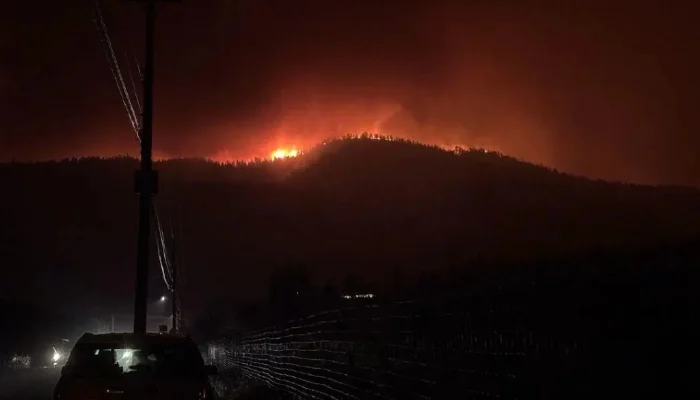
    British Columbia declared a provincial state of emergency on Saturday after a rapidly spreading wildfire forced thousands of residents in the western Canadian province to flee their homes overnight, with the blaze nearly doubling in size within hours. The Bald Range wildfire burned out of control and expanded rapidly to roughly 9,500 hectares, prompting evacuation orders across Summerland, Peachland and other districts west of Okanagan Lake in the province’s southern interior. The region produces the majority of British Columbia’s wine and ranks as Canada’s second largest wine producing area, adding an economic dimension to the disaster beyond the immediate threat to homes and lives. Officials describe explosive fire behaviour Premier David Eby told a news conference on Saturday that one fire official had compared the blaze to an explosion going off. Eby said the official described flames reaching 100 feet up trees, with additional flames shooting a further 200 feet above that, and the fire generating its own weather system that produced lightning, which in turn fed further fire growth in a self-sustaining cycle. “Homes have been lost, and properties have been destroyed,” Eby said, adding that some residents became trapped as conditions shifted rapidly and required rescue. The premier described the situation as highly dynamic and continuing to pose a serious threat to the region. Summerland had a population of about 12,000 residents according to the 2021 census, while neighbouring Peachland is home to roughly 6,500 people. Province activates emergency powers The declaration of a state of emergency grants provincial authorities immediate access to special powers, including the ability to impose travel restrictions, protect essential supplies from price gouging and deploy specific tools to coordinate rescue operations across affected areas. Officials said the Bald Range wildfire has triggered the largest evacuation event of the summer so far, with more than 20,000 people across British Columbia forced from their homes since the fire began its rapid expansion. Summerland Mayor Doug Holmes, speaking by phone from nearby Penticton, said a large number of farms in the area have been affected and that officials do not yet know the full extent of structural losses. “They’re still busy fighting the fire,” Holmes said, adding that the community needed to prepare for the worst possible outcome as firefighting efforts continued. Residents flee as highways begin closing Many residents left their homes overnight, driving south toward Penticton or north toward Kelowna before several highways in the region began closing due to the advancing fire. Terry Fries, a Summerland resident, said he was watching a football game on Friday night when a neighbour warned him to prepare an emergency bag as the fire continued to grow nearby. Fries said the fire remained visible behind nearby hills earlier in the evening before conditions worsened. When British Columbia authorities issued the formal evacuation order around midnight, Fries and his family drove approximately 45 kilometres north to the city of Kelowna to reach safety. Residents captured video footage showing fires burning along the highway and structures engulfed in flames as they fled the area. By Saturday afternoon, ash had begun settling on cars and houses in nearby communities as smoke from the fire cast an orange glow across the sky. Power and water systems disrupted Summerland lost electricity on Saturday and issued a boil water notice for residents after untreated water entered the municipal system when it bypassed the standard water treatment plant due to disruptions caused by the wildfire. Wildfires strain resources nationwide Several Canadian provinces, including Ontario and Quebec, have battled significant wildfires this year as hot and dry weather conditions fuelled blazes across dense forest regions. International firefighting crews from Mexico, Australia, France and New Zealand have travelled to Canada to assist local personnel in combating the fires. In British Columbia specifically, where continued hot and dry conditions have heightened the risk of further fire spread, approximately 1,500 firefighting personnel are currently battling more than 100 active fires across the province. Authorities have issued 40 formal evacuation orders and an additional 49 evacuation alerts as the fire season continues to intensify. Wildfires have burned through approximately 4 million hectares of land across Canada so far this year, according to figures from the Canadian Interagency Forest Fire Centre, underscoring the scale of a fire season that has placed sustained pressure on emergency services and firefighting resources nationwide.

  • |

    British Columbia declares state of emergency as explosive wildfire forces 22,000 to evacuate

    The Canadian province of British Columbia has declared a provincewide state of emergency following a rapidly expanding wildfire that forced nearly 22,000 residents to evacuate their homes, with another 9,700 under active evacuation alerts. Over 100 wildfires are currently burning across the region, nearly half of which remain classified as out of control. The entire community of Summerland, comprising approximately 12,000 residents, received overnight mandatory evacuation orders alongside roughly 8,000 people in and around the neighbouring district of Peachland. Originating on Friday evening, the Bald Range wildfire expanded rapidly to cover roughly 50 square kilometres. The blaze swept through the rural settlement of Faulder before advancing approximately 15 kilometres towards Summerland at high speed. British Columbia Premier David Eby noted that an operational official characterised the rapid growth of the fire as being “like a bomb going off”. “I know many families are facing an unimaginable day today,” Eby stated. “People have lost their homes. And many people have been displaced. Others are waiting for news about loved ones.” Cliff Chapman, director of wildfire operations at the BC Wildfire Service, described conditions throughout the province as “explosive”. Due to fast-moving flames cutting off ground evacuation routes, officials dispatched firefighting helicopters to conduct aerial rescues for trapped residents. The declaration of a emergency grants provincial authorities extraordinary legal powers to enforce travel restrictions, secure emergency temporary housing for evacuees, and coordinate response efforts across affected sectors.

Leave a Reply

Your email address will not be published. Required fields are marked *