
nvidia ceo jensen
| | |

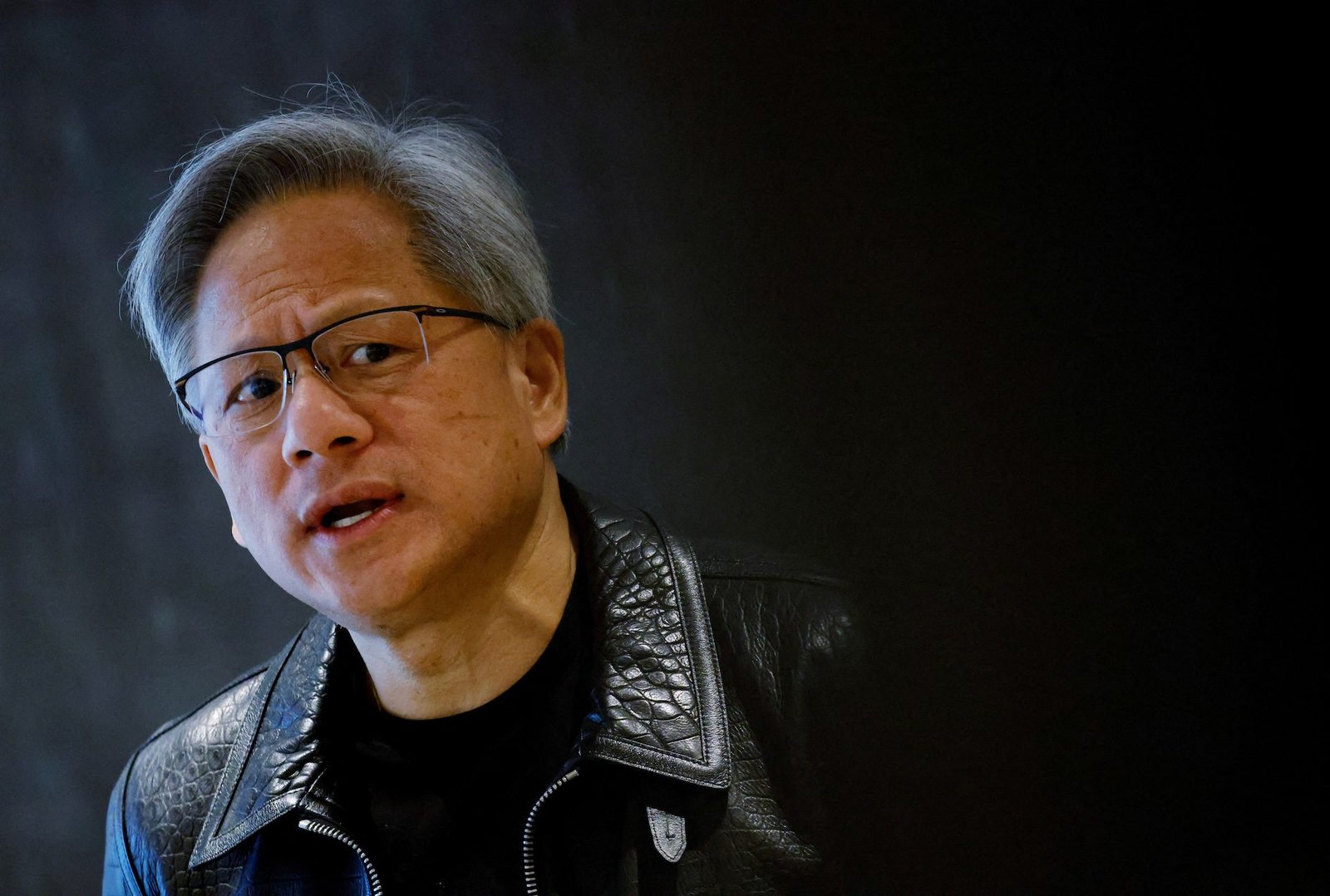
Nvidia CEO Jensen Huang steps down in big blow to AI boom

Nvidia CEO Jensen Huang is stepping down, leaving the AI industry without its biggest champion and clouding the future of the chipmaker he built into an AI powerhouse.

Chief Financial Officer Colette Kress will take over as interim CEO as Nvidia looks for a permanent successor, the company said on Thursday, November 12. It named former Synopsys CEO and board member Harvey Jones as its first-ever board chairman.


Nvidia CEO Jensen Huang steps down in big blow to AI boom

Huang, who co-founded Nvidia and is its fourth-largest investor with a stake of about 3.61%, will exit the board as well.

Nvidia shares fell more than 10% in premarket trading, and weighed on the broader market.

Pressure had been mounting on Huang in recent days after reports said the 63-year-old, who is married, had an affair with a Chinese businesswoman who US authorities suspect of spying for Beijing.

Nvidia’s board met on Wednesday, November 11, to consider his ouster, a person familiar with the matter said, after reports earlier in the day that Huang also had an extramarital affair with a senior company executive who reported to him.

Huang’s exit plunges the $4 trillion company into uncertainty and threatens to disrupt an AI ecosystem that he helped bankroll by pouring Nvidia’s swelling cash pile back into cloud providers, suppliers and the industry’s biggest labs.

“The risk is not that Nvidia suddenly loses its technology roadmap…that roadmap is largely visible for the next several years. The risk is execution. Jensen has been the chief conductor of an extraordinarily complex system,” said Michael Feldman, portfolio manager at ClearBridge Investments.

“In a world with real bottlenecks, that coordination is a competitive advantage in itself.”

Investor sentiment toward AI stocks has already been shaky as soaring cash burn and rising debt at traditionally cash-rich tech giants fuel doubts over whether the AI boom will pay off.

The departure could also have far-reaching consequences for US chip export policy, given Huang’s push to preserve access to the Chinese market and his close ties with US President Donald Trump.

Trump said on Sunday, November 8, that Huang had “done an amazing job for our country” and that the Nvidia chief had told him he had no idea the Chinese woman he had an affair with was a spy.

Huang’s rock-star status

For years, Nvidia was best known to gamers chasing top-tier graphics. But its chips’ ability to perform many calculations at once has made them the oil of the AI boom and a strategic prize in the US-China race to dominate the technology. It also made Nvidia the world’s most valuable company.

That turned Huang into a rock-star CEO, mobbed by fans in Taiwan and South Korea who ask him to sign books, posters and sometimes even their bodies. Such is his pull that stocks moved at his mere mention of company names at events.

But scrutiny of his conduct has intensified in recent days after reports of his relationship with Alice Huang, a former executive at Singapore-based cloud company Megaspeed, who US authorities have concluded was a Chinese intelligence asset.

The two, who have been photographed together in Taiwan, Singapore and California, are not related.

Washington has also investigated Megaspeed, a coveted official Nvidia cloud partner with priority access to its chips, over suspicions it helped China obtain advanced AI chips restricted under US export controls, according to media reports. Beijing has denied Alice Huang is a spy.

Earlier this month, Nvidia’s board launched a probe, led by independent directors with outside legal counsel, into whether Jensen Huang had been targeted by a foreign intelligence operation. It also expressed confidence in him at the time.

The controversy escalated on Wednesday when the New York Times reported Huang also had an affair with Kimberly Powell, Nvidia’s vice president of healthcare, who reported to him. – Rappler.com
Similar Posts

  • |

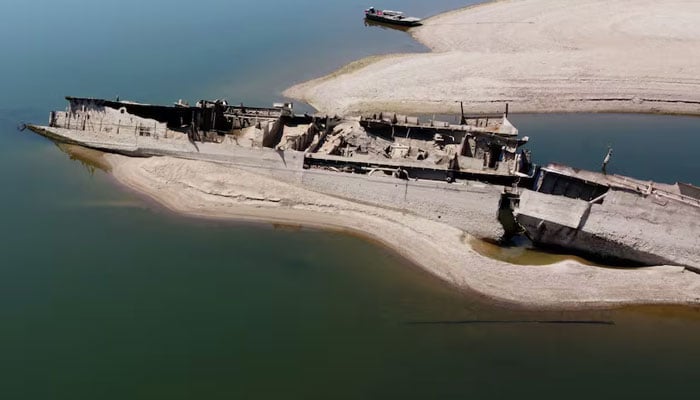
    Drought reveals Nazi-era warships in Danube

    Severe heat and prolonged drought across Europe have caused the Danube River to fall to record-low levels, exposing the wreckage of German warships that sank during World War II. The wrecks have emerged near the border between Serbia and Romania, offering a rare glimpse into one of the lesser-known chapters of the war. The vessels sank in 1944, when Nazi Germany attempted to prevent advancing Soviet forces from moving further west along the Danube. According to foreign media reports, German forces deliberately scuttled dozens of warships in the river as Soviet troops advanced through Eastern Europe. The wrecks remained hidden beneath the water for decades, but the dramatic decline in the Danube’s water level has now brought parts of the vessels back into view. The discovery highlights the wider impact of Europe’s increasingly severe heat and drought conditions. With water levels dropping sharply, the Danube has exposed not only historic shipwrecks but also other submerged remains that normally stay hidden beneath the river. The newly visible wrecks are drawing attention from historians and researchers, while also underscoring how extreme weather can unexpectedly reveal traces of the past.

  • |

    Indian activist held over shocking protest comments

    Indian political commentator and social activist T.G. Mohandas has been detained by police over controversial remarks about students taking part in a protest. Police reportedly took Mohandas into custody from his residence on Sunday evening. A cybercrime police team reached his home with local police officers. He was present when the team arrived. Authorities are investigating remarks made by Mohandas in a video shared on his YouTube channel. Police also collected information about his YouTube account and digital devices allegedly used to record and upload the video. A complaint has reportedly been registered against him. The complaint alleges that the videos published on his channel were capable of disturbing public order. It also accused him of creating fear and unrest through his statements. The controversy began after Mohandas commented on a student protest in Delhi linked to an alleged examination paper leak. In the video, he made offensive remarks about female protesters and claimed that the demonstrations could lead to incidents of sexual violence. He further made a derogatory statement about women participating in the protest. His comments triggered criticism because they appeared to blame or demean potential victims of sexual violence. Mohandas also spoke about how authorities should respond to the demonstrations. He said that if he were in government, he would impose a curfew to disperse the protesters. He further suggested that force could be used if demonstrators refused to leave. His remarks included references to people potentially being killed or permanently injured during a violent crackdown. The comments have drawn attention from law enforcement authorities. Police are now examining the video and other digital material connected to the case. Officials are also questioning Mohandas as part of the investigation. The authorities are expected to determine whether his statements and online content violated laws relating to public order and the spread of fear or unrest. The case has sparked wider discussion over the limits of political commentary and responsibility for statements made on social media. The investigation is continuing, while further details about the allegations and possible legal action are awaited.

  • | | |

    Israel launches second strike in Syria within a we…

    DAMASCUS: Tensions in the region rose again after an Israeli drone strike near the Syrian capital Damascus injured several people, prompting Kuwait to strongly condemn the attack and call for international action to prevent further Israeli operations on Syrian territory. The strike reportedly targeted a civilian vehicle near a village southwest of Damascus. Several people were injured in the attack, according to reports, although the full extent of the casualties was not immediately clear. Kuwait’s Foreign Ministry condemned what it described as repeated Israeli aggression against Syrian territory and urged the international community, particularly the United Nations Security Council, to fulfil its responsibilities and work to stop further attacks. In a statement, the ministry said the targeting of a civilian vehicle had resulted in injuries among civilians. Kuwait called for an effective international response to what it described as continuing violations of Syria’s sovereignty. The incident is particularly significant because it marks the second Israeli attack in Syria within a week, raising concerns that the cycle of strikes could further aggravate tensions in an already volatile region. Israel, however, defended the latest operation. Israeli officials said the strike targeted what they described as “terrorists” and was carried out in response to an immediate threat faced by Israeli troops. The competing accounts highlight the broader security dispute surrounding Israel’s military operations in Syria. Israel has repeatedly said that its forces act to prevent threats from armed groups and to protect Israeli personnel and territory. Syrian and Arab officials, meanwhile, have frequently condemned such operations as violations of Syrian sovereignty. The latest strike comes at a time when the wider Middle East remains under intense pressure from overlapping conflicts and security crises. Any further escalation inside Syria could complicate efforts to maintain regional stability and increase diplomatic pressure on neighbouring countries. Kuwait’s appeal to the UN Security Council reflects growing calls from Arab states for greater international scrutiny of military operations on Syrian soil. The Kuwaiti ministry urged global powers to take concrete steps rather than allowing repeated attacks to continue unchecked. For residents near Damascus, the latest incident adds to concerns over the possibility of renewed violence. Although the immediate strike caused injuries rather than a large-scale loss of life, the frequency of military operations has raised fears that a wider confrontation could develop. With Israel maintaining that its actions are necessary for security and Arab governments calling for an end to attacks, Syria remains caught at the centre of a tense regional confrontation. The latest strike could therefore become another flashpoint in an increasingly fragile security environment.

  • |

    White House reports $19B-$26B annual revenue loss from global tariff evasion

    A new White House report released Thursday estimates that the United States is losing between $19 billion and $26 billion annually in tax revenue due to foreign nations routing exports through third-party countries to evade American tariffs. The report emphasizes that Chinese manufacturers responded to 2018 trade duties by redirecting goods to more than 40 intermediate nations, including Mexico and Malaysia, for minimal assembly or repackaging prior to US entry. White House trade counselor Peter Navarro described the practice as “the great transshipment scam,” asserting that it masks the true volume of Chinese imports while undermining US domestic manufacturing, automotive, and electronics sectors. The findings come ahead of a scheduled September visit to Washington by Chinese Leader Xi Jinping. Navarro indicated that future trade agreements negotiated by the Trump administration will incorporate strict enforcement mechanisms and penalties to punish countries facilitating trade re-routing schemes.

  • | | |

    1,300-year-old shipwreck hides incredible gold tre…

    Archaeologists have uncovered an extraordinary collection of gold coins and precious jewelry from a sunken Byzantine-era ship near Croatia’s southern coastline, offering new insights into the empire’s maritime history and suggesting that a high-ranking official may have been among the passengers. The ancient shipwreck was first discovered more than a decade ago, but researchers spent several years conducting detailed underwater excavations before releasing their findings. The results, announced on Thursday, indicate that the vessel most likely dates back to the seventh or eighth century AD, making it one of the region’s most significant archaeological discoveries in recent years. According to experts, the remarkable collection of valuables recovered from the wreck suggests that the ship was far more than an ordinary merchant vessel. Instead, archaeologists believe it may have been transporting an influential government official, noble, or other prominent figure, accompanied by attendants or security personnel. Among the most valuable discoveries are gold coins minted during the reigns of four Byzantine emperors from the Heraclian dynasty, which ruled between AD 610 and 711. Researchers also recovered ornate gold fittings from luxury boxes decorated with rubies, emeralds, and pearls, highlighting the wealth and status of those on board. The quality and rarity of the artifacts provide important clues about the Byzantine Empire’s political, economic, and cultural life during the early medieval period. Experts say the recovered objects demonstrate the sophisticated craftsmanship of the era and reveal the importance of maritime travel for government officials and elite members of society. The ongoing archaeological investigation is expected to deepen historians’ understanding of Byzantine trade routes, royal travel, and naval activity across the Adriatic Sea. Researchers hope that further analysis of the ship’s structure, cargo, and recovered artifacts will help reconstruct the vessel’s final journey and explain the circumstances that led to its sinking centuries ago. Officials involved in the excavation described the discovery as a major milestone in underwater archaeology. As conservation work continues, many of the recovered treasures are expected to be carefully preserved and studied, providing valuable information for future research into the Byzantine Empire and its influence across southeastern Europe. The discovery underscores the importance of underwater archaeological exploration and demonstrates how centuries-old shipwrecks continue to reveal remarkable stories about ancient civilizations, their rulers, and the maritime networks that connected them across the Mediterranean world.

  • |

    North Korean hackers develop AI tools for cyberattacks

    SEOUL: A North Korean-linked hacking group has reportedly expanded its use of artificial intelligence to strengthen cyberattacks, automate operations and analyse stolen data. The group, identified as Kimsuky, has developed and collected a range of AI-related tools that could help its operators conduct attacks more efficiently, according to a South Korean cybersecurity company. The company said it discovered infrastructure linked to Kimsuky containing several programs designed to run and manage artificial intelligence models locally. These included Ollama, GPT4All and Msty. The hackers also appeared to be using retrieval-augmented generation technology. The system can help AI models search and process large collections of documents. Researchers said the use of locally operated AI models could allow the group to analyse sensitive information without sending data to external AI services. This could give hackers greater control over stolen material and reduce their reliance on third-party platforms. The investigation also uncovered AI agent development frameworks, speech-to-text software and an AI-assisted coding tool called Cursor. According to the cybersecurity firm, the findings indicate that Kimsuky may be moving beyond the simple use of generative AI for creating phishing messages. The group could now be seeking to integrate existing AI models into different stages of its cyber operations. These may include malware development, stolen-data analysis and attack automation. Researchers also identified documents related to finance and cryptocurrency on the infrastructure. Some of the files appeared to have been generated using artificial intelligence. The documents were designed to look like legitimate investment reports and other professional workplace material. Such files could potentially be used as decoys or to make malicious campaigns appear more credible. The findings have not been independently verified. However, cybersecurity researchers and government agencies have repeatedly linked North Korean state-backed groups to international cyber operations. North Korean cyber units have been accused of conducting espionage campaigns, stealing money and targeting cryptocurrency-related assets. Authorities in the United States and South Korea have previously warned about the activities of such groups. Kimsuky has long been associated with cyber-espionage operations targeting governments, organisations and individuals. The group has also been accused of gathering intelligence to support North Korea’s strategic interests. The latest findings point to a growing role for artificial intelligence in cyber operations. Security researchers have warned that AI tools can make phishing campaigns more convincing and help attackers process information and develop malicious software more quickly.

Leave a Reply

Your email address will not be published. Required fields are marked *