
cebu pacifics new
|

Cebu Pacific’s new ‘Dreamer Plane,’ a flying tribute to its roots

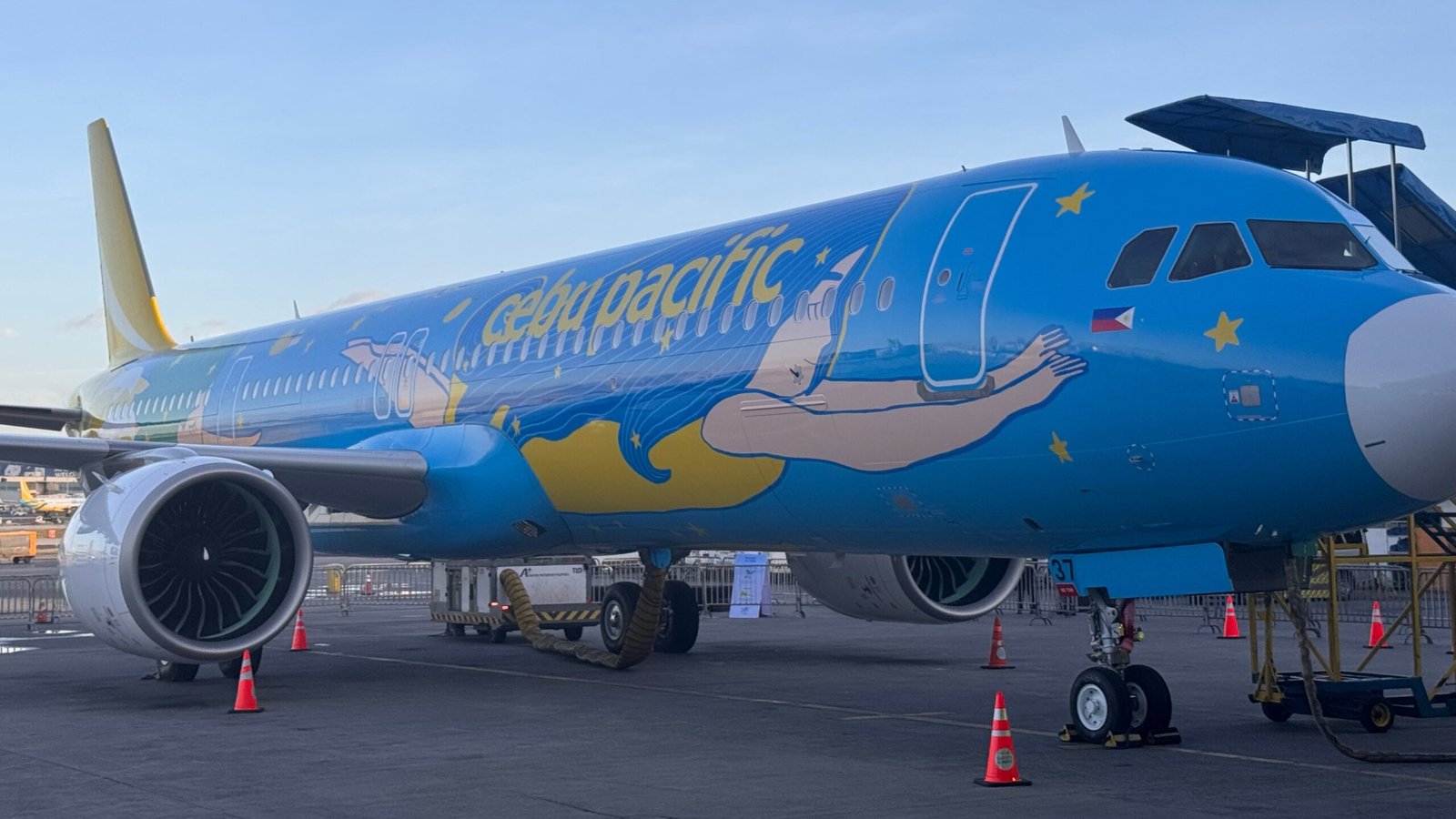
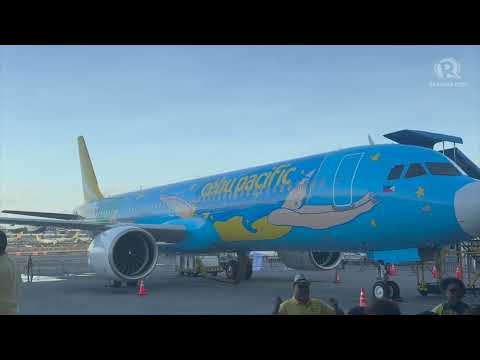
MANILA, Philippines – Cebu Pacific went back to its roots as it unveiled its newest special livery aircraft on Tuesday, November 10, in a festive celebration filled with lively Cebuano music and, of course, lechon. Painted across the plane are a dreamer reaching for a star, a constellation representing Cebu, and a little boy on a bicycle — a nod to the visionary who would one day build an airline and a business empire.

The low-cost carrier showcased its new Airbus A321neo, dubbed the “Dreamer Plane,” with an eye-catching livery designed by Cebu-based artist duo Happy Garaje to celebrate its 30th anniversary.

Cebu Pacific’s new ‘Dreamer Plane,’ a flying tribute to its roots

The livery, or the aircraft’s exterior paint scheme, on this plane shows the Dreamer Girl stretching toward a star against a sea of blue and yellow. There are references to Cebu’s festivals and culture, including a festival queen, while a constellation of 53 stars represents the island’s 53 cities and municipalities. 

The tiny cyclist honors John Gokongwei Jr., who sold goods around Cebu on his bicycle as a boy before building one of the Philippines’ biggest business empires, spanning aviation, food manufacturing, real estate, and retail. Cebu Pacific is among the companies he founded. He would have turned 100 this year.

LEGACY. Cebu Pacific executives and members of the Gokongwei family pose in front of the Dreamer Plane. Photo by Lance Spencer Yu/Rappler

For Happy Garaje’s Johanna Deutsch and Mark Joseph Deutsch, an airplane was an unfamiliar canvas. The duo had to learn which parts could be painted and which had to remain untouched for technical and safety reasons. They only recently saw their designs brought to life on an actual jet.

It’s been a long time since Cebu Pacific has dressed up its planes in a special livery. In the early 2000s, the low-cost carrier had some destination-themed aircraft featuring Manila, Cebu, and Davao. 
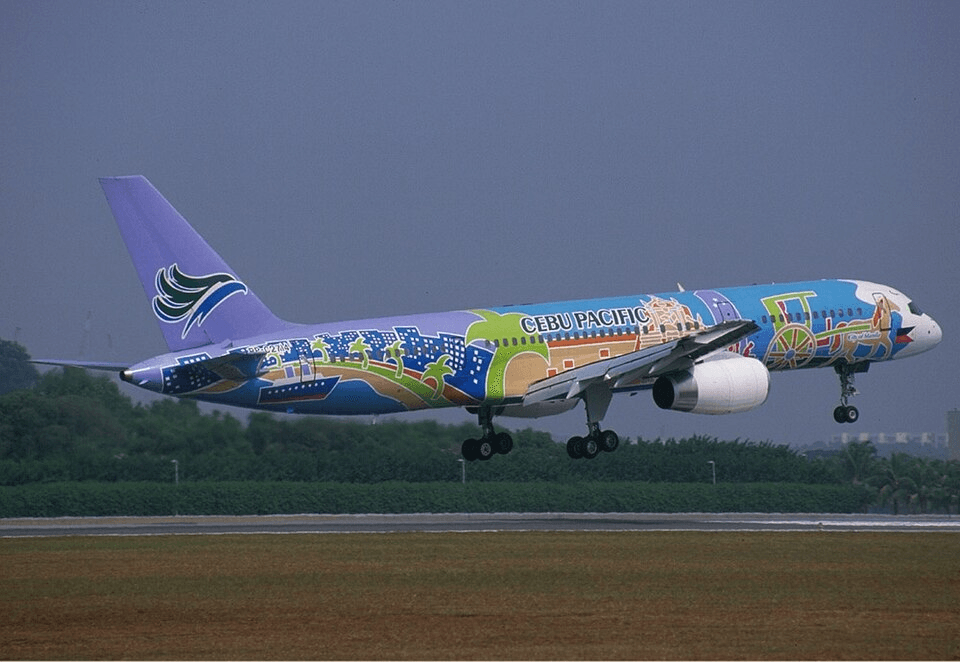
THROWBACK. A Cebu Pacific Boeing 757-200 sporting a colorful Manila-themed special livery back on October 26, 2022. Photo by Kok Chwee Sim/Wikimedia Commons

But the Dreamer Girl may not be the last. Another special livery is coming, chief marketing and customer experience officer Candice Iyog teased, although its design remains a secret for now.

“Will there be more? There is one more, but we won’t say it,” Iyog said. “We have to give the Dreamer its time in the spotlight.”

And it’s certainly had its share of the spotlight. Iyog said the Dreamer Plane was the most tracked flight in the world when it arrived in the Philippines from Airbus’ Hamburg facility in Germany on Sunday, November 8. The aircraft has drawn crowds of aviation enthusiasts and planespotters in both Hamburg and Manila, with even Airbus personnel admiring its design. 

The Dreamer Plane is beginning domestic flights on Wednesday, November 11, with General Santos and Cebu among its first destinations. Cebu Pacific also expects another widebody aircraft around December or January and seven narrowbody deliveries in 2027.

Meanwhile, Cebu Pacific president Xander Lao said demand for travel remains resilient despite inflation and higher airfares. The airline expects to surpass the 26.9 million passengers it flew in 2025, with strong bookings during the Undas break and throughout the holiday season. – Rappler.com


Must Read

‘He had to give back to society’: Why John Gokongwei donated billions to education


‘He had to give back to society’: Why John Gokongwei donated billions to education

Similar Posts

  • How 3D Virtual Shopping Company Can Enhance Customer Experience

    There is just one drawback to online purchasing. Customers cannot physically touch or examine a product. Thus, a 3D virtual shopping company addresses this issue by providing actual 3D images. Customers move around the virtual store, examining items from all angles. In 2026, the worldwide market for 3D e-commerce was estimated at $10.54 billion, with […]

  • |

    Oil prices climb amid US-Iran tensions as markets brace for supply risks

    LONDON: Global oil prices moved higher on Friday and were set to post strong weekly gains as investors closely monitored escalating tensions between the United States and Iran, raising fears of potential disruptions to energy supplies from the Middle East. Brent crude futures advanced by 1.45%, reaching $88.33 per barrel, while US West Texas Intermediate (WTI) crude rose 1.26% to $82.27 a barrel. The gains came as diplomatic efforts aimed at easing regional conflict showed little progress, increasing uncertainty in global energy markets. Market participants remained focused on reports that Washington could intensify economic pressure on Tehran, including the possibility of expanding maritime restrictions and tightening sanctions. Analysts said any further deterioration in relations between the two countries could have a significant impact on global crude exports, particularly given the Middle East’s critical role in oil production. Energy analysts noted that concerns over supply interruptions have become a key driver of recent price movements. While no major disruption has yet occurred, traders are pricing in the risk that a broader conflict could affect shipping routes and regional oil infrastructure. “Geopolitical developments continue to dominate market sentiment,” analysts said, adding that a major escalation could trigger a sharper increase in oil prices and add to inflationary pressures worldwide. Meanwhile, economic data from the United States added another dimension to market activity. A survey released on Friday indicated that consumer sentiment weakened in early August as households faced higher living costs, partly linked to rising energy prices and global uncertainty. US retail sales data also came in weaker than expected, leading investors to scale back expectations of another interest rate increase by the Federal Reserve next month. The softer economic outlook pushed the US dollar lower and reduced Treasury yields, offering support to commodities priced in dollars, including gold and oil. Spot gold prices climbed 0.69% to $4,380.03 per ounce, while US gold futures settled 0.4% higher at $4,437.30 an ounce as investors sought safe-haven assets amid geopolitical concerns. In currency markets, the Japanese yen strengthened slightly against the US dollar, trading near 159.37 per dollar. The movement followed reports that the Bank of Japan may consider raising interest rates as early as September. However, traders continued to watch the key 160-yen level, which could prompt intervention by Japanese authorities. Global equity markets showed mixed performance. On Wall Street, technology stocks weighed on major indexes after recent gains. The Dow Jones Industrial Average slipped 73.41 points, while the S&P 500 and Nasdaq Composite also closed lower. Despite Friday’s decline, both the S&P 500 and Nasdaq remained on course for a third consecutive weekly gain. European markets also ended lower, snapping a four-week winning streak as rising oil prices and geopolitical risks overshadowed generally positive corporate earnings. MSCI’s global equity index edged down 0.09%, reflecting cautious investor sentiment, while Asia-Pacific shares outside Japan recorded modest gains. Market strategists said investors are increasingly balancing optimism over corporate earnings and expectations of easier monetary policy against uncertainty surrounding international conflicts. John Sidawi, Senior Portfolio Manager at Federated Hermes, observed that financial markets have recently shown resilience despite geopolitical shocks, but warned that this calm may not last indefinitely. He noted that either a significant escalation in conflict or a clear diplomatic breakthrough could lead to a much stronger market reaction than current asset prices suggest.

  • |

    SNGPL faces billions in losses after LPG air-mix project abandoned

    Pakistan’s state-owned gas utility, Sui Northern Gas Pipelines Limited (SNGPL), has incurred losses worth billions of rupees after a major liquefied petroleum gas (LPG) air-mix project was shelved despite substantial investments in land, equipment, and infrastructure. The issue surfaced during a recent meeting of the Economic Coordination Committee (ECC), where the Ministry of Energy (Petroleum Division) presented a detailed briefing on the fate of the long-delayed project and proposed options for utilising the idle assets. The LPG air-mix initiative was originally approved between 2016 and 2018 under the Pakistan Muslim League-Nawaz (PML-N) government to provide gas to remote and mountainous regions where extending conventional natural gas pipelines was either technically challenging or financially unviable. The project envisioned the installation of 16 LPG air-mix plants, backed by an estimated government subsidy of around Rs16 billion. However, after the Pakistan Tehreek-e-Insaf (PTI) government assumed office, concerns over the project’s financial sustainability prompted a review. In March 2020, the Petroleum Division informed the ECC that the scheme required substantial government support and would place an additional financial burden on already struggling gas companies. The committee was presented with two options: continue the project with government subsidies or abandon it altogether. On March 25, 2020, the ECC decided to halt the installation of all LPG air-mix plants where construction had not yet commenced. Despite this decision, SNGPL had already acquired land, imported specialised equipment, and completed procurement for several planned facilities, resulting in significant sunk costs. The Petroleum Division later sought clarification regarding three proposed plants in Drosh, Ayun, and Chitral, where procurement activities had already been completed. In December 2020, the ECC directed SNGPL to discontinue these projects as well and dispose of the purchased land and equipment through an open and transparent process while minimising financial losses. According to officials, SNGPL subsequently issued tenders on three separate occasions to sell the unused assets. However, the company failed to receive any serious offers. As a result, the equipment remains stored in Lahore, while the sale of land is still awaiting approval from the Board of Revenue, Khyber Pakhtunkhwa. The Petroleum Division informed the ECC that SNGPL now estimates approximately Rs60 million will be required merely to conduct an operational health assessment of the idle machinery before any future use can be considered. The original project was estimated to cost Rs2.775 billion over a 15-year period. Of this amount, Rs943 million was allocated for plant installation, land acquisition, and civil works, while another Rs1.832 billion was earmarked for developing a gas distribution network capable of serving around 12,000 consumers in Chitral. Financial projections prepared at the time painted a challenging picture. SNGPL estimated an annual revenue shortfall of Rs419 million in the first year, increasing to approximately Rs815 million by the sixth year. In addition, the cost of producing synthetic natural gas through the LPG air-mix system was projected at nearly Rs25,000 per million British thermal units (mmBtu) during the initial year of operations. Despite these concerns, the Petroleum Division has now proposed a revised and more cost-effective plan. Officials told the ECC that by redesigning the project, optimising engineering specifications, and utilising existing company resources, the overall capital requirement could be reduced significantly to Rs1.779 billion. The revised proposal includes cutting civil construction costs and using surplus pipeline materials already available in SNGPL’s inventory. The company also believes operational expenses can be lowered by reducing unaccounted-for-gas (UFG) losses based on operational experience from similar facilities in Gilgit, while also improving fuel and power efficiency. Under the updated estimates, the annual revenue deficit could decline to Rs119 million in the first year, rising to Rs432 million by the sixth year. Likewise, the cost of producing synthetic natural gas could be brought down to around Rs7,229 per mmBtu, assuming an initial consumer base of approximately 2,000 households. To avoid further financial losses and make productive use of equipment already purchased, the Petroleum Division has recommended that one LPG air-mix plant be established in Chitral, subject to a technical health assessment of the stored equipment and approval from the original equipment vendor.

  • | | | | | | | |

    [Vantage Point] The fire Marcos started, and the signature at the bottom

    Suitcase testimony can explain the mechanics, but bank records, property purchases, foreign-exchange transactions, corporate ownership, and communications must supply corroboration

Leave a Reply

Your email address will not be published. Required fields are marked *