nvidia chips pile

Nvidia chips pile up in Hong Kong as China withholds import approval

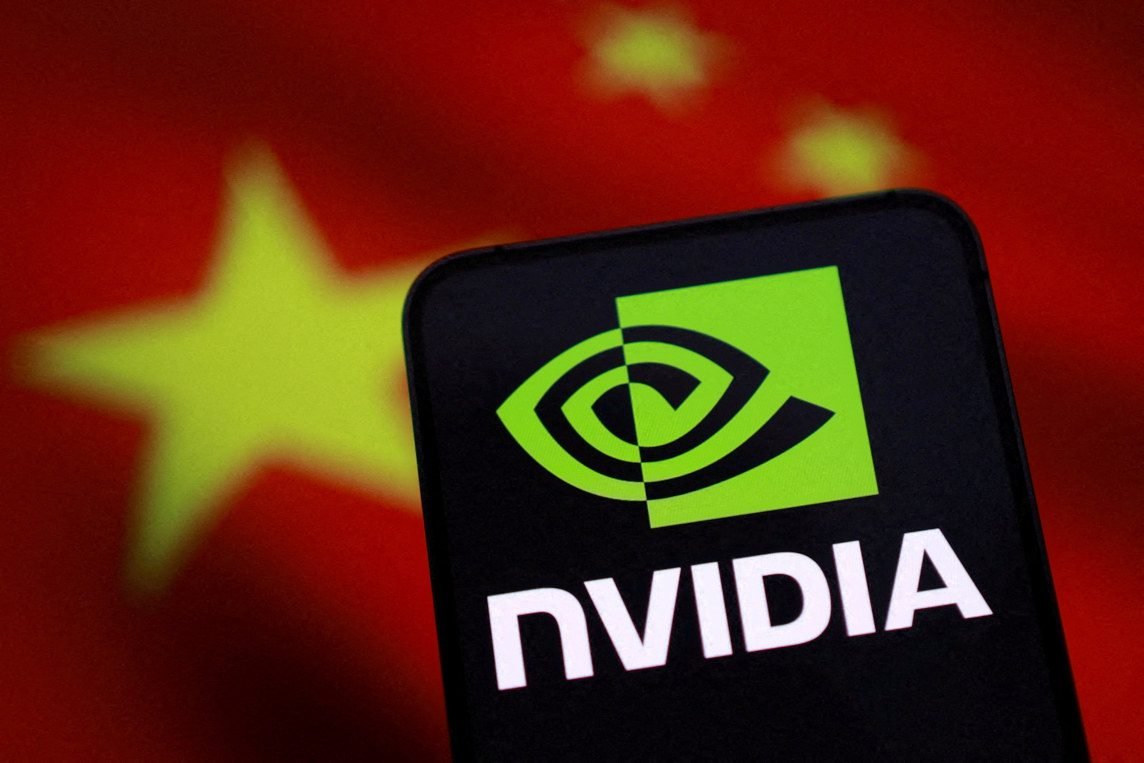
About 600,000 of Nvidia’s advanced artificial intelligence chips are stored in Hong Kong awaiting shipment to mainland China, two people familiar with the matter said, as Beijing withholds approval for large-scale imports despite demand from tech firms.

The size of the stockpile of H200 chips, which has not previously been reported, reflects Beijing’s reluctance to increase reliance on US technology.

At the same time, Chinese companies need Nvidia’s advanced computing power to meet surging AI demand in the world’s second-largest economy.

China has allowed entry for some of the chips in recent months, three people familiar with the matter said. Several major Chinese internet companies have each obtained about 10,000 H200 chips in the past few months, one of the people said.

Three people said small quantities of chips had been shipped via intermediaries and indirect routes without specifying how many. The Hong Kong government did not respond to a request for comment.

But Beijing has yet to approve large-volume imports into mainland China, the people said.

China’s Ministry of Industry and Information Technology and the National Development and Reform Commission did not respond to requests for comment. Neither did Nvidia or Chinese tech companies Alibaba, ByteDance, DeepSeek and Tencent.

H200 is not the most advanced but very useful

The H200 is not Nvidia’s newest AI processor, but it has capabilities that Chinese alternatives have yet to match, making it useful for training AI models particularly when combined with Nvidia’s software.

US export controls since 2022 have sought to restrict China’s access to advanced Nvidia chips and the equipment needed to make them.

With authorized supply constrained, Chinese buyers have turned to intermediaries and indirect routes, pushing up prices in the unofficial market.

An eight-card H200 server was offered for more than 6 million yuan ($900,000) in mainland China by the end of October, about three times its price a year earlier, one person familiar with the matter said. Servers using Nvidia’s newer Blackwell chips, which fall under US export controls, were offered for more than 20 million yuan apiece, the person added.

Tension over trade and technology

The H200 chip is caught in tension over trade and technology more broadly between Washington and Beijing.

The United States barred exports of the H200 to China before President Donald Trump’s administration gave Nvidia permission last year to sell the chips to approved Chinese customers. The policy shift followed US-China trade negotiations.

Reuters reported in May that the US had approved H200 chip sales to 10 Chinese firms, including Alibaba, Tencent, and ByteDance.

But Beijing has imposed its own constraints on H200 imports, reflecting concerns about dependence on US technology.

Technology publication, the Information, reported in July that Chinese officials had told companies, including Alibaba, ByteDance and DeepSeek that they could receive permission to buy limited quantities of H200 chips for training AI models.

It reported that total approvals could amount to fewer than 200,000 chips and that Beijing wanted firms to prioritise Chinese processors for inference — the task of running AI models.

Reuters reported last month that ByteDance, Alibaba, and Tencent had ordered more than 3 million Nvidia RTX Pro 5500 graphics cards, a less powerful export-compliant product, with a combined sticker price exceeding $35 billion. – Rappler.com

Similar Posts

  • |

    WhatsApp web gets voice and video calling

      WhatsApp has introduced a major update that brings voice and video calling to WhatsApp Web, allowing users to make and receive calls directly through their web browsers. Previously, these features were available only on the mobile app and the native desktop application. With this latest expansion, WhatsApp Web now offers a more complete communication experience, making it easier for users to stay connected without switching devices. The update significantly enhances the web version by introducing a dedicated Calls tab, where users can view their recent call history, access favorite contacts, and start voice or video calls with ease. WhatsApp Web also now supports features such as screen sharing and emoji reactions during calls, bringing it closer to the experience already available on the desktop application. According to Meta, these improvements are designed to make conversations more convenient for both personal and professional use. Whether users are catching up with friends and family or participating in work meetings, the new calling features aim to provide a smoother and more interactive experience. One of the most notable additions is the ability to transfer an ongoing call between devices without disconnecting. For example, a user who answers a call on a computer can seamlessly continue the conversation on a smartphone without interruption. This feature offers greater flexibility for people who frequently switch between devices during the day. WhatsApp has also introduced waiting rooms for group calls. When creating a call link, hosts can enable the “Require approval to join” option, allowing them to decide who can enter the call. This added layer of control is expected to be especially useful for business meetings, online classes, and large group discussions. The latest update also improves call quality by introducing background noise suppression, helping reduce unwanted sounds during voice and video calls made in noisy environments. In addition, Meta has enhanced video performance by enabling high-definition (HD) video streaming within the first few seconds of a call, providing users with a clearer and sharper video experience much sooner than before. The announcement comes as Meta continues to expand WhatsApp beyond traditional messaging. The company is also developing WhatsApp usernames, which will allow users to connect and make calls without relying solely on phone numbers, offering greater privacy and convenience. The new calling features are being rolled out gradually to WhatsApp users around the world. As the update reaches more devices, users will gain access to a more powerful communication platform that combines messaging, voice calls, video conferencing, and collaboration tools in a single service.

  • |

    AI errors hit report behind Australia’s under-16 ban

    A government-commissioned report that helped support Australia’s plan to restrict social media access for children under 16 has come under scrutiny after several inaccurate and apparently fabricated academic references were identified. The report, produced as part of a $3.48 million government-funded trial examining age-assurance technologies, was prepared by the Age Check Certification Scheme (ACCS). The organisation has acknowledged that ChatGPT was used to rewrite parts of the document after initially denying that artificial intelligence had been involved. An analysis of the report found six problematic citations in a chapter examining emerging technologies. Some of the digital object identifiers, or DOIs, reportedly directed readers to research papers that did not exist. Other references contained combinations of authors, journals and publication dates that could not be verified in academic records. In another case, a DOI reportedly led to a genuine research paper, but the paper did not support the claim attributed to it in the report. The controversy intensified after ACCS was questioned about the use of artificial intelligence. A spokesperson initially said no AI had been used in producing the report. The organisation later acknowledged that ChatGPT metadata was present in four links across two sections of the document. ACCS maintained that the metadata effectively disclosed the use of the tool and said the references had been manually checked. However, efforts to correct the disputed citations reportedly resulted in further inconsistencies. One example involved a research paper that an ACCS source said had been accessed in March 2025. According to the paper’s lead author, however, the research was not published until June 2025, raising additional questions about the accuracy of the report’s references. The report has attracted attention because it was used in the policy process surrounding Australia’s planned restrictions on social media for under-16s. Communications Minister Anika Wells had previously praised the report for identifying potential approaches to age verification. The minister’s department told a Senate inquiry that it had discussed the citation problems with ACCS. However, the department was reportedly informed about faulty links rather than allegations that some references had been fabricated. Australian National University academic Christian Downie warned that unreliable references can have serious consequences regardless of whether they were generated by AI or resulted from human error. He said inaccurate citations could contribute to poor policymaking and weaken public confidence in government-commissioned research. Independent Senator Fatima Payman also compared the controversy with a separate case involving Deloitte, which refunded part of a $440,000 government contract after problems were identified with AI-generated references.

  • |

    China unveils hyper-realistic robotic head

      Although companies around the world—particularly in China—are making rapid progress in developing humanoid robots capable of walking, moving, and interacting like humans, creating robotic faces that display truly lifelike expressions has remained one of the biggest challenges in robotics. Engineers have long struggled to replicate the subtle emotions and facial movements that make human communication so natural. A Chinese startup is now attempting to bridge that gap by introducing a highly realistic robotic head that closely resembles a human face in both appearance and expression. The innovation represents a significant step toward narrowing the divide between humans and machines. The company behind the project, AgiBot Farm, was founded in 2024 by Yuhang Hu, an engineer from Columbia University. Its latest creation, the Origin M1, is an advanced robotic head designed to reproduce a wide range of human facial expressions with remarkable precision. Unlike conventional robots that often appear stiff or expressionless, the Origin M1 can imitate subtle facial movements that are essential to human interaction. These include raising or furrowing the eyebrows, producing a gentle smile, moving the eyes naturally, and displaying other delicate expressions that convey emotions. Such realistic facial behavior makes conversations with the robot feel more natural and engaging. Beneath its lifelike silicone skin lies an intricate mechanical system powered by 25 to 42 ultra-quiet micro motors, depending on the model. These miniature motors function similarly to human facial muscles, expanding and contracting in coordinated patterns to create highly accurate facial movements. This sophisticated design allows the robot to produce smooth and realistic expressions instead of the rigid movements commonly associated with traditional robots. The robot’s eyes are equally advanced. Hidden within its pupils are tiny cameras that enable it to observe and analyze its surroundings. These cameras help the robot detect objects, monitor movement, and better understand the environment, allowing it to respond more intelligently during interactions. To further enhance communication, the Origin M1 is equipped with built-in microphones and speakers. These components allow the robot to hear human voices, process spoken language, and engage in conversations. This combination of vision, hearing, and expressive facial movements brings the robot much closer to human-like communication than previous generations of humanoid technology. However, such cutting-edge innovation comes at a premium price. The most advanced version of the Origin M1 is currently available for approximately US$150,000, making it suitable primarily for research institutions, technology companies, and specialized industrial applications rather than everyday consumers. Looking ahead, AgiBot Farm plans to make the robot even more intelligent by integrating lip-sync technology and large language models (LLMs). These upgrades will enable the robot not only to understand spoken language more effectively but also to generate facial expressions that match the tone, emotion, and context of a conversation. As a result, future versions of the Origin M1 could communicate in a way that feels increasingly natural, empathetic, and human. The development of robots like the Origin M1 highlights the rapid pace of artificial intelligence and robotics. As these technologies continue to evolve, experts believe that highly expressive humanoid robots could eventually play important roles in healthcare, education, customer service, research, and companionship, bringing humans and machines closer together than ever before.

Leave a Reply

Your email address will not be published. Required fields are marked *