errors hit report
|

AI errors hit report behind Australia’s under-16 ban

A government-commissioned report that helped support Australia’s plan to restrict social media access for children under 16 has come under scrutiny after several inaccurate and apparently fabricated academic references were identified.

The report, produced as part of a $3.48 million government-funded trial examining age-assurance technologies, was prepared by the Age Check Certification Scheme (ACCS). The organisation has acknowledged that ChatGPT was used to rewrite parts of the document after initially denying that artificial intelligence had been involved.

An analysis of the report found six problematic citations in a chapter examining emerging technologies. Some of the digital object identifiers, or DOIs, reportedly directed readers to research papers that did not exist. Other references contained combinations of authors, journals and publication dates that could not be verified in academic records.

In another case, a DOI reportedly led to a genuine research paper, but the paper did not support the claim attributed to it in the report.

The controversy intensified after ACCS was questioned about the use of artificial intelligence. A spokesperson initially said no AI had been used in producing the report. The organisation later acknowledged that ChatGPT metadata was present in four links across two sections of the document.

ACCS maintained that the metadata effectively disclosed the use of the tool and said the references had been manually checked. However, efforts to correct the disputed citations reportedly resulted in further inconsistencies.

One example involved a research paper that an ACCS source said had been accessed in March 2025. According to the paper’s lead author, however, the research was not published until June 2025, raising additional questions about the accuracy of the report’s references.

The report has attracted attention because it was used in the policy process surrounding Australia’s planned restrictions on social media for under-16s. Communications Minister Anika Wells had previously praised the report for identifying potential approaches to age verification.

The minister’s department told a Senate inquiry that it had discussed the citation problems with ACCS. However, the department was reportedly informed about faulty links rather than allegations that some references had been fabricated.

Australian National University academic Christian Downie warned that unreliable references can have serious consequences regardless of whether they were generated by AI or resulted from human error. He said inaccurate citations could contribute to poor policymaking and weaken public confidence in government-commissioned research.

Independent Senator Fatima Payman also compared the controversy with a separate case involving Deloitte, which refunded part of a $440,000 government contract after problems were identified with AI-generated references.

Similar Posts

  • | |

    Ahsan Iqbal highlights importance of Artificial In…

    Federal Minister for Planning, Development, and Special Initiatives Ahsan Iqbal has stated that artificial intelligence (AI) is set to bring extraordinary changes across the world. He emphasized that Pakistan must prepare its youth for the future by providing them with modern education, digital skills, and technological resources, including laptops, to compete in the rapidly changing global environment. Addressing a ceremony at Islamia Degree College Narowal, Ahsan Iqbal said that equipping young people with digital skills has become an urgent necessity in today’s era. He stressed that technology is transforming economies, industries, and workplaces around the world, and nations that fail to adapt to these changes may fall behind in global competition. The federal minister highlighted that science and technology will play a decisive role in shaping the future economy. According to him, investment in scientific research, innovation, and technological development is essential for securing a prosperous future for the country. He stated that countries that focus on research and technological advancement are better positioned to achieve economic growth and development. Ahsan Iqbal said that the modern world is moving rapidly towards digital transformation, where artificial intelligence, automation, and emerging technologies are changing the way people work and communicate. He emphasized that Pakistan’s youth represent a valuable resource, and providing them with the right skills and opportunities can help them contribute significantly to national progress. He further stated that the government is committed to supporting young people by improving access to quality education, digital training programs, and technological facilities. He mentioned that initiatives such as providing laptops and promoting skill development programs are aimed at helping students gain knowledge and abilities required in the modern job market. The minister explained that digital skills are no longer limited to the technology sector but have become important in almost every field, including business, education, communication, healthcare, and industry. He encouraged students to learn new technologies and develop skills that can increase their employment opportunities and enable them to participate in the digital economy. Ahsan Iqbal also highlighted the importance of scientific research and innovation in achieving sustainable development. He said that investment in universities, research institutions, and technology-based projects can help Pakistan create solutions for future challenges and strengthen its position internationally. He stated that nations that successfully integrate technology into their education systems and economic structures will be the ones that succeed in the global arena. According to him, technological awareness and digital readiness are essential for young generations to take advantage of emerging opportunities. The minister urged students to focus on acquiring knowledge, improving their technical abilities, and using technology positively for personal and national development. He said that the youth must be prepared to meet future challenges and benefit from opportunities created by advancements in science and technology. Concluding his remarks, Ahsan Iqbal reiterated that artificial intelligence and digital transformation will shape the future of the world. He emphasized that Pakistan’s progress depends on empowering its young population with modern education, research opportunities, and digital skills. By investing in technology and human resources, the country can build a stronger economy and compete effectively at the international level.

  • | |

    NCCIA crack down on OTP fraud Gang, arrests 27 acr…

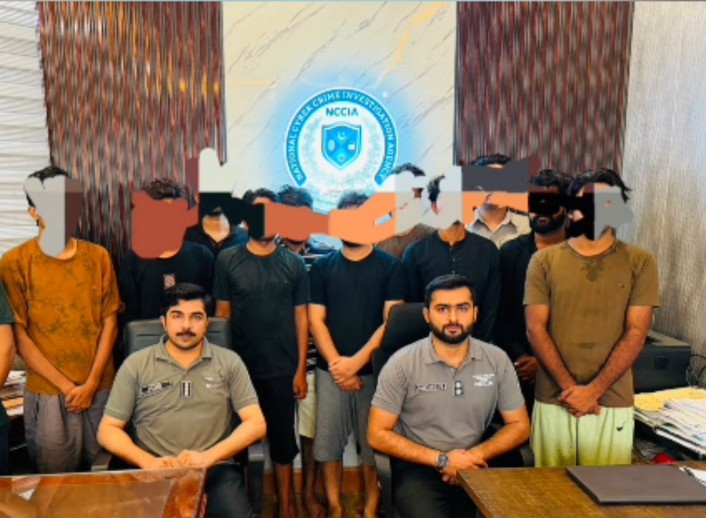
    LAHORE: In one of the largest cybercrime crackdowns in recent months, Pakistan’s National Cyber Crime Investigation Agency (NCCIA) has dismantled an organised online fraud network, arresting 27 suspects during coordinated operations in Lahore, Multan and Faisalabad. According to officials, the suspects were part of an organised “OTP Gang” accused of targeting bank customers through sophisticated phone scams. Investigators said the group impersonated bank officials, customs officers and police personnel to deceive citizens into revealing sensitive financial information before stealing money from their accounts. The largest operation was carried out in Lahore, where NCCIA teams conducted raids at multiple locations and arrested 13 suspects in two separate operations. Authorities also recovered mobile phones, computers and other digital evidence believed to have been used in cyber fraud activities. In Multan, four intelligence-based operations resulted in the arrest of 13 key members of the network. Officials believe the suspects played central roles in planning and executing online scams that affected victims in different parts of the country. Meanwhile, in Faisalabad, investigators arrested another suspect allegedly involved in hacking bank and social media accounts. During the raid, officials recovered several fake SIM cards and digital devices that are being examined as part of the investigation. Preliminary findings suggest the network relied on social engineering techniques, convincing victims that their bank accounts or identity documents required urgent verification. Once victims shared one-time passwords (OTPs), banking details or verification codes, the suspects allegedly gained access to their accounts and carried out unauthorised financial transactions. Cybercrime investigators are analysing the seized electronic devices to identify additional members of the network, trace stolen funds and determine whether the group has links to other organised fraud rings operating across Pakistan. Following the successful operation, the NCCIA urged citizens to remain vigilant against phone and online scams. The agency warned people never to share their OTPs, ATM PINs, passwords or banking information with anyone claiming to represent a bank, government department or law enforcement agency. Officials also advised the public to verify suspicious calls through official customer service numbers and immediately report suspected cyber fraud to the relevant authorities. The latest crackdown highlights the growing threat of cyber-enabled financial crime in Pakistan and underscores the government’s increasing efforts to dismantle organised digital fraud networks while encouraging stronger public awareness of online security.

  • | | |

    FBR starts fiscal year strong with rs810 billion t…

    ISLAMABAD: Pakistan’s Federal Board of Revenue (FBR) kicked off the new fiscal year on a positive note by surpassing its July tax collection target, although a shortfall in income tax receipts and the government’s decision to reject a key enforcement proposal highlighted the challenges that lie ahead. According to provisional figures, the FBR collected Rs810 billion in July, exceeding its monthly target by Rs30 billion. The collection also marked a 7% increase compared to Rs757 billion collected during the same month last year. The strong performance was largely driven by robust sales tax collections, which reached Rs358 billion, surpassing the target by Rs53 billion and recording an 18% year-on-year increase. A significant 78% of total sales tax, amounting to Rs275 billion, was collected at the import stage, where tax compliance is generally higher. However, income tax collection remained below expectations. The FBR collected more than Rs300 billion in income tax, falling Rs23 billion short of the target. Analysts attributed the shortfall to advance tax collections made in June to meet last fiscal year’s revised revenue goals, along with reduced withholding tax rates for salaried individuals and property transactions introduced in the latest federal budget. Meanwhile, customs duty collection stood at Rs105 billion, matching the target, while federal excise duty generated Rs48 billion, slightly exceeding expectations. The July performance marks the beginning of a crucial fiscal year in which the government has committed to collecting Rs15.263 trillion in taxes under an agreement with the International Monetary Fund (IMF). Meeting the annual target is considered essential for securing future IMF loan disbursements and creating fiscal space for development, defence and water resource projects. The FBR also reported encouraging progress in tax compliance, receiving around 227,000 income tax returns during July after updated tax return forms became available. Additionally, the authority issued Rs98 billion in tax refunds, approximately Rs13 billion more than in the same period last year. Despite the positive revenue performance, the federal cabinet declined an FBR proposal to activate restrictions on high-value purchases by individuals with insufficient declared assets. Had the proposal been approved, it would have limited the purchase of luxury vehicles, expensive properties, large stock investments and major cash withdrawals by non-compliant taxpayers. Economic observers say the government’s ability to sustain monthly revenue growth will be closely watched, as consistent tax collection remains critical to maintaining fiscal stability and meeting commitments under Pakistan’s economic reform programme.

  • | |

    JSMU issues separate notifications on Dr Nighat Sh…

    Jinnah Sindh Medical University (JSMU) has issued two separate notifications regarding the retirement and subsequent contractual appointment of Professor Dr Nighat Shah, daughter of former Sindh chief minister Syed Qaim Ali Shah. According to the university’s notifications, Dr Nighat Shah retired from government service on August 12, 2026, but was allowed to continue working at the university as a Professor of Gynaecology (BPS-21) for another three years on a contractual basis. The two notifications were issued separately. One formally announced her retirement, while the other approved her immediate appointment on a three-year contract following her retirement. According to the retirement notification issued by JSMU Registrar Dr Azam Khan, Dr Nighat Shah, who was serving as Professor of Gynaecology and Obstetrics in BPS-21 as well as Pro-Vice Chancellor, retired from government service with effect from the afternoon of August 12. The notification also referred to an earlier order dated October 6, 2025, under which she had been appointed Pro-Vice Chancellor of the university. Her tenure as Pro-Vice Chancellor was linked to her period of government service and was therefore due to end upon her retirement. However, a separate notification issued by the university states that, following a decision by the Sindh government and approval from the competent authority, the Syndicate, Dr Nighat Shah was permitted to continue her services at JSMU as Professor of Gynaecology for three years on a contractual basis. The new contract will take effect from August 13, 2026, just one day after her retirement from government service. The arrangement means that, according to the university’s own notifications, Dr Nighat Shah formally retired from government employment on August 12 but resumed her professional duties at the same institution without any break from August 13 under a three-year contractual appointment. The development has drawn attention because of the timing of the two notifications, with the retirement order followed immediately by the contractual appointment. Dr Nighat Shah was appointed Pro-Vice Chancellor of JSMU in October 2025. Her new contractual role, however, is specifically as Professor of Gynaecology rather than as Pro-Vice Chancellor. The three-year contract will allow her to continue teaching and providing academic and professional services at the university until the completion of the approved contractual period, subject to the terms and conditions of her appointment.

  • | |

    Hailey Bieber steals the show at Kylie Jenner’s birthday party

    Hailey Bieber turned heads with a playful party moment during Kylie Jenner’s 29th birthday celebrations in Beverly Hills. Kylie hosted a pink-themed gathering over the weekend as part of her early birthday celebrations. The party brought together several members of her close circle, including Hailey, Kim Kardashian and Khloe Kardashian. Guests followed a “princess kitty” theme. They were seen wearing tiaras and colourful feather boas as they joined the celebrations. Hailey shared several glimpses of the party with her followers on Instagram. However, one unusual photo quickly became a talking point among fans. In the picture, Hailey appeared in a silver and pink tiara with a fluffy pink feather boa. She was seen playfully posing behind a friend in a cheeky and unexpected manner. The photo was initially shared by Kylie and Hailey’s close friend Devon Lee Carlson. Hailey later reposted the image on her own Instagram account. For the celebration, Hailey kept her outfit casual. She wore a pink tank top with khaki trousers and completed the look with the party accessories. Kylie began celebrating her birthday ahead of the actual date. She turned 29 on Monday, making the weekend gathering part of her early birthday festivities. Hailey’s husband, Justin Bieber, also attended the celebration. The event featured several people from Kylie’s close friendship group. Kylie’s sister Kendall Jenner was also seen in a group photograph from the party. She wore a light pink tank top with black wide-leg trousers, along with a tiara and feather boa.

  • |

    Messi-less Inter Miami stunned by Monterrey in Leagues Cup

    MIAMI: Inter Miami suffered a dramatic 2-1 defeat to Monterrey in the Leagues Cup on Saturday, with Lionel Messi absent as he travelled to Argentina following the death of his father, Jorge Messi. The match began with an emotional tribute to Messi’s father, who died at the age of 68. Both teams observed a minute of silence before kick-off, while Inter Miami expressed its support for their captain and his family. Despite missing their star player, Miami looked set for another positive result after Rodrigo De Paul opened the scoring in the 32nd minute. The Argentine midfielder celebrated in a particularly touching manner, removing his No. 7 shirt to reveal a No. 10 underneath as a tribute to Messi. The hosts carried their 1-0 advantage into half-time, but Monterrey quickly changed the momentum after the break. Belgian striker Hugo Cuypers equalised just two minutes into the second half, putting Miami under increasing pressure. The match appeared destined for a draw until Monterrey delivered a late blow. Uruguayan forward Diego Rossi struck in the 90th minute to complete Monterrey’s comeback and leave Inter Miami empty-handed. The defeat comes after Miami opened their Leagues Cup campaign with a convincing 4-2 victory over Atletico San Luis. The MLS champions will now look to respond when they face Leon on Wednesday. For Messi, however, football understandably took a back seat as he returned to Argentina to be with his family following his father’s death. The emotional night in Miami showed just how much the Argentine captain means to the club, both on and off the pitch.

Leave a Reply

Your email address will not be published. Required fields are marked *