dsi summon siam

DSI to Summon PC Siam Petroleum Over Alleged Oil Hoarding in Surat Thani

BANGKOK — The Department of Special Investigation will summon PC Siam Petroleum in Surat Thani to clarify allegations of oil hoarding, with the case potentially being designated as a special case under DSI jurisdiction, the Bangkok Post reported.

Authorities Probe Mystery Loss of 57 Million Litres of Fuel in Surat Thani

A task force led by DSI director-general Pol Maj Yutthana Praedam held an urgent meeting on Saturday to establish investigative frameworks following Prime Minister Anutin Charnvirakul’s order to collect data on oil stockpiling at storage facilities and consider special-case designation.

Centralized War Room

Since the required data is dispersed across multiple agencies — including the Royal Thai Police, Surat Thani Provincial Police, the Thai Maritime Enforcement Command Center, the Department of Energy Business and the Marine Department — a centralized war room will be established to monitor developments and consolidate intelligence.

Alleged Irregularities

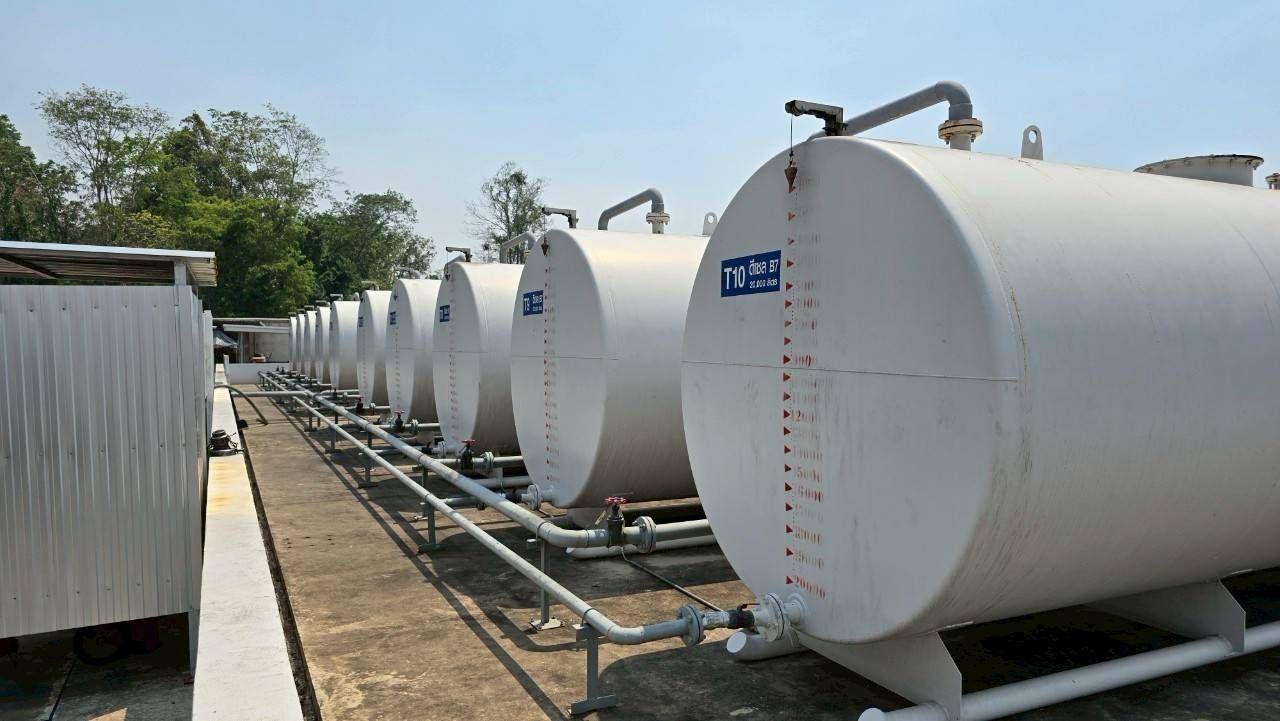
Inspections conducted on Wednesday at six major oil depots in Surat Thani uncovered alleged irregularities. PC Siam Petroleum in particular was allegedly stockpiling 2 million litres of oil, with significant discrepancies in its inventory, sales and intakes during February and March identified by investigators. The company will be summoned to clarify these alleged inconsistencies, according to a source familiar with the case.

Such actions may violate the Price of Goods and Services Act, the source said. The case could proceed as a special case, though it requires approval from the DSI’s Board of Special Case due to its criminal nature. The DSI is expected to finalize and submit the case file to the board next week.

Other Companies Cooperate

Meanwhile, PTT Oil and Retail Business and Caltex have cooperated with regulators in inspections of oil storage and transport in Surat Thani, reaffirming transparency and compliance. PTT said authorities examined March’s data on inflows, outflows and inventories and found operations had met required standards with no evidence of stockpiling or irregularities.

Star Fuels Marketing of Star Petroleum Refining Plc, which operates Caltex in Thailand, said its fuel management and marine transport complied with safety, quality and legal requirements.

Disappearance of 57 Million Litres

Regarding the disappearance of over 57 million litres of oil during maritime transport, authorities said at least 20 voyages have shown suspicious delays, suggesting possible offshore stockpiling. The Thai-MECC is leading that probe and will forward findings to the DSI.

Thai Government Confirms Sufficient Fuel Supplies During Songkran Holiday

The investigations come as Thailand continues to grapple with fuel shortages and rising prices, with authorities increasingly focused on uncovering hoarding and supply manipulation that may be exacerbating the crisis for consumers and businesses. For PC Siam Petroleum, the impending summons marks the next step in an investigation that could lead to criminal charges — and potentially expose a network of fuel diversion operating along Thailand’s coast.

-Thailand News (TN)
Similar Posts

  • Inspections Conducted Nationwide Reveal Underfilled Gas Tanks

    BANGKOK — Inspectors from the Department of Internal Trade under the Commerce Ministry have been conducting random inspections of outlets selling LPG cooking gas and gas-filling facilities to ensure they are not cheating customers by selling less gas than the tanks’ stated capacity. Cabinet freezes diesel and cooking gas prices for 3 months, raises electricity […]

  • | |

    Iran says Oman deal nears completion but insists U…

    Iran said on Sunday that a deal with Oman establishing new shipping lanes through the Strait of Hormuz has entered its final stages, though Tehran maintained the critical waterway will remain closed until Washington satisfies a broader set of conditions tied to the ongoing standoff between the two countries. A US official told Reuters on Friday that an agreement between Iran and Oman appeared close and could soon lead to the reopening of the strait, a passage that carried roughly a fifth of global oil and liquefied natural gas shipments before Iran shut it down in response to American and Israeli military strikes earlier this year. Iranian Foreign Minister Abbas Araqchi confirmed on Sunday that negotiations over the strait, which sits between Iran and Oman, had reached their final stages. However, he repeated comments made a day earlier stressing that the waterway would not reopen unless additional conditions set by Tehran were met first. Iran’s Mehr news agency quoted Araqchi as saying the emerging agreement would establish the new shipping lanes to be used once the United States fulfils those conditions and the strait formally reopens. Araqchi said Iran and the United States are not currently engaged in direct talks and that Tehran has no plans to begin them as long as Washington continues to breach an interim agreement the two countries signed in June. He added that messages between the two sides are being exchanged through intermediaries rather than direct contact. Iran demands compensation and sanctions relief The United States launched air strikes against Iran in late February, saying the campaign aimed to prevent the Islamic Republic from acquiring nuclear weapons or using missiles and regional proxy forces to threaten the wider Middle East. Washington and Tehran agreed to a ceasefire in June, but the United States reimposed a blockade on Iranian shipping in the Gulf in July, a move Iran characterised as a violation of a truce that had already shown signs of collapse. A US official, speaking to Reuters on condition of anonymity, said the blockade on Iranian ports would lift once a deal restoring unimpeded commercial shipping is formally announced. The official added that any American actions would remain directly tied to Iran fulfilling its own commitments under the emerging agreement, pointing to a carefully sequenced approach that both sides appear to be navigating cautiously. The arrangement under discussion appeared, according to sources who previously spoke to Reuters, to grant Tehran a degree of control over vessels entering the Gulf through the strait, an arrangement that shipping industry sources have said would be difficult to implement in practice. The precise current status of the agreement remained unclear on Sunday, and Iran’s latest statements suggested several additional factors could still complicate its finalisation. Araqchi said the strait’s reopening would depend in part on the United States providing compensation to Iran for what Tehran describes as widespread attacks on its territory and interests. Mohammad Baqer Zolqadr, secretary of Iran’s top national security body, outlined a broader list of demands, including an end to US threats against Iran, a halt to what Tehran calls aggression against its allies in Lebanon, the Palestinian territories, Yemen and Iraq, the lifting of the shipping blockade and broader sanctions, and the release of frozen Iranian financial assets. Supreme Leader’s condition remains unclear Ultimate decision making authority in Iran rests with Supreme Leader Mojtaba Khamenei, who has not appeared in public since an air strike killed his father and predecessor on February 28, the first day of the joint US and Israeli air campaign against Iran. State media reported on Sunday that Iranian President Masoud Pezeshkian met with Khamenei in late July, and a paramilitary leader promised that footage of the supreme leader would soon be released publicly. Khamenei was reportedly injured in the same strike that killed his father, according to earlier reporting. Separately, the United Arab Emirates said on Saturday that Iran had attacked a vessel affiliated with its state oil company. Iran did not immediately respond to the allegation. The country’s powerful Revolutionary Guards have attacked commercial vessels in the past, arguing that ships transiting the strait without coordinating their passage with Iranian authorities are not protected from such action. Houthi attacks widen regional shipping crisis Iran’s strikes on shipping in the Strait of Hormuz have coincided with intensified attacks from its Yemen based allies, the Houthis, who have targeted vessels at a separate chokepoint located between the Red Sea and the Gulf of Aden on the opposite side of the Arabian Peninsula. The Houthis declared a naval blockade against Saudi Arabia in the Red Sea last month, framing the move as retaliation for what they described as a Saudi imposed siege in Yemen, an accusation the Saudi government has firmly denied. Riyadh continues to back Yemen’s internationally recognised government in the country’s ongoing conflict. The group claimed responsibility for an attack on Saudi Aramco’s Jazan refinery on Sunday, coming just two days after the kingdom signed a defence pact with fellow Sunni Muslim majority nations Turkey and Pakistan amid growing concern over regional instability stemming from the US and Israeli military campaign against Shiite led Iran. Saudi Arabia’s energy ministry confirmed that a fire broke out at the refinery following the attack but was later extinguished without causing any injuries, and that authorities were continuing to manage the aftermath of the incident. The ministry did not specify a cause for the blaze. Houthi military spokesperson Yahya Saree said on social media platform X that the group used a drone to strike the facility. The Houthis have targeted Aramco sites in Jazan before, a refinery that processes approximately 400,000 barrels of crude oil daily in southwestern Saudi Arabia. It remains unclear whether or to what extent Pakistan or Turkey would participate in any Saudi response to the latest attack. Turkish Foreign Minister Hakan Fidan said the newly formed alliance between the three countries was not directed against Iran or any other nation, describing it instead as a general commitment to

  • | |

    US publication praises Pakistan’s digital financ…

    A US publication has praised Pakistan’s efforts to modernise its financial system, saying the country is steadily strengthening its position in the global digital financial landscape through reforms and technological innovation. The article highlighted Pakistan’s initiatives to promote digital transformation and said the country has the potential to play a meaningful role in the evolving global digital economy. It also commended the vision of Pakistan Virtual Assets Regulatory Authority (PVARA) Chairman Bilal Bin Saqib, stating that Pakistan must actively position itself within the international digital financial system to benefit from emerging technologies and new economic opportunities. According to the publication, the future will belong to countries that make swift decisions and implement reforms without delay. It noted that Pakistan has the opportunity to emerge as a leader in the digital economy by embracing innovation and adopting forward-looking policies. The article further stated that governments can no longer rely solely on traditional bureaucratic systems. Instead, they must adopt the speed, flexibility and innovation-driven approach of technology startups to remain competitive in a rapidly changing global environment. It added that digital assets are becoming the foundation of the future financial infrastructure and countries investing in digital finance today will be better positioned for long-term economic growth and global competitiveness. The publication’s remarks come as Pakistan continues to promote digital payments, financial technology and cashless transactions as part of its broader strategy to modernise the economy and expand financial inclusion.

  • Thailand Fast-Tracks Deportation Rules for Foreigners Violating Laws and Social Norms

    BANGKOK – Thailand’s Cabinet has approved a new draft regulation to quickly deport foreign nationals who violate local laws or act against Thai social norms. Spearheaded by Deputy Prime Minister Pakorn Nilprapunt, the measure aims to replace outdated, slow administrative procedures. It allows authorities to swiftly remove those who commit crimes, work illegally, or threaten […]

  • | |

    Biden’s cancer has spread and become very pa…

    Former President Joe Biden’s prostate cancer has spread beyond his bones and has become very painful, his son Hunter Biden revealed in a new interview, offering the most detailed public update yet on the 83-year-old’s deteriorating health condition. Hunter Biden told the BBC’s Newsnight programme that his father’s cancer has metastasized into his bones and beyond, according to video footage of the interview posted online on Friday. He described the condition as very painful and debilitating in many respects, offering a stark assessment of how far the disease has progressed since it was first diagnosed. A spokesman for the former Democratic president declined to comment on Hunter Biden’s remarks when reached on Saturday, leaving the son’s account as the most recent and detailed public statement on the elder Biden’s health status. Diagnosis first revealed in 2025 Biden first disclosed his prostate cancer diagnosis in May 2025, less than four months after leaving the White House. At the time, his office described the diagnosis as an aggressive form of the disease and confirmed that it had already spread to his bones, marking a serious health revelation that came just months after he left office following a single term as president. A spokesman for Biden said in October that the former president had begun undergoing radiation treatment alongside hormone therapy in an effort to manage the disease, representing the most recent official update on his treatment regimen prior to Hunter Biden’s latest comments. A presidency shaped by scrutiny over age and health Biden made history as the oldest person ever elected to the American presidency when he won the office in 2020. His physical health and mental acuity faced sustained public scrutiny throughout his presidency, which ran from 2021 to 2025, with questions about his fitness for office becoming a recurring theme during his time in the White House and throughout his time seeking reelection. Despite the health challenges that have emerged since leaving office, Biden has continued to make public appearances. He attended the dedication of former President Barack Obama’s presidential library in Chicago in June, marking one of his more notable public appearances since departing the presidency. Biden served as vice president under Obama from 2009 to 2017, a partnership that has continued to define much of his political legacy. Memoir set for November release Biden’s presidential memoir is scheduled for release on November 17, offering what is expected to be his own detailed account of his one term in office. The timing of the book’s release means it will arrive as public attention remains focused on his health, with Hunter Biden’s latest comments likely to intensify interest in how the former president addresses his cancer diagnosis and its impact on his post-presidency in his own written account. The revelation adds to a year marked by significant health developments for the former president, whose battle with an aggressive and now advancing form of cancer has become an increasingly prominent part of his public story since leaving the White House.

  • |

    JICA delegation visits Literacy Centres in Lahore

    LAHORE: A high-level delegation from the Japan International Cooperation Agency (JICA) visited Middle-Tech Literacy Centres in Lahore following an invitation from Literacy and Non-Formal Education Secretary Syed Haider Iqbal. The delegation included JICA President Dr. Akihiro Tanaka, Ambassador of Japan to Pakistan Shuichi Akamatsu, and JICA Pakistan Chief Representative Yusuke Shinozaki. During the visit, the officials toured literacy centres in Fatah Garh and Tajpura, reviewed the facilities available to students, and observed the teaching and learning activities. The delegation also interacted with students and distributed gifts among them. JICA representatives further handed over Package E textbooks to students who had completed Package D, enabling them to continue their education and move on to the next stage of their learning journey. During the visit, Secretary Literacy Syed Haider Iqbal briefed the Japanese delegation on the department’s ongoing initiatives for non-formal education. He highlighted projects being implemented with JICA’s support, along with other programmes aimed at improving access to education for children and young people who remain outside the formal schooling system. The secretary also outlined the department’s future plans and targets for expanding literacy, strengthening non-formal education and promoting skills development across Punjab. The JICA delegation appreciated the efforts of the Literacy and Non-Formal Education Department to improve literacy rates and provide educational opportunities to underserved communities across the province. The officials also acknowledged the department’s efforts to equip learners with skills that can contribute to their personal development and future economic opportunities. The meeting also focused on strengthening cooperation between the Literacy Department and JICA to expand educational opportunities for out-of-school children. Both sides discussed ways to enhance their partnership and explore further areas of collaboration to bring more children into the education system. The visit underscored the importance of international cooperation in addressing educational challenges and expanding access to learning opportunities, particularly for children who have been unable to attend mainstream schools.

Leave a Reply

Your email address will not be published. Required fields are marked *