
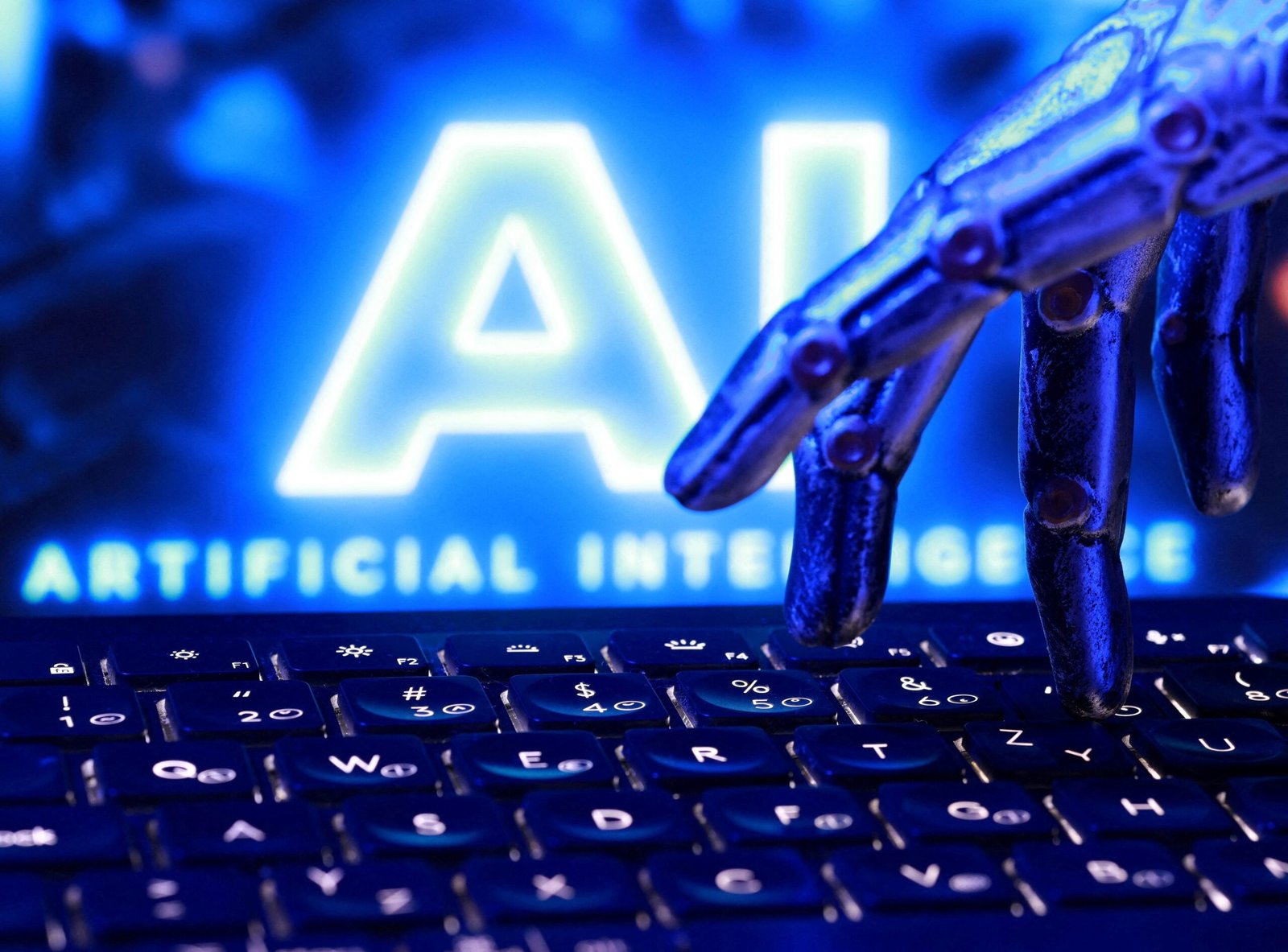
sharpens catandmouse hacking
|

AI sharpens cat-and-mouse hacking battle as companies strengthen defenses

From hacked supermarket fridges and a record cryptocurrency theft at Binance to an emergency over flaws in widely used web software, companies worldwide are facing a wave of cyber threats executives say AI is accelerating and making more sophisticated.

The surge is straining IT departments, with staff working overnight to patch software vulnerabilities, prompting some companies to turn to and increase investment in AI-powered security tools to help manage the workload.

A cyberattack on European supermarkets on Monday, the second in three weeks in which hackers raised refrigerator and freezer temperatures, forcing retailers to discard millions of dollars’ worth of spoiled food, underscored the urgency.

“It’s a never-ending game of cat and mouse, with very high stakes,” said Marnie Wilking, chief security officer at travel platform Booking.com.

“We shut down one route, and before we’ve even finished rolling out the fix, the bad guys have moved on to the next,” she said, adding that hundreds of engineers at the company were now building AI-powered defense systems.

Nearly 37,000 security flaws in software or computer systems were reported in the third quarter of 2026, tripling from a year earlier, according to the Common Vulnerabilities and Exposures list, an international registry of disclosed security flaws.

“We’re seeing events of a magnitude every week, or even every couple of days, that used to be months apart,” Markus Noga, chief technology officer of German web hosting company Ionos, which serves seven million customers, told Reuters.

Ionos said it changed its security practices after seeing a spike in vulnerabilities in July, deploying AI-based monitoring systems to scan for threats and using AI-assisted tools to install patches on its systems around the clock.

“I’m kind of limited to what a nine-to-five office hours team can do and that’s no longer good enough,” Noga said.

Cyber threats drive defensive spending

Binance, hit by hackers who stole $6.3 billion worth of cryptocurrency, said it would increase investment in AI-enhanced detection systems. The Port of Rotterdam is working on an AI-powered “cyber shield,” while Siemens is testing advanced AI models for defensive security.

Dutch-based grocer Ahold Delhaize, which operates the Stop & Shop and Giant Food chains in the US, was hit by two hacks in the past month. The first, in mid-October, led to more than €200 million ($225 million) in sales losses and prompted a profit warning.

In that incident, Ahold took its websites and apps offline for a week after detecting an intrusion. This week, some of its stores in Belgium and Luxembourg were among those hit by cyberattacks on refrigerators across a dozen European countries.

“We’re adjusting to a new reality,” CFO Jolanda Poots-Bijl told Reuters, adding smaller firms were particularly exposed. At the same time, AI is a defensive tool, she said.

“AI also helps us to detect and to restore in a much faster way than we were ever able to do in the past,” she added.

McKinsey projects the global market for cybersecurity products and services sold by outside vendors will grow from $223 billion in 2025 to $346 billion by 2029.

AI tools help researchers recreate hacks

The refrigerator cyberattacks show how AI is putting pressure on companies to patch systems quickly once a vulnerability is found, said Sean Tufts, field chief technology officer at cybersecurity firm Claroty.

Claroty published research in August, months before the attacks began, outlining weaknesses in refrigeration controllers.

After a first wave of attacks hit stores in France on October 11, Claroty researchers used widely available AI tools to reproduce the flaws and take control of a test device, highlighting the risk of further attacks.

“We were able to recreate it for six dollars and 28 minutes,” Tufts said.

The October 21 disclosure of two AI-discovered flaws in the PHP programming language, which underpins many websites, prompted governments and companies from Tokyo to Helsinki to take websites offline as a precaution.

US internet infrastructure firm Cloudflare reported that attempts to exploit PHP flaws rose from thousands to millions within hours of their disclosure. AI-discovered bugs could lead to more disruption in future, it told Reuters.

“The threat is real, it’s growing,” said Kraft Heinz CEO Steve Cahillane, adding cybersecurity was “more important today than it was yesterday and will be even more important tomorrow”.

At Swiss building materials maker Holcim, which took its website offline around 9:30 p.m. (1930 GMT) on October 21 to install PHP fixes and restore service before midnight, Chief Financial Officer Steffen Kindler echoed those comments.

“We need to get smarter. Both sides are heavily equipped,” he said. “Both sides use AI, and that race is continuing.” – Rappler.com


Similar Posts

  • | |

    UK lawmaker seeks court order against Grok over fake sexualised images

    LONDON: A British lawmaker has asked a London High Court to order Elon Musk’s xAI to prevent its Grok chatbot from generating manipulated sexualised images of her without consent. Labour lawmaker Jess Asato filed the case against xAI, alleging misuse of private information and breaches of data protection laws. She is seeking permanent technical measures that would stop Grok from producing altered images of her. Asato said fake content featuring her had been created after she publicly criticised Musk and Grok. She previously said one manipulated video depicted her being drugged and prepared for a sexual assault. Her lawyers argue that the design and training of Grok enabled users to generate sexualised material involving real people. They say the case could have wider implications for artificial intelligence developers and the way privacy and data protection laws apply to AI platforms. Court documents cited by Asato’s legal team reportedly refer to internal instructions given to Grok. Her lawyers claim the system contained safeguards against assisting users involved in criminal activity but had fewer restrictions concerning adult sexual and offensive content. Asato’s lawyer, Ravi Naik, argued that the platform’s behaviour reflected decisions made by its developers. He said those decisions should have legal consequences if the system fails to comply with privacy and data protection requirements. The lawsuit comes amid growing international criticism over AI-generated sexualised images. Critics have raised concerns that such technology can be used to create non-consensual material involving women and other individuals without their knowledge. xAI previously introduced restrictions on image editing in Grok. The company said it had blocked certain requests involving people in revealing clothing where such content was illegal. However, subsequent investigations found that the safeguards did not always prevent users from generating sexualised images of people, including when users indicated that the subjects had not given consent. The controversy has also triggered legal action in other jurisdictions. Baltimore filed a lawsuit against xAI over allegedly manipulated sexualised images generated using Grok. Other cases have also emerged in the United States and the Netherlands. Grok is available through Musk’s social media platform X. The AI chatbot has faced regulatory scrutiny in several countries over its image-generation capabilities. Asato’s case could therefore become an important test of whether AI companies can be held legally responsible for harmful manipulated content generated by their systems. xAI had not immediately responded to requests for comment on the allegations. The company had also not filed a response to the lawsuit at the time of the report.

  • Why the five-day office week may disappear

      For many New Yorkers, commuting to the office remains a significant part of daily life. The average worker spends around 53 minutes travelling each way, but Mark Dixon, CEO of workspace giant IWG, believes this routine may look very different within the next 15 years. Research conducted by IWG in partnership with engineering consultancy Arup suggests that younger generations are already developing very different expectations about where and how they will work. According to the research, 80% of Gen Alpha—the oldest members of which are currently only 16 years old—expect flexible working to become the standard by 2040. Dixon argues that the attitudes of today’s teenagers could fundamentally reshape the workplace. He told Fortune that future generations may find it difficult to understand why people once spent hours travelling to an office simply “to sit down and use a computer.” In other words, the traditional office may eventually seem as outdated to younger workers as other workplace practices from previous generations seem today. The research also highlights how strongly Gen Alpha values shorter commutes. Only about one-quarter of those surveyed said they would be willing to accept a journey of more than 30 minutes to work. Most expect to work close to their homes or work remotely from home altogether. From Dixon’s perspective, the current push by some companies to bring employees back to the office is likely to be a temporary adjustment rather than a permanent reversal of the remote-work trend. Evidence from the National Bureau of Economic Research (NBER) points in a similar direction. Researchers analysed data involving approximately 8,000 American employees and found an interesting relationship between a CEO’s age and office attendance requirements. Younger CEOs tend to require fewer days of in-person work than their older counterparts. As younger executives increasingly move into leadership positions, the researchers suggest that the traditional five-day office week could gradually become obsolete. The NBER study also identified another important connection: leaders who are more supportive of remote work tend to be quicker to adopt new technologies and software-based management systems. This suggests that workplace flexibility may be connected to a broader willingness to embrace technological change. Dixon takes this argument even further. He believes companies that remain focused on physical presence while failing to embrace workplace flexibility and artificial intelligence could eventually struggle to compete. In a rapidly changing business environment, organizations may need to prioritize results, collaboration and technological innovation over simply measuring whether employees are physically sitting at their desks.   Brian O’Kelley, the founder of climate-tech company Scope3 and former CEO of AppNexus, which was sold to AT&T for $1.6 billion, shares a similar view. He argues that CEOs who impose strict office requirements may not be giving enough attention to preparing their organizations for an AI-driven future. Ultimately, the workplace of 2040 could look very different from today’s. As younger leaders enter positions of influence and technologies such as AI become increasingly integrated into everyday business, flexibility may become less of an employee benefit and more of a fundamental feature of how companies operate.

Leave a Reply

Your email address will not be published. Required fields are marked *