Buy-to-let investment grows in Cha-am and Hua Hin
Phetchaburi, Cha-am and Hua Hin are being touted as increasingly attractive locations for buy-to-let investment, as Thailand’s wider property market faces pressure from household debt, tighter lending rules and weaker demand from domestic homebuyers.
Reports from Kasikorn Research Centre and the Real Estate Information Centre indicate that the residential sales market remains under pressure, particularly in the lower-priced segment. Loan rejection rates for homes priced below 3 million baht have reportedly risen to between 40 and 70 percent, limiting the ability of many Thai buyers to enter the market.
The slowdown has contributed to a shift in focus among some investors, away from short-term speculation and towards properties that can generate regular rental income.
Buy-to-let investment supported by rental demand
The Cha-am-Hua Hin area is being highlighted as one of the locations benefiting from this trend, partly because it serves both the tourism and long-stay residential markets.
Rental demand is being driven by several groups. These include long-stay retirees from Europe and Russia, who often rent condominiums or pool villas for several months during the winter season, as well as foreign families and professionals connected to international schools in the area.
Digital nomads and so-called bleisure travellers are also contributing to demand, particularly for beachfront or near-beach condominiums rented for one to three months.
Developers and property managers in the area have responded by offering rental programmes, serviced apartment-style management and legal short-term rental options. Some projects are marketed with expected rental yields of around 4 to 6 percent a year.
New condominium developments in prime Cha-am-Hua Hin locations are also reported to have increased the proportion of units available under the foreign ownership quota to around 15 to 20 percent, in response to demand from overseas buyers seeking rental income.
Beachfront condos and pool villas in demand
The strongest rental demand is said to be concentrated in two main property types: sea-view or beachfront condominiums and privately managed pool villas.
One- and two-bedroom condos with resort-style facilities are attracting interest from renters seeking convenience, sea views and access to shared amenities. Average rents for some projects are reported at around 18,000 to 25,000 baht per month.
Pool villas in Hua Hin, hillside locations and areas near golf courses are also seeing strong interest, particularly from higher-income foreign families. Rents in this segment can range from tens of thousands of baht to more than 100,000 baht per month, depending on location, size and level of management.
Second-hand homes are also becoming more attractive to investors, as they often offer lower prices per square metre than new-build projects. Some buyers are renovating older properties before placing them on the rental market.
Thew Talay Estate highlighted as beachfront option
Among the projects being promoted for buy-to-let investment is Thew Talay Estate Cha-am-Hua Hin, a mixed-use beachfront development covering more than 110 rai. The project was developed by Ruam Issara, a joint venture involving Charn Issara Development, Saha Pathanapibul and I.C.C. International.
The project’s appeal is linked to its beachfront location, where large plots without a road between the development and the beach are increasingly limited.
Within the estate, Blu Diamond, a 21-storey condominium, is being marketed as an accessible investment option. One-bedroom units of around 30 square metres are reported to start from about 1.6 million to 1.79 million baht, with estimated rents of around 7,000 baht per month.
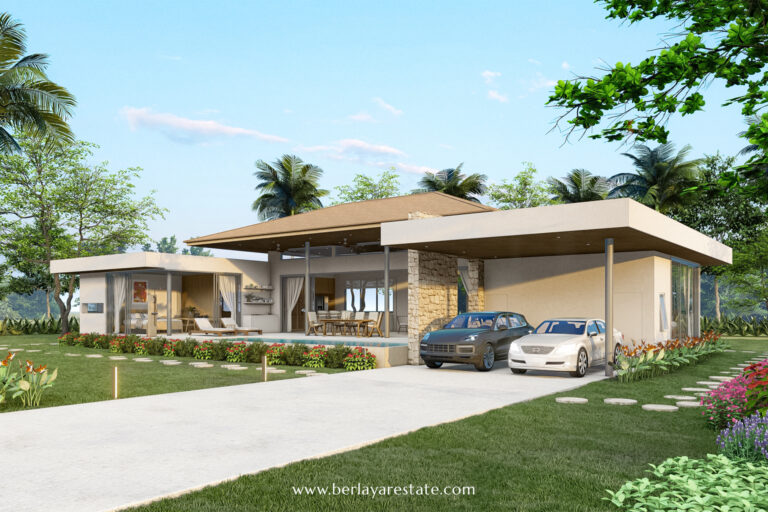
Baba Beach Club Residences, also within the estate, targets a higher-end market through a limited number of luxury pool villas supported by services associated with Sri panwa.
Analysts say professionally managed projects in genuine beachfront locations could appeal to investors seeking more predictable rental income, particularly as the property market places greater emphasis on value, cash flow and long-term demand.