cebu save your
| | | | | |

Cebu, save your sensilyo! BSP’s coin machines could arrive by January 2027

Remember those coin deposit machines that let you turn your barya into digital cash? Well, they’re finally making a comeback, although a little later than expected.

In an interview with Rappler on the sidelines of the Bahandi launch, Bangko Sentral ng Pilipinas (BSP) Deputy Governor Bernadette Romulo-Puyat said the central bank is now eyeing January 2027 for the machines’ return. The delay, she explained, has largely been due to the service provider taking longer than expected.

This time, the BSP wants a rollout across the regions first, with SM Cebu potentially getting first dibs.

inside track logo

“We’ll launch it in Cebu,” Romulo-Puyat told Rappler, adding that she also hopes to hold a launch in Mindanao.

The plan is to deploy 25 coin deposit machines outside the capital while also bringing back 25 machines in Metro Manila and doubling the original fleet.

After all, Metro Manila residents already had their turn when the BSP first introduced the machines in June 2023. (READ: How to turn coins into digital cash with Bangko Sentral’s coin deposit machines)

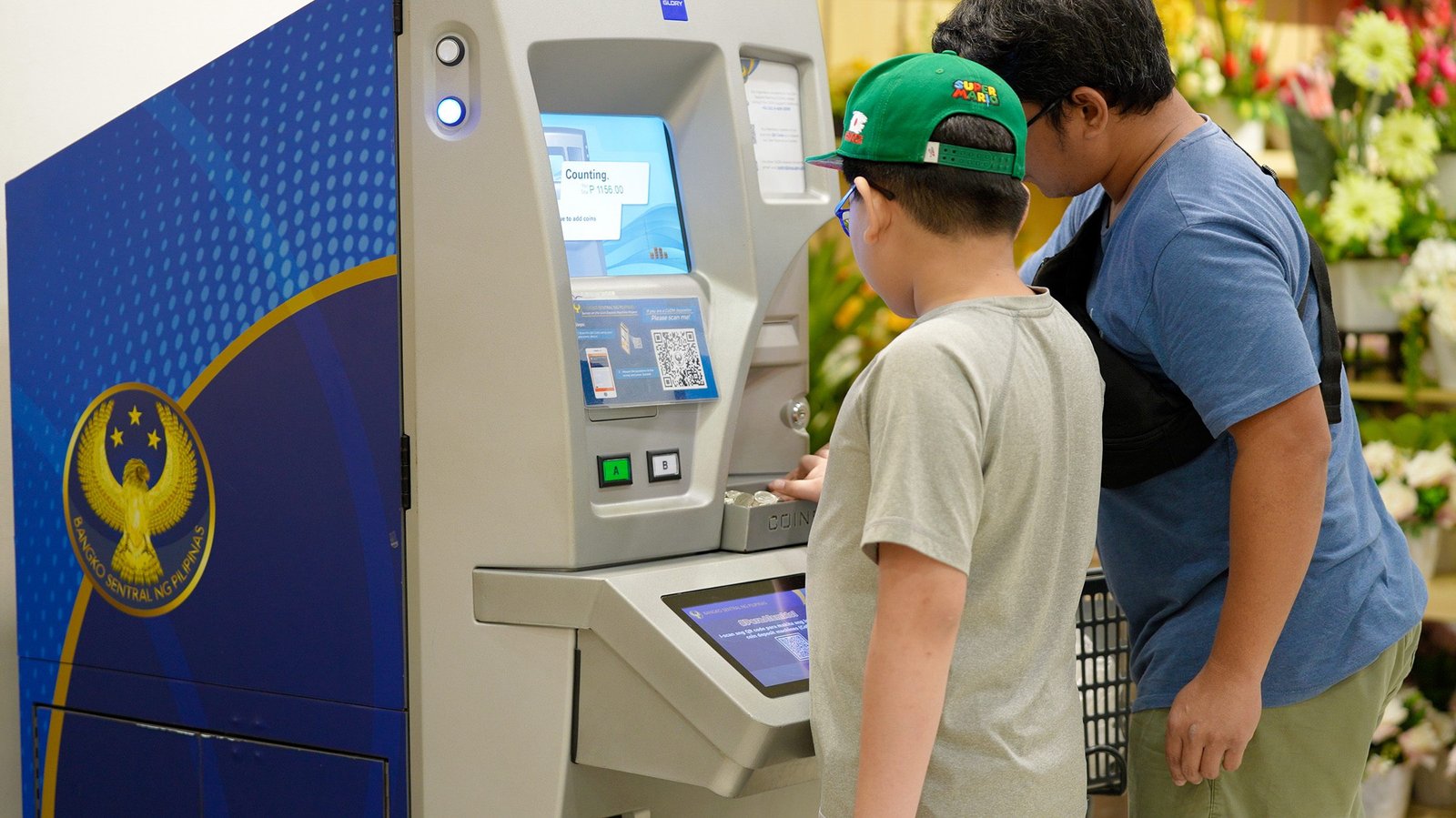
And what a hit they turned out to be. Filipinos hauled their loose change to participating malls, poured coins into the machines by the handful, and received the equivalent amount in their GCash or Maya wallets, GoTyme bank accounts, or shopping vouchers.

By March 2025, the BSP reported that the machines had collected around P1.4 billion worth of coins.

Now, the BSP is working with SM to bring them back, with the mall operator helping shoulder costs and identify high traffic locations for the machines.

Romulo-Puyat said the arrangement would help lower the cost of operating the program, which she acknowledged was expensive.

As for Metro Manila, the machines could return around the same time as those in the provinces, but less the fanfare.

“Here naman, announce lang namin, people will come,” she said. (We just announce it here and people will come.) – Rappler.com


Must Read

Before the Philippines even had a name, it had gold


Before the Philippines even had a name, it had gold

Similar Posts

  • |

    Nepra approves Rs21.4bn investment plan for SEPCO, sets loss targets

    The National Electric Power Regulatory Authority (Nepra) has approved a Rs21.436 billion Distribution Investment Plan (DIP) for Sukkur Electric Power Company Limited (SEPCO), covering its transmission and distribution operations for the five-year Multi-Year Tariff (MYT) period from fiscal year 2025-26 through FY2029-30. Along with the investment plan, the regulator has also set provisional targets for transmission and distribution (T&D) losses, while directing SEPCO to improve project execution, digitalise operational data and strengthen its planning and monitoring mechanisms. SEPCO had originally requested approval for an investment programme worth Rs90.563 billion. However, after Nepra raised several questions regarding the proposed projects, costs, utilisation of existing assets and investment requirements, the power utility submitted revised details. Following the revisions, SEPCO reduced its proposed investment to Rs40.191 billion in information submitted to Nepra on June 19, 2026. The revised proposal included changes in investment priorities and network development requirements based on updated demand projections. The company also revised project costs in light of the latest Purchase Orders (POs). Nepra, however, found substantial weaknesses in SEPCO’s original investment submission. According to the regulator, the initial proposal did not adequately reflect actual field conditions and lacked a comprehensive assessment of the utility’s requirements. It also contained gaps in cost calculations and information concerning the utilisation of existing assets. The regulator stressed that future investment planning should be based on reliable data, realistic demand assessments and proper evaluation of existing infrastructure rather than relying solely on projected requirements. Low utilisation of previous investments raises concerns Nepra also raised concerns over SEPCO’s ability to execute projects and utilise approved investment funds effectively. During the previous control period, SEPCO had been allowed investment of Rs39.509 billion. However, the company utilised only Rs14.231 billion, representing around 36% of the approved amount. The regulator said the low utilisation rate raised questions about SEPCO’s project implementation capacity and the efficiency with which approved investments were being converted into infrastructure and operational improvements. Delays were particularly noted in projects falling under the STG head. Nepra attributed the slow progress to difficulties in acquiring land, procurement-related problems and inadequate coordination between relevant departments. The regulator indicated that these issues point towards weaknesses in project planning, monitoring of milestones and implementation. SEPCO asked to improve network performance Nepra has also expressed concern over SEPCO’s technical and operational performance, particularly its transmission and distribution losses and reliability indicators, including the System Average Interruption Frequency Index (SAIFI) and System Average Interruption Duration Index (SAIDI). The authority directed the company to strengthen preventive maintenance programmes, improve energy accounting and introduce stronger system controls. These measures, Nepra said, are necessary to reduce losses, improve reliability and ensure consumers receive a more stable electricity supply. SEPCO’s approved investment priorities include expansion and strengthening of its 132-kilovolt network, augmentation of the existing system to accommodate future electricity demand and the deployment of modern technologies. The proposed technological improvements include Advanced Metering Infrastructure (AMI), Supervisory Control and Data Acquisition (SCADA) systems and Geographic Information System (GIS)-based mapping. These technologies are expected to support better monitoring of the electricity network, improve operational efficiency and enhance safety and service quality. Independent consultant made mandatory In a significant condition attached to the investment approval, Nepra has required SEPCO to engage an independent third-party consultant to review and validate its future investment plans before they are submitted to the regulator. SEPCO has also been instructed to prepare detailed Terms of Reference (ToRs) for the consultant and obtain Nepra’s approval before beginning the procurement process. The regulator said independent validation would help ensure that future investment proposals are based on actual requirements and that proposed projects are properly justified. Nepra pushes digitalisation of SEPCO operations Nepra has further directed SEPCO to move away from manual data-management practices and establish a comprehensive digital system for its operational information. The authority noted that dependence on manual systems can result in errors, delays and inefficient decision-making. A fully integrated digital platform, according to Nepra, would allow the company to monitor its network in real time, improve demand forecasting and make investment decisions based on reliable data. The regulator has also adopted a dynamic approach to the approved investment programme, allowing adjustments on an annual basis as well as a mid-term review. SEPCO has been directed to submit its mid-term review by December 2027. The review will include updated electricity demand forecasts, progress on approved projects and the company’s financial performance. Provisional T&D loss target set at 16.31% For FY2025-26 and FY2026-27, Nepra has approved a provisional T&D loss target of 16.31% for SEPCO. The target includes a 1% allowance related to law-and-order conditions. The regulator has also ordered SEPCO to commission an independent third-party assessment of its T&D losses through an international consultant or consortium. The study is required to be completed within nine months, with the timeline taking effect from January 7, 2026, in accordance with the tariff rebasing decision. Nepra warned that failure to submit the required independent study within the prescribed period could result in the regulator applying benchmark loss levels. Under the benchmark framework, the applicable levels would include 5.32% high-tension (HT) losses and 1.85% low-tension (LT) losses, resulting in total distribution losses of 7.17%. Transmission losses would be set at 1%, while the overall technical loss ceiling would remain within the range of 8% to 10%.

  • |

    PSX jumps 2,700 points on Trump-Iran talks news

    The first trading session of August brought renewed optimism to the Pakistan Stock Exchange (PSX), where investors returned with aggressive buying, driving the benchmark KSE-100 Index sharply higher. The bullish momentum followed US President Donald Trump’s announcement regarding the commencement of talks with Iran, a development that boosted investor confidence and eased concerns over escalating geopolitical tensions. During early trading, the KSE-100 Index surged by 2,708 points, climbing to 178,802 points as buying activity intensified across several major sectors. Market participants attributed the rally to improved global sentiment, with hopes that diplomatic engagement between Washington and Tehran could reduce regional tensions and support international financial markets. Analysts said investors responded positively to the possibility of a more stable geopolitical environment, which could help stabilize global energy prices and encourage foreign investment in emerging markets, including Pakistan. Strong buying interest was witnessed in leading banking, energy, cement, and fertilizer stocks, contributing to the market’s upward trajectory. Despite the robust performance of the PSX, Asian equity markets presented a mixed picture. Japan’s benchmark Nikkei Index declined by 1.5 percent amid continued investor caution, while South Korea’s Kospi recorded a steeper fall of 5.25 percent, reflecting selling pressure in major technology and export-oriented shares. In contrast, Hong Kong’s Hang Seng Index remained in positive territory, posting a modest gain of 0.1 percent as investors welcomed signs of easing geopolitical uncertainty.

Leave a Reply

Your email address will not be published. Required fields are marked *