Ed Quitoriano: The life, travels, and travails of a promdi rebolusyonaryo
The writing of Deeper Ground, Darker Shadows: The Making of a Mindanao Rebel began when Francisco “Pancho” Lara Jr., executive director of the non-government research and policy institute Climate Conflict Action, asked me to comment on Ed Quitoriano’s first draft chapters.
I could not say no to an old friend. After a common friend heard about this, he told me to ask Ed about his nose. When we finally chatted with each other via social media, I asked him about his nose to break the ice. Ed casually replied that Cuban plastic surgeons reconfigured it so that he would look more Latino than Asian. That way, Latin American revolutionaries would warm up to him more since he would look like them! But the doctors botched the first operation, so they had to do the plastic surgery all over again!
Of course, I asked him, “What in heaven’s name were you doing in Cuba?” Again, matter-of-factly, he said during that time he was going around Latin America on behalf of the New People’s Army’s General Command, seeking military assistance from Leftwing movements and Cuba for the NPA.
He then added that, before Cuba, he also visited Nicaragua, Lebanon, Libya, Yugoslavia, and North Korea, with multiple transits points ranging from Athens, Algeria, Belgrade, Moscow, Brazil, Peru, Mexico, Singapore, Vietnam, and Thailand! This got my attention and, for the next 10 years, Ed and I worked on the manuscript.
It was not an easy edit. I told Ed at the onset that his life should be the center of the book and that he should write as honestly as possible. We both knew how much memoir writing in the Philippines are, by nature, flawed. Authors — many conveniently dead — embellished their records and peppered over the dark sides of their lives. It is easy to spot these self-indulgences in the memoirs of politicos, presidents, and corporate bigwigs, but also in the autobiographies of civil-society activists, human rights advocates and of course revolutionaries. I did not want Ed to follow that well-trodden, contemptible path.
Then we had to stop this dreary habit Ed learned from the underground, where one always starts a chapter pertaining to a country visited with some broad economic, political, and socio-cultural overview. Ed’s first chapters read like this monotonous formulaic prerequisite. “I landed in Syria in April. Syria was once a colony of the French then the British empire and after independence fought in the Arab Israeli war, blah, blah, blah.” I told him to do away with that, reminding him that if readers needed some background, they could check this at the library or, if too lazy, Wikipedia.
Finally, there were the characters in his stories, many of them still alive when Ed began writing. In some weird ghastly manner, we had to wait for some of them to die so that there would be no more resorting to aliases or, God forbid, innuendos. It was also because of this that we could not get a local publisher to be interested in the manuscript. But eventually some of these characters did die, which made the writing easier. But others are still with us, and challenging Deeper Ground, Darker Shadow’s narrative is the Japanese Red Army (JRA) leader Fusako Shigenobu.

So, what you have here is the autobiography of a “nobody” in the CPP-NPA, not a member of the Politburo; a cadre who came from a small town in “frontier” Mindanao, not urban Manila. Ed learned his radicalism from Irish missionaries of the St. Columban Order, not from Maoist commissars from the University of the Philippines.
This marriage of Marxism and theology was a distinctive feature of Mindanao communism of his time. Ed was a kumander who helped build the first viable NPA guerrilla zones in Mindanao, only to learn later that many of his comrades were also the first to be arrested, tortured, then killed by a caretaker Mindanao leadership, which panicked when news got to them that the military had infiltrated the movement.
The book’s prologue is a dirge and a reminder that the victims of the purges of the 1980s still must get justice and its perpetrators be prosecuted to the fullest. Finally, he was an outsider to movement politics — he was out of the country when debates, the splits, and the purges of the 1980s upended the revolution. He would also become the convenient scapegoat in the first and perhaps only communist kangaroo court we will ever read about.
Ed was a rural kid who found himself in the global stage, striking a conversation with the drunken Sandinista deputy interior minister Omar Cabezas, and was given an Arabic nom d’ guerre by the second-in-command of the dreaded Popular Front for the Liberation of Palestine. He got $1 million USD dollars each from the dying North Korean Kim Il Sung (Ed saw the large pustule on the despot’s back!) and the animated Moammar Khadafy, who told him that in exchange for the $1 million, the NPA should fly a plane into a New York high rise!
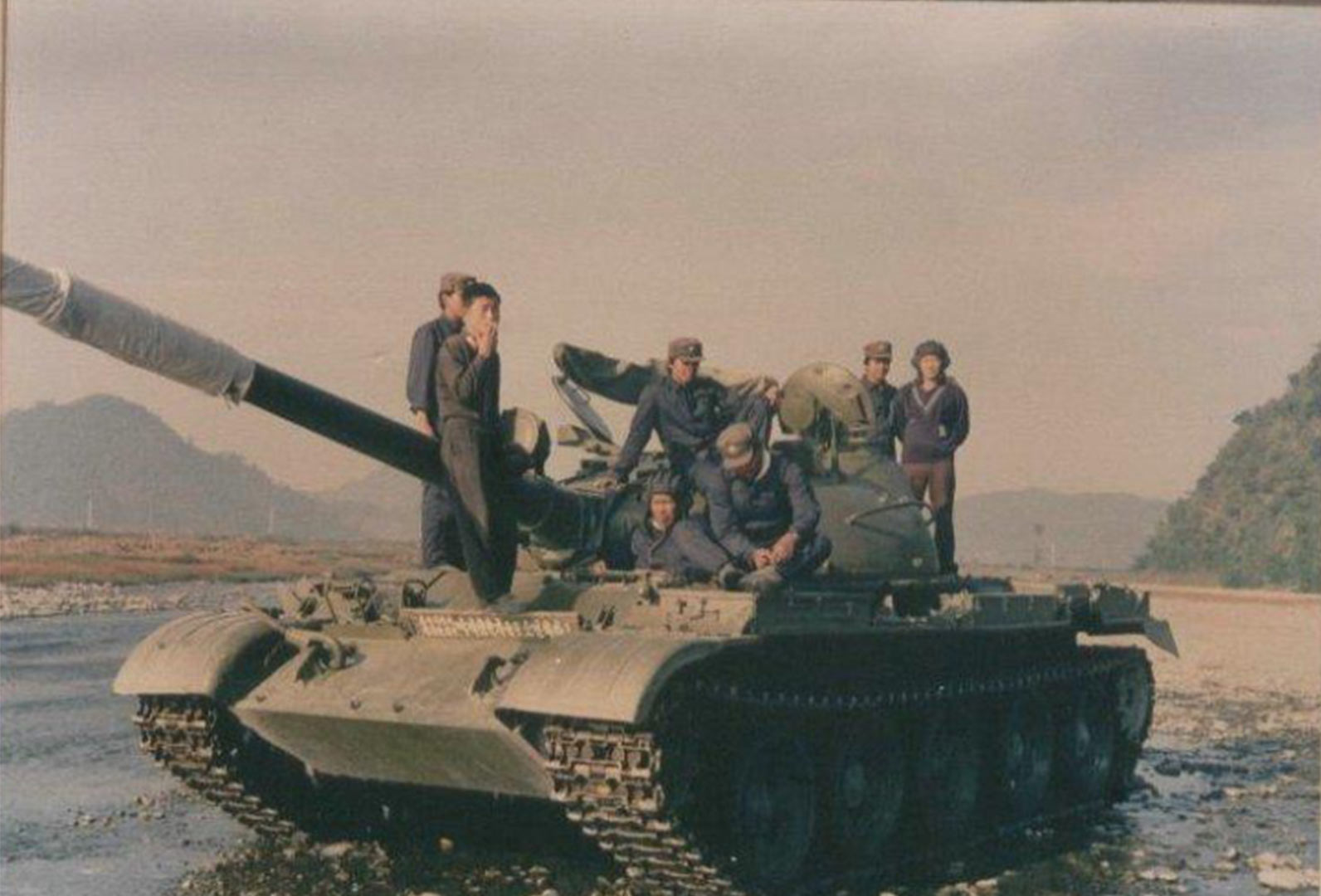
It is worth mentioning here Ed’s close ties with Fusako Shigenobu. His travels were funded not by the NPA nor the CPP but by Shigenobu, she who became famous in Japanese politics when she released her revolutionary declaration in Hiragana, the phonetic, cursive script that upper class women use to write their diaries and poetry. She became a global icon when she led many of her comrades to Europe and the Middle East and established this elaborate network that extended from Brazil and Peru to the Philippines! It was even rumored that the Japanese Red Army (JRA) ran a bar in Makati’s seamier side, which was a joint investment with the Yakuza. Shigenobu would be Ed’s close adviser, financier, and I even dare say, friend, in his travels across the world.
Four years ago, I sat alongside my University of Hawaiʻi colleague, sociology professor Patricia Steinhoff, in a workshop on Japan and Southeast Asia. Pat is the world’s top expert on the JRA, so I mentioned to her that I was editing the work of a friend who once had close ties with the group in the 1980s. Her face lit up because it was this period which she drew a blank about the whereabouts of the JRA after it had to close its European and Middle Eastern operations. But once we compared faces with pseudonyms and real names, she could now sort out where the group’s members went and, from our end, put a real name to each face instead of relying on aliases. Pat then happily agreed to write the foreword to the book.
My friend and novelist, Professor Caroline Sy Hau of the Center for Southeast Asian Studies in Kyoto University, wrote this unusual blurb, describing Deeper Ground, Darker Shadows as one that read “like a political thriller, with elements of the picaresque novel thrown in for good measure.” No wonder even his military captors encouraged Ed to do a movie about his life! It is a singular book for its honesty and candor, its expanse and intimacies, that I doubt will be matched by any other Filipino communist’s memoir for quite a while. – Rappler.com
Deeper Ground, Darker Shadows: The Making of a Mindanao Rebel is published under the “New Perspectives in Southeast Asia” Series of the University of Wisconsin Press. The Ateneo de Manila University Press publishes the Philippine edition.
Patricio N. Abinales is working on a book on the University of the Philippines and Martial Law, and completed the first draft of the manuscript on Philippine cuisines for Bloomsbury Press’s Global Food Cultures Series. This piece was delivered during the Manila book launch of Deeper Ground, Darker Shadows on July 23, 2026.