francis halzen wins
| | | |

Francis Halzen wins Nobel physics prize for Antarctic ‘ghost particle’ hunt

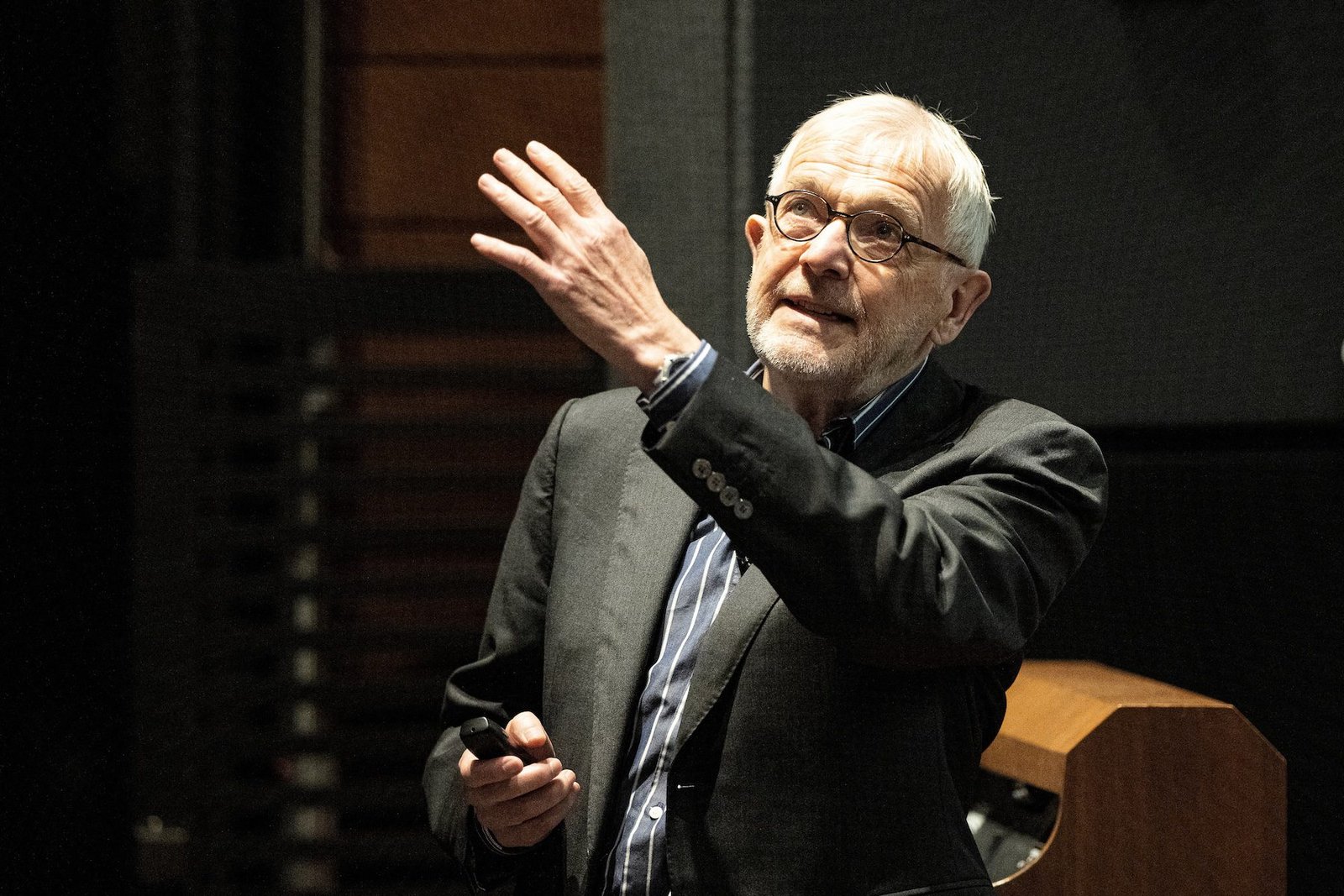
STOCKHOLM, Sweden – The Belgian-American scientist Francis Halzen won the 2026 Nobel Prize in Physics for his work creating an Antarctic observatory of ice to detect high-energy neutrinos, elusive subatomic particles that can reveal otherwise inaccessible information about the cosmos.

Halzen, 82, realized that pristine ice at the South Pole could be used to track such neutrinos, sometimes known as “ghost particles” for the way they pass through the Earth without a trace, only interacting with matter extremely rarely.

“The messengers bring information from the cosmos,” Eva Olsson, of the Royal Swedish Academy of Sciences, told a press conference. “They open the door to distant galaxies and tell us about the processes of exploding stars.”

“It’s a great relief for me because this was not totally unexpected, and around this time of the year I always felt miserable because I didn’t win the prize and thought it was terrible for my collaborators who deserved it so much,” Halzen said at a press conference. “So that problem is finally solved.”

Halzen hailed for detecting ‘messengers from the cosmos’

The interactions registered by the IceCube Neutrino Observatory provide information about how high-energy particles are created and may even reveal previously unknown phenomena, the Academy said.

“We could catch them in ice, that was the goal,” Halzen said of the years-long effort to construct the observatory, which he described as opening “a window on the universe.”

In 2014, the US-based Smithsonian magazine dubbed Halzen “Neutrino Man” when giving him one of its Ingenuity Awards, acclaiming him for an “amazing experiment (that) heralds the beginning of a new era in astronomy”.

It even published a comic illustrating his life: “How One Physicist’s Pursuit of the Cosmos Took Off in Antarctica”.

The observatory – in effect a telescope that shows neutrinos instead of light – is set in a cubic kilometre of Antarctic ice, which extends to a depth of 2,500 metres below the surface near the Amundsen-Scott South Pole Station.

More than 5,000 sensors await blips from the nearly massless high-energy neutrinos, which unlike other particles do not lose energy or change direction, in the hope of tracing their paths back to exploding stars, gamma-ray bursts, and cataclysmic phenomena involving black holes and neutron stars. They can expect to register about one per day.

Halzen, a professor at the University of Wisconsin–Madison in the US, first presented his idea in 1988 for capturing neutrino traces at the South Pole, but the project was not completed until 2011.

“I have to emphasise how lucky I was because, when we started this project, everybody realised this was maybe a good idea, but very few thought it would work, including myself,” Halzen told the press conference by telephone.

Neutrinos are electrically neutral, undisturbed by any magnetic field, which means that, in contrast to electromagnetic waves such as visible light, the direction from which they arrive points directly back to their source.

Fruits of Halzen’s research yet to come

The observatory has determined that high-energy neutrinos originate within but also far outside our own Milky Way galaxy, setting in motion an interstellar quest to find the objects and processes that create them.

Through the long winter at the South Pole, when bringing anything in or out is difficult as temperatures below minus 50 degrees Celsius (minus 58 Fahrenheit) preclude even aircraft landing, a skeleton crew of “winterovers” has to maintain the observatory.

The station, home to many other activities, can house as many as 150 people and has an industrial kitchen, dining room, gym and even a greenhouse. Last week it celebrated the sun’s return above the horizon after six months of night with a six-hole ice-golf tournament.

An extension, IceCube-Gen2, encompassing 8 cubic kilometres of ice, is planned to become operational in 2033 and will be able to detect 10 times as many neutrinos, including much weaker ones.

Halzen said the main fruits of his work were yet to be seen and that it was too early to say exactly what it could reveal about the universe.

“This is a new way of looking at the universe, and it will take bigger telescopes, many more telescopes, to become real astronomy,” he said. “And what this will bring is impossible to predict.”

Winners from Einstein to Bohr and the Curies

Belgian Prime Minister Bart De Wever congratulated Halzen on the recognition of “a life dedicated to unraveling the greatest secrets of the cosmos through its most minuscule manifestations.”

The physics laureate receives an award of 12 million Swedish crowns ($1.2 million). Past winners include several other neutrino research pioneers, for instance Japan’s Takaaki Kajita and Arthur McDonald from Canada in 2015.

The Nobel Prizes were established under the will of Swedish inventor and entrepreneur Alfred Nobel, whose fortune was built in part on the invention of dynamite.

Physics was prominent in Nobel’s will and the prize remains one of the discipline’s highest distinctions. Over the decades, it has recognised discoveries that have fundamentally reshaped humanity’s understanding of the universe.

Among past laureates are some of the most celebrated figures in science, including Albert Einstein, Marie and Pierre Curie, Max Planck and Niels Bohr, whose work helped establish the foundations of modern physics.

The prize is presented in Stockholm on December 10, the anniversary of Nobel’s death. – Rappler.com

($1 = 10.0329 Swedish crowns)

Similar Posts

  • |

    US issuing final opportunity for nuclear agreement with Tehran before extreme military action

    US President Donald Trump has issued a final ultimatum to Iran, stating that Tehran has one last opportunity to negotiate a diplomatic resolution with Washington before facing severe military force, which he referred to as decapitation. Speaking from the Oval Office, the American leader confirmed he had paused planned air strikes following direct requests from Persian Gulf nations, including Saudi Arabia, Qatar, and the United Arab Emirates, who urged Washington to allow diplomacy one final window. The framework for the proposed negotiations relies on a two-stage approach, with the initial phase requiring the immediate and unconditional reopening of the Strait of Hormuz to international shipping. The subsequent phase will address the complete denuclearisation of Iran, referencing commitments previously outlined in a joint memorandum signed in June. Trump further dismissed any personal domestic political considerations regarding the timeline, emphasising that his decision to delay military action was driven by a desire to prevent widespread loss of life while pursuing a durable diplomatic outcome.

  • |

    Progressive Abdul El-Sayed and moderate Haley Stevens lock horns in high-stakes Michigan Democratic Senate primary

    Voters across Michigan headed to the polls on Tuesday for a pivotal Democratic Senate primary that has emerged as a major battleground testing the ideological direction of the party. Former public health director Abdul El-Sayed faced four-term US Representative Haley Stevens in a fierce contest to secure the nomination to replace retiring Democratic Senator Gary Peters. The election night watch party for El-Sayed in Detroit saw left-wing commentator Hasan Piker launch a sharp critique against the Democratic political establishment while speaking to media representatives. Piker praised El-Sayed’s campaign as an “issues-first” movement, asserting that grassroots engagement carried greater weight than financial backing. Piker drew specific attention to external campaign funding, taking aim at the more than $30 million (£23.5 million) poured into the race by political action committees affiliated with the American Israel Public Affairs Committee (AIPAC) in support of Stevens. Describing the influx of negative advertising against El-Sayed as a “heinous smear campaign”, Piker expressed hope that mainstream Democrats would learn from El-Sayed’s approach. He also dismissed suggestions that the candidate or his high-profile backers would prove to be a general election liability, arguing that voters are disillusioned with personality-driven politics and seeking structural policy changes. Throughout the primary, the candidates presented starkly contrasting visions for the party’s future in the battleground state. El-Sayed, who gained endorsement from Senator Bernie Sanders, focused his platform on reducing corporate influence in politics, expanding healthcare access, and providing economic support to working families. Responding to characterisations regarding his political stance, El-Sayed clarified that he advocates for regulated capitalism rather than socialism. Conversely, Stevens leaned on her tenure in the US House of Representatives and her previous role in the Obama administration, positioning herself as a pragmatic candidate with the legislative track record needed to retain the seat. While earlier polling indicated El-Sayed held a slight edge, surveys suggested Stevens might hold broader appeal amongst moderate voters in the upcoming general election. The political friction surrounding the primary also drew public commentary from US President Donald Trump, who characterised the race as a contest between a “communist and a socialist.” The winning Democratic nominee will move on to face Republican candidate Mike Rogers in the November general election, a race anticipated to play a crucial role in determining party control of the US Senate.

  • |

    South Korea offers North Korea formal end to war

    South Korea has made a fresh and potentially significant proposal to North Korea, calling for both sides to formally bring an end to the Korean War and move away from decades of hostility. According to officials, Seoul has urged Pyongyang to abandon threats and confrontational policies and instead work toward ending the state of war that has technically remained unresolved since the 1953 armistice. The South Korean government also proposed establishing a coordinated security system along the border to help prevent military tensions and reduce the risk of accidental clashes. The initiative is aimed at creating greater stability on the heavily fortified Korean Peninsula. The proposal comes amid continued tensions between the two Koreas, where military activity and hostile rhetoric have repeatedly raised concerns about a possible escalation. Seoul’s latest offer could open a new diplomatic door if Pyongyang responds positively, although North Korea has historically remained cautious about South Korean-led initiatives. Meanwhile, US President Donald Trump also drew attention to the issue by sharing a memorable photograph on social media showing his meeting with North Korean leader Kim Jong Un. The developments have renewed questions over whether diplomacy could eventually replace confrontation on the Korean Peninsula.

  • | | |

    Iran warns tankers over Strait of Hormuz passage

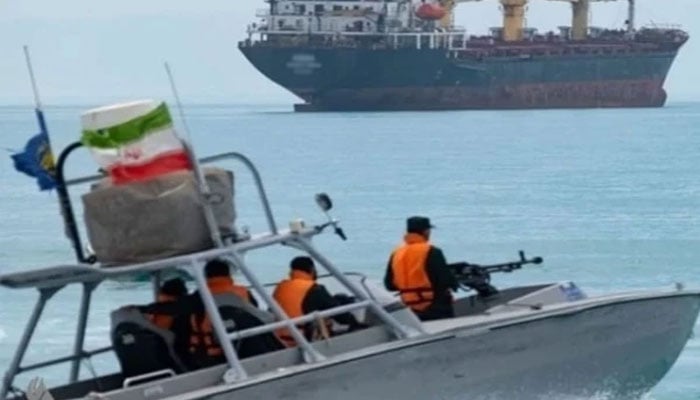
    Iran’s Islamic Revolutionary Guard Corps (IRGC) has claimed that one of three oil tankers caught fire after an explosion while attempting to navigate a route reportedly surrounded by naval mines south of the Strait of Hormuz. According to the IRGC, the other two tankers turned back and abandoned their attempt to continue through the area. The Iranian force said the incident occurred amid heightened tensions in the strategically important waterway, which serves as a major route for global energy shipments. The IRGC maintains that Iran controls the Strait of Hormuz and has closed the passage completely in response to what it describes as increased US military activity in the region. The IRGC also issued a warning to commercial vessels, saying that no tanker would receive permission to enter or pass through the strait without Iran’s approval. The statement signals a further escalation in tensions surrounding one of the world’s most important oil transit routes. The Strait of Hormuz connects the Persian Gulf with the Gulf of Oman and remains a crucial corridor for international energy supplies. Any disruption to shipping through the waterway could affect global oil markets and raise concerns over the security of maritime trade. The reported tanker incident and Iran’s warning come as regional tensions remain high, increasing uncertainty for shipping companies and energy markets operating in and around the Gulf.

Leave a Reply

Your email address will not be published. Required fields are marked *