hajj applications digital
| |

Hajj applications go digital as Pakistan lets pilg…

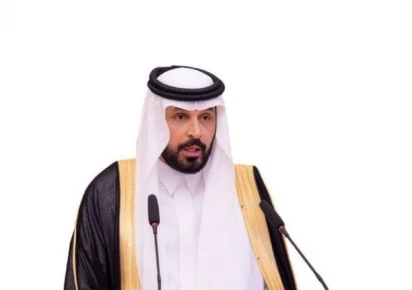
ISLAMABAD: Federal Minister for Religious Affairs Sardar Muhammad Yousaf has announced that Pakistan’s Hajj application process has been fully digitized, allowing prospective pilgrims to apply from the comfort of their homes without visiting offices or standing in long queues.

Speaking at a press conference in Islamabad, the minister said the digital system had been introduced to make the Hajj registration process easier and more convenient for pilgrims. Around 400,000 registered applicants will be able to submit their applications online.

Under the new system, applicants will have several options for paying their Hajj expenses. Payments can be made through credit cards or PSID, while those wishing to pay in cash can print a challan and deposit the required amount.

Yousaf said 107,526 pilgrims are eligible to perform Hajj under the government scheme. The collection of the first installment of Hajj expenses will begin on August 17, while the second installment is scheduled to be collected in October.

Applications will be processed on a first-come, first-served basis, with registration closing once the government’s allocated quota is reached.

The minister also said pilgrims opting for the private Hajj scheme would be able to select a private operator through the Pak Hajj application. However, he cautioned pilgrims against making direct payments to private Hajj operators.

Similar Posts

  • | |

    CDF Asim reinforces Pakistan’s defence partn…

    A high-level delegation from Somalia, led by Defence Minister Ahmed Moallim Fiqi, met Field Marshal Syed Asim Munir, Chief of Army Staff and Chief of Defence Forces, at the General Headquarters (GHQ) in Rawalpindi to discuss bilateral defence cooperation and regional security. According to the Inter-Services Public Relations (ISPR), the meeting focused on matters of mutual interest, the evolving regional security environment and ways to strengthen defence and military cooperation between Pakistan and Somalia. Both sides emphasised the importance of expanding military-to-military relations and enhancing cooperation in training and capacity-building initiatives to address shared security challenges. They also discussed the need for closer collaboration to promote peace and stability in the region. During the meeting, the Somali defence minister acknowledged Pakistan’s continued support for Somalia and praised the professionalism of the Pakistan Armed Forces in contributing to regional peace and security. Field Marshal Asim Munir reaffirmed Pakistan’s commitment to supporting Somalia in strengthening its security institutions and enhancing defence capabilities. He said Pakistan values its longstanding relationship with Somalia and remains committed to deepening bilateral cooperation in the defence sector. The meeting reflects the growing defence ties between the two countries and their shared commitment to enhancing security cooperation and addressing common regional challenges.

  • |

    SBP to maintain focus on price stability, reforms and sustainable economic growth

    KARACHI: State Bank of Pakistan (SBP) Governor Jameel Ahmad has said the central bank will continue to prioritise price stability, structural reforms and the creation of a business-friendly economic environment aimed at boosting productivity, exports and employment. Addressing a flag-hoisting ceremony held at the SBP headquarters in Karachi to mark Pakistan’s 79th Independence Day, Governor Ahmad said the country had made notable progress towards macroeconomic stability over the past year. He attributed the improvement to disciplined fiscal and monetary policies, better economic management and continued efforts to strengthen financial and economic institutions. Inflation remains within medium-term range Speaking about the inflation outlook, the SBP governor said average inflation during fiscal year 2025-26 stood at 7.1 percent. He said the central bank believed that the prevailing monetary policy stance was appropriate for keeping inflation within its medium-term target range of 5 to 7 percent. According to Ahmad, the current policy framework also provides sufficient space for economic activity to continue, while supporting investment and employment generation. The governor said maintaining price stability would remain a central objective of the SBP as Pakistan seeks to move from short-term stabilisation towards sustained economic expansion. Growth expected to strengthen Ahmad said Pakistan’s economy recorded growth of 3.7 percent in FY26, reflecting the impact of improved macroeconomic conditions and greater fiscal and monetary discipline. Looking ahead, he projected economic growth in the range of 3.5 to 4.5 percent during FY27. He described the outlook as encouraging, saying the economy was gradually moving towards a more sustainable growth path after going through a difficult period of economic stabilisation. The governor stressed that maintaining policy discipline would be important to ensure that the gains achieved in recent years translate into durable economic development. Remittances strengthen external position The SBP chief also highlighted improvements in Pakistan’s external sector, particularly the performance of workers’ remittances. He said overseas Pakistanis had demonstrated confidence in the country by sending record amounts of money home, with remittances surpassing $41 billion during FY26. The inflow is expected to increase further, with remittances projected to reach around $44 billion in FY27, according to the governor. Ahmad said stronger remittance inflows, combined with a relatively low current account deficit, had helped improve Pakistan’s foreign exchange position. The country’s foreign exchange reserves reached $18.4 billion by the end of FY26, while the SBP expects reserves to rise above $21 billion during FY27. He said strengthening the external position would help improve economic resilience and provide greater capacity to withstand external shocks. SBP pushes digital transformation The governor also outlined measures taken by the central bank to modernise Pakistan’s financial infrastructure and expand the use of digital payment channels. He pointed to the successful launch of PRISM+, saying the upgraded payment and settlement infrastructure had brought Pakistan’s large-value payment system closer to international standards. The system has improved the speed, security and efficiency of large-value payments and settlements, he said. Ahmad added that SBP initiatives aimed at encouraging digital payments had resulted in a substantial increase in the use of electronic channels. Retail digital transactions increased from approximately 10 billion to 12 billion over the past year, reflecting growing adoption of technology across the financial system. According to the governor, the shift towards digital payments is more than a technological development. It is also contributing to greater documentation, transparency and efficiency within the economy. Self-reliance and institutions vital for progress Governor Ahmad said Pakistan’s long-term economic success would depend not only on financial and monetary policies but also on stronger institutions, economic self-reliance, respect for the rule of law and national unity. He emphasised that the country’s journey towards sustainable development required continued commitment and collective efforts from institutions, businesses and citizens. While acknowledging the progress achieved during the past year, he cautioned that Pakistan continued to face economic challenges that required sustained attention, policy consistency and determination. He said the objective should now be to convert the gains from economic stabilisation into a durable foundation for investment, productivity, exports and employment. The governor reaffirmed that the SBP would continue playing its role in supporting monetary and financial stability while contributing to broader efforts aimed at improving the welfare of the Pakistani people.

  • | |

    Maura Higgins explains why she declined to partner…

    Maura Higgins has revealed why she chose not to partner with professional dancer Gleb Savchenko ahead of her upcoming appearance on Dancing with the Stars, saying her decision was based on friendship rather than drama. The Irish television personality and model recently spoke with E! News about joining the hit dance competition, which returns in September 2026. During the interview, Higgins addressed speculation surrounding her professional dance partner and explained why she decided against being paired with Savchenko. According to Higgins, the two have become good friends over the years, and she felt working together on the competition could make things uncomfortable rather than enjoyable. (E! News⁠) Higgins said she values her friendship with Savchenko and believes maintaining that bond is more important than forcing a professional partnership. She explained that while they get along well off the dance floor, competing together would change the dynamic of their relationship, especially given the intense training schedule and pressure that comes with the show. Savchenko also reacted to Higgins’ comments, admitting he was disappointed that she did not choose him as her partner. However, his response was delivered with humor, as he joked that her decision had left him frustrated. Despite the playful remarks, there appears to be no serious conflict between the pair, with both continuing to speak positively about one another. Higgins rose to international fame after appearing on Love Island UK and has since established herself as a successful television personality and influencer. Over the past few years, she has taken on a variety of entertainment projects, and joining Dancing with the Stars marks another major step in her television career. The upcoming season has already generated excitement among fans, with viewers eager to see how Higgins performs on the ballroom floor. Although she admitted dancing is outside her comfort zone, she said she is ready to embrace the challenge and give the competition everything she has. Savchenko, meanwhile, remains one of the show’s most recognizable professional dancers. Known for his impressive choreography and competitive spirit, he has partnered with numerous celebrities throughout his time on the series and continues to be a fan favorite. Fans have reacted with curiosity to Higgins’ decision, with many praising her for prioritizing a genuine friendship over potential headlines. Others are excited to find out which professional dancer she will ultimately be paired with when the new season begins. As anticipation builds for the September premiere, Higgins is focused on preparing for the demanding competition. Her decision to decline a partnership with Savchenko highlights the importance she places on personal relationships, proving that sometimes protecting a friendship matters more than creating a headline. With rehearsals set to begin soon, all eyes will be on Higgins as she steps onto the Dancing with the Stars stage for the first time.

  • | |

    CTD Karachi nabs most-wanted terror suspect, recov…

    KARACHI: The Counter Terrorism Department (CTD) Karachi has arrested a key suspected member of a militant network during an intelligence-based operation, officials said on Thursday. According to a CTD spokesperson, Syed Mehdi Nabvi Abidi, who was listed among the top 10 most-wanted suspects on the MQM-L death squad list, was taken into custody over alleged involvement in planning terrorist activities in Karachi and other parts of the country. Officials said the suspect was wanted in several terrorism-related cases registered in Karachi. During preliminary interrogation, he allegedly disclosed that following the arrest of two of his associates, he and other members of the network had planned attacks in Karachi and other cities. The CTD said the suspect had been nominated in multiple cases dating back to 2004 and 2005, including cases involving the killings of religious scholars and the alleged possession of explosives and other prohibited material. A hand grenade and a loudspeaker were reportedly recovered from his possession during the operation. Following the arrest, CTD Karachi registered two new cases against the suspect. One was registered under the Explosive Substances Act, 1908, read with Section 7 of the Anti-Terrorism Act, 1997, while the second was registered under the Anti-Terrorism Act. The department said further interrogation of the suspect is underway. Special teams have also been formed to trace and arrest other alleged facilitators and members of the network based on information obtained during the investigation. The CTD maintained that operations against the network would continue as investigators work to establish the full extent of the suspect’s alleged activities and connections.

  • | |

    Bessent says Hormuz shipping deal with Iran could …

    US Treasury Secretary Scott Bessent said on Tuesday that a deal to reopen the Strait of Hormuz to normal shipping traffic could be reached within a day or two, as diplomatic activity intensified across the Gulf region. Speaking in a television interview, Bessent said American officials are in active discussions with Iranian counterparts and expressed optimism about a near term breakthrough. “There is a chance we may have a deal today or tomorrow,” he said, adding that the goal is to move toward a more normalized posture in the conflict. Asked whether any agreement would let Iran charge ships a toll for using the waterway, Bessent said he expects the outcome to guarantee freedom of movement rather than a fee based system. He noted that vessel traffic through the strait has picked up in recent days despite lingering danger, and predicted that energy prices would ease once a deal takes hold. His comments followed a report from The New York Times saying Iran and Oman have moved close to an arrangement that would restore commercial shipping through the strait. Under the terms described in that report, inbound vessels would travel through a corridor close to the Iranian coast while outbound ships would use a route nearer Oman. Iranian officials told the newspaper that no formal tolls would apply, though they said a service charge tied to environmental protection, cargo security and staffing costs would be split evenly between Tehran and Muscat. A US official pushed back on that characterization, calling the Iranian version inaccurate and insisting any temporary shipping lanes would not need Iranian sign off or involve fees. The report also noted that some Pentagon officials worry the arrangement could look like a concession to Tehran, while some Iranian officials privately questioned whether it would actually stop further American strikes. Qatar’s Foreign Ministry said Tuesday that mediators including Doha, Pakistan and Oman continue to coordinate closely to bridge the gap between Washington and Tehran, exchanging draft proposals between the two sides. Ministry spokesperson Majed Al Ansari said there is still no clear timeline for a final agreement, and Qatar separately called for a return to normal conditions in the strait while diplomacy continues. Tension over the waterway remained visible even as talks progressed. A dry bulk carrier called the Minoan Pioneer, sailing under the Liberian flag, was struck by an unidentified projectile near Oman’s coast on Tuesday, according to maritime security sources. The strike reportedly hit the engine room and sparked a fire in the crew’s living quarters, forcing the entire crew to abandon ship. One crew member, the vessel’s third engineer, was reported missing. The ship’s Greece based operator did not immediately respond to requests for comment. The incident followed an earlier report from the UK Maritime Trade Operations center, which said a separate cargo vessel had broadcast that it was hit by an unknown projectile about 20 nautical miles northeast of Khasab, Oman. No group has claimed responsibility for either strike, and authorities have opened an investigation. In Tehran, President Masoud Pezeshkian used a televised address to reject reports that he had offered his resignation amid the ongoing standoff with Washington. “If I were going to resign, I would announce it publicly,” he said, denying any rift with Supreme Leader Ali Khamenei or the armed forces and insisting the leadership is working in full coordination. He separately said Iran intends to defend its territorial integrity but has no interest in expanding the conflict, while claiming Iranian missile and drone strikes had disrupted US military goals during a recent 17 day period of fighting. The regional picture grew more complicated elsewhere. Yemen’s Houthi movement claimed responsibility for a drone strike on Najran Airport in southern Saudi Arabia, with military spokesman Yahya Saree saying the attack struck its target accurately. He described the strike as retaliation for alleged Saudi drone incursions over Yemen’s Saada and Hajjah provinces and warned that further violations would draw a response. Saudi authorities had not commented on the claim as of Tuesday. In Lebanon, a seventh round of direct negotiations with Israel opened in Rome under American sponsorship, continuing talks tied to a framework agreement the two sides signed in June covering a phased Israeli withdrawal from Lebanese territory in exchange for Lebanese army deployment and the disarming of armed factions, a clear reference to Hezbollah. Hezbollah Secretary General Naim Qassem used a speech at an Arbaeen commemoration in Baalbek to criticize the talks, saying they have delivered only “shame, humiliation, despair and repeated concessions” for Lebanon. He accused Lebanese President Joseph Aoun of acting with bias rather than serving as a unifying figure and argued that only the earlier US brokered truce between Washington and Tehran had kept Israeli strikes at bay. Financial markets showed relief at the signs of diplomatic movement. Brent crude futures fell about 7 percent to near $83.77 a barrel on Monday, while the Dow Jones Industrial Average closed at a record high. Asian stocks and oil prices ticked higher again on Tuesday. In a Truth Social post, Trump described Iran’s leadership as “unbelievably duplicitous” while claiming more talks were scheduled for the near future. He also reasserted that the US Navy maintains full control over the strait, writing that nothing passes through unless Washington allows it. The exchange fits a broader pattern that has defined the conflict since it began roughly five months ago under the codename Operation Epic Fury. Trump has repeatedly threatened major military escalation only to step back and cite diplomatic openings, while Iran has publicly refused direct talks with Washington since a memorandum of understanding both sides signed collapsed in early July. Washington maintains that June’s memorandum obligated Iran to open the Strait of Hormuz to shipping, while Tehran insists the agreement preserved its authority over traffic through the waterway, a disagreement that continues to sit at the center of the standoff.

  • | | |

    Relatives of Murdered Thai Family Demand Death Penalty for Killers as Chonburi Family of Three Cremated

    CHONBURI, Thailand The bodies of a father, mother and teenage daughter murdered and buried by a gang of criminals reportedly led by a suspect known as “Pong” were cremated on Saturday in a solemn ceremony at a temple in Banglamung district, as grieving relatives called for the death penalty and reported strange incidents they believe […]

Leave a Reply

Your email address will not be published. Required fields are marked *