
hong kong records
|

Hong Kong records hottest day in more than 140 years 


Hong Kong has experienced an unprecedented heatwave, with temperatures reaching a record high and breaking a more than 140-year-old temperature record. The city endured its hottest day on record as the Hong Kong Observatory recorded a scorching 36.9°C at its headquarters.

The extraordinary heat was felt even more intensely in several parts of the region. In Sheung Shui, located in Hong Kong’s New Territories, temperatures climbed to an astonishing 39.8°C, highlighting the severity of the heatwave affecting the territory.

According to reports,the extreme weather conditions were linked to subsiding air associated with Tropical Cyclone Dolphin. The atmospheric conditions caused temperatures to rise sharply across Hong Kong, producing exceptionally hot and humid weather.

The new temperature record surpassed the previous official high of 36.6°C, which was recorded in August 2017 during the passage of Typhoon Hato. The latest reading therefore represents a significant increase and underscores the intensity of the current heat event.

The Hong Kong Observatory serves as the city’s primary reference point for official temperature records. However, temperatures recorded in other areas demonstrate that some communities experienced considerably more severe conditions than the official citywide figure. The 39.8°C recorded in Sheung Shui is particularly notable and reflects the potentially dangerous conditions faced by residents in inland areas.

Authorities have urged members of the public to remain cautious as the extreme temperatures continue. Residents have been advised to avoid prolonged exposure to direct sunlight, remain hydrated and take appropriate measures to reduce the risk of heat-related illness. Vulnerable groups, including older people, children and those working outdoors, are particularly susceptible to the effects of extreme heat.

Weather officials have warned that the intense heat is unlikely to disappear immediately. Forecasts indicate that the heatwave could continue for the next several days before changing weather conditions potentially bring some relief. Meteorological authorities are closely monitoring the situation as hot and humid conditions remain across the region.

The record-breaking temperatures have also renewed concerns about the growing frequency and intensity of extreme heat events. Hong Kong is not alone in facing unusually high temperatures. Several countries across Asia, Europe and the Middle East have experienced severe heatwaves, with temperatures in some locations reaching between 40°C and 55°C.

Scientists and climate experts have increasingly warned that extreme heat is becoming a major global environmental challenge. Rising temperatures can place additional pressure on healthcare systems, energy supplies and water resources while increasing risks to people who work or spend extended periods outdoors.

Hong Kong’s latest record serves as another reminder of the changing climate and the growing threat posed by extreme weather. As heatwaves become more frequent and intense, authorities and communities are being encouraged to strengthen preparedness and public awareness.

With temperatures expected to remain elevated in the coming days, residents across Hong Kong are being urged to follow official weather advisories and take precautions against prolonged heat exposure.

Similar Posts

  • | | |

    Fake Iranian statements allegedly used to push nuc…

    TEL AVIV: An Israeli journalist has alleged that a fabricated statement attributed to an Iranian official was circulated as part of an effort to portray Tehran as actively seeking to develop nuclear weapons. According to Israeli journalist Ronen Bergman, a false statement was allegedly created and attributed to Ahmad Vahidi, a senior commander of Iran’s Islamic Revolutionary Guard Corps. The fabricated remarks purportedly claimed that Iran was developing nuclear weapons. Bergman said the alleged fake statement was initially circulated through the social media account of a Hindu extremist in India before being amplified by a number of prominent Israeli and US-linked accounts and figures. He alleged that the material was subsequently shared by accounts associated with Israel’s Mossad, an Israeli television channel, Israeli Prime Minister Benjamin Netanyahu and the US ambassador to the United Nations. The claims have raised questions about the role of disinformation in the highly sensitive debate surrounding Iran’s nuclear programme, particularly amid continuing tensions between Tehran and Israel. The allegation is significant because claims about Iran’s nuclear ambitions have repeatedly featured in political and security debates in the region. Any fabricated statement presented as an authentic admission could potentially influence public opinion and international perceptions. However, the reported allegations concern the authenticity and circulation of the statement rather than independently establishing the broader question of Iran’s nuclear intentions. The development highlights how rapidly unverified material can spread across social media and be amplified by influential accounts, especially during periods of heightened geopolitical tension. The claims attributed to Bergman are likely to fuel further debate over information warfare, source verification and the use of alleged intelligence-related material in the ongoing Iran-Israel confrontation.

  • |

    Indonesia hit by powerful 7.7 earthquake, Tsunami …

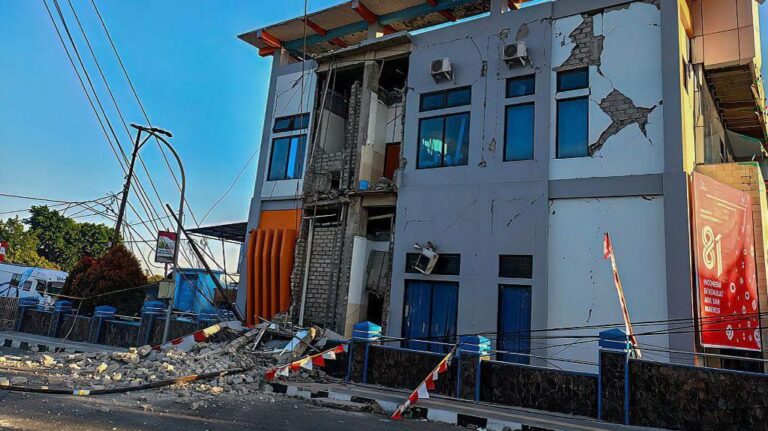
    A powerful 7.7-magnitude earthquake struck off Indonesia’s Flores region early Saturday, August 15, 2026, sending strong tremors across parts of eastern Indonesia and prompting authorities to issue a tsunami warning for vulnerable coastal areas. The earthquake struck at around 5:58am local time, with the epicentre near Nagekeo in East Nusa Tenggara. The relatively shallow quake was followed by several aftershocks, intensifying fears among residents living near the coast. Indonesia’s Meteorology, Climatology and Geophysics Agency (BMKG) issued a tsunami warning shortly after the earthquake and urged people in exposed coastal areas to move to higher ground as a precaution. Minor tsunami waves were subsequently recorded in some locations. The powerful shaking caused damage to buildings and other infrastructure in parts of East Nusa Tenggara. Residents rushed outdoors as buildings shook, while emergency teams began assessing the extent of the destruction. At least several people were reported killed or injured, although casualty figures remained subject to change as rescue teams reached affected areas. In some locations, hospitals moved patients outdoors amid concerns over building safety. The earthquake also triggered evacuations, with thousands of residents moving away from coastal areas after the tsunami alert. Authorities continued monitoring sea levels and aftershocks as emergency operations got underway. The tsunami warning was later lifted after officials found no continuing threat of major waves. Australia’s tsunami warning authorities also said the earthquake posed no tsunami threat to mainland Australia, its islands or territories. Indonesia lies along the seismically active Pacific Ring of Fire, making the country particularly vulnerable to powerful earthquakes and volcanic activity. Authorities have urged residents in affected areas to remain alert, follow official instructions and avoid damaged structures while inspections and rescue operations continue.

  • | |

    Australia defends social media ban for under-16s

    The Australian government has defended its ban on social media use by children under the age of 16, despite new data showing that most teenagers continue to access restricted platforms months after the law came into effect. The legislation, introduced in December, was designed to protect children from the harmful effects of social media on their mental and physical health. The policy attracted international attention, with Australia becoming the first country to implement such a nationwide restriction on underage social media users. A recent report by Australia’s online safety regulator found that more than eight in ten teenagers under the age of 16 were still using social media platforms three months after the restrictions became operational. The findings have highlighted the challenges governments face in enforcing digital regulations. Despite the report, Australian authorities insisted that the policy remains an important step toward creating a safer online environment for children. Officials said the law has already influenced public discussion about online safety and encouraged greater awareness among parents, educators and technology companies. Assistant Minister for Productivity, Competition, Charities and Treasury Andrew Leigh said the government never expected complete compliance immediately after the law came into force. He explained that many public safety laws require time before they achieve widespread compliance. Leigh said the government considers the legislation successful because it has changed the national conversation about children’s use of social media and encouraged stronger action to protect young users from harmful online content. He noted that millions of social media accounts had already been closed or restricted since the implementation of the law. According to the minister, this demonstrates that the legislation is already having an impact, even if some teenagers continue to access online platforms. The government also stressed that technology companies have a major responsibility to ensure compliance with the new rules. Officials said digital platforms must strengthen age verification systems and take effective measures to prevent underage users from creating or maintaining accounts. Regulatory authorities are continuing to assess how well social media companies are implementing the restrictions. They are also examining additional measures that could improve enforcement and ensure technology firms meet their legal obligations. Experts say the latest findings illustrate the complexity of regulating online platforms, particularly as social media has become deeply integrated into the daily lives of young people. They note that effective enforcement will require cooperation between governments, parents, schools and technology companies.

  • |

    Trump appoints Will Scharf as new White House counsel

    US President Donald Trump has named Will Scharf as the incoming White House counsel and assistant to the president, succeeding David Warrington on September 1, 2026. Warrington, who previously served as general counsel for Trump’s campaign and managed initial administration legal affairs, will be departing for the private sector. Scharf currently serves as the White House staff secretary, a role where he manages the daily flow of papers and documents reaching the president’s desk. In addition to these duties, he chairs the National Capital Planning Commission, where he helped fast-track approvals for a controversial $400 million White House ballroom project. A former federal prosecutor and appellate law clerk, Scharf joined Trump’s personal legal team in 2023. He played a central role in defending Trump across several high-profile legal battles, including the federal election interference case and the landmark presidential immunity ruling before the US Supreme Court. In his new post, Scharf will lead the administration’s legal strategy. His responsibilities will include overseeing executive privilege, managing judicial nominations, liaising with the Department of Justice, and preparing for potential congressional inquiries ahead of the upcoming midterm elections.

  • | |

    Fuego volcano forces evacuations in Guatemala as l…

    Guatemalan authorities have ordered residents in at least two villages to evacuate after the Fuego volcano erupted, sending lava and ash shooting into the air. Fuego, regarded as one of the most active volcanoes in the Western Hemisphere, began erupting on Monday. The country’s volcanic monitoring agency reported that pyroclastic flows, fast moving currents made up of hot gas, volcanic ash and rock fragments, continued rushing down the volcano’s south eastern slope into early Tuesday. Guatemala’s disaster management agency, known as Conred, raised a nationwide orange alert, the second highest level on its warning scale, and cautioned residents to remain prepared as further eruptions could generate additional pyroclastic flows and large ash clouds. The agency advised people living nearby to keep their doors and windows shut, and officials canceled classes at schools located close to the volcano. Fuego sits roughly 16 kilometers, or about 10 miles, west of Antigua, a city that draws large numbers of tourists each year for its well preserved colonial era architecture and status as a UNESCO World Heritage Site. The volcano itself has also become a popular destination for hikers in recent years, drawing visitors who trek its slopes for views of the surrounding region. Conred urged both tourists and local residents to avoid approaching the volcano or lingering in areas considered at risk, particularly along its slopes, as the situation continues to develop. The eruption has revived memories of a far deadlier event in 2018, when a sudden eruption of Fuego killed more than 200 people. Many of the victims were overtaken by fast moving pyroclastic flows that swept down the Las Lajas ravine with little warning, a disaster that remains one of the deadliest volcanic events in the country’s recent history. Fuego’s frequent activity has long made it one of Central America’s most closely monitored volcanoes, with authorities maintaining routine surveillance given its proximity to populated areas and popular tourist destinations.

  • |

    White House reports $19B-$26B annual revenue loss from global tariff evasion

    A new White House report released Thursday estimates that the United States is losing between $19 billion and $26 billion annually in tax revenue due to foreign nations routing exports through third-party countries to evade American tariffs. The report emphasizes that Chinese manufacturers responded to 2018 trade duties by redirecting goods to more than 40 intermediate nations, including Mexico and Malaysia, for minimal assembly or repackaging prior to US entry. White House trade counselor Peter Navarro described the practice as “the great transshipment scam,” asserting that it masks the true volume of Chinese imports while undermining US domestic manufacturing, automotive, and electronics sectors. The findings come ahead of a scheduled September visit to Washington by Chinese Leader Xi Jinping. Navarro indicated that future trade agreements negotiated by the Trump administration will incorporate strict enforcement mechanisms and penalties to punish countries facilitating trade re-routing schemes.

Leave a Reply

Your email address will not be published. Required fields are marked *