inside argentina8217s collapse

Inside Argentina’s Collapse: The 10 Tactical Mistakes That Cost Them the 2026 World Cup

The 2026 World Cup final was heavily billed as a historic clash of generations. Defending champions Argentina faced off against a vibrant, youthful Spanish squad in New Jersey. Fans expected a completely thrilling spectacle, but instead, they witnessed a systematic South American breakdown.

Spain ultimately claimed a dramatic 1-0 victory following an intense extra-time battle on Sunday. However, Argentina’s deeply painful defeat was not just a simple matter of bad luck. It was the direct result of several massive tactical errors that completely derailed their championship dreams.

Key Takeaways

  • Argentina heavily relied on overly aggressive tactics, resulting in a disastrous red card for Enzo Fernández.
  • Spain completely dominated ball possession, while Argentina managed only two total shots during the entire match.
  • Manager Lionel Scaloni failed to adjust his game plan, leaving Lionel Messi completely isolated upfront.

A Flawed Blueprint from the Start

Going into the final, Argentina knew they faced an incredibly gifted and dynamic Spanish side. Spain had completely dominated their previous opponents using a flawless, highly disciplined possession-based system. To survive, the South American champions needed a perfectly executed, highly flexible tactical masterclass.

Unfortunately, Argentina arrived with a deeply flawed game plan that immediately invited massive pressure. They willingly surrendered the ball, hoping to strike purely on rare, opportunistic counter-attacks. This highly passive strategy allowed Spain to comfortably dictate the entire tempo of the championship match.

1. Over-Reliance on an Aging Lionel Messi

Argentina’s offensive structure was completely built around maximizing Lionel Messi’s legendary playmaking abilities. While this worked previously, relying entirely on a 39-year-old superstar against elite defenders proved disastrous. Messi was constantly isolated, lacking the necessary physical support to break through the rigid Spanish lines.

2. Conceding the Midfield Battle Entirely

By deliberately dropping deep, Argentina handed complete control of the midfield over to Spain. Spanish playmakers like Rodri and Pedri operated with absolute freedom, completing passes without any serious pressure. Official FIFA statistics show Spain held an astonishing 64 percent possession throughout the grueling final.

Discipline and Defensive Errors

When a football team constantly chases the ball, massive physical and mental fatigue inevitably sets in. Argentina tried to compensate for their lack of possession by employing highly aggressive spoiling tactics. This physical approach was designed to disrupt Spain, but it ultimately backfired in spectacular fashion.

3. Enzo Fernández’s Costly Lack of Discipline

The absolute biggest turning point occurred in the 93rd minute of the highly tense match. Midfielder Enzo Fernández received a completely avoidable second yellow card for a reckless, desperate challenge. This catastrophic lack of personal discipline tragically reduced Argentina to ten men for extra time.

4. A One-Dimensional Defensive Strategy

Instead of pressing strategically, the Argentine defense simply absorbed continuous waves of dangerous Spanish attacks. They focused entirely on blocking shots rather than actively winning the ball back quickly. This one-dimensional approach invited constant danger and placed massive pressure on goalkeeper Emiliano Martínez.

5. Zero Offensive Urgency in Regulation

Astonishingly, Argentina did not register a single shot during the standard ninety minutes of play. Their very first actual scoring attempt arrived incredibly late, deep into the extra-time period. You simply cannot win a World Cup final if you completely refuse to attack the opponent.

Scaloni’s Failure to Adapt

Manager Lionel Scaloni has rightfully received massive praise for his previous tactical brilliance globally. However, his performance during this specific final exposed a highly concerning lack of flexibility. When the original game plan clearly failed, he severely struggled to provide a viable alternative solution.

6. Ineffective Midfield Substitutions

Scaloni attempted to refresh his deeply exhausted squad by introducing Leandro Paredes and Giovani Lo Celso. Unfortunately, these highly anticipated substitutions completely failed to shift the overall momentum of the game. The fresh players simply fell into the exact same passive defensive shape as their tired teammates.

7. The Absence of a “Plan B”

As noted by sports analysts at The Week, Argentina suffered from a severe structural issue and zero tactical flexibility. Once Spain successfully neutralized Messi, the defending champions looked completely out of creative ideas. They desperately needed a secondary attacking strategy, but Scaloni had absolutely nothing left to offer.

The Final Collapse in Extra Time

Entering extra time with only ten men is a terrifying scenario against any football team. Against a beautifully coordinated Spanish side, it was basically an absolute death sentence for Argentina. The exhausted players could no longer cover the massive gaps appearing across the wide pitch.

8. Poor Energy Management

Chasing shadows for over ninety minutes completely drained the physical reserves of the Argentine squad. By the time extra time began, several key players were visibly struggling to simply walk. This severe lack of stamina made defending against fresh Spanish substitutes practically impossible.

9. Failing to Track Quick Runners

The fatal blow finally arrived in the 106th minute due to a terrible defensive lapse. Argentina’s exhausted defenders completely lost track of Nico Williams and Ferran Torres inside the penalty area. This brief moment of lost concentration allowed Torres to smash home the historic winning goal.

10. Psychological Fragility Under Pressure

After conceding the late goal, Argentina’s famous mental resilience completely evaporated on the pitch. The players looked entirely defeated, unable to mount any serious, desperate final attacking charge. They ultimately allowed their immense frustration to overshadow their undeniable talent on the biggest global stage.

Ultimately, Spain’s brilliant tactical setup exposed every single weakness within the aging Argentine system. The defending champions simply made too many unforced errors to secure another historic global title. This painful defeat will certainly force a massive, highly necessary rebuild for the proud South American nation.


Similar Posts

  • Tyson Fury Steps Into the Ring in Pattaya: What to Expect as He Faces Mariusz Wach

    PATTAYA – Tyson Fury is bringing heavyweight boxing to Thailand in a very unexpected way. Tomorrow night, the “Gypsy King” will step under the lights of the 1,500-seat Max Muay Thai Arena in Pattaya. He faces veteran Polish fighter Mariusz Wach in an event that feels completely unique. The setting is quite intimate, but the […]

  • |

    Bangladesh make history, overtake India in WTC table

    DARWIN: Bangladesh’s stunning nine-wicket victory over Australia in Darwin has not only delivered a landmark moment for the team but also lifted them above India in the ICC World Test Championship 2025-27 standings. Bangladesh secured their first-ever Test victory over Australia, doing so on Australian soil in a result that sent a strong message across the Test cricket world. The win also produced a significant shift in the World Test Championship points table. Australia remain at the top despite suffering their second defeat of the current cycle, holding a points percentage of 77.78. South Africa are second with 75 per cent, while New Zealand sit third on 72.22 per cent. Bangladesh have now climbed to fourth place with an impressive 66.67 per cent, moving ahead of India, who are fifth with 48.15 per cent. The result gives Bangladesh an important boost as they continue their WTC campaign and adds even greater significance to their historic success in Darwin. Sri Lanka occupy sixth position with 41.67 per cent, followed by England on 24.36 per cent. Pakistan are eighth with 22.22 per cent, while the West Indies remain ninth on 20.83 per cent. For Bangladesh, the victory represents more than just two points or a rise in the rankings. It marks their first Test triumph against Australia and could become one of the defining results of their current World Test Championship campaign. WTC Standings Details Bangladesh Position: 4th place Bangladesh Points Percentage: 66.67% (3 wins from 5 matches) India Position: 5th place India Points Percentage: 48.15% (4 wins from 9 Tests) Historic Milestone: Marked Bangladesh’s first Test win on Australian soil.

  • |

    Rumesh Tharanga: Sri Lanka’s new javelin star

    Sri Lanka’s athletics scene has a new rising star. At just 23, Rumesh Tharanga Pathirage has established himself as one of the most exciting young javelin throwers in the world. Tharanga’s remarkable 2026 season has already included a 92.62-metre national record, a Commonwealth Games gold medal, multiple Diamond League victories and a World Championships final appearance. His latest achievement came at the Lausanne Diamond League, where he edged India’s Olympic champion Neeraj Chopra by just nine centimetres. From cricket to javelin Born on March 21, 2003, in Kalutara, Sri Lanka, Tharanga initially dreamed of making a career in cricket. He developed into a promising fast bowler and reportedly reached speeds of around 134 kilometres per hour as a teenager. His father’s involvement in throwing events eventually encouraged him to explore athletics. Tharanga first tried discus before turning his attention to javelin while studying at St Peter’s College in Colombo. His cricket background helped him develop explosive movement, speed and coordination — qualities that later became important parts of his javelin technique. Rapid rise in athletics Tharanga represented Sri Lanka at the 2022 World Athletics U20 Championships, gaining valuable international experience. By 2025, he had moved beyond the status of a promising prospect. He became the first Sri Lankan male javelin thrower to reach a World Athletics Championships final and finished seventh with a throw of 84.38 metres. His progress accelerated dramatically the following year. Breaking the 90-metre mark At the Rome Diamond League in 2026, Tharanga produced the biggest throw of his career, sending the javelin 92.62 metres. The effort set a new Sri Lankan national record and placed him among the world’s elite throwers. It also put him close to Pakistan’s Olympic champion Arshad Nadeem, whose 92.97-metre throw won gold at the Paris 2024 Olympics. Crossing the 90-metre barrier marked a major milestone. Tharanga had firmly established himself as a serious contender at the highest level of international javelin. Commonwealth Games champion Tharanga carried that momentum into the 2026 Commonwealth Games in Glasgow, where he faced a star-studded field that included Chopra, Nadeem, Anderson Peters and Keshorn Walcott. He produced a huge 89.75-metre throw to claim the gold medal. Chopra finished second, while India’s Yash Vir Singh secured bronze. The victory gave Sri Lanka a major javelin success and further raised Tharanga’s profile on the international stage. Narrow win over Neeraj Chopra The rivalry with Chopra continued at the Lausanne Diamond League on August 21. Tharanga opened the competition with an 85.99-metre throw before improving to 87.06 metres with his second attempt. Chopra responded with an 88.05-metre throw, his season’s best at the time, and briefly moved into first place. Tharanga answered immediately. His third attempt travelled 88.14 metres, putting him back in the lead and securing the victory. The nine-centimetre margin highlighted just how closely matched the two athletes were. Lausanne Diamond League standings: 1. 🇱🇰 Rumesh Tharanga Pathirage — 88.14m 2. 🇮🇳 Neeraj Chopra — 88.05m 3. 🇬🇩 Anderson Peters — 86.69m 4. 🇹🇹 Keshorn Walcott — 83.71m 5. 🇺🇸 Marc Anthony Minichello — 80.06m The Lausanne victory added another important chapter to Tharanga’s breakthrough season and strengthened his position among the leading javelin throwers in the world. A new South Asian rivalry For years, South Asian javelin focused largely on the rivalry between Chopra and Nadeem. Tharanga’s rapid emergence has added another major contender from the region. His 92.62-metre national record demonstrates his enormous throwing ability, while his Commonwealth Games gold and Diamond League victories show that he can perform when the pressure is highest. At only 23, Tharanga still has considerable room to develop. Sri Lanka’s rising athletics star Tharanga’s success carries significance beyond javelin. Sri Lanka has long enjoyed a strong sporting identity through cricket, but his achievements are bringing renewed attention to the country’s athletics programme. His journey from teenage fast bowler to Commonwealth champion and Diamond League winner also highlights the unpredictable paths that can lead athletes to international success. With a 92.62-metre personal best, major titles already on his record and growing experience against the world’s best, Tharanga appears to have established himself as one of the leading young names in men’s javelin. At 23, his biggest achievements may still lie ahead.

  • | |

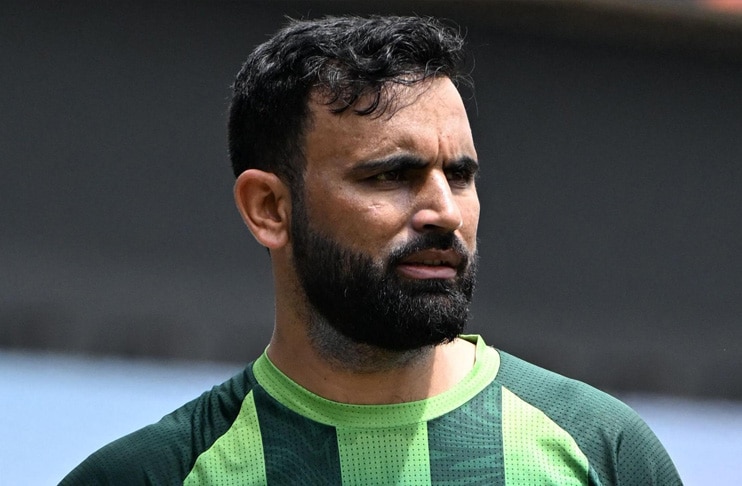
    Fakhar Zaman urges patience over PSL performers

    Pakistan opener Fakhar Zaman has urged selectors and fans not to judge players solely on one or two impressive Pakistan Super League (PSL) performances, stressing that franchise cricket is very different from the demands of international cricket. Speaking during a media interaction in Lahore, the experienced batter said consistency should remain the key criterion for national team selection. The 35-year-old noted that several young cricketers earn Pakistan call-ups after performing in only a handful of PSL matches. While he welcomed healthy competition for places in the national side, he insisted that players must prove themselves over a longer period before being considered ready for international cricket. Fakhar said: “Many youngsters break into the national side after performing in just one or two Pakistan Super League matches. If a young player is good enough to take my place in the white-ball team, they are welcome to do so tomorrow. However, they must prove their quality, consistency, and form.” The left-handed opener explained that domestic and franchise cricket cannot be compared directly with the international game. According to him, many players realise the difference only after representing Pakistan, where the level of competition and pressure is much higher. He added: “When domestic performers step into international cricket, they realize the difference is significant. Development camps like these should be held regularly. A player should not be labeled extraordinary after just one or two good PSL matches because league cricket and international cricket are very different.” Fakhar also spoke about Pakistan’s batting order, revealing that discussions had taken place with the team management. However, he made it clear that certain decisions remain internal and cannot be discussed publicly. He said: “We have discussed the batting order with the management, but some matters cannot be shared publicly. I always think about what the team needs, and that remains my priority. Every player has personal preferences, but not everything can be discussed in the media. The important thing is that we are all on the same page.” The opener emphasised that team success always comes before individual preferences. While every batter has a preferred position in the lineup, he said professional players must be willing to adapt according to the team’s requirements. Looking ahead, Fakhar also expressed confidence about Pakistan’s future assignments in South Africa. He recalled enjoying success on South African pitches in the past and believes the conditions complement his style of batting. He concluded by saying: “I have many good memories of playing in South Africa. The bouncy pitches suit my technique, and I am preparing with the 2027 World Cup firmly in mind.” Fakhar’s remarks come as Pakistan continues to evaluate its white-ball squad ahead of major international tournaments. His comments highlight the importance of balancing opportunities for emerging players with the need for consistency and experience at the highest level. While welcoming competition, the veteran opener believes sustained performances—not just a brief run of form in the PSL—should determine who earns the honour of representing Pakistan on the international stage. 

  • |

    Gull Feroza stars as Pakistan beat Sri Lanka in OD…

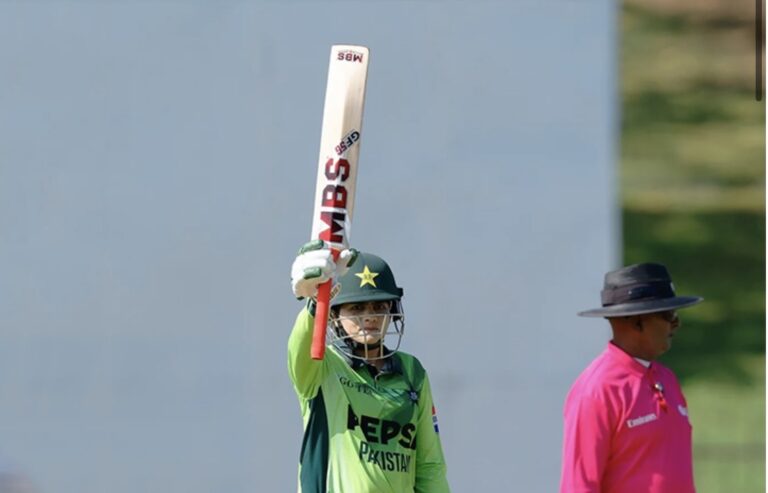
    Gull Feroza and Sidra Amin’s half-centuries helped Pakistan beat Sri Lanka in the first ODI of the three-match series at the Mahinda Rajapaksa International Cricket Stadium on Thursday. The Green Shirts comprehensively chased down 211 in 43 overs, losing only five wickets in the process. Sadaf Shams and Gull Feroza added 58 runs for the opening wicket partnership at the end of the first powerplay, with Shams contributing 20 off 27 balls, including three fours. The highlight of Pakistan’s innings was the second-wicket stand of 90 runs off 114 balls, which made light work of the chase, taking the total to 148 in 28.5 overs. Feroza eventually departed after scoring a free-flowing 78 off 77 balls, including 11 fours. Sidra Amin continued and raised her half-century before getting castled by Inoka Ranaweera on 57, hitting five fours in her measured knock. The visitors eventually reached home in the 43rd over. For Sri Lanka, Kavisha Dilhari picked up two wickets. With their fifth ODI win in a row, Pakistan moved up to second position in the ICC Women’s Championship Points table. Earlier, Sri Lanka could not capitalise on the decision to bat first as they were limited to 210-9 in 50 overs despite a strong opening foundation. Skipper Chamari Athapaththu and Vishmi Gunaratne stitched a 56-run stand in 11 overs, with Gunaratne contributing 28 off 34 balls, hitting four boundaries. Despite the wicket, Sri Lanka carried on as Athapaththu and Hasini Perera stitched a 53-run partnership to take the total over the 100-run mark. However, once Pakistan introduced spinners, the momentum quickly shifted in their favour. The visitors removed well-set Athapaththu (46) and Perera (35) in quick succession to make a comeback. The home side could not recover after the quick wickets, losing wickets in clusters and eventually being limited to a below-par total. For Pakistan, Nashra Sandhu starred with the ball, scalping three wickets in her 10 overs. The victory gives Pakistan a 1-0 lead in the three-match series, with the second ODI scheduled to take place in the coming days. The team will be looking to build on this momentum and secure a series win, while Sri Lanka will aim to bounce back and level the series. Pakistan’s batting depth and bowling attack were on full display, highlighting their potential as a formidable side in the ICC Women’s Championship. The series continues to provide exciting cricketing action, with fans eagerly awaiting the next fixtures as both teams battle for supremacy in the ODI format. The win also boosts Pakistan’s position in the championship standings, keeping them in contention for a top spot as they continue their campaign. The Green Shirts will be hoping to carry this form into the remaining matches and secure a comprehensive series victory.

Leave a Reply

Your email address will not be published. Required fields are marked *