successful asean summit
| | | |

‘Successful’ ASEAN Summit ends with Marcos unable to solve its hardest problems

MANILA, Philippines – After three days of summits and a seemingly endless procession of meetings, the Association of Southeast Asian Nations (ASEAN) had over a hundred outcome documents to show for its time in Manila.

Yet it also had a civil war in Myanmar with no end in sight and a South China Sea Code of Conduct (COC) that, despite two decades of negotiations, its members and China still could not agree on.

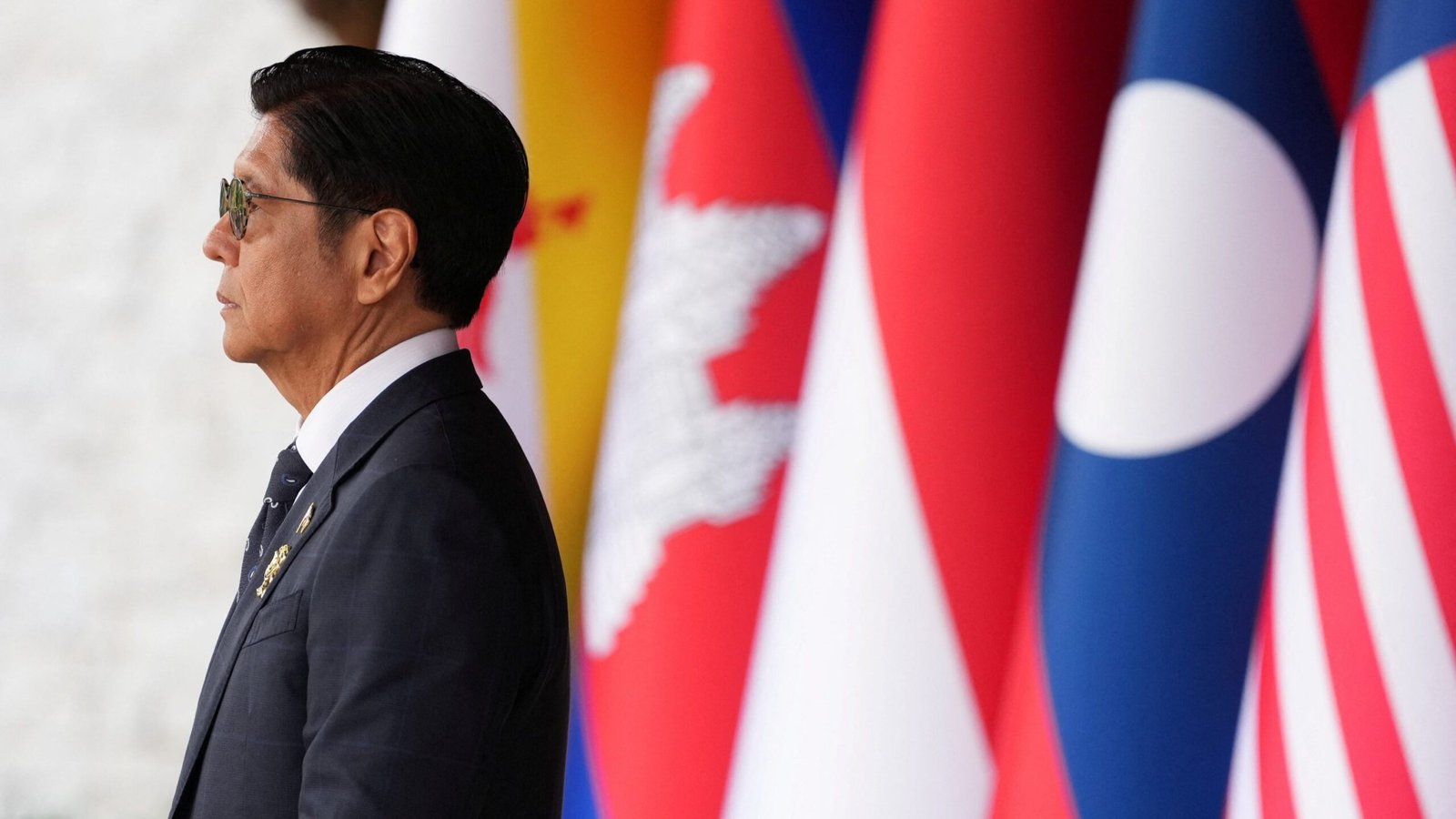
Such was the record of the Philippines’ ASEAN chairmanship, which President Ferdinand Marcos Jr. declared a “success” on Tuesday, November 17, as he formally handed over the reins to Singapore.

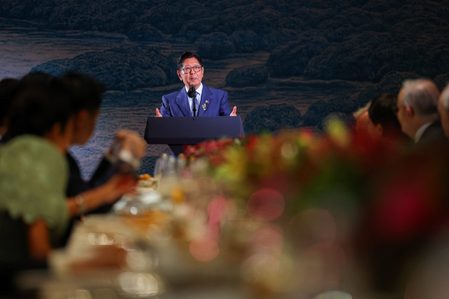
“I would say that it was a success simply because of the work that we were able to achieve. The one thing I did not want to do was to waste an opportunity such as this by just doing this hosting,” Marcos told the media following the summit’s closing ceremony.

The 49th ASEAN Summit and Related Summits brought leaders to the Philippines in a world beset by overlapping crises. Ongoing wars in Iran and Ukraine have thrown global energy and food supplies into disarray, El Niño threatens agricultural production, and economies across the region are reeling from rising costs and varying levels of domestic unrest. (READ: Marcos gov’t on track to miss growth target for fourth straight year)

Against this backdrop, Southeast Asian leaders and their allies had much to discuss across the different meetings that Manila has played host to. Read Rappler’s live updates for more details on the key developments.

To be fair, there were milestones. ASEAN signed its Digital Economy Framework Agreement, establishing common rules for digital trade and payments. All 11 members also signed an enhanced memorandum of understanding on the ASEAN Power Grid, with Marcos announcing that a proposed undersea cable would connect Sabah to Mindanao. The bloc also advanced initiatives on maritime cooperation, disaster response, online scams, and child protection.

But what of ASEAN’s most difficult problems?

Must Watch

Rappler Recap: PH ends ASEAN chairship with gains, but Myanmar and COC unresolved


Rappler Recap: PH ends ASEAN chairship with gains, but Myanmar and COC unresolved

Without peace, Myanmar stays on the sidelines

Top on Marcos’ plate was Myanmar, still embroiled in a political crisis that has seen it sidelined from ASEAN since the military-backed government seized power in 2021.

Marcos said Philippine Foreign Secretary Maria Theresa Lazaro, serving as ASEAN’s special envoy, had focused on facilitating dialogue and expanding humanitarian assistance.

“None of those items are easy. However, the one that is easily understandable and immediately implementable is the assistance on the humanitarian side,” Marcos told the media on Tuesday.

ASEAN leaders agreed to pursue a “calibrated, progress-based approach” toward Myanmar, leaving open the possibility of gradually restoring its full political representation if the country demonstrates concrete progress under ASEAN’s Five-Point Consensus. In their review of the Myanmar situation, the leaders also reiterated their “deep concern over the insufficient progress in the implementation of the 5PC.”

But until progress towards peace comes, Myanmar remains barred from having its political leaders join the high-stakes ASEAN summits and foreign ministers’ meetings.

“The ball is very much now in the court of Myanmar and its present leadership,” Marcos said.

Must Watch

Rappler Recap: Trump meets ASEAN leaders at special summit


Rappler Recap: Trump meets ASEAN leaders at special summit

No breakthrough in South China Sea COC talks

It would also have been a perfect win to conclude COC negotiations during Marcos’ year at the helm of ASEAN. Instead, that too failed to live up to ambitions.

The President told reporters that 85% to 90% of the agreement had been completed — a more optimistic assessment than his foreign secretary’s earlier estimate of around 80%.

According to Marcos, much of the remaining work revolves around the definition of terms.

“There are definitions, there are phrases, and there are paragraphs that need to be clearly defined so that it is very understandable and very clear to everyone involved that these are the rules,” he said.

But absent from his remarks was perhaps the most contentious issue of all: whether the eventual COC would be legally binding. This is particularly important for the Philippines, given its continuing confrontations with China in the West Philippine Sea.

In the meantime, Marcos said ASEAN and China had reached a “tacit agreement” to continue abiding by the 2002 Declaration on the Conduct of Parties in the South China Sea, the earlier, nonbinding framework that the COC is meant to build upon.
Must Read

Sorry, Marcos can’t keep his ‘very, very important guest’ waiting


Sorry, Marcos can’t keep his ‘very, very important guest’ waiting

Manila’s oldest friend comes to town

Although the ASEAN closing ceremony was already over, leaders were asked to stretch their stay a little longer for one final meeting, a special summit with visiting US President Donald Trump.

Perhaps that was why Marcos was also mum on the controversial US-led Pax Silica initiative, which has drawn protests across the metro and in the provinces. Officials had already previously said no major announcement on the initiative was planned during the summit.

Unfortunately, there was little opportunity to press the Philippine leader further.

His final briefing allowed questions from just one pre-selected reporter before he was whisked away to meet a particularly important guest. Marcos, it seemed, had kept that guest waiting long enough.

“I can’t keep the president of the United States waiting, so I have to go. I’m sorry,” he told reporters on his way out.

And with that, Marcos was off to meet Trump, leaving Singapore, ASEAN’s 2027 chair, to inherit some very old problems to deal with. – Rappler.com

Similar Posts

  • |

    Russian missile enters polish airspace, NATO jets put on alert

    A Russian missile reportedly entered Polish airspace and exploded after crossing into the territory, prompting NATO and Polish forces to quickly deploy fighter jets and other surveillance aircraft. According to international media reports, the missile entered Polish airspace early Thursday as part of a large-scale Russian overnight attack on Ukraine involving ballistic missiles and drones. The wider strikes reportedly killed around eight civilians, including children, and injured more than 50 others. NATO officials said that allied forces immediately responded after detecting the unidentified object. Poland and other NATO members scrambled F-16 fighter jets, an aerial refueling aircraft and an early warning and surveillance plane to monitor the situation and protect allied airspace. A NATO spokesperson said the alliance would continue taking all necessary measures to safeguard its territory and maintain the security of its member states. Polish authorities reported that the missile exploded near the eastern village of Taranawa-Kolonia, leaving a large crater at the site. Officials said the incident caused no casualties or significant property damage. The incident has nevertheless raised fresh concerns over the potential expansion of the Russia-Ukraine war beyond Ukraine’s borders. European countries have repeatedly warned that continued attacks could increase the risk of the conflict spilling into NATO territory. The latest development is also likely to intensify tensions between Russia and NATO, particularly as Poland remains a key member of the alliance and a major logistical hub for international support to Ukraine. NATO has previously reinforced its eastern flank in response to security threats linked to the ongoing war.

  • |

    Infantino urged to skip youth event as FIFA pressure mounts

    FIFA president Gianni Infantino is facing growing pressure to stay away from an under-14s youth tournament in the Dominican Republic. The request comes amid escalating anger over his handling of World Cup-related commercial plans. According to reports, Infantino received a letter on Friday from a regional football executive warning that his presence could disrupt the tournament entirely. The concern centres on how his attendance might overshadow what’s meant to be a purely technical, development-focused youth event. While Infantino received warm greetings from local politicians ahead of the trip, the head of football’s governing body for North America and the Caribbean firmly opposed his attendance at the Caribbean Football Union event. In the letter, the CONCACAF president reportedly asked Infantino directly to reconsider showing up, warning that his presence could end up undermining the tournament’s youth development goals. The request adds to a broader wave of criticism currently surrounding Infantino’s leadership. FIFA continues to provide substantial financial support to countries through revenue generated by the World Cup, giving the organisation considerable regional influence. Despite that, CONCACAF has reportedly joined forces with European and Asian football confederations, co-signing a letter pushing for Infantino’s resignation. The coordinated pressure marks a significant escalation in tensions surrounding his leadership. While Infantino may still retain some support within CONCACAF, particularly from Mexico, other co-hosts of the 2026 World Cup, including Canada, have openly criticised his leadership. That growing divide has placed him under an increasingly difficult spotlight. Adding further pressure, a FIFA presidential election is scheduled for next year. Football associations in England, Wales and Scotland have already withdrawn their prior endorsements of Infantino, signalling weakening support even among traditionally aligned nations. With mounting criticism from multiple continents, an upcoming leadership election, and now formal requests to stay away from grassroots football events, Infantino’s position atop world football appears increasingly precarious heading into the coming year.

  • | |

    Shakib’s home attacked after Hasina media event

    Former Bangladesh cricket captain Shakib Al Hasan’s ancestral home was attacked by a group of people after he participated in the first public media event of former Prime Minister Sheikh Hasina since her removal from power in 2024. According to police, the attack took place in Magura, around 170 kilometres southwest of Dhaka. Protesters reportedly smashed windows of the house and threw bricks along with two petrol bombs. The attack triggered a fire on the upper floor of the residence. Authorities said the property was vacant at the time of the incident and no injuries were reported. Police have launched an investigation into the attack. The incident occurred hours after Shakib joined a virtual discussion organised by the Foreign Correspondents’ Club of South Asia in New Delhi. During the event, Sheikh Hasina addressed the media for the first time since leaving office and declared that she intended to return to Bangladesh in December despite the legal cases against her. Hasina said she was prepared to face imprisonment or even death if she returned, insisting that she wanted to stand with the people of Bangladesh. She also called for the ban on her Awami League party to be lifted so it could resume political activities. Shakib, who was elected to parliament on an Awami League ticket in January 2024, has remained outside Bangladesh since the student-led uprising that forced Hasina from power. He is currently facing several investigations, including allegations related to murder, financial misconduct, fraud and money laundering, all of which remain under legal process. The Bangladesh government strongly criticised Hasina’s media appearance from India, describing it as harmful to the country’s sovereignty. Officials warned that allowing such activities could negatively affect relations between Dhaka and New Delhi. Hasina has been living in India since August 2024 after leaving Bangladesh during the political unrest. The Bangladeshi government has requested her extradition, while Indian authorities have said the request is being reviewed under legal procedures. Last year, Bangladesh’s war crimes tribunal sentenced Hasina to death in absentia over charges linked to the deadly crackdown on the 2024 student protests. The former prime minister has rejected the charges, calling them politically motivated.

Leave a Reply

Your email address will not be published. Required fields are marked *