pope leo enter
|

Pope Leo to enter hospital for surgery on lung nodule

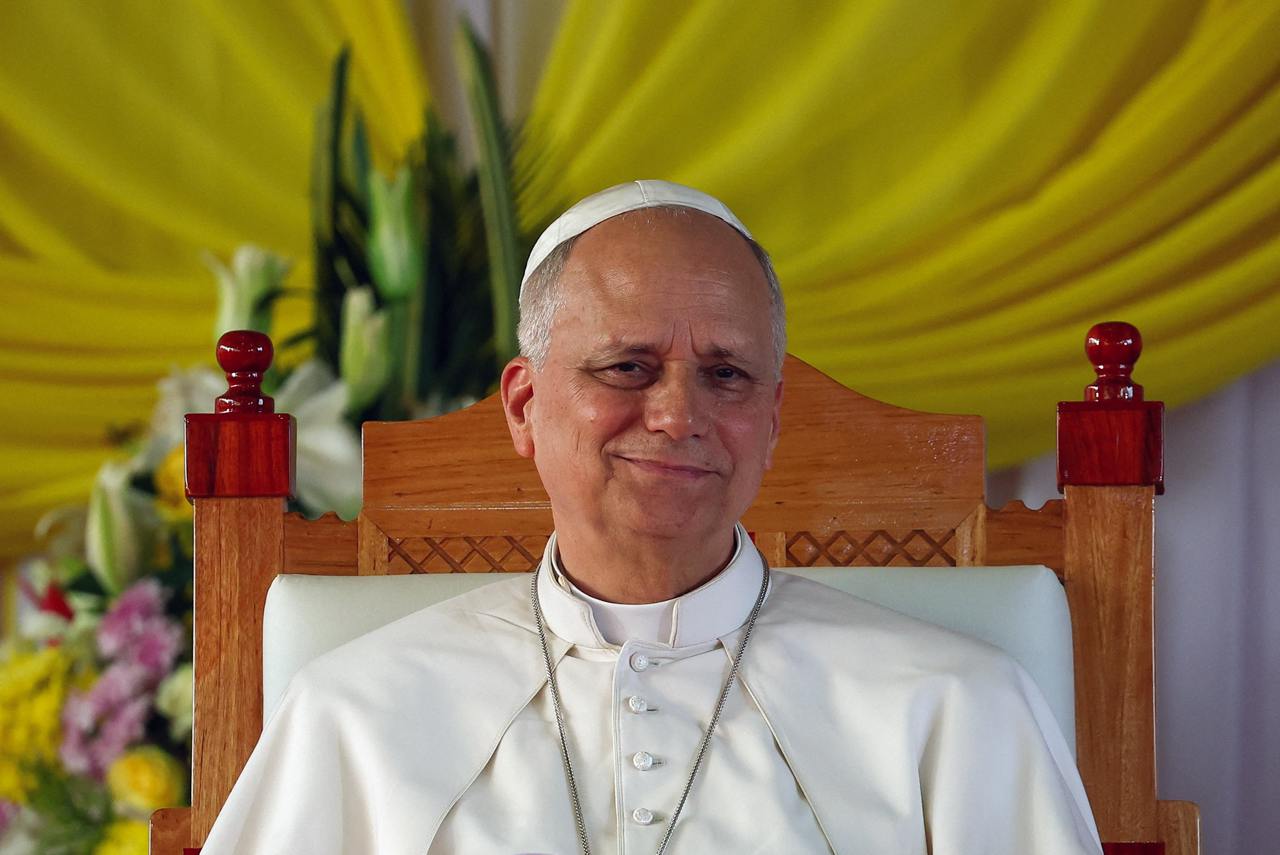
VATICAN – Pope Leo was due to be hospitalized in Rome on Tuesday, October 13, ahead of surgery to remove a small growth on one of his lungs, in the first major health issue of his 17-month tenure.

Leo, 71, said on Sunday, October 11, that a small nodule had been found on a checkup, was “well-contained” and had been spotted early.

He was expected to leave the Vatican for Rome’s Gemelli hospital late morning, the Vatican press office said, without specifying when the actual operation would take place.


Pope Leo to enter hospital for surgery on lung nodule

Leo, elected by the world’s cardinals in May 2025, is relatively young for a Church leader. He enjoys sports, including tennis, and is not known to be a smoker or to have had health issues previously.

The Vatican has said his recovery is expected to take about a week. All his public events have been canceled until October 20.

A nodule on the lung is a small, localized lesion that can be benign. The American Thoracic Society says fewer than 5% of lung nodules overall prove cancerous, although risk rises with age, size, and other factors such as smoking.

Dr. Federico Venuto, chief of thoracic surgery at Rome’s Policlinico Umberto I hospital, said procedures to remove lung nodules are usually minimally invasive, and can sometimes involve use of a thin camera tube called a thoracoscope.

“The complication rate is extremely low,” he told Reuters.

The late Pope Francis, Leo’s predecessor, died at age 88 in April 2025 and was hospitalized several times as he grew frail in his later years.

Leo, who spoke in a firm, clear voice at his only public event on Monday, keeps a very busy schedule. He is due to make an 11-day tour of Uruguay, Argentina and Peru from November 6 to 17.

In the same address on Sunday when the pope announced his need for surgery, Leo pledged he would go forward with the trip. – Rappler.com
Similar Posts

  • |

    Japan earthquake disrupts auto and chip production as death toll rises to 34

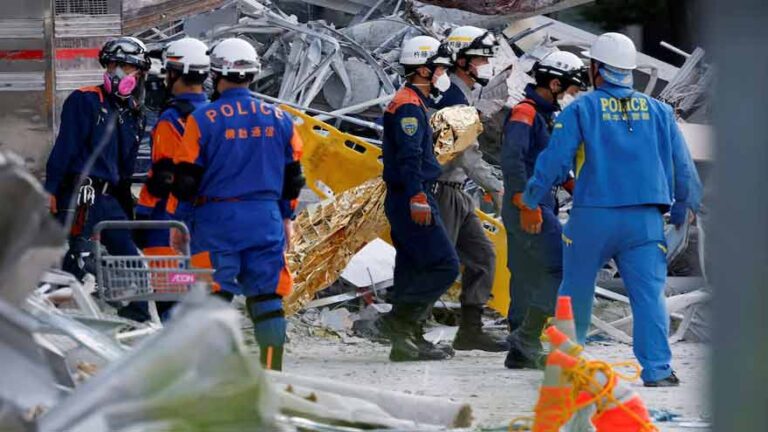
    A powerful earthquake that struck Japan’s Kumamoto region has killed at least 34 people and disrupted major manufacturing operations, exposing the continued vulnerability of the country’s industrial supply chains. The 7.1 magnitude quake damaged roads, interrupted essential services and forced several automobile and semiconductor companies to suspend production, raising concerns about delays across global supply networks. The earthquake struck on Tuesday, causing widespread destruction in southern Japan. Thousands of households were left without basic utilities while damaged roads and transport links made it difficult for businesses to continue normal operations. Kumamoto is one of Japan’s most important manufacturing regions and plays a key role in producing vehicles, auto parts and semiconductors used around the world. Toyota has temporarily suspended production at three factories in Fukuoka until August 5 because of concerns about employee safety and disruptions affecting suppliers and transport companies. The company has also decided to halt operations at one of its plants in Aichi, located more than 600 kilometres from the disaster zone, showing how shortages of essential components can quickly affect factories far from the earthquake’s epicentre. One of Toyota’s major suppliers, Aisin, also suffered disruptions at its factory near the hardest hit area. The company manufactures engines, doors and other vehicle parts for Toyota, Nissan and Daihatsu. Aisin said it plans to restart production gradually after confirming that facilities are safe and product quality can be maintained. However, it has not announced when full operations will resume. Trucks carrying supplies, including portable toilets, were seen entering the factory as recovery work continued. Local businesses reported that water services had been interrupted although electricity remained available. The latest disaster has revived memories of the 2016 Kumamoto earthquake, which caused severe damage to the same Aisin plant and forced Toyota to suspend production across Japan because of shortages of a critical door component. Industry officials said smaller suppliers further down the supply chain may also have been affected this time, increasing the risk of continued production delays. Auto parts manufacturer Denso said one of its suppliers had already reported damage while several others were still assessing conditions. Nissan has suspended some production at its two vehicle plants in Kyushu because of delays in receiving parts. Mitsubishi Motors has also halted certain production lines at its factory in Okayama as the effects of the earthquake continue to spread through the manufacturing sector. Kumamoto has also become one of Japan’s leading centres for semiconductor production in recent years. The region is often referred to as the country’s Silicon Valley because of its concentration of advanced chip manufacturers. Taiwan Semiconductor Manufacturing Company, the world’s largest contract chipmaker, evacuated workers from its Kumamoto plant immediately after the earthquake. The company later confirmed that operations had started to resume within a few hours. Other semiconductor companies are expected to take longer to recover. Renesas said damage at one of its facilities included fallen ceiling panels, cracked walls and water leaks. The company plans to restart production in stages beginning on August 5. Tokyo Electron announced that it expects to resume production next week, while Sony said efforts are continuing to restore operations at its semiconductor factory in Kumamoto. Although the number of deaths is lower than the more than 260 people killed in the 2016 earthquake, this disaster has still caused significant human and economic losses. Nearly half of the fatalities occurred inside commercial buildings. Nine people died when severe structural damage struck a Nippon Paper Industries mill near the epicentre. Another seven people lost their lives at an Aeon shopping mall where authorities believe a gas explosion occurred more than an hour after the initial earthquake. The disaster has once again highlighted the challenge Japan faces in protecting both its population and its globally important manufacturing industry from natural disasters.

  • |

    UK Parliament hears fresh concerns over human rights in Indian-Occupied Jammu & Kashmir

    The human rights situation in Indian-occupied Jammu and Kashmir (IIOJK) came under renewed scrutiny in the House of Lords on Thursday after Lord Qurban Hussain urged the British Government to clarify its position in light of a Genocide Watch report published earlier this year. During the debate, Lord Qurban Hussain said the report warned that the situation in Indian-occupied Jammu and Kashmir had reached a critical stage and alleged that eight of the ten recognised stages associated with genocide had already been reached. He asked how seriously the British Government viewed the report and what action it was taking to help prevent further deterioration. The British peer, who said members of his family live on both sides of the Line of Control, urged the Government to explain its assessment of the report and its approach towards the human rights situation in Indian-occupied Jammu and Kashmir. Responding for the Government, Lord Collins of Highbury, Parliamentary Under-Secretary of State at the Foreign, Commonwealth and Development Office (FCDO), reiterated the UK’s longstanding position on human rights. He said the UK continues to express concern over violence and loss of life and supports full, transparent and impartial investigations into allegations of abuse by Indian police and security forces. He added that the British Government continues to raise human rights issues with India through diplomatic channels. Lord Qurban Hussain’s intervention highlights continuing concern among a number of British parliamentarians over the human rights situation in Indian-occupied Jammu and Kashmir, with renewed calls for accountability, respect for fundamental rights and a peaceful resolution of the longstanding dispute.

  • | |

    Riyadh sofa factory fire kills 16 Bangladeshi work…

    RIYADH: At least 16 Bangladeshi migrant workers have died after a fire swept through a sofa manufacturing factory in Saudi Arabia’s capital, Riyadh, in a tragedy that has prompted urgent efforts to bring the victims’ remains home. The fire broke out on Sunday at a furniture manufacturing facility in the industrial area of Riyadh’s Al Shifa district, according to Bangladesh’s Ministry of Foreign Affairs. Bangladesh’s embassy in Riyadh is coordinating with Saudi authorities over the incident and arrangements for the repatriation of the victims’ bodies. Officials are also working to identify the deceased and complete the necessary formalities. Bangladesh’s Expatriates’ Welfare and Overseas Employment Minister Ariful Haque Choudhury expressed deep sorrow over the deaths and directed officials to speed up the process of returning the bodies to Bangladesh. He also called for assistance and compensation to be provided to the bereaved families, many of whom depend on income earned by relatives working abroad. Saudi Arabia’s Civil Defence confirmed that firefighters had responded to a blaze at an unlicensed furniture-making facility in the capital, although its initial statement did not provide details about the fatalities. The tragedy has once again drawn attention to workplace safety for migrant labourers in the Gulf. Saudi Arabia is home to a large Bangladeshi expatriate community, with reports putting the number at around 3.5 million. For many of these workers, employment in Saudi Arabia provides a vital source of income for families back home. The deaths in Riyadh have therefore sent shockwaves beyond the immediate workplace, leaving families anxiously awaiting the return of their loved ones. Authorities are expected to investigate the cause of the fire and examine safety conditions at the factory. The focus will also be on determining whether violations contributed to the deadly blaze. For Bangladesh, the immediate priority remains bringing the victims home and ensuring their families receive the promised support.

  • | |

    Israeli court halts Ben-Gvir plan to place crocodi…

    An Israeli court has temporarily blocked National Security Minister Itamar Ben-Gvir’s plan to install crocodiles around Ketziot Prison in southern Israel’s Negev desert, where Palestinian detainees from Gaza are being held, according to Israeli media reports on Monday. Israeli authorities had already begun digging trenches around the section of the prison holding Palestinians detained from Gaza over alleged involvement in the events of October 7, 2023. Under the plan championed by Ben-Gvir, crocodiles would be placed inside these trenches as a security measure. Israel’s public broadcaster reported that the Jerusalem District Court issued a temporary injunction on Sunday evening after the animal rights group Let the Animals Live filed a legal petition challenging the plan, which has the backing of the National Security Ministry and the Israel Prison Service. Judge Avraham Rubin ordered authorities to halt any action based on a decision by Environmental Protection Minister Idit Silman to classify crocodiles as tended wild animals, a legal designation that would have permitted their transfer to and use at the prison facility. According to the broadcaster, the ruling followed an administrative petition the organization filed against Silman, Ben-Gvir and the Israel Prison Service just hours earlier. The temporary order will stay in place until authorities file their formal response, which the court expects by mid August. The dispute centers on a decision Silman made on July 15 that was designed to allow crocodiles to serve as what officials described as a deterrent and security measure inside prisons. The petition filed against the plan argues that the decision effectively strips crocodiles of protections normally applied to wild animals by removing the licensing and oversight mechanisms that would otherwise govern their care and control. Let the Animals Live told the broadcaster that the Israel Prison Service had already started infrastructure work, including digging a canal around the prison, and said the National Security Ministry had set aside 21 million shekels, or roughly 6.9 million dollars, to fund the pilot project. The group said the decision was made without adequate legal authority and disregarded expert and legal warnings about risks to the animals themselves, to the public and to the surrounding environment. Officials have not yet submitted the government’s formal position to the court, though a response is expected as part of the proceedings tied to the injunction request. Representatives from Let the Animals Live and the Environmental Justice and Animal Rights Clinic at Tel Aviv University said the court’s order prevents irreversible construction work from moving forward for now and protects the animals’ welfare while they continue pursuing a permanent cancellation of the plan. Since taking office in late 2022, Ben-Gvir has overseen a broader tightening of detention conditions for Palestinian prisoners, including measures involving food deprivation, denial of medical care, mistreatment and prolonged isolation. Palestinian and Israeli human rights organizations report that approximately 9,500 Palestinian prisoners, including women and children, are currently held in Israeli facilities under harsh conditions, with dozens reported to have died as a result of starvation, mistreatment and medical neglect.

Leave a Reply

Your email address will not be published. Required fields are marked *