trump stalemate summit
|

Trump, Xi ‘stalemate’ summit was a glitzy gift to China

US President Donald Trump hoped his pomp-filled summit with Xi Jinping in Washington last week would showcase the strength of his personal relationship with the Chinese leader.

Instead, the limited outcomes showed just how far apart Washington and Beijing remain on key issues, and reinforced a view among analysts that Xi sees little reason to grant Trump major political victories ahead of November’s midterm elections.

“The US-China relationship has settled into a managed stalemate,” said Craig Singleton, senior director for China at US-based think tank, the Foundation for Defense of Democracies.

Must Read

US says China trade truce extended as Trump welcomes Xi


US says China trade truce extended as Trump welcomes Xi

“The elaborate pageantry matters precisely because there is still relatively little substantive progress to showcase.”

Both sides said they reached consensus on lowering tariffs for a $60 billion batch of non-sensitive goods, but there was no timeline for adoption. At the same time, a deadline for a broader trade accord was pushed into next year.

The absence of a Chinese CEO delegation accompanying Xi also highlighted the challenges of overcoming US suspicion of Chinese investment, casting doubt on the viability of a two-way investment scheme the leaders unveiled at a Beijing summit in May, analysts said.

“The Trump-Xi summit created a positive political atmosphere but did nothing to narrow differences, or reduce mutual suspicions,” said Drew Thompson, a senior fellow at the S. Rajaratnam School of International Studies in Singapore.

‘PR win’ for China

White House officials had tempered expectations before the summit, pointing out that the leaders would also meet at international forums in Shenzhen and Miami before year end.

But while the uneventful meeting capped off a diplomatic week that exposed the limits of Trump’s powers, Joe Mazur, geopolitics analyst at Beijing-based consultancy Trivium, said it served as a “PR win” for China.

From the outset, Trump went out of his way to fete Xi – the leader of a country he has previously said is “killing America” with unfair trade practices.

He broke protocol to greet him at the airport, the first time a US president has done so for a world leader in 11 years.

Later, addressing a coterie of top government officials and tech magnates assembled for a lavish state banquet in his honour, Trump said they “had never gotten along better.”

“The extraordinary courtesy the Americans extended to Xi Jinping met and far exceeded China’s expectations,” said Shen Weizhong, a former Chinese foreign ministry official and vice president of Beijing-based think tank Global Governance Institution.

“The Chinese do not feel that a visit necessarily has to result in a specific number of agreements, or in tariff reductions or other such outcomes … The mere fact that they meet, nod to one another, and shake hands speaks volumes.”

Xi is also in no rush to make concessions, analysts say.

China’s dominance in production of rare earths, minerals critical for sectors from tech to autos and defence, gives it a powerful source of leverage, while its trade with the world has surged despite Trump’s tariff threats.

Trump did not come away completely empty-handed, however.

China has proposed cutting tariffs on a range of US agricultural goods, from corn to dairy, a commerce ministry list showed on Monday, September 28. In return, the US will reduce levies on Chinese imports such as toys, fireworks and Christmas ornaments.

That will be welcome news for American farmers, who form one of Trump’s key voting blocs, ahead of midterm elections that look challenging for his Republican party.

But commodity analysts were also quick to add that soybeans, one of the US’ largest exports, did not feature on China’s list, leaving those purchases potentially hostage to any deterioration in ties.

Buying time on Taiwan

China also gave little indication it is willing to help Trump end the war in Iran that has dragged the US president’s approval rating to the lowest in his political career.

Shortly after Xi’s departure, Chinese Vice President Han Zheng pushed back against the US on Iran and its threats against Cuba at a UN General Assembly meeting in New York.

The Chinese leader also did not shy away from pressing Trump on thornier topics such as US support for Taiwan, the democratically ruled island claimed by Beijing.

Trump avoided the subject in his public comments, in a stark contrast with the May summit, at which he called a pending $14-billion package of arms sales to Taiwan a “negotiating chip” with Beijing.

Washington has cast the busy summit schedule with Xi as important to keeping ties on an even keel between the world’s two biggest economies.

But frequent interactions of the leaders also buy Beijing time on unwanted US actions such as the arms sales to Taiwan, said Jeremy Chan, a senior analyst at political risk consultancy Eurasia Group.

“That’s a major strategic win for the Chinese and a major loss for Taiwan and a lot of US allies and partners in the region,” said Chan, a former US diplomat in China. – Rappler.com

Similar Posts

  • |

    Child’s refusal to buckle up leads to flight cancellation in Canada

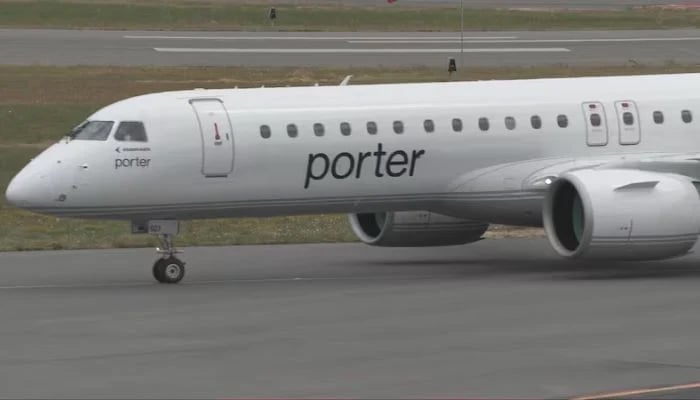
    A Porter Airlines flight from Victoria to Toronto was cancelled after a young child refused to sit in the assigned seat and fasten the seat belt. The incident happened on flight PD444 at Victoria International Airport in British Columbia. The aircraft had already left the terminal. It was preparing for takeoff when crew members noticed the child standing on the seat. Flight attendants tried to resolve the situation. The child’s parents also attempted to convince the youngster to sit down. However, the child continued to resist. The crew could not proceed with the flight while the safety issue remained unresolved. Aviation safety rules require passengers to remain seated and use seat belts when instructed. The aircraft therefore had to return to the terminal. The family was removed from the plane. Their baggage also had to be taken off the aircraft. Airport and airline staff then had to complete the required travel and security procedures. The process took considerable time. The procedures continued beyond 12:30am. Victoria International Airport closes its main runway at 12:30am every night. Because the runway had already closed, the aircraft could not take off again that night. The cancellation caused further inconvenience for the other passengers. They were forced to spend the night in Victoria. Porter Airlines apologised to the affected passengers for the disruption. The airline arranged alternative flights for them the following day. The incident highlights how even a seemingly minor safety issue can cause major delays when an aircraft is preparing for departure. Airlines are required to ensure that all passengers follow safety instructions before takeoff

  • |

    Syria and Russia redefine military ties

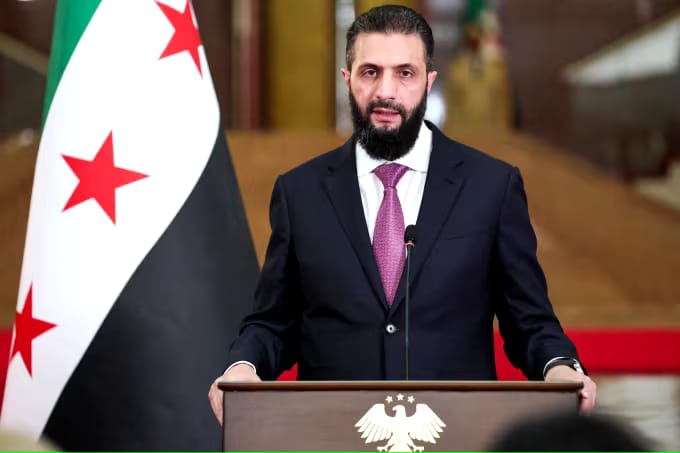
    Syria and Russia have reached a new agreement regarding the future of two strategically important Mediterranean military sites, marking a major shift in Moscow’s role in the country after years of close military cooperation with the former Syrian government. According to Syria’s Foreign Ministry, the agreement will bring changes to the way Russia operates at the Hmeimim air base near Latakia and the Tartus naval facility on Syria’s Mediterranean coast. Both locations served as key Russian military positions during the rule of former President Bashar Assad, who relied heavily on Moscow’s political and military support throughout Syria’s long civil war from 2011 to 2024. The Hmeimim air base became one of Russia’s most important overseas military installations, supporting Russian air operations in Syria and strengthening Moscow’s influence in the eastern Mediterranean. Meanwhile, the naval base at Tartus provided Russia with its only major naval facility outside the former Soviet Union, allowing it to maintain a strategic presence in the region. Under the newly announced arrangement, Syria will assume control of the Hmeimim air base and the commercial section of Tartus port as part of its civilian administration. The remaining military areas at both locations will reportedly be transformed into joint training and qualification centers rather than serving as traditional Russian military outposts. Syria’s Foreign Ministry described the agreement as a “reorganization of the Russian presence” along the country’s coastline. The ministry said the deal represents the most significant step forward in negotiations that have continued for around 18 months and could open the door to a new stage in Syrian-Russian relations. Russia has not yet issued an official public response to the announcement. However, Moscow’s position in Syria has changed significantly since the fall of Assad’s government. During the uprising and subsequent conflict, Russia was one of Assad’s strongest supporters, providing military assistance that helped his government remain in power. After Assad was removed from office, Russia allowed him and his family to seek asylum, while many remaining Russian forces gradually withdrew from Syria. Despite these changes, Syria’s new leadership has attempted to maintain diplomatic relations with Moscow. Interim President Ahmad al-Sharaa has met Russian President Vladimir Putin in Moscow on two occasions since taking office, with the future of the Mediterranean bases being one of the main issues discussed during their talks. At the same time, Syria has expanded its diplomatic engagement with Western nations and regional Arab countries. Several states that had distanced themselves from Damascus during Assad’s crackdown on opposition movements have begun rebuilding relations with the new Syrian authorities. The United States has also removed many of the sanctions that had severely affected Syria’s economy, while European countries have increased diplomatic contacts. French President Emmanuel Macron’s visit to Syria in July marked another important step, with both countries announcing plans to appoint ambassadors for the first time in 14 years. The agreement over Hmeimim and Tartus reflects the changing balance of international influence in Syria. While Russia remains an important partner, the country’s new government appears to be pursuing broader relationships with multiple global and regional powers as it seeks to redefine Syria’s future after years of conflict.

  • |

    Cuban president accuses US of attempting to seize island amid economic pressure

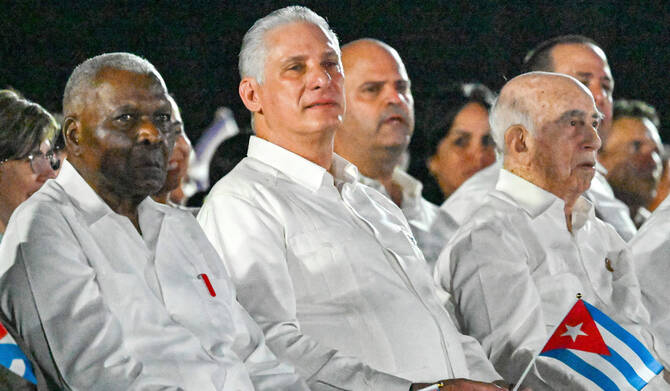
    Cuban President Miguel Díaz-Canel has denounced Washington’s escalating pressure campaign against Cuba as a “genocidal policy”, alleging that the United States is seeking to “appropriate” the nation. Speaking in Pinar del Río during the 73rd anniversary of the Moncada Barracks assault, Díaz-Canel stated that “Cuba is today waging a historic battle … against the walls of a genocidal policy whose objective is to suffocate an entire people in order to appropriate the country”. He further described the US blockade as “a weapon of war” that “causes deaths” and accused Washington of attempting to trigger a “social explosion with the sole aim of installing governments aligned with its imperial interests”. The sharp condemnation comes amid severe energy shortages, rolling blackouts, and financial distress brought on by expanded US sanctions, an oil blockade, and recent restrictions targeting Cuba’s overseas medical missions program. While Washington maintains that Cuba poses a regional security threat, Díaz-Canel called for national unity and the implementation of recent economic reforms, reaffirming that Cuba’s political model remains non-negotiable.

  • |

    Lebanon becomes first Middle Eastern country to abolish death penalty

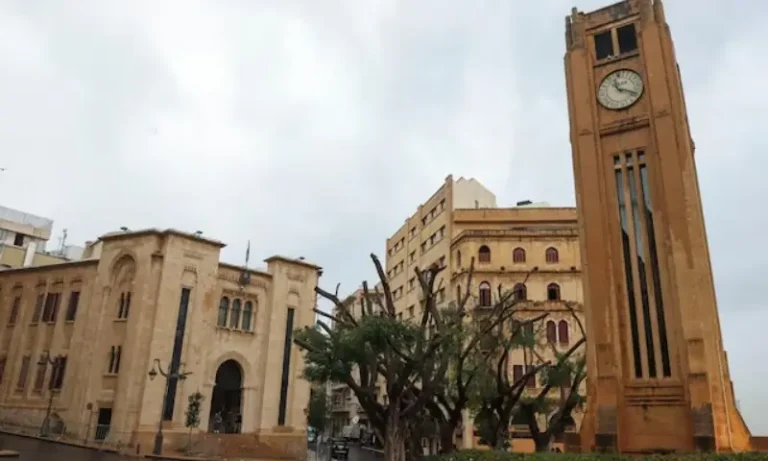
    Lebanon’s parliament has voted to abolish capital punishment, making it the first nation in the Middle East to formally end the practice. While Lebanon has maintained a de facto moratorium on executions since 2004, courts continued to hand down death sentences for major crimes including murder, terrorism, and espionage. Prior to the vote, human rights group Amnesty International estimated that 85 individuals remained on death row across the country. Under the new legislation, capital punishment will be replaced by life imprisonment with aggravated hard labour. Lebanese Justice Minister Adel Nassar described the vote as “historic”, noting that the legal existence of the death penalty had previously hampered Beirut’s ability to secure the extradition of criminal suspects from nations where capital punishment is outlawed. International observers and human rights organisations welcomed the landmark decision. The European Union stated that Lebanon was setting a powerful example for the region, while French Foreign Minister Jean-Noel Barrot praised the vote as a courageous step that upholds democratic values. Human Rights Watch also lauded the law, calling it a monumental victory for human rights in the Middle East.

  • |

    China missile test deepens pacific’s struggle fo…

    SUVA: A Chinese ballistic-missile test in the Pacific has exposed a growing dilemma for the region’s small island nations: how can they preserve their vision of an “Ocean of Peace” while increasingly finding themselves caught between the military ambitions of major powers? China’s July missile launch, its first known ballistic-missile test into the Pacific since September 2024, has intensified concerns about the region’s rapid militarisation. The test came just hours after Fiji signed a major defence agreement with Australia, its first-ever military alliance. The timing highlighted the competing security interests shaping the Pacific, where the United States and China are increasingly contesting influence. Yet despite widespread concern among Pacific leaders, the region failed to agree on a joint statement condemning the Chinese missile test during a meeting of foreign ministers in Suva last week. Papua New Guinea Foreign Minister Justin Tkatchenko described the launch as “totally inappropriate”, saying that while China remained a close friend and partner of Papua New Guinea, the missile test was not helpful. Beijing had informed Papua New Guinea about the launch beforehand, Tkatchenko said, but did not provide details about where the missile would land. China defended the exercise at the time. Foreign Ministry spokesperson Mao Ning said the test had been conducted safely and urged other countries not to “over-interpret” the event. Pacific caught between major powers The missile launch was the latest in a series of military developments that have transformed the Pacific into an increasingly contested strategic space. Chinese naval deployments and live-fire exercises, including drills in the Tasman Sea, have become more visible. At the same time, US allies have expanded military exercises around Guam and Hawaii, while Washington maintains major military facilities and forces across Hawaii, Guam and the Marshall Islands. For Pacific island governments, the growing military activity creates an uncomfortable contradiction. Many have repeatedly insisted that their region should not become another battleground for global power competition. In September 2025, Pacific leaders endorsed the Ocean of Peace Declaration, pledging to protect the region and strengthen international peace and security. The initiative was intended to put Pacific countries themselves at the centre of discussions about their security rather than allowing outside powers to define the region’s strategic priorities. David Peebles of the Australian National University’s Pacific Security College said Pacific nations had historically resisted security agendas imposed by larger countries. But the growing number of defence agreements is now testing that principle. Defence deals bring benefits — and fears For some Pacific governments, security partnerships offer practical advantages. They can provide surveillance against illegal fishing, disaster-response capabilities, policing assistance, military equipment and training. Australia’s new defence agreement with Fiji, known as the Ocean of Peace Alliance, reflects that approach. But critics fear that a growing network of bilateral security arrangements could gradually draw Pacific nations deeper into the strategic competition between China and the United States. Tuvalu’s permanent foreign secretary, Pasuna Tuaga, speaking in a personal capacity, expressed concern over increasing militarisation, including security arrangements such as the AUKUS partnership between Australia, Britain and the United States. The concern is not simply about military exercises or missiles. Pacific governments also worry that agreements could eventually influence how their territory, waters and critical infrastructure are used. Solomon Islands Foreign Minister Rick Houenipwela, who chaired the Suva talks, stressed that the region’s security agenda must remain “conceived by the Pacific, shaped by the Pacific”. Yet achieving that unity is becoming increasingly difficult. China divides Pacific consensus The failure to produce a common statement on China’s missile test revealed just how sharply interests differ among Pacific nations. Officials familiar with the discussions said Kiribati and Nauru did not support the wording of a proposed statement. Both countries have strengthened relations with Beijing after switching diplomatic recognition away from Taiwan. New Zealand Foreign Minister Winston Peters attributed the failure to reach consensus to foreign influence, although he did not identify any country. The disagreement reflects a broader challenge. Some Pacific governments, particularly those closer to longstanding US military facilities, favour stronger security ties with Washington and its allies. Others remain cautious about becoming involved in military competition between major powers and maintain close economic or diplomatic relations with Beijing. Fiji faces a difficult balancing act Fiji is now at the centre of this debate. The country signed its defence agreement with Australia and participated for the first time in the US-led RIMPAC military exercises last month. At the same time, Fiji has publicly supported the vision of a peaceful Pacific free from major-power confrontation. Foreign Minister Sakiasi Ditoka acknowledged the tension, saying Pacific nations wanted to be free from “all these war-making paraphernalia” while recognising that some security capabilities were necessary to protect them. For Pacific leaders, the challenge is increasingly about finding the right balance. The region does not want to choose sides in a rivalry between Washington and Beijing. But as military exercises expand, defence agreements multiply and missiles are tested in Pacific waters, remaining completely outside that rivalry is becoming harder. The issue is expected to return to the spotlight when Pacific leaders gather in Palau in three weeks for the Pacific Islands Forum summit. The missile test may have lasted only moments, but its political impact could linger far longer — forcing Pacific nations to confront whether their dream of an “Ocean of Peace” can survive amid an increasingly militarised region.

Leave a Reply

Your email address will not be published. Required fields are marked *