prince harry learn
| |

Prince Harry to learn how much failed Daily Mail lawsuit will cost

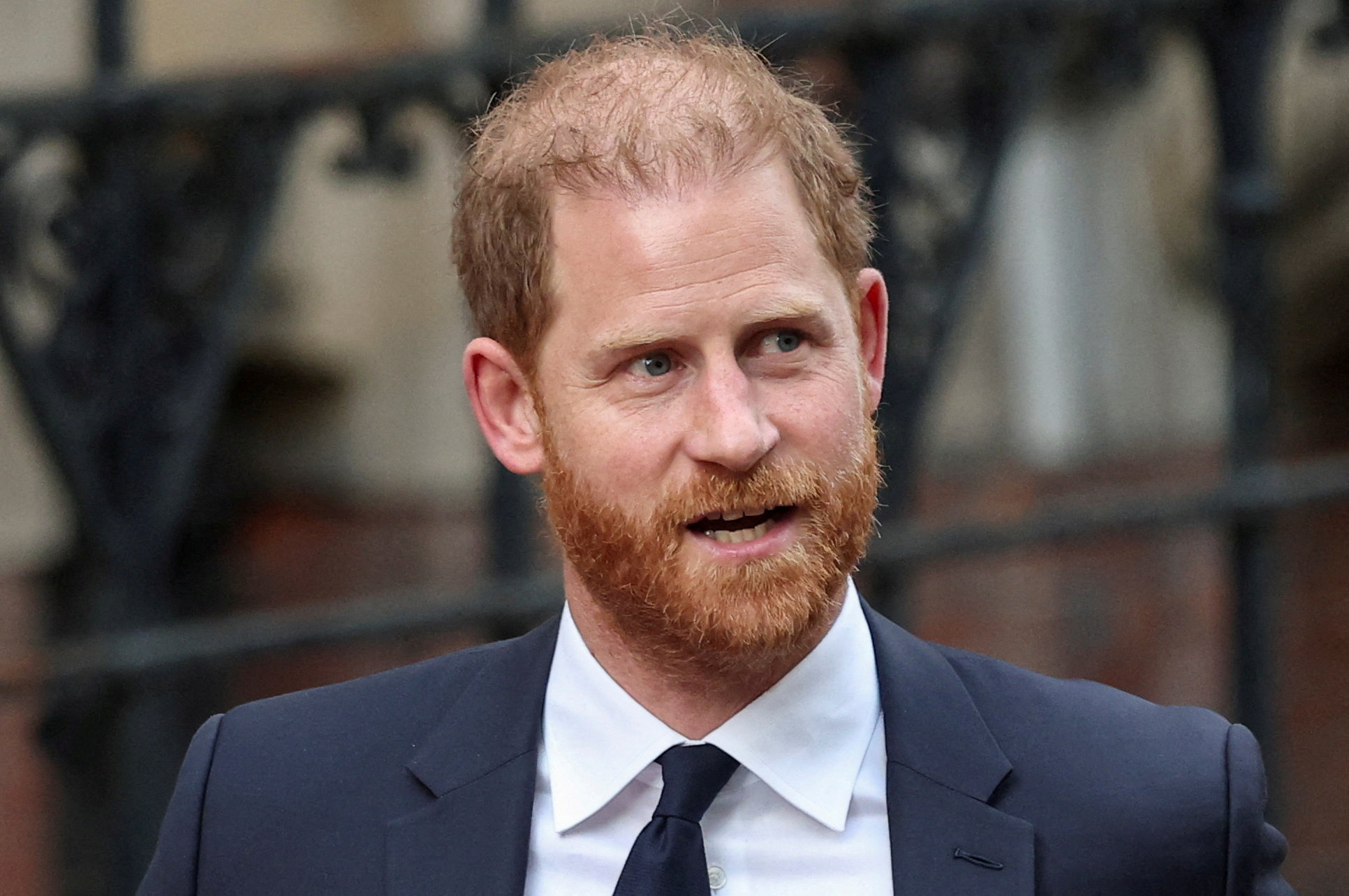
LONDON, United Kingdom – Days after it was revealed he will return to Britain, Prince Harry will learn on Friday, August 21, how many millions of pounds he might have to pay towards the legal costs of the Daily Mail publisher after losing a high-profile privacy lawsuit.

Last month, judge Matthew Nicklin at London’s High Court comprehensively rejected the case brought by King Charles‘ younger son alongside singer Elton John and five other British figures, rejecting allegations that the Mail titles had engaged in widespread unlawful activities, such as phone hacking.

Associated said it was an overwhelming victory for its newspaper and journalists, and “for a free press generally,” while the prince, 41, described the ruling as a “complete and obvious whitewash.”

On Friday, Nicklin will rule on how much the claimants should pay on an interim basis towards the Mail’s legal costs, and, more significantly, whether Harry and the others should be paying the outstanding amount on an “indemnity basis.”

If he decides to do this, it will mean that as the losing party the prince and the others must pay towards Associated’s costs without the publisher needing to show these were reasonable and proportionate.

Nicklin will make a written judgment, so neither Harry nor any of the other parties will be present.

Interim payment sought

The court was told at a hearing in July that Associated had incurred a legal bill of £34.5 million ($45.8 million), while Harry and other claimants only had an insurance policy which covered £16 million.

The Mail’s publisher is seeking an interim payment of £10 million while Harry and the six others have offered £8 million.

The court ruling comes after the shock news that Harry, his wife Meghan and their two children would be relocating to Britain this month from their home in California.

The couple, who stepped down from official duties in 2020 when they moved to the US, will not resume any royal roles nor receive any public money.

Costs hearing

At last month’s hearing about costs, Associated’s lawyer Antony White argued the claimants had made wide-ranging and serious “egregious” allegations without supporting evidence which had added to their costs.

He also said Harry’s statement following the ruling was an abuse of his position and celebrity status.

Nicholas Bacon, the lawyer for the claimants, said in their submissions that Associated’s £34.5 million legal bill was “eye-watering,” far exceeding an agreed budget.

He said it had been reported that Associated wanted to teach the claimants a lesson, and that it would be unjust to award indemnity costs.

In rejecting Harry and the others’ lawsuits following an 11-week trial, Nicklin had said the claimants had needed to prove that information published about them had been obtained unlawfully, but they had failed to do so, and that suspicion alone was not enough.

No decision has yet been made on whether the claimants will appeal.

($1 = 0.7527 pounds)

Similar Posts

  • | |

    Dubai’s viral robot Bu Snaidah ‘marries’ fel…

    Dubai: Dubai’s popular humanoid robot, Bu Snaidah, has sparked widespread attention after announcing its “marriage” to another robot named Moza in a series of social media posts. Photos from the mock wedding ceremony were shared on Bu Snaidah’s official social media accounts, leaving many users amused and curious. However, the announcement was part of a creative social media campaign and did not represent a real legal or religious marriage. Developed by SS Lootah Group, Bu Snaidah is based on the Unitree G1 humanoid robot, a platform originally designed for research and educational purposes. The robot has become an online sensation in the UAE through videos showcasing Emirati traditions, cultural events, and public appearances. The lighthearted wedding campaign has further boosted Bu Snaidah’s popularity, with social media users praising the creative content and the innovative use of robotics to engage audiences.

  • |

    PhD exams face explosive questions over quality

    A renewed debate over the reliability of PhD examinations has emerged following questions surrounding the doctoral thesis of Professor Jason Arday. Arday submitted his PhD thesis at Liverpool John Moores University in July 2015. The controversy resurfaced after Professor Richard Dawkins publicly questioned whether the thesis had been thoroughly examined. Other commentators have also raised concerns about its academic quality and allegations of plagiarism. The debate has now expanded beyond the individual case. It has prompted questions about how universities assess doctoral research and whether the existing system consistently maintains the required academic standards. A PhD normally represents several years of specialised research. A doctoral thesis can contain tens of thousands of words and often requires extensive academic reading and analysis. The assessment is generally carried out by two examiners. One is usually from the candidate’s university, while the other comes from an external institution. Critics argue that the workload involved in examining a thesis is not always matched by the financial compensation provided to examiners. Examiners are commonly paid a relatively modest fee for reviewing lengthy and complex research. This has raised concerns that some may not devote sufficient time to the process. There are also concerns about inconsistencies in examination decisions. Some candidates have reportedly failed their PhDs despite believing that their research met the required standard. Others have received a pass even when questions remained about the quality of their work. The appeal process can be particularly difficult for unsuccessful candidates. A failed PhD can mean years of research being lost. Students who finance their own studies can also face substantial financial losses. For those hoping to build academic careers, the consequences can be even more serious. Another issue is the selection of examiners. Supervisors often play a role in recommending academics to assess their students’ work. Critics say professional relationships within academia could potentially influence the choice of examiners or the assessment itself. Academic misconduct presents another challenge. Universities can spend considerable time investigating allegations of plagiarism and other forms of cheating. Lengthy investigations can involve hearings, appeals and administrative procedures. The discussion has also highlighted the subjective nature of academic assessment. Different examiners can sometimes reach different conclusions about the same research. In some cases, candidates who fail with one set of examiners may later receive a pass from another panel after an appeal. There is no suggestion that these concerns necessarily apply to Arday’s examination. The available debate does not establish whether his thesis met or failed to meet the required standard. However, the controversy has renewed calls for universities to examine their doctoral assessment systems. Questions include how examiners are selected, whether they receive adequate compensation, how thoroughly theses are reviewed and how allegations of academic misconduct are handled. The wider debate is therefore about more than one doctoral thesis. It raises fundamental questions about the credibility, consistency and accountability of the PhD examination process.

  • | |

    Turkey submits bill to parliament aimed at reinteg…

    Turkey’s governing coalition put forward a draft law before parliament on Wednesday designed to secure lasting peace with the Kurdistan Workers’ Party, offering legal protection from prosecution to many former fighters and suspending prison terms for others. The legislation represents a significant step toward closing out an insurgency that has claimed more than 40,000 lives since 1984, deepened political divisions inside Turkey and spilled violence into neighboring Iraq and Syria over four decades. The bill aims to bring the long running conflict to a close in part by clearing the way for potentially thousands of former PKK fighters and civilians to return to Turkey from hideouts in northern Iraq. The measure carries support from a majority of lawmakers and is expected to clear parliament later this week, though public opinion polls suggest many Turks remain doubtful it will deliver a durable peace. Under the bill, Turkey’s national security council would confirm the group’s disarmament, while a dedicated committee, including the vice president, several cabinet ministers and the head of the MIT intelligence service, would supervise the surrender and disarmament of militants. That committee would then report on the process to a parliamentary oversight commission. According to the text of the legislation, the bill would suspend prison sentences for individuals convicted of PKK membership or of assisting the organization. It would also extend legal protection to fighters who were not involved in killings, provided they return to Turkey within six months of the law taking effect. PKK figures convicted of more serious offenses, including leading a terrorist organization or sentenced to aggravated life terms before 2005, would fall outside the scope of these protections and would not receive suspended sentences. That exclusion means PKK founder Abdullah Ocalan, who has been imprisoned since 1999 under an aggravated life sentence, would remain behind bars even as the broader peace process moves forward. Ocalan called on the PKK to lay down its weapons and dissolve last year, a call the group’s leadership accepted. President Tayyip Erdogan’s governing AK Party secured backing for the bill, formally titled the national solidarity and social integration law, from its nationalist ally the MHP as well as the pro Kurdish DEM Party. Most other parties in parliament, including the main opposition, have also expressed support for the legislation. DEM co chair Tuncer Bakirhan described the vote as an important first step, saying he hopes the process continues forward in a constructive direction. The peace initiative between Turkey, which fields NATO’s second largest army, and the PKK first got underway in late 2024. It nearly stalled earlier this year, however, as the war involving Iran raised fears of wider regional instability and diverted attention from the domestic peace effort. Turkey, along with the United States and the European Union, classifies the PKK as a terrorist organization. The group launched its armed campaign in 1984, initially demanding an independent Kurdish state in southeastern Turkey before later shifting its goals toward greater autonomy and expanded political rights for Kurdish communities within Turkey. The legislation now heads toward a parliamentary vote expected within days, marking one of the most consequential efforts yet to formally end a conflict that has shaped Turkish domestic politics and regional security dynamics for more than a generation.

  • |

    UN chief visits Syria after 17 years and backs reconstruction efforts

    United Nations Secretary General Antonio Guterres visited Syria on Saturday for the first time in 17 years, marking a significant moment in the country’s efforts to rebuild after more than a decade of conflict. During his visit to Damascus, Guterres met Syrian President Ahmed al Sharaa and pledged continued UN support for reconstruction, humanitarian recovery and long-term stability as Syria works to recover from years of war. President Sharaa welcomed Guterres at the presidential palace, where the two leaders held talks focused on rebuilding the country and strengthening cooperation with the United Nations. Speaking after the meeting alongside Syrian Foreign Minister Asaad al Shaibani, Guterres said no nation can recover from a devastating conflict without international assistance. He stressed that the global community has a responsibility to help Syria restore its economy, rebuild damaged infrastructure and create conditions for lasting peace. Foreign Minister Shaibani called on the international community, particularly the European Union, to increase financial and technical support for Syria’s recovery. He said discussions with Guterres also covered plans to expand UN assistance for reconstruction projects and support the government’s efforts to gradually close displacement camps as security conditions improve. Regional security was another major topic during the visit. Guterres expressed concern over the situation in the Golan Heights, describing recent developments as unacceptable. Syrian officials repeated their demand for Israeli forces to withdraw immediately from the United Nations monitored buffer zone where troops have been stationed since 2024. Damascus has also called for a return to the 1974 disengagement agreement that previously governed military positions in the area. The visit is being viewed as another important step in Syria’s return to the international stage following the removal of former president Bashar al Assad in late 2024. The end of Assad’s rule brought an end to a civil war that began in 2011 and resulted in hundreds of thousands of deaths while forcing millions of Syrians to flee their homes. At the time, Guterres described the political transition as a hopeful moment for both Syria and the wider region. Before arriving in Damascus, the UN chief described his trip as a visit of solidarity and reaffirmed the United Nations’ commitment to supporting the Syrian people during this critical period. He is expected to spend several days in the country, meeting senior government officials, representatives of civil society and humanitarian organizations. Guterres is also scheduled to address Syria’s parliament, where he is expected to speak about the country’s opportunity to build a more stable, inclusive and prosperous future after years of conflict. The visit comes as Syria continues to rebuild diplomatic ties with countries around the world. President Sharaa’s administration has sought to strengthen relations beyond the country’s traditional allies while encouraging international investment and cooperation. Since taking office, the government has focused on restoring Syria’s place in regional and global affairs after years of political isolation. Recent diplomatic developments have reflected that effort. Last year, Sharaa became the first Syrian president in decades to address the United Nations General Assembly. Earlier this month, US President Donald Trump announced plans to remove Syria from the United States list of state sponsors of terrorism after Washington lifted most of its sanctions on the country. Despite these diplomatic gains, security concerns remain. Guterres’ visit follows recent bomb explosions near a hotel in Damascus that had hosted French President Emmanuel Macron during his landmark visit, the first by a European Union head of state since Syria’s political transition. The incidents highlighted the continuing security challenges facing the country as it moves through a delicate rebuilding process. During his stay, Guterres is also expected to visit the UN peacekeeping mission responsible for monitoring the buffer zone between Israeli and Syrian forces. The mission has operated in the area for decades and continues to play a key role in maintaining stability along the disputed frontier. His visit underscores the United Nations’ commitment to supporting Syria’s recovery while encouraging dialogue, regional stability and international cooperation.

  • |

    What was their crime? 120 children killed in school strike

    A devastating missile strike on a primary school in the southern Iranian city of Minab has claimed the lives of 156 people, including 120 children, making it one of the deadliest civilian incidents of the recent conflict involving Iran. The attack took place on February 28 during the opening hours of the military confrontation. The school was operating normally when explosions struck the area, causing large sections of the building to collapse and trapping students and teachers beneath the rubble. According to survivors, children had gathered inside the school for morning prayers because it was the holy month of Ramadan. Shortly after classes began, school authorities decided to dismiss students as reports of nearby explosions emerged. Before many children could leave the premises, another powerful strike directly hit the school building. Teachers who survived the attack described scenes of panic and destruction. They said the explosion threw students and staff across classrooms while thick smoke quickly filled the building, making it difficult to breathe or see. Parts of the school collapsed within seconds, leaving many children trapped. Emergency rescue teams rushed to the scene soon after the explosions. Rescue workers spent hours searching through damaged classrooms and collapsed concrete in an attempt to find survivors. However, many victims had already lost their lives before rescuers arrived. Officials involved in the rescue operation said the destruction was so severe that several victims could only be identified through clothing, shoes, or personal belongings. Families gathered outside the school in desperate search of their children as rescue efforts continued. The tragedy has left the entire community in mourning. Parents and relatives continue visiting the cemetery where many of the students and teachers have been buried. Families say they are still struggling to cope with the loss of children who had simply gone to school for their education. The school was located next to a compound associated with Iran’s Islamic Revolutionary Guard Corps (IRGC). Satellite images and independent analysis indicate that military facilities in the neighbouring compound were also struck during the attack. Reports citing officials familiar with the investigation suggest the strike may have resulted from outdated intelligence that mistakenly identified the school area as part of a military target. However, no official conclusion has been released, and investigations into the incident are still ongoing. Iranian authorities insist the school had been operating as a civilian educational institution for years and reject suggestions that it was part of any military facility. They have repeatedly highlighted the attack as evidence of the heavy civilian toll caused by the conflict. The incident has intensified international concern over civilian protection during military operations. Human rights advocates and legal experts have called for a transparent and independent investigation to determine responsibility and examine whether international humanitarian law was violated. The strike has also renewed global debate over the accuracy of military intelligence, the protection of schools in conflict zones, and the need to safeguard civilians during armed confrontations.

Leave a Reply

Your email address will not be published. Required fields are marked *