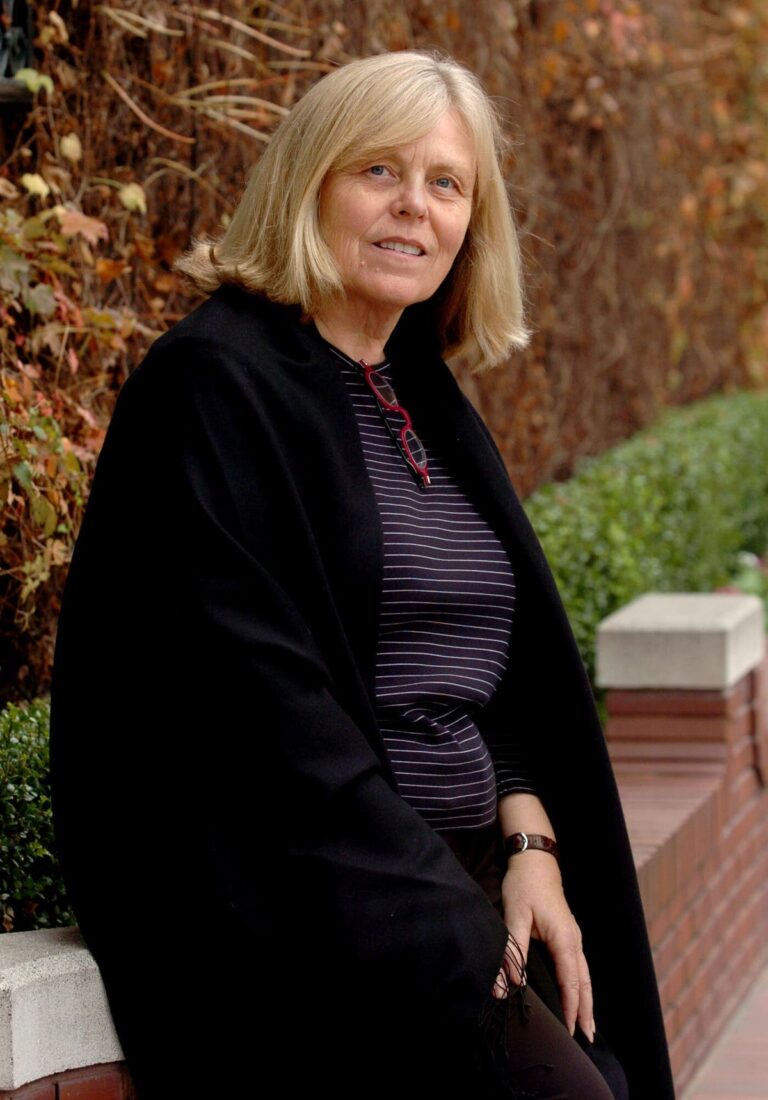
Remembering Marjane Satrapi: an author who humanized Iran
The global arts community is mourning the unexpected passing of Marjane Satrapi. She is the pioneering French-Iranian author, illustrator, and film director best known for her graphic memoir Persepolis. Satrapi passed away in Paris at the age of 56. Relatives confirmed that her death was tied to profound heartbreak following the loss of her husband, Swedish producer Mattias Ripa, who died the previous year. Her death sparked an outpouring of tributes from political leaders, cultural institutions, and readers worldwide. French President Emmanuel Macron paid homage to Satrapi as a monumental talent who converted her childhood in revolutionary Iran into an accessible, universal human story, blending sharp irony, vulnerability, and courage. Born in 1969 in the northern Iranian city of Rasht, Satrapi grew up in Tehran during one of the most turbulent eras in modern Middle Eastern history. As a child of progressive, middle-class parents, she witnessed the overthrow of the Shah in 1979, followed by the rapid consolidation of power by the fundamentalist Islamic regime and the devastating Iran-Iraq War. Concerned for her safety and rebellious spirit, her family sent her to study at the Lycée Français in Vienna when she was just fourteen. Her years in Austria were marked by acute feelings of social isolation, homelessness, and cultural displacement. The struggles that would later become central themes in her creative career. After returning to Tehran to complete her university education in visual communication, Satrapi ultimately chose a life in exile, relocating permanently to France in 1994. In 2000, Satrapi published the first volume of Persepolis, a monochrome graphic novel that fundamentally altered how Western audiences viewed everyday life in Iran. Drawn in a bold, stripped-down visual style influenced by expressionist art, the book chronicled her youth with remarkable humor and emotional honesty. Satrapi demystified a country often flattened by geopolitical headlines. The book became an international bestseller, translated into dozens of languages and adopted into school curricula worldwide. In 2007, Satrapi co-directed an animated film adaptation alongside French artist Vincent Paronnaud. The film won the Jury Prize at the Cannes Film Festival, earned an Academy Award nomination for Best Animated Feature, and cemented Satrapi’s standing as a multi-talented cinematic voice. “I don’t want to return to a dictatorship and spend the rest of my life in jail being tortured.” — Marjane Satrapi Satrapi’s artistic career extended well beyond Persepolis. She directed live-action feature films including Chicken with Plums (2011), the dark comedy The Voices (2014) starring Ryan Reynolds, and Radioactive (2019), a biopic celebrating Marie Curie. In addition, she was an accomplished painter and was elected to the prestigious French Academy of Fine Arts. Yet, Satrapi remained fiercely principled. She consistently criticized the Iranian regime while demanding true integrity from Western governments. In early 2025, she publicly rejected France’s prestigious Légion d’honneur, citing European political hypocrisy regarding human rights in Iran. Following the 2022 Iranian protests triggered by the death of Mahsa Amini, she edited the collective work Woman, Life, Freedom, uniting artists and historians to support the civil rights uprising. Through her uncompromising honesty, sharp wit, and visual mastery, Marjane Satrapi left behind a legacy that proved art can dismantle prejudice, bridge divide, and speak truth to power.