
eu

  • | |

    Spain accuses EU allies of ‘selfish’ r…

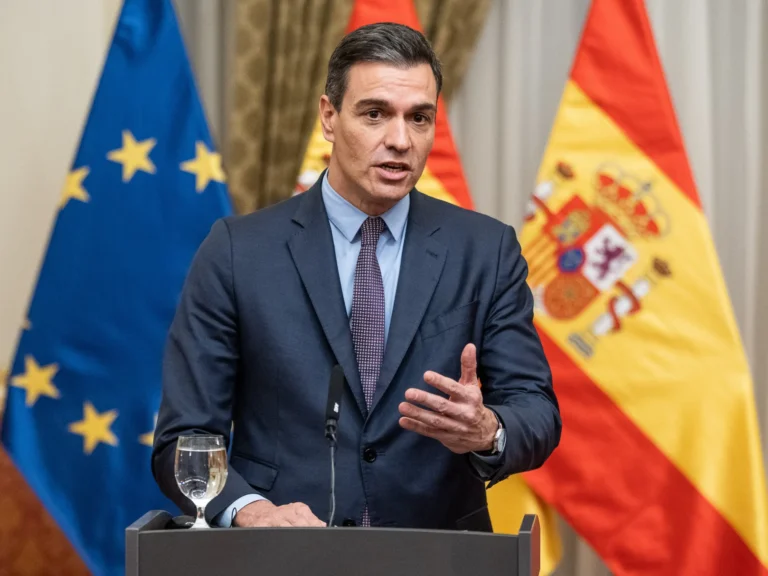
    Spain has accused several European Union governments of a selfish and unlawful reaction after nearly 60,000 migrants crossed into the Spanish enclave of Ceuta from Morocco, triggering a wave of statements from EU member states calling for tighter border restrictions. Prime Minister Pedro Sanchez, in a letter addressed to European Commission President Ursula von der Leyen, described the response from unnamed member states as selfish, polarizing and unlawful. According to a report by the British broadcaster, Sanchez said Madrid had restored order within 48 hours, returning most of the migrants to Morocco and preventing them from reaching mainland Europe. The diplomatic dispute was triggered largely by Italy’s response, which included a temporary suspension of visa free travel with Spain under the Schengen arrangement, along with pointed criticism accusing Madrid of encouraging human trafficking by granting citizenship to more than 500,000 people who had entered the country irregularly. Italian Foreign Minister Antonio Tajani wrote on social media that he supports closing the Schengen area to Spain and expressed confidence in the actions of Italy’s interior minister, Matteo Piantedosi. He said uncontrolled and irregular immigration represents a threat to national security, and argued that the situation unfolding in Ceuta demonstrates how Spain’s decision to naturalize large numbers of irregular immigrants was fundamentally wrong and only encourages trafficking. Italy was not alone in calling for a tougher stance. Czech Prime Minister Andrej Babis went further, calling for Spain to be suspended immediately from the 29 member Schengen arrangement. Finland and Denmark also voiced support for stricter border controls in response to the crisis. Notably, Ceuta itself lies outside the Schengen zone, meaning the enclave is not directly governed by the same free movement rules at the center of the diplomatic dispute between Madrid and its European partners. The clash highlights long standing tensions within the European Union over how to handle migration pressure at its external borders, an issue that has repeatedly strained relations between member states with differing approaches to asylum policy, border enforcement and integration in recent years.  

  • | |

    Italy and Denmark rally 22 EU states behind push f…

    Italy and Denmark have secured the backing of 22 European Union member states for a joint push toward stronger border security, following a chaotic migrant surge into the Spanish enclave of Ceuta that left at least 19 people dead. Thousands of migrants attempted to reach Ceuta, located on Africa’s northern coast, on Thursday, with many swimming around breakwaters using inflatable devices while others scaled the high border fence separating Morocco from the Spanish territory. Official estimates put the total number of migrants who crossed into Ceuta from Morocco at around 60,000. The scale of the crossing prompted alarm among European leaders, with Italian Prime Minister Giorgia Meloni moving quickly to temporarily suspend Italy’s open border Schengen arrangement with Spain for one month, closing direct air and sea travel from Spain without passport checks. By Saturday, Italy had escalated its response further, joining Denmark in leading a coordinated diplomatic push. The two countries spearheaded a joint letter, signed by 22 EU member states, calling for urgent and coordinated European action on border security, deportations and human trafficking. Meloni wrote on social media that the scenes emerging from Ceuta underscored the urgency of a unified European response to illegal immigration. She said the letter, organized together with Denmark, calls for joint efforts to reinforce external borders, combat irregular immigration, target human traffickers, improve the effectiveness of deportations and remove any incentives that encourage further illegal crossings. She added that protecting the European Union’s external borders is not the concern of a single nation but a shared responsibility across the bloc. Spanish Prime Minister Pedro Sanchez pushed back against the growing pressure, accusing several EU countries of a selfish, polarizing and unlawful response to the crisis. In a letter sent to Brussels, Sanchez said some European states have chosen to target Spain and push for its temporary removal from the Schengen area, driven by what he described as prejudice, misinformation, ignorance or political motives. EU officials were scheduled to hold an emergency meeting Saturday afternoon to determine next steps in addressing the unfolding migration crisis in Ceuta. The dispute highlights a long running fault line within the European Union over migration policy, as border states facing the brunt of new arrivals often clash with governments pushing for stricter continent wide controls, a tension that has resurfaced repeatedly during major migration episodes over the past decade.