tennis wta makes

Tennis, WTA makes genetic sex testing mandatory for women’s events

The Women’s Tennis Association (WTA) has introduced a new eligibility policy requiring all players to undergo a one-time genetic sex test before competing in professional women’s tennis events.

According to British media reports, the new policy requires players to provide a cheek swab, blood sample or saliva sample to test for the presence of the SRY gene which is linked to the Y chromosome and plays a key role in the development of male biological characteristics.

Only players whose tests do not detect the SRY gene will be eligible to compete on the WTA Tour. If the test result is positive, further medical evaluation will be conducted.

Under the new policy, players must also sign a document acknowledging the rules. Refusing to undergo the test could result in disciplinary action.

Previously, under the WTA’s 2024 policy, transgender women were allowed to compete in women’s events if they maintained testosterone levels below the specified limit.

The WTA said the updated policy is intended to ensure fair competition and equal opportunities in women’s tennis while treating all players with respect and dignity.

Similar Posts

  • |

    This gold is for Pakistan, claims Ehsanullah Mahsud

    Pakistani taekwondo player Ehsanullah Mahsud has dedicated his latest gold medal to the people of Pakistan. He credited their prayers and support as a major reason behind his success in the competition. Speaking to Geo News after his win, Mahsud did not hold back his gratitude. He said the medal was not just his own achievement. It belonged to the nation that stood behind him throughout the tournament. The gold came at the Thailand International Taekwondo Championship. Mahsud put together a strong run from the very first round. He opened his campaign with a win against a Kazakh opponent. That victory set the tone early and gave him the momentum he needed heading into the tougher rounds ahead. He carried that form into the semi-final. There, he faced off against an Indian competitor. Mahsud came out on top in that matchup, securing his place in the final. Beating a regional rival at that stage is never easy, and the win added extra weight to his overall run. In the final, Mahsud went up against a player from Sri Lanka. He delivered another strong performance, finishing the tournament with a win and claiming the gold medal. Each stage of the competition tested him differently. From facing a Central Asian opponent early on, to going head-to-head with regional rivals in the later rounds, Mahsud’s path to gold wasn’t a simple one. Every match added pressure, and every win built on the last. This is not just a personal milestone for him. Wins like these also add to Pakistan’s growing presence in international taekwondo, a sport that continues to produce strong performances from Pakistani athletes on the global stage. For Mahsud, the victory reflects months of preparation and discipline. Competing internationally requires consistent training, sharp reflexes, and the ability to perform under pressure across multiple rounds in a short span of time. As he continues competing on the international circuit, this gold adds another achievement to his growing list of accomplishments. It also reinforces his position as one of the athletes representing Pakistan on international platforms. For now, Mahsud’s focus remains on what comes next, as he continues building on this latest success and preparing for future competitions ahead.

  • | |

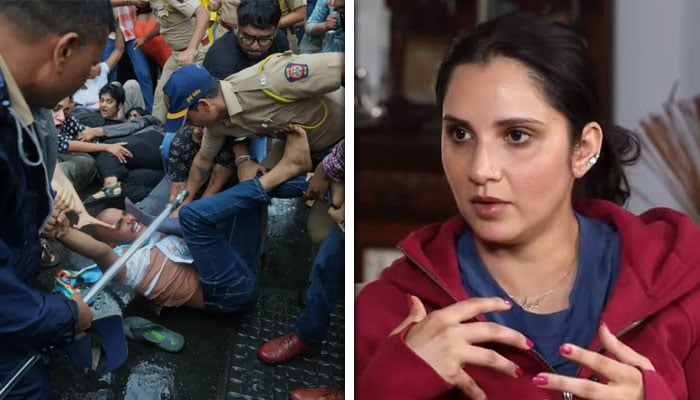
    Sania Mirza backs NEET student protesters

    Former Indian tennis star Sania Mirza has expressed support for students protesting over the alleged NEET examination scandal. She urged the Indian government to introduce meaningful reforms to restore confidence in the country’s education system and ensure fairness for students. In a message shared on social media, Mirza said students are the future of the nation and should not have to face uncertainty after spending years preparing for one of India’s most competitive entrance examinations. She said many young people had devoted significant time and effort to achieving their academic goals and deserved a transparent and credible examination process. Mirza called on the government to listen carefully to students’ concerns. She said their complaints should be addressed without delay and that practical reforms should be introduced to strengthen the integrity of the education system. According to her, restoring public trust in national examinations is essential for protecting the future of millions of students. She also appealed for calm and stressed that violence should have no place in resolving public issues. She encouraged all stakeholders to work together peacefully to find a solution that safeguards students’ interests and ensures equal opportunities for every candidate. The protests began after allegations emerged that the NEET medical entrance examination paper had been leaked. The controversy triggered demonstrations in several parts of India, with students demanding greater transparency, stricter accountability and sweeping reforms in the examination system. Many protesters are also calling for the resignation of India’s Education Minister, Dharmendra Pradhan. They argue that the examination controversy has caused serious emotional and psychological stress for thousands of candidates who spent years preparing for the test.

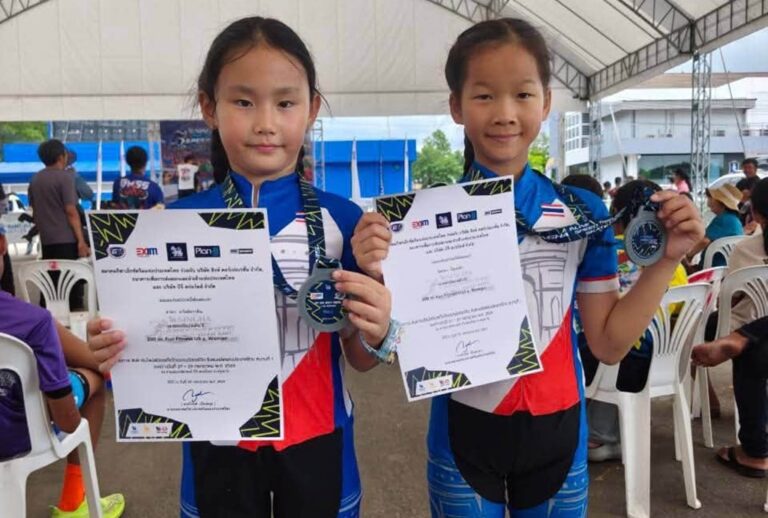
  • Young Skaters from Chiang Rai Win Silver at the 2026 Thailand Inline Skating Championships

    CHIANG RAI – Two young inline speed skaters from Chiang Rai Province made their mark at the Singha Inline Speed Skate Thailand 2026 Championship. Nipada Pannachai and Hana Wangtakwadee, both representing the Legend Maker Chiangrai team, each secured a silver medal in their respective categories. The competition, held from July 27-29, 2026, at BG Stadium […]

  • |

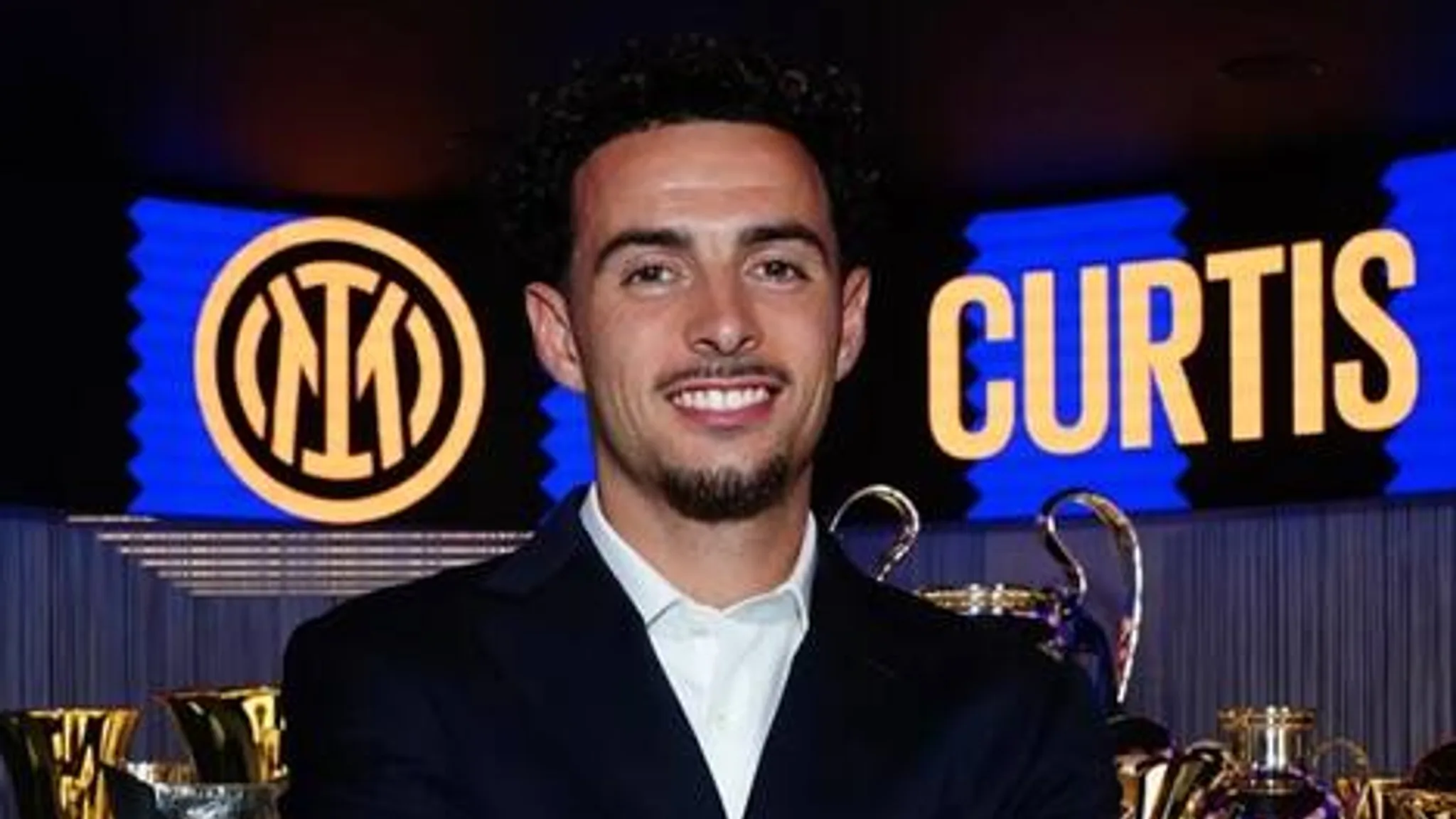
    Curtis Jones becomes third Englishman to join Inter Milan

    MILAN: Inter Milan have added another English name to their squad, with Curtis Jones completing a move from Liverpool to the Italian champions and becoming the third Englishman to join the club this summer. The 25-year-old midfielder has signed a contract running until 2031, bringing an end to a 16-year association with Liverpool, where he progressed through the academy before establishing himself in the first team. Inter confirmed the transfer on Friday, describing Jones’ arrival as the start of a “new, incredible adventure” and noting that he becomes the sixth Englishman in the club’s history. According to Italian media reports, Inter will pay around €35 million ($40.8 million) for the Liverpool academy graduate. Jones leaves Anfield with an emotional farewell message to the club that shaped his career. “After 16 years, it’s time to say goodbye,” Jones wrote on Instagram. The midfielder said he had joined Liverpool as a child with the dream of playing for the club and felt fortunate to have lived that dream. “Liverpool will be a massive part of me,” he added. Jones now begins a completely different chapter in Serie A, joining an Inter squad that has already welcomed two other English players this summer. Right-back Djed Spence and centre-back John Stones have also completed moves to San Siro, both signing contracts through 2031. Stones joined Inter after his Manchester City contract expired, while Spence has also made the switch to Italy. Jones’ transfer underlines Inter’s growing interest in English talent as the club prepares for another demanding domestic and European campaign. For the midfielder, the move represents an opportunity to experience football outside England for the first time and compete in one of Europe’s most tactical leagues. Inter will begin their Serie A campaign against Monza on Saturday, giving Jones the chance to make an immediate impression with his new club. After spending virtually his entire professional life at Liverpool, the midfielder now faces the challenge of adapting to a new country, language and style of football. But with a long-term contract and the backing of the Italian champions, Jones will hope his move to Milan becomes the next defining chapter of his career.

  • |

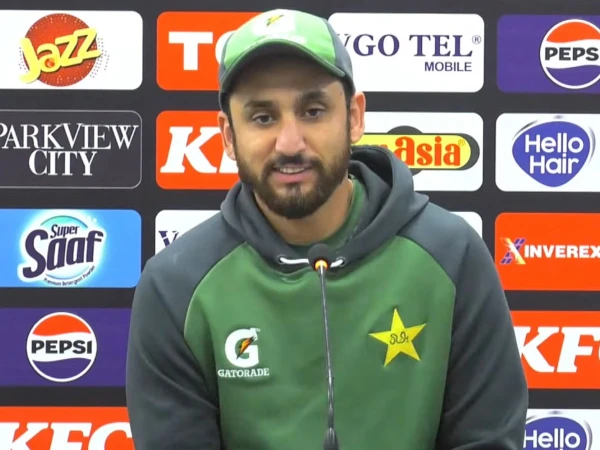
    Salman Ali Agha breaks silence after Pakistan’s England defeat

    LEEDS: Pakistan’s stand-in captain Salman Ali Agha has admitted that England exposed weaknesses across the board after Pakistan suffered a heavy defeat in the opening Test, while expressing hope that Babar Azam will return for the next match. Speaking at the post-match press conference, Salman acknowledged that Pakistan were outplayed by England and failed to maintain the consistency required at international level. “England outclassed us in every department,” Salman said, adding that the team repeatedly failed to execute its plans when it mattered most. The defeat has raised fresh questions about Pakistan’s preparations for the challenging England conditions. Salman said the team had arrived only about a week before the start of the series, leaving limited time for players to adjust to the unfamiliar conditions. “We always face tough challenges in England,” he said, stressing that adapting to local conditions requires time and experience. Pakistan’s problems were particularly visible with the bat. After being dismissed for 171 in their first innings, the visitors managed only 135 in the second, allowing England to complete a comprehensive innings victory. Salman also admitted that several senior players are struggling for form. He pointed to his own performance, as well as those of Mohammad Rizwan and Saud Shakeel, saying the lack of runs from key batters has become a major concern for the side. The captain nevertheless insisted that Pakistan have enough talent to improve. “We are going through a difficult rebuilding phase,” Salman said, describing the current team as a side being prepared with an eye on the future. He acknowledged that Pakistan’s bowling attack is relatively young and inexperienced but argued that the experience gained during difficult overseas tours could prove valuable in the long term. The captain’s comments come as Pakistan attempt to recover from a disappointing start to their three-Test series against England. The visitors will need a significant improvement in both batting and execution if they are to challenge the hosts in the remaining matches. One potential boost could come from the return of Babar Azam. Salman expressed hope that the former Pakistan captain would be fully fit and available for the next Test. Babar’s return could provide Pakistan with much-needed experience and stability in the batting order at a crucial stage of the series. Pakistan’s recent struggles have highlighted the difficulty of competing overseas, particularly when a team is undergoing transition. For Salman, however, the priority is clear: Pakistan must learn quickly and raise their standards. The stand-in captain stressed that the current level of performance is not acceptable and urged the team to improve its execution in foreign conditions. With two Tests still remaining, Pakistan have an opportunity to respond on the field. But after a one-sided opening defeat, the pressure will be firmly on the visitors to show that their rebuilding project can deliver results as well as promise.

  • | |

    Female UEFA officials lead pushback against Infantino amid FIFA turmoil

    Two women sitting on UEFA’s executive committee have become the most visible faces of opposition to FIFA President Gianni Infantino as he confronts the toughest test of his ten years leading world football’s governing body, raising fresh questions about whether the sport is ready for female leadership at the top. Laura McAllister of Wales and Lise Klaveness of Norway, the only two women on UEFA’s executive committee, have taken outspoken public stances against Infantino during a crisis triggered by the collapse of his plan to push through a private equity backed venture called FIFA Football Enterprises. The backlash against that failed proposal has opened up a broader conversation about whether football, an industry historically run by men, could realistically be led by a woman. McAllister, who serves as a UEFA vice president, told a foreign news agency that seeing a woman elected FIFA president would be a welcome development, though she cautioned that the path there remains complicated. “I’d like to think we’re not far off having a female president,” she said, adding that she worries football still lags behind broader social progress on gender. The conversation gained additional traction after former FIFA President Sepp Blatter publicly said this week that the time had come for a woman to lead the organization, singling out Klaveness for praise. McAllister welcomed the sentiment but pushed back on the idea that installing a female president would be straightforward. She said a woman could well be the strongest candidate available, but stressed that FIFA’s global politics do not operate as a simple meritocracy. Her comments follow the unraveling of Infantino’s FFE plan, which fell apart after UEFA and several other regional federations mounted fierce resistance. Wales became the first national association to publicly withdraw its backing for Infantino’s re election bid, and opposition quickly spread through other parts of FIFA’s membership. Infantino was scheduled to hold an emergency meeting in Morocco on Wednesday as the fallout continued. McAllister, whose call for national associations to boycott FIFA events won unanimous backing at UEFA’s emergency meeting last week, said the current unrest points to governance failures that run deeper than any single controversy. She said the organization appears to be approaching a genuine crisis point, if it has not reached one already. She cited a string of episodes that have chipped away at confidence in Infantino’s leadership, including FIFA’s connections to the failed European Super League proposal, political controversies tied to the World Cup, and the federation’s decision to overturn a red card issued to American forward Folarin Balogun after President Donald Trump publicly urged Infantino to revisit the call. McAllister said these incidents collectively point to serious flaws in how FIFA governs itself. She framed the standoff as a fight to preserve football’s core principles, tracing her outlook and Klaveness’s back to their shared history as international players for their respective countries before they moved into administrative careers, Klaveness as a lawyer and McAllister as a political scientist. She said both are driven by a strong sense of values, warning that football risks losing its essential character if those values slip away. She added that women in the sport sometimes bring a clearer focus on football’s fundamental purpose rather than getting absorbed in its business side, arguing the game belongs to everyone, from grassroots participants to elite professionals, spanning wealthy and poor countries alike, and should remain free from private capital control or political interference. Only 10 of FIFA’s 211 member associations currently have a woman at the helm, Klaveness among them. Any serious bid for the FIFA presidency would require support stretching well beyond Europe, and McAllister urged patience rather than a rushed push for female leadership. She said building momentum gradually often proves more effective than trying to force rapid change. Michael Payne, a former marketing director at the International Olympic Committee, said football’s governing bodies have historically trailed other sports when it comes to advancing women into leadership positions. He drew a contrast with the IOC, now led by Kirsty Coventry, noting that the Olympic movement has spent roughly two decades pursuing gender equity and has reached full parity between male and female athletes at the Games, a benchmark football’s World Cup has yet to meet. The dispute over FIFA’s direction reflects broader tensions playing out across international sports governance, where longstanding institutions face growing pressure to modernize leadership structures and diversify decision making bodies that have remained largely unchanged for decades. As football’s global profile continues to expand, the question of who holds power at its highest levels, and how that power gets exercised, appears likely to remain a central point of contention well beyond the current crisis surrounding Infantino’s leadership.

Leave a Reply

Your email address will not be published. Required fields are marked *