female uefa officials
| |

Female UEFA officials lead pushback against Infantino amid FIFA turmoil

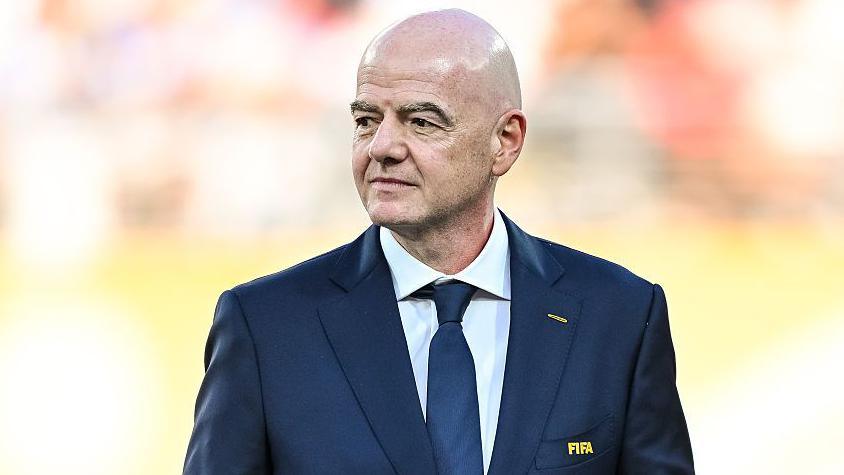
Two women sitting on UEFA’s executive committee have become the most visible faces of opposition to FIFA President Gianni Infantino as he confronts the toughest test of his ten years leading world football’s governing body, raising fresh questions about whether the sport is ready for female leadership at the top.

Laura McAllister of Wales and Lise Klaveness of Norway, the only two women on UEFA’s executive committee, have taken outspoken public stances against Infantino during a crisis triggered by the collapse of his plan to push through a private equity backed venture called FIFA Football Enterprises. The backlash against that failed proposal has opened up a broader conversation about whether football, an industry historically run by men, could realistically be led by a woman.

McAllister, who serves as a UEFA vice president, told a foreign news agency that seeing a woman elected FIFA president would be a welcome development, though she cautioned that the path there remains complicated. “I’d like to think we’re not far off having a female president,” she said, adding that she worries football still lags behind broader social progress on gender.

The conversation gained additional traction after former FIFA President Sepp Blatter publicly said this week that the time had come for a woman to lead the organization, singling out Klaveness for praise. McAllister welcomed the sentiment but pushed back on the idea that installing a female president would be straightforward. She said a woman could well be the strongest candidate available, but stressed that FIFA’s global politics do not operate as a simple meritocracy.

Her comments follow the unraveling of Infantino’s FFE plan, which fell apart after UEFA and several other regional federations mounted fierce resistance. Wales became the first national association to publicly withdraw its backing for Infantino’s re election bid, and opposition quickly spread through other parts of FIFA’s membership. Infantino was scheduled to hold an emergency meeting in Morocco on Wednesday as the fallout continued.

McAllister, whose call for national associations to boycott FIFA events won unanimous backing at UEFA’s emergency meeting last week, said the current unrest points to governance failures that run deeper than any single controversy. She said the organization appears to be approaching a genuine crisis point, if it has not reached one already.

She cited a string of episodes that have chipped away at confidence in Infantino’s leadership, including FIFA’s connections to the failed European Super League proposal, political controversies tied to the World Cup, and the federation’s decision to overturn a red card issued to American forward Folarin Balogun after President Donald Trump publicly urged Infantino to revisit the call. McAllister said these incidents collectively point to serious flaws in how FIFA governs itself.

She framed the standoff as a fight to preserve football’s core principles, tracing her outlook and Klaveness’s back to their shared history as international players for their respective countries before they moved into administrative careers, Klaveness as a lawyer and McAllister as a political scientist. She said both are driven by a strong sense of values, warning that football risks losing its essential character if those values slip away. She added that women in the sport sometimes bring a clearer focus on football’s fundamental purpose rather than getting absorbed in its business side, arguing the game belongs to everyone, from grassroots participants to elite professionals, spanning wealthy and poor countries alike, and should remain free from private capital control or political interference.

Only 10 of FIFA’s 211 member associations currently have a woman at the helm, Klaveness among them. Any serious bid for the FIFA presidency would require support stretching well beyond Europe, and McAllister urged patience rather than a rushed push for female leadership. She said building momentum gradually often proves more effective than trying to force rapid change.

Michael Payne, a former marketing director at the International Olympic Committee, said football’s governing bodies have historically trailed other sports when it comes to advancing women into leadership positions. He drew a contrast with the IOC, now led by Kirsty Coventry, noting that the Olympic movement has spent roughly two decades pursuing gender equity and has reached full parity between male and female athletes at the Games, a benchmark football’s World Cup has yet to meet.

The dispute over FIFA’s direction reflects broader tensions playing out across international sports governance, where longstanding institutions face growing pressure to modernize leadership structures and diversify decision making bodies that have remained largely unchanged for decades. As football’s global profile continues to expand, the question of who holds power at its highest levels, and how that power gets exercised, appears likely to remain a central point of contention well beyond the current crisis surrounding Infantino’s leadership.

Similar Posts

  • Europe’s Natural Gas Crisis: Why Russian Gas Sales Are Surging Again

    BRUSSELS – Europe desperately wanted to break free from Russian gas after the invasion of Ukraine. But the harsh reality on the ground is much more complicated than many politicians admit. Today, massive amounts of Russian gas are still flowing heavily into European homes and businesses. European leaders publicly pledged to cut off all these […]

  • | |

    Amber Khan’s dance video draws mixed reactions online

    Pakistani actress, television host and former model Amber Khan has found herself at the centre of an online discussion after a recent dance video from a wedding celebration attracted criticism on social media. Amber, who has remained active in Pakistan’s entertainment industry for years, has recently been sharing glimpses of her personal and professional life with followers through Instagram and YouTube. The actress has been attending wedding festivities with friends and posting pictures and videos from the celebrations. In a recent clip, Amber was seen dancing with her friends to the popular Bollywood song “Munni Badnam Hui”. The video quickly circulated among social media users, prompting a variety of reactions from viewers. While some followers appeared to enjoy the celebratory mood and praised Amber for confidently participating in the festivities, others were less impressed by the dance performance. Several commenters criticised what they considered to be the style and nature of the performance, with some describing it as inappropriate for a public social media post. A section of users also questioned whether such dance performances were suitable for family gatherings. Some comments focused on Amber’s age, while others criticised celebrities more broadly for sharing content that they believe may invite unnecessary controversy. However, social media reactions were not entirely negative. Many people argued that celebrities should be allowed to enjoy private celebrations and that a short dance video from a wedding should not become the subject of harsh personal criticism. Amber Khan has enjoyed a long association with Pakistani television and has appeared in several drama serials, including Dobara, Kismat, Mumkin, Manjhali, Muhabbat Aur Mehngai and Modern Family. She also gained wider public attention after participating in the reality show Tamasha in 2023. Apart from acting and hosting, Amber is also associated with the beauty industry and digital content creation. She continues to maintain an active presence on social media, where she regularly interacts with her followers.

  • | |

    Dr Summaiya flags 14 flaws in Mir Raza Ali post-mo…

    KARACHI: Police Surgeon Dr Summaiya Syed has identified 14 serious deficiencies in the post-mortem examination of Mir Raza Ali and formally raised concerns with the police, calling for a thorough review of the forensic findings. In a letter addressed to the Senior Superintendent of Police (SSP) District East, Dr Summaiya questioned the quality and completeness of the autopsy report prepared by Dr Osama Sheikh. She highlighted several procedural and forensic shortcomings that, according to her, could affect the accuracy and credibility of the investigation. According to the letter, no X-rays were conducted on the body before or during the post-mortem examination. Dr Summaiya stated that such imaging is a standard forensic requirement and can help identify bullet trajectories, fractures and other internal injuries that may not be visible during a routine examination. She further pointed out that no chemical analysis was carried out to determine the presence of gunpowder residue around the entry wound. The absence of such testing, she noted, limits the ability to determine the firing distance and other important forensic details. The police surgeon also stated that the internal examination of the skull and neck was not performed. She said these examinations are essential in cases involving firearm injuries, particularly when determining the exact cause of death and the path of the bullet. Dr Samia’s letter also criticised the documentation process followed during the autopsy. She said no measurement scale was used while recording the injuries, making it difficult to accurately assess the size of the wounds. She added that photographs of the injuries were not taken in accordance with accepted forensic standards. She further observed that the report did not adequately explain the bone characteristics associated with the entry and exit wounds, making the injury assessment incomplete. The letter also highlighted that the nature and stage of decomposition of the body had not been clearly described in the report. According to Dr Summaiya, documenting decomposition is important in estimating the time of death and assessing the condition of the body. Another major concern raised was the reported size of the wounds. The post-mortem report recorded the entry wound as significantly larger than the exit wound, a finding Dr Summaiya described as unusual and requiring immediate re-examination and verification. She also questioned the identification process, stating that although the face of the deceased was reportedly unrecognisable, no DNA sample was collected to scientifically confirm the identity of the body. Dr Summaiya urged the investigating authorities to carefully review the post-mortem findings and address the identified shortcomings to ensure that the forensic investigation meets professional standards and supports a fair and transparent legal process.

  • | | |

    Spanish royals captivate with Mediterranean charm

    Spain’s royal family has officially begun its annual summer holiday with a traditional public appearance in the Mediterranean island of Mallorca, where members of the royal household showcased relaxed yet elegant fashion that reflected the country’s coastal culture. Every August, Spain’s monarchs spend part of their summer in Palma de Mallorca, the capital of the Balearic Islands. The visit begins with an official reception at the historic Marivent Palace, where the royal family meets local government officials, community leaders and representatives from across the islands before starting their private vacation. This year’s gathering brought together King Felipe VI, Queen Letizia, their daughters Crown Princess Leonor and Infanta Sofía, as well as the King’s mother, Queen Sofía. The appearance highlighted the close relationship between Spain’s monarchy and the Balearic Islands while offering the public a glimpse of the family’s more casual summer style. Unlike the formal attire usually seen during official state events, the royal family opted for lightweight outfits suitable for the warm Mediterranean weather. Queen Letizia, widely regarded as one of Europe’s most stylish royals, wore a flowing white dress by Spanish designer Sybilla. The elegant outfit featured soft pleats and subtle striped details, giving it a simple yet sophisticated look. She paired the dress with gold high-heeled sandals, while King Felipe chose a light blue shirt and neutral trousers, keeping his appearance relaxed. Their elder daughter, Crown Princess Leonor, selected a sleeveless orange two-piece outfit by Spanish fashion label Thinking Mu. The colourful ensemble featured artistic shades of blue, yellow and orange, inspired by Mediterranean sunsets. She completed her look with gold bracelets and naturally styled hair. Meanwhile, Infanta Sofía wore a long pastel-coloured maxi dress decorated with soft pink, cream and lavender tones, creating a fresh summer appearance. The youngest royal’s outfit complemented the vibrant floral caftan worn by Queen Sofía, whose multicoloured dress reflected the cheerful atmosphere of the Mediterranean season. The annual reception is considered one of the final public engagements for the Spanish royal family before they begin their private summer holiday. The event has become a long-standing tradition and attracts significant public and media attention each year, with many observers focusing not only on the royal family’s activities but also on their fashion choices. For many Pakistanis unfamiliar with Spain’s monarchy, the country’s royal family plays a largely ceremonial constitutional role similar to several other European monarchies. While the elected government manages day-to-day political affairs, the King serves as the country’s head of state and represents Spain during official ceremonies, national events and international engagements.

  • | |

    Another Reko Diq-Sized mining project in Pakistan,…

    ISLAMABAD: The United States has expressed strong confidence in Pakistan’s mineral sector, with a senior US Embassy official revealing that the Trump administration is prepared to support another mega mining project on the scale of  to invest in Pakistan despite security concerns, viewing the country’s vast mineral wealth as strategically important for future global industries. During a background briefing with journalists on Wednesday, the embassy official said Washington considers Pakistan a key partner in the global race for critical minerals that are essential for advanced technologies, clean energy, artificial intelligence, semiconductors and defence manufacturing. According to the official, the US government is encouraging American investors to explore Pakistan’s untapped mineral resources, ranging from large-scale copper and gold projects to smaller mining ventures worth only a few million dollars. US Prepared to Finance Another Mega Project The official said the US administration is ready to support another project comparable to the multibillion-dollar Reko Diq development if geological surveys and feasibility studies demonstrate strong commercial potential. He added that financing support could be extended through US institutions such as the Export-Import (Exim) Bank and the Development Finance Corporation, both of which are playing a growing role in securing global supply chains for critical minerals. The official noted that American companies are not only interested in major mining investments but are also examining opportunities to acquire, develop and expand smaller mining operations across Pakistan. Reko Diq Progress Continues Despite Delays Discussing the Reko Diq copper and gold project, the official acknowledged that work is progressing, although at a slower pace than initially anticipated. He explained that project costs are currently being reassessed, after which developers will return to financiers to finalize the remaining funding package. The first phase of the Reko Diq project is estimated to cost around $7.7 billion, while the US Exim Bank has already offered $1.25 billion in financing. However, the overall financial structure remains under discussion. The project has experienced delays due to rising construction costs and security concerns in Balochistan, prompting project stakeholders to revise cost estimates more than once. Earlier this year, Barrick Gold, which owns a 50 percent stake in the project, also reviewed development timelines because of increasing costs and security-related challenges. Major Economic Benefits Expected The embassy official said Reko Diq has the potential to transform Pakistan’s economy once it becomes fully operational. According to the estimates shared during the briefing, the project could generate nearly $2 billion in annual free cash flow. Of this amount, around $500 million would go directly to the Government of Balochistan, while another $500 million would benefit Pakistan’s state-owned enterprises. The official further stated that Pakistan’s mining sector currently contributes roughly 3 percent to the country’s economy, while Reko Diq alone could increase national GDP by approximately 0.5 percentage points, highlighting its significance for long-term economic growth. Critical Minerals Becoming Strategic Priority The US official emphasized that critical minerals have become a top strategic priority for Washington as demand continues to rise across technology, renewable energy and defence sectors. Pakistan possesses commercially attractive reserves of copper, antimony, tungsten and several other minerals considered essential for future industries. He said American companies believe Pakistan has enormous untapped potential, particularly as global demand for copper is expected to rise sharply over the coming decades. The official added that US firms are actively seeking long-term supply agreements for minerals extracted from Pakistani mines, while some investors are interested in purchasing and developing smaller mining assets. Investment Opportunities Across Pakistan Besides Balochistan, American investors are also exploring mineral opportunities in Khyber-Pakhtunkhwa, particularly for copper deposits, while rare earth mineral prospects in Gilgit-Baltistan have also attracted attention. The official said the United States is searching globally for around 60 critical minerals needed for emerging technologies, many of which are found in Pakistan. He noted that several companies have already begun exploration and extraction activities in different regions of the country. Security Remains the Biggest Challenge Despite strong investment interest, the official acknowledged that security remains one of the most significant obstacles facing mining projects in Pakistan. He said US companies fully understand the risks associated with operating in regions such as Balochistan and Khyber-Pakhtunkhwa but remain willing to invest if appropriate security arrangements are provided. The official stressed that the Pakistani government should continue strengthening security measures and facilitating investors to ensure long-term success of mining projects. He added that American companies are encouraged to partner with local firms, which possess valuable experience in navigating operational and security challenges in remote mining areas. US Calls for Transparent Investment Environment The embassy official also urged Pakistan to maintain a transparent, predictable and competitive investment climate to attract greater foreign investment into the mineral sector. He noted that Pakistan’s participation in the US Critical Minerals Initiative earlier this year reflects growing cooperation between the two countries in securing future mineral supply chains. According to the official, if exploration and investment continue at the current pace, Pakistan’s mining industry could emerge as one of the country’s strongest economic sectors over the next 10 to 20 years, creating employment, increasing exports and significantly boosting national revenues.

Leave a Reply

Your email address will not be published. Required fields are marked *