

thai automotive associations

Thai Automotive Associations Call For 32% Import Duty On Chinese EVs

BANGKOK, Thailand — Thailand’s automotive and auto parts industry associations are urging the government to impose a 32% import duty on Chinese battery electric vehicles (BEVs), warning that a potential surge in imports following the expiration of current incentive programs could severely undermine the country’s domestic manufacturing sector and supply chain.

Thai Government Pushes Plan to Get 300,000 EVs on the Road

The call to action comes as industry leaders express concern about the long-term implications of the EV3.5 scheme, a government incentive program running from 2024 to 2027 that offers tax cuts and subsidies to automakers in exchange for investment in BEV assembly plants within Thailand. Under the scheme, participating companies must maintain a production-to-import ratio, requiring them to produce two BEVs locally for every one imported between 2024 and 2025, with the ratio increasing to three locally produced vehicles for every imported unit by 2027.

However, executives from the Electric Vehicle Association of Thailand (EVAT) and nine other industry groups fear that Chinese automakers may scale back or halt local production entirely once they have satisfied the minimum requirements under EV3.5, potentially flooding the Thai market with imported vehicles while bypassing domestic manufacturing commitments.

“Once Chinese manufacturers meet their obligations under the incentive scheme, there is a real risk they could shift strategy and prioritize imports over local production,” warned an EVAT executive who requested anonymity due to the sensitivity of ongoing policy discussions. “Such a move would deal a serious blow not only to Thailand’s BEV manufacturing sector but also to the extensive network of auto parts makers and suppliers that depend on steady production volumes.”

To address these concerns, EVAT and allied associations plan to submit a formal proposal to the government calling for a 32% import duty on Chinese BEVs. While Chinese automakers currently benefit from zero tariffs on BEV imports under the ASEAN-China Free Trade Agreement, imports remain subject to other duties depending on vehicle classification. Companies participating in the EV3.5 scheme receive additional reductions on certain duties, providing them with a competitive advantage in the Thai market.

Industry analysts argue that without stronger protective measures, Thailand’s auto parts sector—which comprises approximately 1,700 companies under the Federation of Thai Industries—faces significant vulnerability. Most of these firms are small or medium-sized original equipment manufacturers categorized as tier 2 and tier 3 suppliers, which typically provide components to larger tier 1 producers that are often subsidiaries of global carmakers.

“In a market dominated by large foreign manufacturers, our smaller suppliers are the first to suffer when production shifts overseas,” said a representative from the Thai Auto Parts Manufacturers Association. “Protecting local content requirements isn’t just about economics; it’s about preserving jobs and industrial capability.”

Beyond import duties, the associations are also urging the government to tighten local content requirements for electric vehicle production. Under current Board of Investment guidelines, global EV producers receiving investment incentives must source 40% of their EV components domestically. The industry groups are proposing to raise this threshold to 80%, arguing that higher local content would strengthen Thailand’s supply chain resilience, foster technological development, and safeguard employment across the manufacturing ecosystem.

“Thailand has built a robust automotive ecosystem over decades,” noted a Bangkok-based industry analyst who requested anonymity. “The transition to electric vehicles presents both opportunity and risk. If we don’t structure our policies carefully, we could find ourselves assembling vehicles with imported parts while losing the deeper industrial capabilities that have defined our sector.”

Concerns over sluggish domestic car sales have already prompted the National EV Policy Committee to ease certain production rules. Under a revised framework, each BEV produced for export now counts as 1.5 units toward the quota, providing automakers with greater flexibility in meeting their obligations. However, industry leaders remain wary that such adjustments, while helpful in the short term, may not adequately address the strategic positioning of Chinese manufacturers in the regional market.

“A flood of Chinese EVs would hurt local BEV manufacturing, auto parts makers, and suppliers across the board,” the EVAT executive emphasized. “We are hoping to submit and discuss these proposals with the government as soon as possible to ensure that Thailand’s automotive transition benefits our domestic industry.”

The associations plan to meet with officials from the Ministries of Finance and Industry to present their case and explore potential policy adjustments. Key discussion points are expected to include the structure and timing of import duties, mechanisms for verifying local content compliance, and strategies for supporting small and medium-sized enterprises during the industry’s electric transition.

Thailand has long positioned itself as the “Detroit of Asia,” serving as a major production hub for conventional vehicles and increasingly for electric models. The country’s strategic location, established supply chains, and government incentives have attracted significant investment from global automakers seeking to serve both domestic and export markets. However, the rapid rise of Chinese EV manufacturers—backed by substantial state support and advanced battery technology—has introduced new competitive dynamics that challenge traditional industry structures.

Government officials have not yet issued a formal response to the associations’ proposal, though sources familiar with policy discussions indicate that the Ministry of Finance is reviewing various options for balancing consumer access to affordable electric vehicles with the need to protect domestic industrial capacity.

“For policymakers, the challenge is finding the right equilibrium,” said a former trade official who spoke on condition of anonymity. “Too much protection could raise prices for consumers and slow EV adoption; too little could erode the industrial base that has supported Thailand’s economy for generations.”

Consumer advocacy groups have expressed mixed views on the proposed import duties. While some acknowledge the importance of protecting local jobs, others worry that higher tariffs on Chinese EVs could limit affordability and slow the transition to cleaner transportation.

“Electric vehicles offer significant environmental and economic benefits, but only if people can actually afford them,” said a representative from a Thai consumer rights organization. “Any policy discussion should consider both industrial protection and accessibility for everyday buyers.”

As the debate unfolds, Thailand’s approach to managing the electric vehicle transition is being watched closely by neighboring countries facing similar questions about industrial policy, foreign investment, and technological sovereignty. The outcome could influence regional strategies for balancing open markets with domestic development goals.

For now, industry associations remain focused on advancing their proposals through official channels. “We are committed to constructive dialogue with the government,” the EVAT executive stated. “Our goal is not to block competition but to ensure that Thailand’s automotive transformation creates lasting value for our workers, our companies, and our economy.”

Chinese EVs Dominate Bangkok Motor Show

Further updates regarding government responses, policy deliberations, and industry negotiations are expected as discussions between automotive associations and ministry officials proceed.

-Thailand News (TN)
Similar Posts

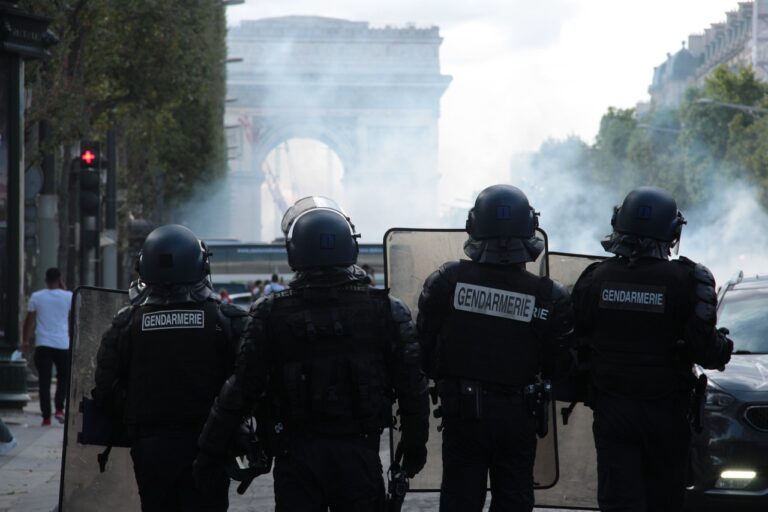
  • PSG Champions League Celebrations Marred By Violence And Vandalism In Paris

    PARIS, France — Celebrations following Paris Saint-Germain’s Champions League victory on Saturday descended into violence and vandalism across the French capital, prompting a significant law enforcement response and resulting in almost 800 arrests nationwide, according to official statements from French authorities. More than 700 arrested on the fifth night of riots in France, unrest spreads […]

  • | |

    Acid traces found as Mir Raza probe widens

    The Sindh government has decided to establish a judicial commission to investigate the death of 25-year-old businessman Mir Raza Ali in Karachi. Sindh Home Minister Zia-ul-Hassan Lanjar said the decision was taken during a meeting with Chief Minister Murad Ali Shah. He said the investigation would now be conducted with the involvement of judges from the Sindh High Court. Speaking about the case, Lanjar said the government wanted to ensure justice for Mir Raza’s family. He expressed sympathy with the family and said authorities were committed to uncovering the facts surrounding the young businessman’s death. The minister also confirmed that the police investigation team had already been changed. Deputy Inspector General Amir Farooqui is heading the new team. According to Lanjar, the family has also been given the option of suggesting police officers who could be included in the investigation team. He said authorities had so far found no evidence indicating the involvement of any high-profile personality. Lanjar said the formation of a judicial commission had become necessary because of questions surrounding the investigation and conflicting findings related to the case. The decision comes after a second post-mortem examination reportedly raised serious questions about the circumstances of Mir Raza’s death. Preliminary findings indicated that he had sustained a gunshot wound from behind, challenging earlier assumptions about the case. The minister also addressed concerns regarding the initial post-mortem examination. He said doctors responsible for the examination should have immediately informed their superiors if they believed there were shortcomings in the report. Meanwhile, a new development has emerged in the investigation. According to forensic sources, there was an alleged attempt to damage or burn Mir Raza’s body with acid. Sources said traces of acid were reportedly found on the shirt worn by the 25-year-old businessman. Investigators are expected to examine the finding as part of the wider forensic inquiry. Mir Raza’s body was discovered in bushes in Karachi’s Gulistan-i-Jauhar area after he went missing. His family has maintained that he was kidnapped, tortured and murdered. The latest developments have intensified questions surrounding the circumstances of his death. The proposed judicial commission is expected to examine the available forensic, medical and investigative evidence and determine what happened to the young businessman.

  • |

    Jayden Seales strikes early to put Pakistan in tro…

    West Indies pacer Jayden Seales struck twice before lunch to leave Pakistan reeling in pursuit of 211 on day four of the first Test at the Brian Lara Cricket Academy on Tuesday. Imam-ul-Haq made five while Azan Awais could only manage three, leaving Pakistan at 21-2 inside five overs. Salman Ali Agha could not open his account and was pinned lbw by Seales, reducing Pakistan to a dire 25-3. Babar Azam and Mohammad Rizwan then negotiated the remainder of the session to steady the innings. Earlier, Mohammad Abbas produced a superb bowling performance, taking a five-wicket haul to bowl out West Indies for 181 in their second innings after they had resumed the day on 126-7. The home side’s tail frustrated Pakistan early on, with Shamar Joseph and Kemar Roach adding 28 more runs in four overs during a 61-run stand that took West Indies’ lead past the 180-run mark. Joseph top-scored with a useful 38 off 27 balls, striking four sixes and a four, before Mohammad Ali eventually dismissed him with a slower delivery to break the partnership. The West Indies tail continued to frustrate Pakistan as Roach added another 15 runs with Jomeel Warrican to take the lead closer to 200. Mohammad Abbas then snared Roach, who made 18, to claim his fourth wicket before bowling Warrican for 14 to complete his seventh five-wicket haul in Test cricket. For Pakistan, Abbas returned figures of 5 for 22 in 15.5 overs, while Mohammad Ali and Khurram Shahzad claimed two wickets apiece. With Pakistan’s chase off to a disastrous start, the pressure now falls on Babar Azam and Mohammad Rizwan to rebuild the innings and guide their team towards the 211-run target on a challenging pitch.

  • | |

    Pakistan stands firmly with Saudi Arabia: PM

    Prime Minister Shehbaz Sharif has reaffirmed Pakistan’s full support for Saudi Arabia during a telephone conversation with Saudi Crown Prince Mohammed bin Salman. The two leaders discussed the regional security situation, recent developments in the Middle East and the importance of maintaining peace and stability. During the conversation, the prime minister strongly condemned the recent Houthi attacks on Saudi oil tankers in the Red Sea. He described the attacks as unacceptable and said they were a clear violation of international law. He added that such actions pose a serious threat to international maritime security, commercial shipping and the free movement of global trade. Shehbaz Sharif said attacks targeting commercial vessels not only endanger regional stability but also threaten the global economy by disrupting vital shipping routes. He stressed that the international community must work together to ensure the safety of maritime trade and prevent further escalation in the region. The prime minister reaffirmed Pakistan’s complete solidarity with Saudi Arabia. He said he, Field Marshal Syed Asim Munir and the people of Pakistan stand firmly with the Saudi leadership and the brotherly people of the Kingdom during this challenging period. He emphasized that Pakistan fully supports Saudi Arabia’s efforts to safeguard its security and territorial integrity. Shehbaz Sharif also reiterated Pakistan’s unwavering commitment to the sovereignty, independence and prosperity of Saudi Arabia. He said the deep-rooted relationship between Islamabad and Riyadh is based on shared faith, mutual respect and decades of close cooperation in political, economic and security matters. Saudi Crown Prince Mohammed bin Salman thanked Pakistan for its consistent support and appreciated the strong brotherly ties between the two countries. He acknowledged Pakistan’s continued commitment to regional peace and stability. The prime minister conveyed his best wishes to King Salman bin Abdulaziz, Custodian of the Two Holy Mosques, and expressed hope for his continued good health and well-being. Shehbaz Sharif also stressed that Pakistan would continue cooperating with Saudi Arabia and the international community to promote peace, security and stability across the Middle East. He emphasized the importance of ensuring uninterrupted maritime traffic through the Red Sea and the Strait of Hormuz, saying these waterways are critical for global trade, energy supplies and international economic stability.

  • | |

    Karachi weather to remain hot and humid, drizzle l…

    The weather in Karachi is expected to remain hot and humid over the next 24 hours.The sky will remain partly cloudy during the period. According to the Meteorological Department, some parts of the city may receive light drizzle. The possibility of scattered drizzle has been forecast for the next 24 hours.The weather conditions are expected to remain largely warm despite the possibility of rain. The department said the maximum temperature in Karachi could rise to between 33°C and 35°C.Sea breezes are also continuing to blow across the city. Their speed has been recorded at around 18 kilometres per hour. The humidity level in Karachi has been recorded at 78 percent. The high humidity is likely to make the weather feel warmer and more uncomfortable. The Meteorological Department also reported the minimum temperature during the past 24 hours. The lowest temperature recorded in the city was 28.5°C.Meanwhile, weather experts have said that rainfall could begin in most parts of Sindh by August 2. The expected rain may bring some relief from the ongoing hot and humid conditions. However, weather conditions may vary across different parts of the province.Residents of Karachi are advised to remain prepared for changing weather conditions. People should also take precautions against the heat and high humidity, particularly during the warmer hours of the day. The weather department will continue to monitor the situation. Further updates are expected as the weather system develops.

  • Thai Army Accuses Cambodia of Using Ancient Temple as Military Base

    SURIN – The Thai army has accused Cambodian forces of using a historic border temple as a military base to launch operations against Thailand, in what it says is a violation of international law. The Second Army Region, responsible for security along the Cambodian border, stated that Cambodian troops equipped with heavy weapons have been […]

Leave a Reply

Your email address will not be published. Required fields are marked *