thai teen kills
|

Thai teen kills 7 in rampage at home and school before shooting himself

BANG KRUAI, Thailand – A Thai teenager killed at least five people and himself at a school outside Bangkok on Friday after fatally shooting his grandparents, police said, in the Southeast Asian nation’s worst mass killing since 2022.

Those killed at the school were all teachers and staff and police said the 14-year-old shooter, a student, fired at least 26 bullets using a gun that belonged to his grandfather. An additional 34 rounds were found, police said.

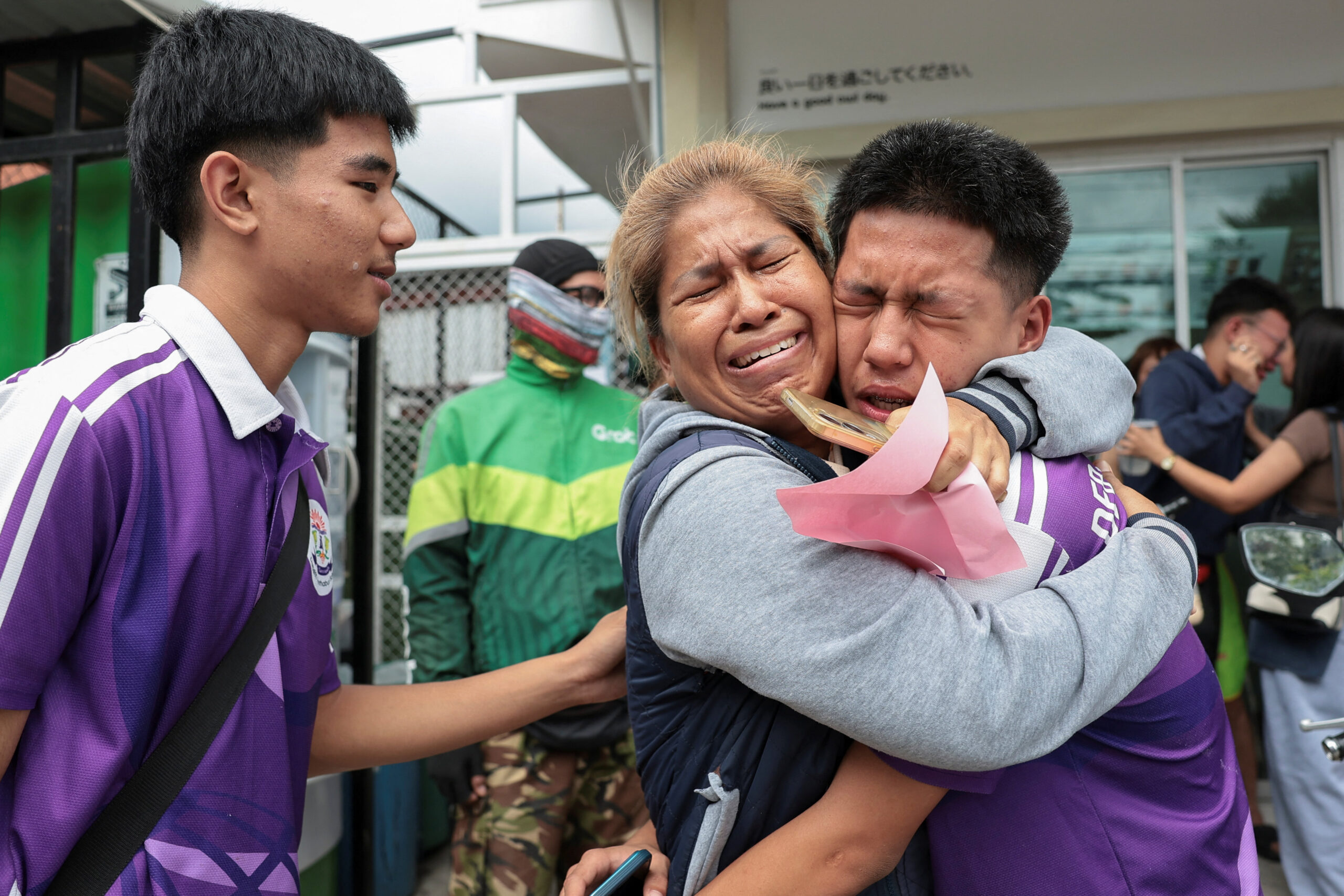
Students streamed out of the Debsirin Nonthaburi School, on the capital’s northwestern outskirts, as the wounded were loaded on to ambulances and teachers hugged each other and cried. In photos circulated by emergency workers, one person is seen lying down on a stretcher outside an ambulance, while another is attended to by a medic.

Police said 23 people were wounded in the incident, the latest in a succession of high-profile shootings in recent years in Thailand, which has by far the largest number of guns in civilian possession in Southeast Asia, and among the most per capita in Asia, according to a 2017 estimate by the Small Arms Survey.

One 18-year-old student told Reuters he initially thought there were firecrackers going off or someone banging an object.

“I didn’t think it was a gun at first,” he said. “There were many shots: bang, bang, bang. Then it went quiet. Then it started again.”

Second school shooting

Education Minister Prasert Jantararuangtong told Reuters that both teachers and students were among the casualties. The motive for the shooting was being investigated, he told reporters.

It is the second school shooting in Thailand this year after a teacher died and a student was injured in the south of the country in February.

Emergency worker Kiatikhun Verapongpradith, 47, described arriving as the shooting was ongoing and his team treated students with injuries in the back, chest and arms. They found a male teacher lying dead on an upper floor of the school, and in another room they found a female teacher with wounds in her chest and arm.

He said he was called to treat the teenage shooter after hearing a final shot.

“We rushed up and found that the perpetrator had shot himself in the right side of the head and collapsed. When we got up there, we checked his pulse, he still had one, so we started CPR.”

In the 2025 academic year, the school had an enrolment of around 3,100 students and 147 teachers, according to district authorities.

“This is terrible for something like this to happen,” Prime Minister Anutin Charnvirakul told reporters. “I’m sad for those who died and sad for something like this to happen in our country.”

History of shootings

Gun ownership and gun violence are not uncommon in Thailand, which has seen a series of deadly shootings in the past six years, with children among the victims.

Thailand’s worst mass killing by a single perpetrator in its recent history took place in 2022, when a former policeman ran amok in a three-hour gun-and-knife attack in the northeast that killed 36 people including 22 children stabbed as they slept at a daycare centre.

A gunman killed five people including security guards and a vendor at a Bangkok market in July 2025 before turning the gun on himself, while a teacher died in the southern city of Hat Yai in February this year when a shooter opened fire at a school where she worked.

In 2020, a soldier killed 29 people in a shooting rampage in Nakhon Ratchasima. And in 2023, a 14-year-old used a modified handgun to kill two people and wound five others at a luxury Bangkok shopping centre.

After the 2023 shooting, Anutin, who was then serving as interior minister, ordered a raft of gun control measures, including a short-term ban on new licenses, import restrictions, and banning of people under 20 years from shooting ranges.

Longer-term measures also included a medical certificate assessing the mental health and psychological condition of gun owners as well as a specified validity period for some gun licenses.

Thailand had an estimated 10.3 million firearms in civilian possession, equating to around 15 guns per 100 residents, the highest rate in Southeast Asia by a wide margin, according to a 2017 estimate by the Small Arms Survey. – Rappler.com


Similar Posts

  • |

    Australia, Spain secure victories in Hockey World Cup 2026

      WAVRE: Australia began their FIH Hockey World Cup 2026 campaign with a convincing 3-1 victory over Ireland in Pool C at the Belfius Hockey Arena on Sunday. The Australian side, ranked third in the world, produced a strong attacking display in the opening half and established a commanding three-goal advantage before the interval. Joel Rintala was the standout performer for Australia, scoring twice, while Blake Govers also found the net through a penalty corner. Australia opened the scoring when Rintala successfully converted an opportunity to beat Irish goalkeeper Jamie Carr. The early goal gave Australia confidence, and they continued to apply pressure on Ireland’s defence. Rintala then struck again to double Australia’s advantage and put Ireland under increasing pressure. The Australians continued their dominance before half-time, with Blake Govers adding another goal from a penalty corner. His successful conversion gave Australia a comfortable 3-0 lead at the break and left Ireland facing a difficult task in the second half. Ireland returned after the interval with a much more aggressive approach. The Irish players adopted a higher press and began creating more opportunities around the Australian circle. Luke Witherow came close to reducing the deficit, but Australian goalkeeper Ash Thomas produced an excellent save to deny him. Ireland eventually managed to get on the scoresheet when Ali Empey converted a rebound following a penalty corner. The goal gave the Irish side renewed hope of making a comeback and changed the momentum of the contest. However, Australia’s defence remained composed under pressure. Ireland continued searching for additional goals and created several late opportunities, but Thomas stood firm in front of the Australian goal. With less than three minutes remaining, the goalkeeper made three important saves to prevent Ireland from narrowing the gap further. Australia successfully protected their 3-1 advantage until the final whistle, securing an important victory in their opening Pool C fixture. In the other Pool C match, Spain also made an impressive start to their World Cup campaign by defeating South Africa 3-1. Spain, known as the Redsticks, immediately took control of the contest and put South Africa under considerable pressure. Their attacking efforts produced two goals in quick succession during the first half. Forward Marc Reyne opened the scoring in the 11th minute before Jose Basterra doubled Spain’s advantage just one minute later. Spain continued to dominate possession and maintain pressure on their opponents. Basterra added his second goal towards the end of the second quarter, giving Spain a commanding 3-0 lead at half-time. South Africa fought back after the break and managed to score through Mustapha Cassiem in the third quarter. The goal provided some encouragement, but Spain remained in control and prevented South Africa from producing a stronger comeback. Despite South Africa’s efforts in the latter stages, Spain comfortably held on to their advantage and completed a 3-1 victory. With both Australia and Spain winning their opening matches, Pool C has begun with strong performances from the two sides as the competition for the knockout stages intensifies.

  • | |

    Shein turns to China as Hong Kong IPO nears

    Fast-fashion giant Shein is preparing to make its stock market debut in Hong Kong after years of efforts to list in the United States and Britain, marking a significant shift in how the company presents its relationship with China. The company is expected to raise around $1.7 billion through its Hong Kong initial public offering, with a valuation of about $26.5 billion. That figure is considerably below the company’s valuation in 2022. Shein had previously sought to establish itself as a global company. It moved its headquarters to Singapore in 2021 and promoted plans to expand manufacturing and operations in countries including Brazil, Türkiye and parts of Europe. However, its attempts to secure a Western listing faced regulatory and political obstacles. Chinese authorities were also reportedly involved in blocking earlier efforts to list in New York and London. After shifting its focus to Hong Kong in 2025, Shein founder Sky Xu increased his engagement with Chinese officials and became more involved in regulatory and capital-market discussions inside the country, according to people familiar with the matter. Xu also made a rare public appearance at a business forum in Guangdong earlier this year, where he announced plans for Shein to invest $1.5 billion in the province. He said the company would deepen its presence in Guangdong and develop its smart supply-chain system while contributing to the region’s fashion industry. Shein also opened a research and development centre in Nanjing, the eastern Chinese city where the company was founded in 2012. These moves helped reinforce the company’s economic links with China at a time when Beijing has been paying close attention to companies with major overseas operations. Officials in Guangdong also reportedly highlighted Shein’s contribution to employment and domestic economic activity when engaging with central authorities. The company has sought to emphasise that its main business is overseas rather than in China. Shein does not market its extremely low-priced products to Chinese consumers, allowing it to distance itself from the intense competition among domestic e-commerce platforms. Shein has instead argued that its international operations benefit China by generating foreign currency and supporting Chinese manufacturing and supply chains. The company’s Hong Kong prospectus describes China as the foundation of its global logistics and fulfilment network. Nearly 80 per cent of Shein’s workforce is based in mainland China. The shift comes after growing difficulties in Western markets. In the United States, lawmakers raised concerns over Shein’s supply chains and called for stronger assurances that its products were not linked to forced labour. The company has also faced scrutiny in Europe over competition, product safety and items offered through its online marketplace. At the same time, changes to low-value import rules in the US and Europe have created additional challenges for Shein’s business model, which relies heavily on inexpensive shipments directly to consumers. Analysts say the company’s experience demonstrates how geopolitical tensions are increasingly influencing corporate decisions and stock-market listings.

  • |

    UK faces potential red weather alerts as fifth heatwave of 2026 brings 36C temperatures

    The United Kingdom is preparing for a fifth heatwave this summer, with temperatures projected to reach 36C and prompting the Met Office to consider issuing rare red weather alerts. The extreme heat poses severe risks of disruption across railway lines and power networks, whilst compounding growing concerns over drought and food security. Following a temporary drop in temperatures on Monday, heat levels across England and Wales are expected to climb rapidly. Sunday marked the 35th day in 2026 where British temperatures exceeded 30C, hitting a peak of 30.6C. Met Office meteorologist Tom Morgan indicated that mid-30s temperatures will become widespread on Wednesday and Thursday, with Thursday currently tracking as the hottest day of the week and holding a small chance of exceeding 36C. The prolonged period of dry conditions has left half of England and Wales grappling with near-drought environments, and officials warn that further regions could soon be declared affected zones. Alongside potential infrastructure damage, authorities are highlighting risks to health and agricultural output. The Met Office confirmed that formal amber and red warnings are under active consideration as the situation develops. Meanwhile, the UK Health Security Agency has put yellow heat-health alerts in place across the East Midlands, West Midlands, South East, South West, East of England, Yorkshire and the Humber, and London. These health advisories remain active through Tuesday evening, with potential extensions if extreme conditions persist.

  • |

    Romanian forces execute controlled detonation on Danube to safeguard nuclear energy supply

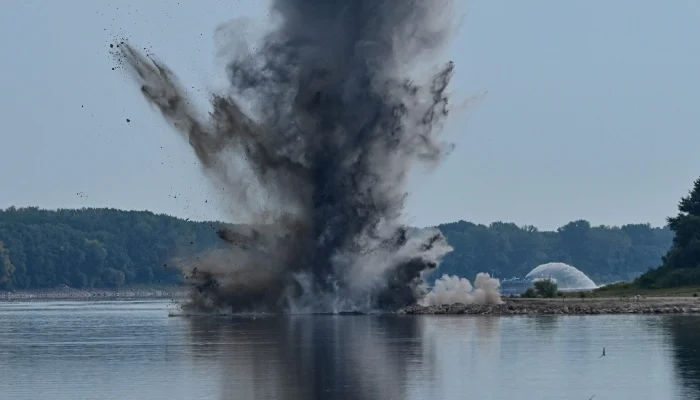
    Romanian naval forces detonated 180 kilogrammes of explosives to clear a massive rock obstruction in the drought-stricken Danube River, attempting to channel essential cooling water towards the country’s sole remaining functional nuclear reactor at Cernavoda. The blast was designed to clear the riverbed and facilitate the construction of a temporary dam to boost water volume heading to the facility. The intervention follows Romania’s declaration of a nationwide state of emergency for August after record-low water levels forced one reactor to shut down entirely. Romanian Defence Minister Radu Miruta defended the costs of the operation, emphasising that maintaining operational capacity at the facility even for a few additional days far outweighs the financial expenditure. Regional energy strains are mounting simultaneously in neighbouring Hungary, where severe water depletion at the Paks nuclear power station has drastically cut output. Prime Minister Peter Magyar warned that a complete plant shutdown could occur next week without weather relief, urging regional coordination and energy restraint to avoid a wider crisis as low rainfall continues across Eastern Europe.

  • | | | |

    US launches strikes on Iran after attack on Jordan base

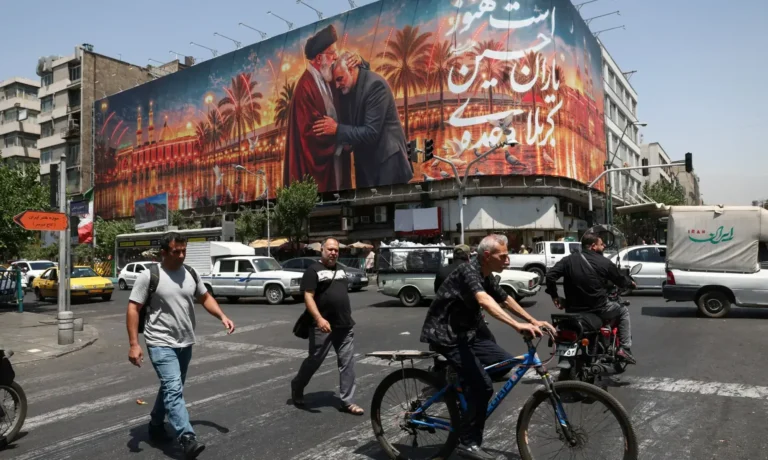
    WASHINGTON/TEHRAN: Tensions between the United States and Iran have sharply escalated after Washington launched strikes against Iranian targets following a ballistic missile attack on a US military base in Jordan. US Central Command said its forces began the strikes at around 8pm Eastern Time on Wednesday. CENTCOM described the operation as a “powerful response” to attempted attacks against American forces in the Middle East. The strikes came after Iran’s Islamic Revolutionary Guard Corps claimed responsibility for operations targeting US military assets in Jordan. The IRGC said it had targeted an airbase and a command centre. US President Donald Trump had earlier warned that Iran would face a strong military response. Trump said the United States would hit Iran “very hard” after the attack, despite reports that US forces had intercepted the missiles. The latest developments have raised fears of a wider regional conflict. Military activity has also been reported across southern Iran. Iranian state broadcaster IRIB reported explosions in Bushehr province, home to the country’s only nuclear power plant. Several explosions were also reported on Qeshm Island. Iranian media said a missile may have struck a residential area, although details about casualties were not immediately available. Other explosions were reported at several locations in southern Iran following the launch of the US operation. The conflict has also intensified around Iraq. Baghdad condemned US and Saudi strikes that reportedly killed members of Iraq’s Popular Mobilisation Forces. The group said at least 20 of its fighters were killed and 32 others were wounded. Iranian media separately reported that four Iranian advisers were killed in the strikes. The situation around the Strait of Hormuz has also become increasingly tense. Iran’s Revolutionary Guard said its naval forces targeted three oil tankers that were allegedly approaching the strategic waterway using routes not approved by Tehran. Iran has rejected an Omani proposal concerning shipping routes through the Strait of Hormuz. Tehran has also discussed imposing charges on vessels using the strategically important passage. Iranian officials have insisted that mine-clearing operations in the waterway should be carried out by Iranian forces. Tehran has warned that any European involvement could turn those forces into potential targets. The latest escalation comes only days after Trump said Washington was holding what he described as positive talks with Iran. He had also warned that military action could resume if Tehran failed to show seriousness in negotiations. Analysts have warned that continued retaliation could create a dangerous cycle of escalation. They say repeated strikes could eventually expand beyond military targets and increase the risk to civilians and critical infrastructure.

  • |

    West Bank village mourns lost harvest as violence halts annual fig festival

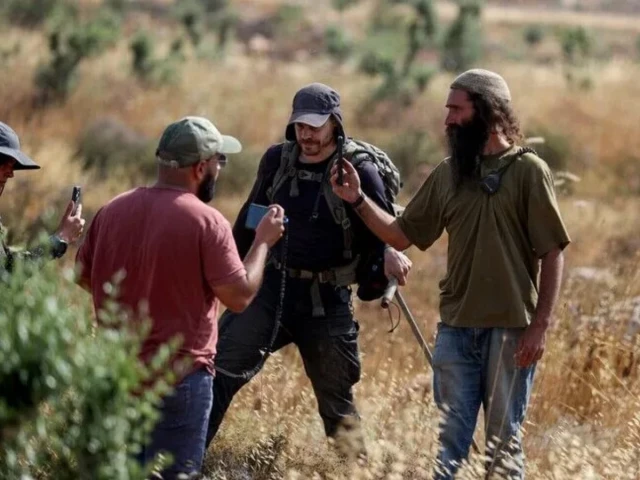
    The Palestinian village of Tel in the northern occupied West Bank should have been celebrating one of its busiest and most cherished times of the year. Residents had spent weeks preparing for the annual fig harvest and a festival expected to attract visitors from across the region. Instead, the village has been left grieving after a deadly confrontation forced organizers to cancel the event and replaced the festive atmosphere with mourning. The violence erupted after an attack involving Israeli settlers last week. The clashes that followed resulted in the deaths of four Palestinians and two Israeli settlers, leaving the community in shock. Black flags now hang where festival decorations were meant to be displayed, while many orchards remain out of reach because of an increased Israeli military presence and ongoing restrictions in the area. Tel village council head Walid Zaidan said the tragedy has deeply affected the community of around 7,000 people. According to him, the village has lost its usual energy and sense of joy after the deaths of four young residents in a single day. He said the emotional impact is visible throughout the village, where families continue to cope with grief and uncertainty. Zaidan said residents had not been seeking confrontation but were trying to protect their homes after repeated attacks by Israeli settlers. He recalled an earlier incident in which the home of a local resident, Sohaib Ramadan, was set on fire. The family managed to escape only moments before the house was completely destroyed. He said many villagers feared another similar attack and went out to defend their neighborhood when violence broke out again. The damage has extended beyond the loss of life. Zaidan said Israeli bulldozers entered farmland and cleared large sections of agricultural land. Initial estimates suggest that around 2,000 dunams, or roughly 500 acres, have been affected. Local officials have been unable to inspect the full extent of the destruction because access to the area remains restricted by Israeli forces and settlers. Residents also claim that a new settlement outpost is being established on the land. At the same time, Israeli forces have carried out arrests and questioned dozens of Palestinians in the village, adding to growing tensions. For the people of Tel, farming is more than an economic activity. Fig trees, olive groves and prickly pear plants have long been central to the village’s identity and way of life. Tel is known throughout the occupied West Bank for producing several varieties of figs, drawing visitors each harvest season to buy fresh fruit and locally made products. Plans for a three day festival featuring figs, dairy products, cheeses and other local goods were abandoned after the violence. Farmers who own nearby livestock and poultry farms have also struggled to reach their animals because roads remain blocked, raising concerns about the welfare of their livestock. Local resident Omar Ishtayeh said the village has depended on agriculture for generations, but increasing restrictions and repeated settler attacks have made farming more difficult. He said orchards that once represented prosperity now reflect the hardships facing local families. With the fig season already underway, many farmers fear the fruit will spoil before they are able to safely return to their land. Palestinian officials argue that the events in Tel are part of a wider rise in settler violence across the occupied West Bank. According to the Palestinian Colonisation and Wall Resistance Commission, thousands of attacks targeting Palestinians and their property were recorded during the first half of 2026. These incidents included assaults on civilians, arson attacks, damage to farmland, restrictions on access to agricultural areas and the expansion of settlement outposts. The United Nations considers Israeli settlements in the occupied Palestinian territories illegal under international law. Palestinians say the continued expansion of settlements is reducing hopes for the creation of an independent Palestinian state and making everyday life increasingly difficult for communities that rely on their land for survival.

Leave a Reply

Your email address will not be published. Required fields are marked *