This Golden Age Batman Key Issue Looks Perfect, But There’s a Catch
Many of today’s most valuable collectibles have the same origin: nobody thought to hold onto them. For golden age comic books especially, their scarcity is generated by the fact that public perception of the medium was as disposable. Comics were entertainment for children, meant to be read and then thrown out by your mother when she cleaned your room. Most of the Marvel and DC Comics we have today from the 1930s and 40s are the result of luck, forgotten in a corner of an attic or childhood bedroom. This also means that many of those same comics are in low-grade condition, worn from continued use and improper storage. For most golden age key issues, only a couple hundred copies are known to exist, traded covetously among hardcore collectors. A high grade sample of any of these issues is an incredible find, and will usually sell for record-breaking prices. But if that graded comic comes with a purple label, collectors will think twice before bidding.
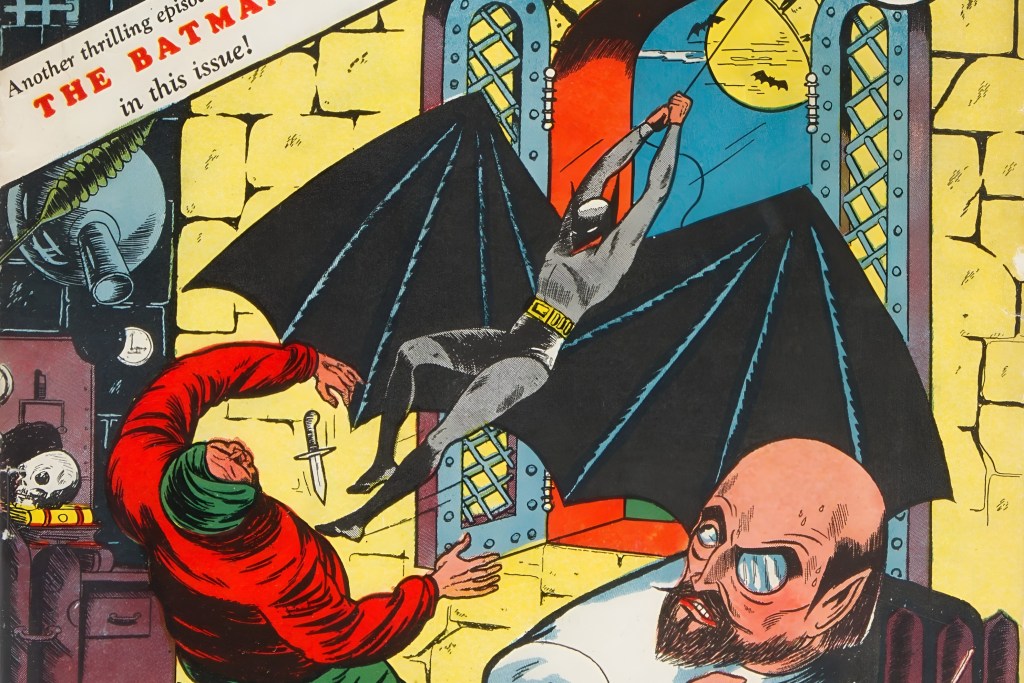
The Certified Guarantee Company (CGC) uses a color-coding system for its labels: the standard blue label is used for most graded comics; the yellow label denotes a book with a CGC-certified signature; the green label is for comics with a significant defect, like a missing page. The most controversial among comic collectors is the purple label, used to signify that a book has had professional or amateur restoration to improve its condition. Since the early 2000s and the introduction of the “restored” label, collectors have come to view restored comics as less valuable, with some staying away from them entirely — even when a restored comic represents their only chance to own a mega-rare key like Detective Comics #36, the first appearance of Hugo Strange. This restored 8.0-graded copy is one of only one hundred and six on the CGC’s population report, and one of less than ten in 8.0 condition or better. And yet the stigma around what some collectors have gone so far as to call “the Purple Label of Death” is so strong that the listing remains unpurchased.
A Look at the History of Comic Book Restoration
As we know it today, the practice of comic book collecting has its roots in the 1960s, and owes its existence to two major developments. The first was the birth of a nostalgia market for “golden age” comics of the 1930s and 40s as the children of those decades grew into adults with disposable income. This also facilitated the development of other hobby markets, some of which (like baseball card collecting) are still popular today, and others (like model railroad collecting) have faded with the decades. The other was that DC and Marvel Comics began publishing the addresses of readers who had written to their letters pages, enabling correspondence between comic fans. An organized comic book fandom emerged, and with it, the first comic book stores (Golden Age Collectibles in 1961) and conventions (New York Comic-Con, 1964).
For this new collecting community, the condition of their comics became a concern — especially for the already decades-old early golden age adventures of heroes like Batman and Superman. Restoration was a natural solution, and for several decades, was standard practice. There were dedicated labs collectors could send their comics off to for restoration, as with this Detective Comics #36. One of the photographs in the listing shows the report (dated September, 1993) from the Boston, Massachusetts branch of the restoration lab, detailing the restoration treatment performed on the comic. This includes a “touch-up” of the paints on the cover, a reinforcement of the comic’s spine, mending, tape removal, and a solvent bath. Interestingly, a few of the cleaning procedures used are still practiced today: the comic was “pressed,” a process by which light pressure, heat, and moisture are applied to remove surface defects.
The acceptance of pressing a comic underscores where most collectors draw the line, as defined by the CGC in The Official CGC Guide to Grading Comics: “Restoration returns a comic book to its ideal state by replacing missing parts of a comic book using foreign material.” The “foreign material” is key, as it is seen as undermining the value and significance of owning an original issue. Conserving the comic’s condition with a cleaning or pressing, designed to prevent further damage to its condition as well as improve how it looks, is acceptable. The CGC distinguishes the practices this way: “restoration’s primary goal is both structural and aesthetic improvement, while conservation is primarily structural.” One article provides a particularly crazy example: using vintage staples to replace rusted staples in a vintage comic is conservation, putting in brand new staples is restoration. It may sound arbitrary, but this distinction is worth literal tens of thousands of dollars to some collectors.
The change in attitude toward comic restoration came with the founding of the CGC in the 2000 and the general acceptance in the comic collecting community of its 1-10 grading scale as the standard metric of condition, quality, and value. When restored comics were given their own label, comic book sellers began to note a reduced interest from buyers. They could only sell a restored comic at a discount, compared to the price of an unrestored copy of the same issue in unrestored (or even in lower-grade) condition. This is where the “Purple Label of Death” moniker came into use: sellers would send in what they thought was a high-grade key issue for grading, knowing that a certified high grade would increase its value. If the book came back with a purple label, that value was drastically reduced.
How This Key’s Significance Could Overcome Its Purple Label
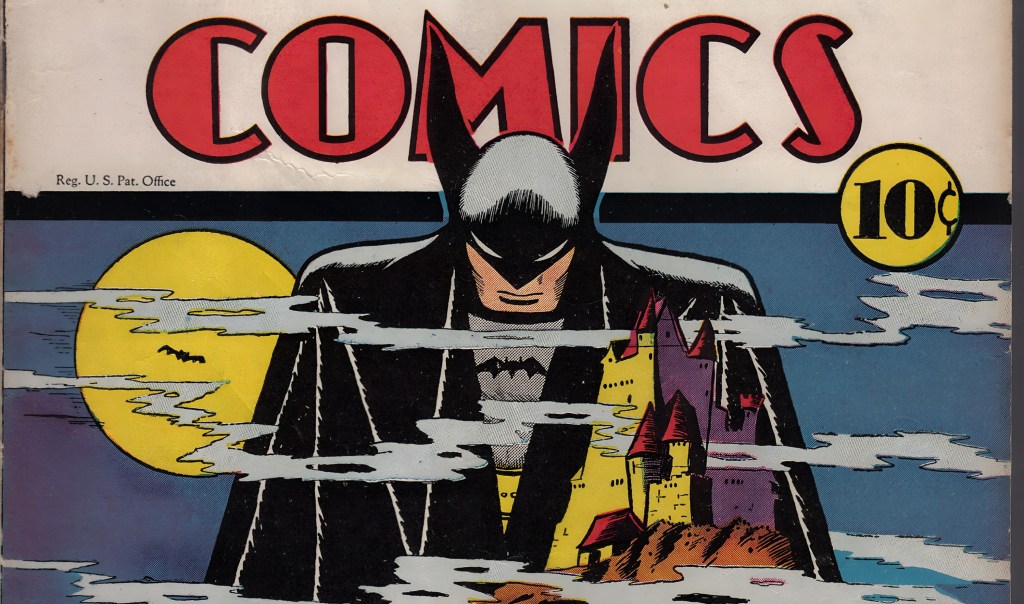
Detective Comics #36 is only the tenth-ever issue Batman appeared in. It predates the debut of virtually everything fans associate with the character: Robin, Alfred, Catwoman … even the Batcave. Debuting in this issue makes Hugo Strange the oldest regularly-appearing foe in Batman’s rogues’ gallery, and only the second-ever super-villain Batman encountered (the first being the “Mad Monk” in Detective Comics #31). Bruce Wayne describes him better than I can: “Professor Hugo Strange … the most dangerous man in the world! Scientist, philosopher, and a criminal genius.” In his debut appearance, Strange covers Gotham with an artificial fog that enables his henchmen to carry out organized robberies under its cover. His scheme is foiled and he’s sent to prison by Batman, escaping to threaten the Caped Crusader once again in Batman #1 before meeting his apparent demise in Detective Comics #46.
Hugo Strange stayed dead until 1977, returning at last during Steve Englehart’s Detective Comics run (issues #471-476), which re-established him for the modern era, and cemented him as a recurring foe to Batman. Here, Hugo Strange operates a private hospital for Gotham’s elite, really a front for human experimentation and extortion. While Bruce Wayne is a patient there, Strange discovers his double life as Batman — the first villain to do so. Gerry Conway would build on this for an arc Batman and Detective Comics in 1982 and 1983. Here, Strange used his knowledge of Batman’s secret identity to try and kill Bruce Wayne and take his place. Naturally the plan failed, though Strange would match wits with Batman once more in the pre-Crisis on Infinite Earths continuity in Batman Annual #10.
Post-Crisis depictions of Strange draw significant inspiration from these bronze age stories, with Strange’s “Monster Men” and his obsession with replacing Batman often at the center of his schemes. It’s these modern storylines that have turned Hugo Strange into a firm fan favorite, recognized by Batman readers as one of the most challenging foes the Dark Knight faces. Hugo Strange’s intellect makes him a psychological threat to Batman, and for a while, his unique knowledge of Batman’s secret identity gave him leverage over the hero. Fans knew that when they were reading a story with Hugo Strange at its center, in order to defeat him, they would see Batman at his best.
This fan favorite status, enhanced by his numerous appearances in video games and animated series, may make Detective Comics #36 an exception to the rule of CGC-restored labels. Three other 8.0-graded copies exist in any condition, only one unrestored. Only two unrestored copies exist in better condition. If a fan wants to own a high-grade copy of this piece of Batman comics history, this copy is likely to be their only chance for a long time: the last recorded sale in high grade was five years ago. For a comic this rare, it may not be possible to be particular about condition.
What do you think of restored comics? Leave a comment below and join the conversation now in the ComicBook Forum!