pims tragedy revives
| |

PIMS tragedy revives questions over delayed hospit…

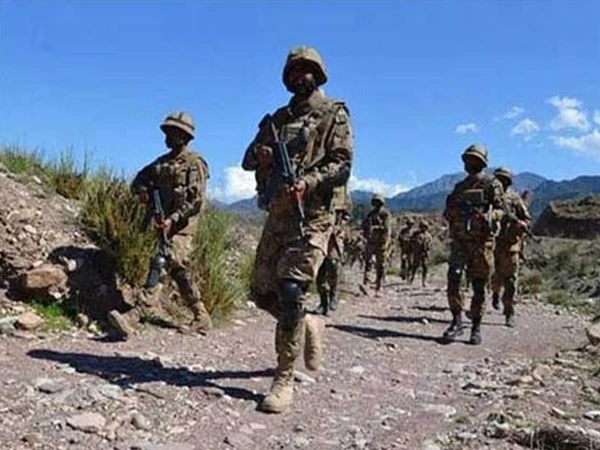
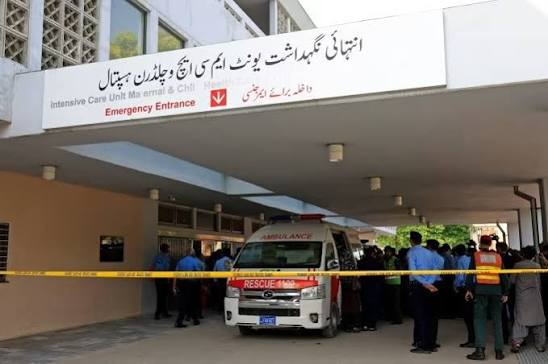
ISLAMABAD: Almost three years after the caretaker federal government proposed appointing officers from the Pakistan Army Medical Corps to lead the Pakistan Institute of Medical Sciences (PIMS) and Federal Government Polyclinic (FGPC), the proposal remains unimplemented. Following the August 26, 2026 fire in the PIMS Mother and Child Health (MCH) Ward that claimed the lives of several newborns, questions are being raised over whether prolonged administrative delays contributed to weaknesses in   hospital management On October 9, 2023, the Ministry of National Health Services approached the Ministry of Defence seeking BS-21 officers from the Army Medical Corps for three-year deputations as Executive Directors of PIMS and FGPC.

The ministry cited vacant executive positions and a shortage of eligible officers in the relevant cadre as reasons for seeking experienced hospital managers. The proposal was described as an interim measure intended to improve the management and service delivery of two of Islamabad’s busiest public hospitals.

The proposal faced opposition from sections of the medical community. On October 30, 2023, the Islamabad chapter of the Pakistan Medical Association criticized the plan, arguing that bringing military officers into civilian hospitals could undermine the role of civilian doctors.

Legal complications subsequently emerged. The Islamabad High Court restricted the appointment of outside deputationists as permanent heads, pushing authorities toward appointments from within the existing health system.

The health ministry also maintained that appointments would ultimately be made according to established procedures and merit.

Nearly three years later, the absence of permanent leadership at the hospitals has renewed criticism of the government’s handling of the issue.

A senior health-sector observer argued that timely implementation of the original proposal might have improved management, reduced financial leakages and strengthened oversight of procurement, medicines, machinery, construction and renovation projects.

PIMS has already faced concerns over staffing and expenditure. Figures cited in the debate include Rs22 billion allocated over three years, an alleged Rs670 million over spend against a budget of Rs6.84 billion last year, and 949 vacant positions out of 2,451 sanctioned posts at PIMS. More than 1,470 posts are reportedly vacant across four federal hospitals in Islamabad.

The August 26 fire has intensified these concerns. Prime Minister Shehbaz Sharif took notice of the incident, while Health Minister Mustafa Kamal was directed to submit a report. Health Secretary Aslam Ghauri was suspended and a high-powered inquiry was ordered.

The controversy has now moved beyond the question of who should manage federal hospitals to whether those responsible for prolonged administrative shortcomings should be held accountable.

Critics are questioning whether officials who managed billions of rupees in public funds should face consequences if negligence or poor oversight is established. They have also warned against allowing the inquiry to end with routine transfers, suspensions or committees without meaningful reforms.

Supporters of the original proposal point to the management of military-run Combined Military Hospitals (CMHs), arguing that they demonstrate stronger discipline, cleanliness and operational management.

However, opponents maintain that civilian healthcare institutions should be strengthened through transparent, merit-based appointments rather than relying on military deputations.

With legal restrictions and opposition to military appointments, the government may need to move quickly toward permanent, merit-based leadership for PIMS and FGPC.

The recent tragedy has made the issue more urgent. The central question is no longer simply whether the 2023 proposal should have been implemented, but whether years of administrative uncertainty contributed to systemic weaknesses.

Ultimately, an independent inquiry must determine the causes of the fire and establish responsibility based on evidence. The priority now should be ensuring that Islamabad’s major public hospitals have competent leadership, adequate staffing, effective safety systems and transparent financial oversight.

August 25, 2023: Health ministry stresses merit-based appointments.
October 9, 2023: Defence ministry approached for Army Medical Corps officers.
October 30, 2023: PMA Islamabad opposes the proposal.
Late 2023–2024: Legal restrictions emerge over outside deputations.
August 26, 2026: Fire breaks out in PIMS MCH Ward, resulting in multiple deaths.

Similar Posts

  • | |

    LHC acquits man sentenced to life for wife’s…

    LAHORE: The Lahore High Court ( LHC) has overturned the life imprisonment sentence of a man convicted of murdering his wife, ruling that the prosecution failed to establish his guilt beyond reasonable doubt. Justice Tariq Saleem Sheikh issued a detailed 19-page written judgment, allowing the appeal filed by the convict, Tanveer, and ordering his immediate release. According to the verdict, Tanveer maintained that he was on duty at a petrol station at the time of the incident and denied any involvement in the killing of his wife. The court observed that the prosecution had failed to produce reliable and convincing evidence to support the allegations against him. The judgment concluded that the available evidence was insufficient to sustain the conviction, leading the court to set aside the trial court’s decision and acquit the appellant. Tanveer had been sentenced to life imprisonment in 2022 by a trial court after being found guilty of his wife’s murder. In addition to the prison term, he was fined Rs400,000. He later challenged the conviction before the Lahore High Court, which has now ruled in his favor.

  • | |

    79th Independence Day ignites nationwide patriotic…

    Independence Day celebrations were held across Punjab and Khyber-Pakhtunkhwa on Thursday, with political leaders, judges and government officials highlighting national unity, development, democracy and the sacrifices made for Pakistan. Punjab Chief Minister Maryam Nawaz Sharif, in her Independence Day message, said the occasion was a day for the younger generation to renew its commitment to the country’s future. She said she wanted to see young people equipped with books, pens and laptops, stressing that genuine development would only be achieved when no section of society was left behind. Lahore High Court Chief Justice Justice Aalia Neelum, addressing a flag-hoisting ceremony, said love for the homeland was part of faith. She said every citizen had a responsibility to work tirelessly for the country’s progress and added that the Punjab judiciary was striving to ensure the effective delivery of justice. Independence Day celebrations were also held at King Edward Medical University in Lahore. Punjab Health Minister Khawaja Salman Rafique attended the ceremony as chief guest, cut the Independence Day cake and led prayers for the country’s security and prosperity. He said every citizen must play a role in Pakistan’s development. A flag-hoisting ceremony was also organised at the Sports Board Punjab. The secretary sports, director general sports and other officials and employees attended the event. The national flag was hoisted and participants observed a minute of silence in memory of the martyrs who sacrificed their lives for Pakistan. Jamiat Ulema-e-Islam-Fazl chief Maulana Fazlur Rehman said Independence Day should also serve as an opportunity to reflect on the objectives and sacrifices behind the creation of Pakistan. He said the country was established in 1947 on the principles of unity, discipline and firm faith, but 79 years later the nation had still not fully achieved national cohesion. Fazlur Rehman called for overcoming regional, linguistic and group-based divisions and urged people to move forward as one Pakistani nation. He said the objectives of Pakistan’s creation included an Islamic system, a prosperous economy and stable democracy. Jamaat-e-Islami Pakistan chief Hafiz Naeemur Rehman said Pakistan was created on the basis of the Two-Nation Theory but the country had yet to fully realise the objectives for which it was established. He criticised successive governments for making people’s lives difficult and said the implementation of the Quran and Sunnah was essential to achieving Pakistan’s true destination. In Khyber-Pakhtunkhwa, Governor Faisal Karim Kundi hoisted the national flag at Governor House. Iran’s Consul General Ali Banafsheh Khah also attended the ceremony. Prayers were offered for Pakistan’s development, prosperity and stability, while Kundi and the Iranian consul general jointly cut the cake marking the country’s 79th Independence Day. K-P Adviser on Finance Muzammil Aslam said the province had witnessed significant improvements and called for greater efforts to strengthen the region. He said the provincial government had faced serious financial difficulties when it took office but the situation had subsequently improved. Aslam said officials should set clear targets for what they wanted to achieve before the next Independence Day. He also stressed the need for collective efforts to eliminate terrorism from the province. K-P Chief Secretary Shahab Ali Shah said the objectives behind the creation of Pakistan would be fulfilled. He said the people would not hesitate to make sacrifices for the country and would continue working towards its progress and stability. Federal Minister for IT Shaza Fatima Khawaja also congratulated the nation on Independence Day. She paid tribute to the martyrs who sacrificed their lives defending the country and described the armed forces as guarantors of peace and development. She said Pakistan’s growing international standing reflected the efforts of its political and military leadership. According to her, Pakistan is increasingly recognised globally for its commitment to peace, development, defence and its vision of a digital future.

  • |

    23 militants killed in Intelligence-Based Operations across South Waziristan, Lakki Marwat, Taunsa Sharif and Balochistan

    ISLAMABAD/SOUTH WAZIRISTAN: Security forces successfully foiled a major terrorist attack on a check post in South Waziristan after destroying an explosives laden vehicle before it could breach the security perimeter. Four militants, including a suicide bomber, were killed during the operation, while security forces suffered no casualties. According to security sources, the attackers attempted to ram a vehicle packed with explosives into the check post. Alert troops responded swiftly, targeting the vehicle outside the outer defensive barrier. The vehicle was completely destroyed, killing the suicide bomber on the spot and preventing any damage to the installation. The remaining three militants fled into a nearby building, where security forces launched a clearance operation and killed all of them. Search and sanitization operations are continuing in the area. Meanwhile, security forces are conducting ongoing operations in the Dargai Kot, Laman and adjoining areas of Wana in South Waziristan, targeting suspected militant hideouts to restrict terrorist movement and eliminate safe havens. In a separate intelligence-based operation (IBO) in the Khui area of Lakki Marwat district, four militants belonging to the Fitna al-Khawarij-linked Astarana group were killed. The deceased were identified as Abu Dujana, Arshad, and Abu Zar alias Khayal Badin, son of Muhammad Aslam, while efforts are underway to confirm the identity of the fourth militant. In another successful operation in the border region of Taunsa Sharif between Khyber Pakhtunkhwa and Punjab, security forces killed three militants and injured several others. One of the slain militants was identified as Amir Baloch, while identification of the remaining militants is in progress. Separately, under Operation Al-Azm, security forces continued intelligence based operations against terrorist networks in Balochistan. According to security sources, militant hideouts and ambush positions were destroyed in Kili Kand Umrani, Khad Kocha, Mastung, and surrounding areas. A large cache of weapons and explosives was also recovered. Security officials said that 16 militants have so far been killed during the ongoing operations in Balochistan. Authorities reiterated their commitment to continuing counterterrorism operations across the country until terrorism is completely eradicated and lasting peace is restored.

  • |

    Swiss government rejects proposed constitutional ban on non-UN sanctions ahead of neutrality vote

    The Swiss government has formally rejected a popular initiative seeking to enshrine a rigid, absolute definition of neutrality into the country’s constitution, warning the move would cripple national security and diplomatic flexibility. The constitutional referendum, scheduled for 27 September, was triggered after right-wing campaign groups backed by the Swiss People’s Party gathered over 100,000 signatures. Proponents argue Bern’s historical stance has been diluted by adopting European Union sanctions against Russia over its war in Ukraine and deepening training ties with NATO. If passed, the amendment would constitutionally mandate that Swiss neutrality remain perpetual and armed, while explicitly barring non-UN sanctions and foreign military alliances. Launching the official counter-campaign on Tuesday, Swiss Foreign Minister Ignazio Cassis insisted the nation’s neutrality remains intact without need for restrictive legal amendments. “Switzerland has been and is neutral, and it will remain neutral,” Cassis said in a statement, adding that the proposal would severely hinder security cooperation with international partners prior to an actual crisis. Current polling indicates low public support for the initiative, with a Tamedia survey showing 54 per cent of voters opposed compared to 34 per cent in favour.

  • | |

    British high commissioner meets deputy Prime Minis…

      British High Commissioner to Pakistan Jane Marriott met with Deputy Prime Minister and Foreign Minister Ishaq Dar in Islamabad to discuss matters of mutual interest and ways to further strengthen bilateral cooperation between Pakistan and the United Kingdom. The meeting highlighted the importance of maintaining high-level and continuous engagement between the two countries. Both sides discussed the positive developments taking place in Pakistan-UK relations and emphasized the need to continue diplomatic contacts to deepen cooperation in areas of shared interest. During the meeting, Jane Marriott conveyed her greetings and extended congratulations to Pakistan on the occasion of its Independence Day. She also discussed issues relating to the ongoing relationship between the two countries and reaffirmed the importance of continued engagement between Islamabad and London. Deputy Prime Minister Ishaq Dar appreciated the positive progress in Pakistan-UK relations and described the developments as encouraging. According to an official statement, Dar also referred to his recent meeting with the British Foreign Secretary in Manila, highlighting the importance of high-level contacts between the two countries in strengthening mutual understanding and cooperation. The discussion also covered regional and international developments, according to the spokesperson for Pakistan’s Ministry of Foreign Affairs. The two sides exchanged views on the evolving regional situation as well as broader global issues of mutual concern. Ishaq Dar stressed that Pakistan and the United Kingdom should continue working together through dialogue and diplomatic engagement. He emphasized the importance of implementing the Islamabad Memorandum of Understanding in accordance with both its spirit and its agreed text. Dar also maintained that negotiations and diplomacy remain the most effective and appropriate way to address outstanding issues. He said that unresolved matters should be dealt with through constructive dialogue rather than confrontation, underlining Pakistan’s preference for diplomatic solutions to complex regional and international challenges. The meeting comes as Pakistan and the United Kingdom continue efforts to strengthen their longstanding bilateral relationship. The two countries maintain cooperation across several areas, including trade, investment, education, security, development and people-to-people relations. Regular high-level meetings between officials from both sides are considered important for maintaining momentum in bilateral ties. The discussions between Dar and Marriott also reflected the broader importance of sustained diplomatic communication at a time when regional and global developments continue to influence international relations. Both Pakistan and the UK have an interest in maintaining regular consultations on issues that affect regional stability, economic cooperation and international peace. The Pakistani foreign ministry said that continued engagement and dialogue would remain important for addressing matters of mutual interest and promoting closer cooperation between Islamabad and London. The meeting concluded with an emphasis on maintaining regular high-level contacts and advancing bilateral cooperation. Both sides expressed support for continued diplomatic engagement and efforts aimed at strengthening Pakistan-UK relations. The interaction between Ishaq Dar and Jane Marriott demonstrates the continued focus of both countries on maintaining constructive diplomatic ties. With discussions covering bilateral relations, implementation of existing understandings, regional developments and international affairs, the meeting provided an opportunity for Pakistan and the UK to reaffirm their commitment to dialogue and cooperation.

  • | |

    Senate erupts over Imran Khan’s medical treatmen…

    ISLAMABAD: The Senate witnessed a heated exchange between the opposition and government benches on Tuesday over the medical treatment of PTI founder and former prime minister Imran Khan. The dispute centred on the implementation of an August 18 Supreme Court order concerning Imran Khan’s treatment. The court had directed authorities to shift him to Shifa International Hospital in Islamabad and form a medical board that would include his sister and personal physician. The government, however, took Imran Khan to Pakistan Institute of Medical Sciences (PIMS), citing security concerns. He was later returned to Adiala Jail after doctors declared him medically fit. The opposition accused the government of failing to comply with the Supreme Court’s directions. The government rejected the allegation and maintained that the authorities had acted within the framework of the court order. The issue came up after PTI parliamentary leader Barrister Ali Zafar sought permission to move a resolution regarding the Supreme Court’s directions. Presiding Officer Shahadat Awan did not allow the resolution, ruling that the matter was sub judice. Opposition senators were instead allowed to raise the issue through points of order. Zafar argued that Parliament must uphold the Constitution and ensure compliance with decisions of the Supreme Court. He claimed that Imran Khan had neither been shifted to Shifa International Hospital nor examined by the medical board mentioned in the court’s order. He also alleged that the required facilities for examining the PTI founder were not available at PIMS. Zafar said political differences should not affect a person’s access to medical care. He urged the government to separate Imran Khan’s political status from his health and medical needs. PTI Senator Azam Swati also criticised the government, accusing it of adopting different standards in dealing with political figures. He cited previous instances in which government institutions had facilitated political leaders. The government defended its position through Prime Minister’s Adviser Rana Sanaullah. He said the state had complied with the Supreme Court’s directions while taking security considerations into account. Sanaullah said the court had also allowed the administration to assess security arrangements. He maintained that Imran Khan was therefore taken to a government hospital where qualified doctors were available. According to Sanaullah, a panel of doctors examined Imran Khan and found his condition satisfactory. He said the PTI founder was subsequently returned to jail. The adviser said the matter was already before the Supreme Court and a report would be submitted on September 16. He argued that the court itself should determine whether its order had been properly implemented. Opposition Leader in the Senate Allama Raja Nasir Abbas urged the government to demonstrate political maturity and implement the Supreme Court’s order in letter and spirit. He also proposed forming a Senate committee to visit Imran Khan in jail and assess the situation.

Leave a Reply

Your email address will not be published. Required fields are marked *