trumps iran campaign
|

Trump’s Iran campaign echoes the post-9/11 ‘forever wars’

WASHINGTON, USA – When Donald Trump campaigned for a second term in the White House, he promised to be a “president of peace” who would stop foreign wars, not start them.

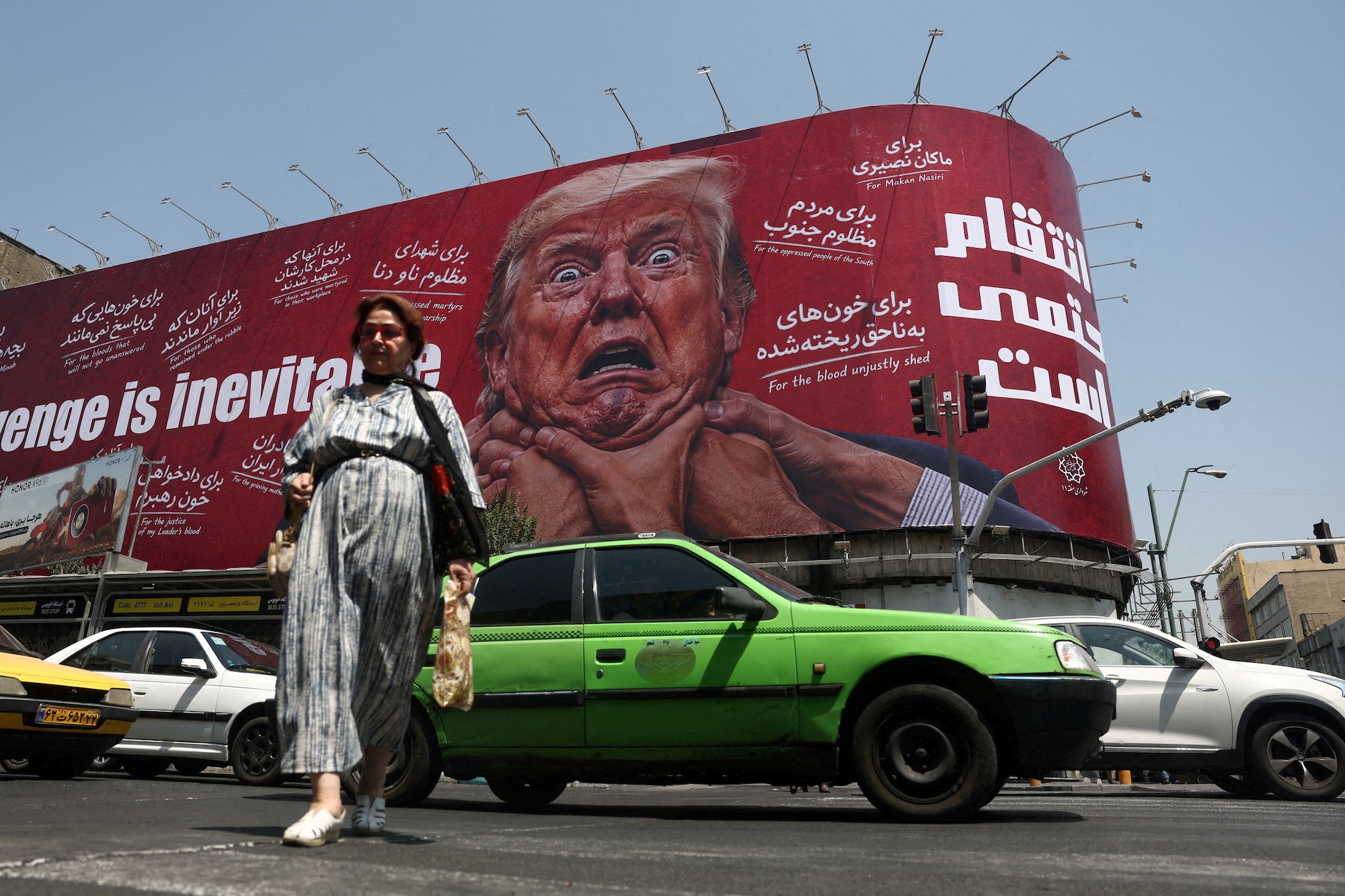
Now, a quarter-century after the September 11, 2001, attacks that triggered America’s global “war on terror,” he is entangled in an unpopular conflict of his own making that analysts say risks becoming his version of a “forever war.”

With the 9/11 anniversary at hand, Trump’s war against Iran is drawing comparisons in foreign policy circles to the long, divisive conflicts in Afghanistan and Iraq that preceded it.

It is also prompting questions about whether the US has again failed to learn the lessons of past conflicts or prepare a clear exit strategy.

“Trump has broken an important post-Iraq and Afghanistan constraint in Washington against launching another major, open-ended war in the Middle East,” said Sina Toossi of the Center for International Policy, a Washington think tank. “That could leave his successor inheriting … an entrenched US-Iran confrontation.”

Administration officials have said the war against Iran is nothing like the protracted post-9/11 engagements.
During the conflicts in Iraq and Afghanistan, the US removed hostile governments, committed thousands of ground troops who took and held territory, suffered and inflicted much higher casualties and struggled to instill Western-style governance.

This time, the US is relying mainly on air and naval power, operations that have damaged Iran militarily and economically but have not defeated it or spurred Iranians to overthrow their rulers as Trump initially urged.

But after six months of war, the United States is mired in a battle of attrition punctuated by bursts of hostilities – exemplified by this week’s exchange of attacks on oil tankers – while Trump tries to tighten the economic noose around Tehran.

Analysts warn it is likely to drag on well past the US midterm elections in November, when voters’ opposition to the war could threaten Trump’s Republican Party’s chances of keeping control of Congress.

And, much like those earlier conflicts, there is no obvious exit even as the economic costs weigh on US consumers.

Tehran’s disruption of oil shipments through the Strait of Hormuz has pushed US gasoline prices higher. The war has weakened Trump’s approval ratings and undermined Washington’s international standing, which was also one of the repercussions from the Iraq and Afghan wars.

White House spokeswoman Anna Kelly said Trump alone had “possessed the courage” to confront Iran over its nuclear program, that he had achieved all of his objectives and Iran’s economy was being crippled by stepped-up sanctions and a US maritime blockade.

She did not respond directly to Reuters’ questions on how the Iran conflict fits into America’s legacy of post-9/11 wars.

Lessons ignored?

Analysts say Trump has failed to heed the central lessons of the post-9/11 era, which began after al Qaeda militants crashed planes into New York’s World Trade Center and the Pentagon outside Washington, killing nearly 3,000 people.

Those include the steep political downsides of long wars and the dangers posed by an entrenched foe fighting for its survival.

The attacks led to decades of conflict, starting with the invasion of Afghanistan, where al Qaeda leaders were sheltering, and followed by the 2003 invasion of Iraq, based on what turned out to be faulty intelligence that it was developing weapons of mass destruction.

The twin wars undertaken by President George W. Bush overstretched the US military and destabilized the Middle East.

The resulting US public backlash helped fuel Trump’s rise a decade ago, and he won a second term in 2024 vowing to avoid military adventurism and focus on Americans’ economic concerns.

But similar to how the Bush administration underestimated the insurgencies the US would face in Iraq and Afghanistan, Trump and his aides have miscalculated Iran’s resiliency and ability to throttle a fifth of the world’s energy shipments, analysts say.

Notably, Trump’s “Operation Epic Fury” launched alongside Israel on February 28 was not precipitated by a 9/11-type national trauma but was deemed by critics to be a war of choice.

Experts have disputed Trump’s claims that Tehran’s nuclear program posed an imminent threat to the US.

Iran may be taking a page from Afghanistan’s Taliban, who returned to power five years ago after a chaotic US withdrawal, that a determined foe can outlast Washington’s superior firepower while domestic pressure erodes its resolve.

The Iran conflict has also illustrated the cost of going to war with few allies on board.

Bush secured significant international support before launching his Iraq and Afghan campaigns, though that backing waned over time.

By contrast, Trump attacked Iran with little prior consultation or explanation and has found European and Asian leaders mostly resistant to his demands for assistance.

Relations with Trump had already been strained by his threat to seize Greenland, his questioning of NATO’s utility, his reduction of weapons supplies to Ukraine and his sweeping tariffs on trade partners.

High cost for allies

The conflict has also mirrored the Iraq invasion in terms of a regional spillover that seemed to catch Washington off-guard, in this case Tehran’s retaliation against US Gulf allies.

With Iran’s neighbors quietly seeking to de-escalate a conflict they never wanted, a Gulf official lamented that the administration might be making some of the same errors of the post-9/11 wars.

“What was the (US) strategy here?” asked the official, speaking on condition of anonymity.

Saudi analyst Aziz Alghashian described “a sense of limitation and helplessness in the Gulf about the wars that are taking place due to the whims of the United States.”

The war’s shockwaves expanded on Thursday, September 10, with Yemeni government military sources saying Iran-aligned Houthis had seized control of the Yemeni port city of Mocha and gained further leverage over an important Red Sea oil-shipping route.

While the Iraq and Afghan wars ended as unpopular conflicts, both started with solid support at home.

Trump’s war enjoyed no such honeymoon in public opinion.

Most Americans were against it from the outset, and he has even drawn criticism from prominent figures associated with his “America First” movement.

Trump had initially expected to replicate his quick win from a January 3 raid that captured Venezuelan leader Nicolas Maduro.

But the Iran campaign instead has hardened into an uneasy stalemate that has not achieved most of Trump’s shifting objectives, including shutting down its nuclear program, and has depleted the Pentagon’s missile stockpiles.

Still, Trump is not without defenders.
Mark Dubowitz, head of the Foundation for Defense of Democracies, a Washington think tank that takes a hard line against Iran’s rulers, denied Trump had plunged the US into an endless war and insisted he had scored successes that would eventually bring victory.

“It’s been a 47-year war waged by the Islamic Republic against America,” Dubowitz said. “And now we’ve struck back.” – Rappler.com

Similar Posts

  • | |

    Pakistan moves to establish strategic petroleum re…

    ISLAMABAD: Pakistan has taken a major step towards strengthening its energy security by initiating a feasibility study for the establishment of strategic petroleum reserves, with international energy consultancy Wood Mackenzie selected to undertake the project. Federal Minister for Petroleum Ali Pervaiz Malik chaired a meeting to formally launch the initiative, stressing that energy security is closely tied to the country’s national security. During the meeting, officials discussed the scope of the feasibility study, its expected completion timeline and the proposed framework for developing strategic petroleum reserves in Pakistan. Wood Mackenzie was chosen through a competitive bidding process after four firms submitted proposals for the project. The consultancy will assess key aspects of the proposed reserves and provide recommendations on their structure and development. The initiative is expected to help Pakistan improve its preparedness against potential disruptions in global oil supplies and strengthen the country’s overall energy resilience.

  • |

    Over 80,000 flee as escalating wildfires ravage south-west France and Spain

    More than 80,000 people have been forced to flee their homes and holiday accommodation across south-west France and central Spain as fierce, uncontained wildfires continue to sweep through the region. Fanned by relentless winds and intense heatwave conditions, the blazes have triggered national emergency declarations and prompted urgent requests for international military and civilian aerial support. In France, authorities ordered the total evacuation of the Cap Ferret peninsula on the Atlantic coast as a vast wildfire in the Gironde department consumed over 12,500 hectares of forest and destroyed at least 80 homes. With the main access road threatened by advancing flames, hundreds of residents and holidaymakers were evacuated by sea using ferries and local boats. A secondary blaze further south near Biscarrosse has burned an additional 2,500 hectares, leaving coastal emergency services struggling to contain the perimeter. Across the border in Spain, the central government declared a national emergency after two massive blazes merged outside Madrid and threatened to join a third active fire in the neighbouring province of Ávila. Over 19,000 people were evacuated overnight across affected municipalities as thick acrid smoke reached the capital’s outskirts. Spanish officials described the convergence of high temperatures, parched terrain, and strong winds as an unprecedented crisis for the region. Both nations have activated the European Union’s Civil Protection Mechanism to request specialized firefighting aircraft, with reinforcements deployed from Portugal, the Czech Republic, Croatia, and Slovakia. Environmental scientists highlight that Europe is warming at roughly twice the global average rate, warning that prolonged droughts and extreme seasonal weather patterns are driving wildfire destruction to historic levels across the continent.

  • | |

    Oil prices climb as Hormuz tensions rekindle suppl…

    Global oil prices moved higher on Friday as renewed uncertainty surrounding the Strait of Hormuz fueled concerns over potential disruptions to one of the world’s most critical energy shipping routes. Brent crude futures rose 80 cents, or nearly 1%, to $83.29 per barrel, while US West Texas Intermediate (WTI) crude gained 64 cents to reach $77.93 per barrel. The increase followed a sharp rally in the previous session, when prices surged by more than $3 after reports that Iran was considering new restrictions on maritime traffic through the strategic waterway. Market sentiment shifted after Iranian officials proposed measures that could prohibit US and Israeli-linked vessels from transiting the Strait of Hormuz, while imposing significant financial penalties on ships from countries deemed hostile. The proposal, reportedly being reviewed by Iran’s parliament, has raised fresh concerns about the future of global energy supplies. Analysts said the latest developments indicate that tensions between Iran and the United States remain unresolved, despite recent hopes of diplomatic progress. They noted that the market is now pricing in the possibility of a tightly managed transit system rather than a return to unrestricted shipping through the strait. Reports also suggest that Iran is seeking transit fees ranging from 5% to 7% of cargo values, while Oman has proposed lower charges. However, industry experts believe any agreement would face significant hurdles because of US sanctions and insurance restrictions affecting international shipping. Although crude benchmarks are still on track to post weekly losses after earlier declines driven by optimism over a possible breakthrough in the regional conflict, the renewed geopolitical uncertainty has restored upward pressure on prices. Adding to market jitters, Yemen’s Houthi movement claimed missile and drone attacks targeting Saudi positions in Marib and Hadramout, further highlighting the fragile security situation in the region. Meanwhile, US President Donald Trump expressed optimism that the conflict could end soon, but investors remain cautious as uncertainty continues to dominate the global oil market.

  • | |

    Malaysian PM Anwar Ibrahim undergoes medical proce…

    KUALA LUMPUR: Malaysian Prime Minister Anwar Ibrahim is undergoing medical examinations and procedures, with his aide saying he is expected to remain under observation for two days. Anwar’s Press Secretary Tunku Nashrul Abaidah confirmed the development on Monday but did not disclose details about the nature of the medical procedures or the condition that prompted them. In a statement, the aide said Anwar was undergoing examinations and procedures arranged by a team of medical experts. The statement also appealed for prayers for the premier’s health and expressed hope that he would be able to return to his regular duties soon. “Let us pray … that he is blessed with long-lasting health so that he can return to his usual duties in the near future,” the statement said. The news prompted a message of support from Pakistan, with Prime Minister Shehbaz Sharif wishing his Malaysian counterpart a swift recovery. “Wishing my dear brother, Prime Minister Anwar Ibrahim, a swift and smooth recovery during his medical procedures,” Shehbaz wrote in a post on X. He added that the people of Pakistan were joining him in praying for Anwar’s continued good health and well-being, reflecting the close ties between the two countries. Anwar, who turned 79 on Monday, has served as Malaysia’s prime minister since 2022. His current medical observation has drawn attention partly because of previous health issues involving his back and shoulder. The Malaysian leader was hospitalised in 2018 after experiencing shoulder and back pain. More recently, he cancelled a planned visit to Pahang state in November last year because of back discomfort. Despite those previous problems, Anwar received a clean bill of health following a routine medical examination in January, according to a statement from the hospital where the check-up was conducted. The latest announcement has not indicated that Anwar is facing any serious health condition. Officials have also not provided details about when he is expected to leave medical care or resume his full schedule. For now, the Malaysian government and Anwar’s supporters are awaiting further updates from his medical team. His aide’s statement sought to reassure the public while asking for prayers as the veteran politician undergoes the procedures. Anwar’s health is closely watched as he continues to lead Malaysia through a period of economic and political challenges, making his expected return to official duties a matter of considerable public interest.

  • | | | |

    Israeli forces arrest 14 Palestinians in West Bank…

    RAMALLAH: Israeli forces detained at least 14 Palestinians, including a woman, during a series of military raids across the occupied West Bank on Tuesday, while three homes were also demolished, according to local sources. The latest arrests come as tensions continue to rise across the occupied territory, where Israeli military operations, arrests and settler violence have intensified in recent days. The raids targeted several locations, including Nablus, Jenin and Tulkarm, according to reports. Eight detained in Nablus In Nablus, Israeli forces entered the Ras al-Ain neighbourhood and stormed three buildings. Soldiers searched several homes before detaining eight Palestinians, including a woman, local sources said. The operation reportedly involved searches of residential properties, with residents subjected to questioning before the detainees were taken away. The raid was part of a wider military campaign across the northern West Bank, where Israeli forces have repeatedly carried out overnight and early-morning operations. Raids reported in Tubas and Jenin In Tubas province, Israeli troops entered the town of Tammun and remained there for several hours before withdrawing. No arrests were reported from the operation. Meanwhile, in the Jenin area, Israeli forces entered Al-Yamoun, where they arrested a former Palestinian prisoner from Jenin city. Another Palestinian was detained in Deir Ghazaleh, located northeast of Jenin, according to local sources. The arrests added to growing concerns over the continuing military pressure on Palestinian communities in the occupied West Bank. More arrests in Tulkarm Further arrests were reported in the Tulkarm area. Israeli forces detained a Palestinian customs police officer and a young man from Irtah, a suburb south of Tulkarm. Two other Palestinians were also arrested following raids and searches of homes in the village of Far’un. The latest operations come against a backdrop of escalating violence in the West Bank. Reuters reported this week that Palestinian residents have described mounting pressure from military raids and settler attacks, warning that the situation is approaching a breaking point. At the same time, reports of demolitions have added another layer to the tensions. Anadolu Agency reported that three Palestinian homes were demolished during the wider military campaign, with Israeli authorities citing claims related to construction permits. The developments are likely to fuel further concern over the security and humanitarian situation in the occupied West Bank, where repeated raids, arrests, demolitions and clashes have continued to affect Palestinian communities.

Leave a Reply

Your email address will not be published. Required fields are marked *