
wanted secretarygeneral mediatorinchief
| | | | |

Wanted: UN secretary-general as ‘mediator-in-chief’

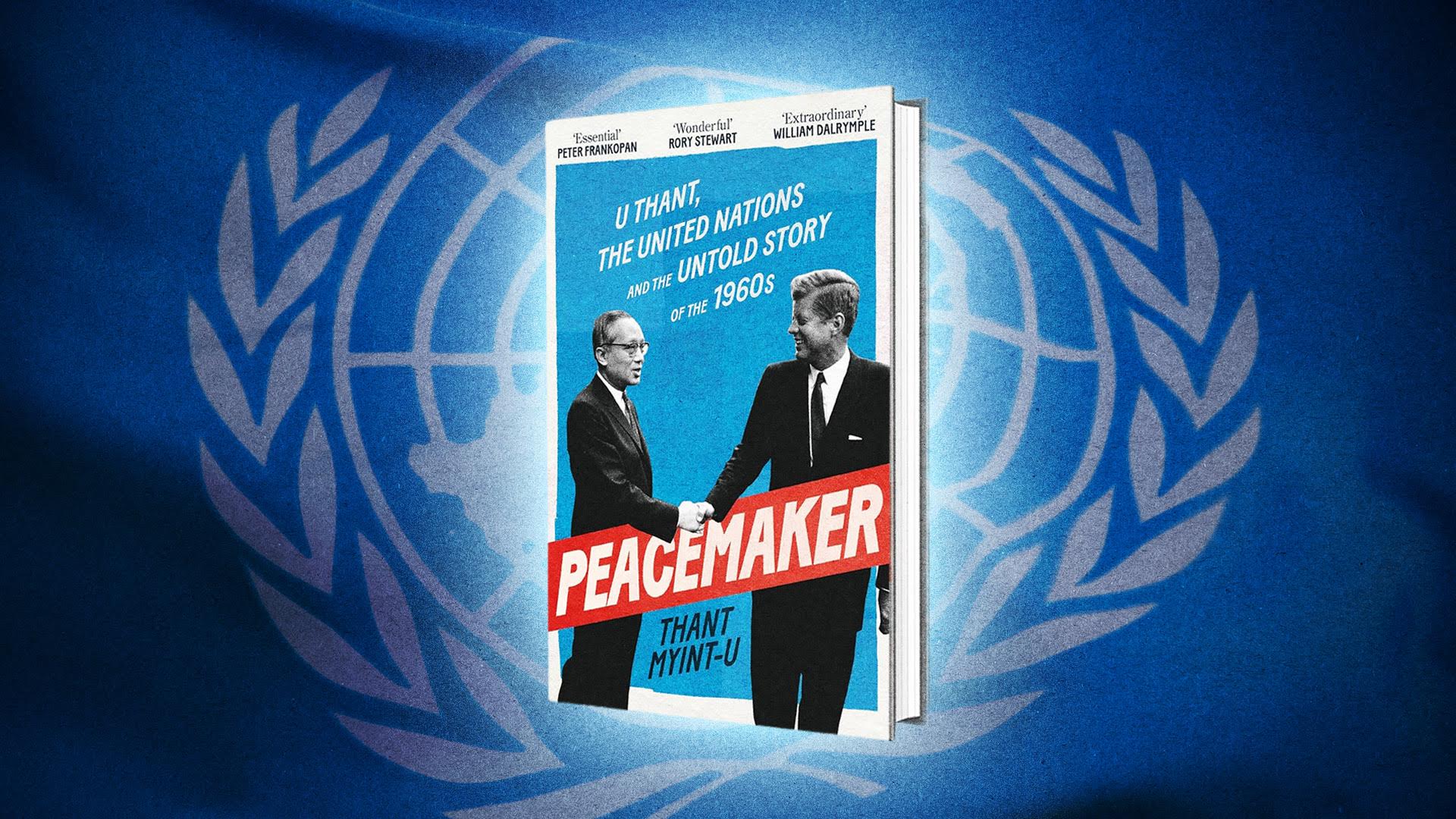
I had given little thought to the ongoing contest for a new United Nations secretary-general until I read the captivating book, Peacemaker: U Thant, the United Nations and the Untold Story of the 1960s.  It schooled me in the dynamics of UN leadership and the ways powerful countries steered the global organization’s direction.

Soon, the UN General Assembly will choose the successor to the current secretary-general, Antonio Guterres, whose term ends in December this year.

More than ever, I appreciate the thankless work of the secretary-general, having gained a close-up view of ten years of Thant’s legendary leadership of the UN. He was the first non-white, the first Asian to hold the post.

The first two secretaries-general were from Norway and Sweden. When Thant stepped down in 1971, he was succeeded by one more from Europe (Austria). The only other Asian was Ban Ki-moon from South Korea (2007-2016). Only one secretary-general has come from the Middle East (Egypt); the same is true for Latin America (Peru) and Africa (Ghana). Guterres is from Portugal, the fourth from Europe.

‘Loneliest job in the world’

Thant led the UN at a time of turbulent conflicts, from the Cuban missile crisis to the six-day Arab-Israel war to the Vietnam war.  What is little known is that Thant’s mediation between the US and USSR helped prevent a third world war over Cuba. He also consistently advocated for détente during the Cold War.

Thant tirelessly worked to attain peace in various flashpoints in the world, finding diplomatic solutions to what seemed to be impossible situations, like helping broker a ceasefire between India and Pakistan in 1965.

Newly independent countries joined the UN as a wave of decolonization swept the early 1960s. Thant provided moral leadership at this critical period of transformation,  championing racial equality.

It’s the “loneliest job in the world,” Thant said of the UN secretary-general’s work. But he got along with almost everyone and was respected by many.

U Thant, the United Nations and the Untold Story of the 1960s
Book cover of Peacemaker: U Thant, the United Nations and the Untold Story of the 1960s

The book opens with a farewell lunch for Thant in December 1971 where the guests ranged from John Lennon to Jacques Costeau. It was there that Lennon first sang a song he had recently written about peace, which, he said, he had never performed before in America. That song was “Imagine.”

The book is beautifully written by Thant Myint-U,  a historian, former UN official, and Thant’s grandson. Unearthing rich archives, including private papers in the care of his mother (Thant’s daughter) and her personal memories, Thant Myint-U gives a ringside view of how Thant made decisions, consulting colleagues he trusted, and their verbal exchanges. His relations with leaders of the US and USSR are well documented in the book, including their conversations and letters.

First woman secretary-general?

Today, eight candidates are in the race for the 10th UN secretary-general, five are women and three are men. If a woman is selected, she will be the first female to lead the UN.  

Six of the aspirants are from Latin America while two are from Africa. 

The next secretary-general will be appointed by the 193-member General Assembly on the Security Council’s recommendation. The five permanent members — France, Britain, China, Russia, and the United States — have a veto on the final decision. 

In August, when the Security Council held a second informal vote, Guyana’s ex-foreign minister, Carolyn Rodrigues-Birkett, narrowly led this round, according to a news report.

Costa Rica’s Rebeca Grynspan, head of the UN Trade and Development, was the front-runner when the Security Council did a first informal vote behind closed doors and by secret ballot. 

Where is the UN in all the wars?

The next secretary-general will take over at a very difficult time, with the UN presence not seen or felt in the wars in Ukraine and the Middle East, and the civil war in Sudan. After all, isn’t it the UN’s core mission to keep peace?

On other fronts, multilateralism is under attack from the US, the Security Council is deadlocked, and the UN faces an “imminent financial collapse” because the US and other countries have not paid their dues 

The crisis facing the UN is “very acute,” Thant Myint-U said in an interview with The Financial Times.  Asked what kind of leader the UN needs now, he replied:

      “…someone who is going to be good as the mediator-in-chief. That requires diplomatic skill, experience… an even temperament… degree of equanimity, a willingness to take risks and fail and move on, someone who’s willing not to always take the credit but sometimes to take the blame unfairly… More importantly, someone who has political  courage, someone who’s going to take those initial risks in the interest of peace.”

I’m waiting with bated breath to see who the next secretary-general will be and, fingers crossed, she/he opens a new chapter for the UN.

Let me know what you think. You can email me at marites.vitug@rappler.com.

I will be taking a year-long book leave next month although I may write occasional pieces. My regular newsletters will resume when I return in October 2027. 

Till next year!

Related articles and video:

Similar Posts

  • |

    The Education Dilemma

    By Tuba Khan Literacy is the key to a successful political, economic and social structure of a country. Nations that prioritize education give birth to a strong, responsible and intellectual generation that could foster civic culture in the country. A well-educated and politically aware youth is the backbone of a country’s development. Society can only progress if it invests in its youth, allocating resources and opportunities to young people. Pakistan ranks fifth among the countries having the largest young population in the world. This youth bulge could become a driver of economic prosperity and social progress if quality education and skills development are provided to the youth. Unfortunately, Pakistan lacks an education system that can produce civic-minded, skilled and informed people. The education sector has remained stagnant for several decades and the quality of education is declining day by day, producing an intellectually enslaved generation. Pakistan ranked 164th out of a total of 194 countries globally in education quality, lagging far behind from the other countries in the region. Education in Pakistan is treated as a business for generating revenue and in return creating inequality across all levels of education.   In Pakistan, around 54% of students are enrolled in public sector institutions, where the quality of education and the infrastructure are in a state of severe deterioration. The country’s education standard is so poor that no Pakistani university ranks among the world’s top 350 reputable universities as per QS World University Rankings 2026. Moreover, approximately 26 million children are out of school and those who are enrolled in schools are often products of the rote learning system, unable to think critically and lack the ability to build independent opinions. They are deprived of basic facilities, such as safe and secure buildings, furniture, laboratories, libraries, electricity, clean drinking water, proper sanitation facilities and other basic amenities at the public educational institutions. The outdated syllabus and unprofessional staff at public educational institutions add fuel to the fire, aggravating the education crisis in Pakistan. According to the data provided by UNESCO in 2024, there were 25.38 million students in total for all public and private elementary schools in the country, while only 445,877 teachers were available to facilitate the students. This highlights that there are around 57 children for each teacher. This highlights the ailing condition of the education system of Pakistan.   Despite the educational challenges and poor education system, government spending on the education sector has declined significantly. From 0.8% of GDP allocated to the education sector in 2024, the education spending has dropped to only 0.2% of the federal budget in 2026. Additionally, the privatization of public schools in Punjab is also the biggest failure of the government as it raised the costs and fees, putting a financial burden on low-income families and provoking more elimination of students from the schools. The privatization policy is contrary to the constitutional promise, introduced under the 18th amendment in 2010 of providing free and compulsory education up to Matriculation, exacerbating the education breakdown. This underscores the incompetence of the government in addressing the paramount issue, the root cause of several multidimensional problems of Pakistan.   Education is a fundamental right of every human being and it must be delivered to its citizens by the state. The government of Pakistan must realize that without an educated nation, the country could never be placed on the path of progress. The government should focus on eliminating gender inequality in the education sector while raising awareness in rural areas, making the educational institutions safe for women and holding the institutions accountable. It should encourage digital and vocational training programs, research, practical learning, skills development and the ability of youth to think critically and form independent opinions about the important issues. It is the duty of the government to provide quality education, maintain educational institutions, strengthen checks and balances within the education system, fulfil the constitutional promise of providing free education to children between the ages of 5 and 16 and strengthen the economy so that the middle and lower-middle class can easily afford education. Investing in education is not merely the responsibility of the government, but a national necessity. However, education alone is not enough unless it is coupled with employment opportunities. Otherwise, the youth bulge would become a demographic burden, marked by unemployment, poverty and instability. Pakistan urgently needs reforms in the education sector and strategies to transform the young population from a demographic challenge into a valuable demographic dividend for sustainable growth. The government must treat the education crisis as a priority issue to ensure a prosperous future.

Leave a Reply

Your email address will not be published. Required fields are marked *