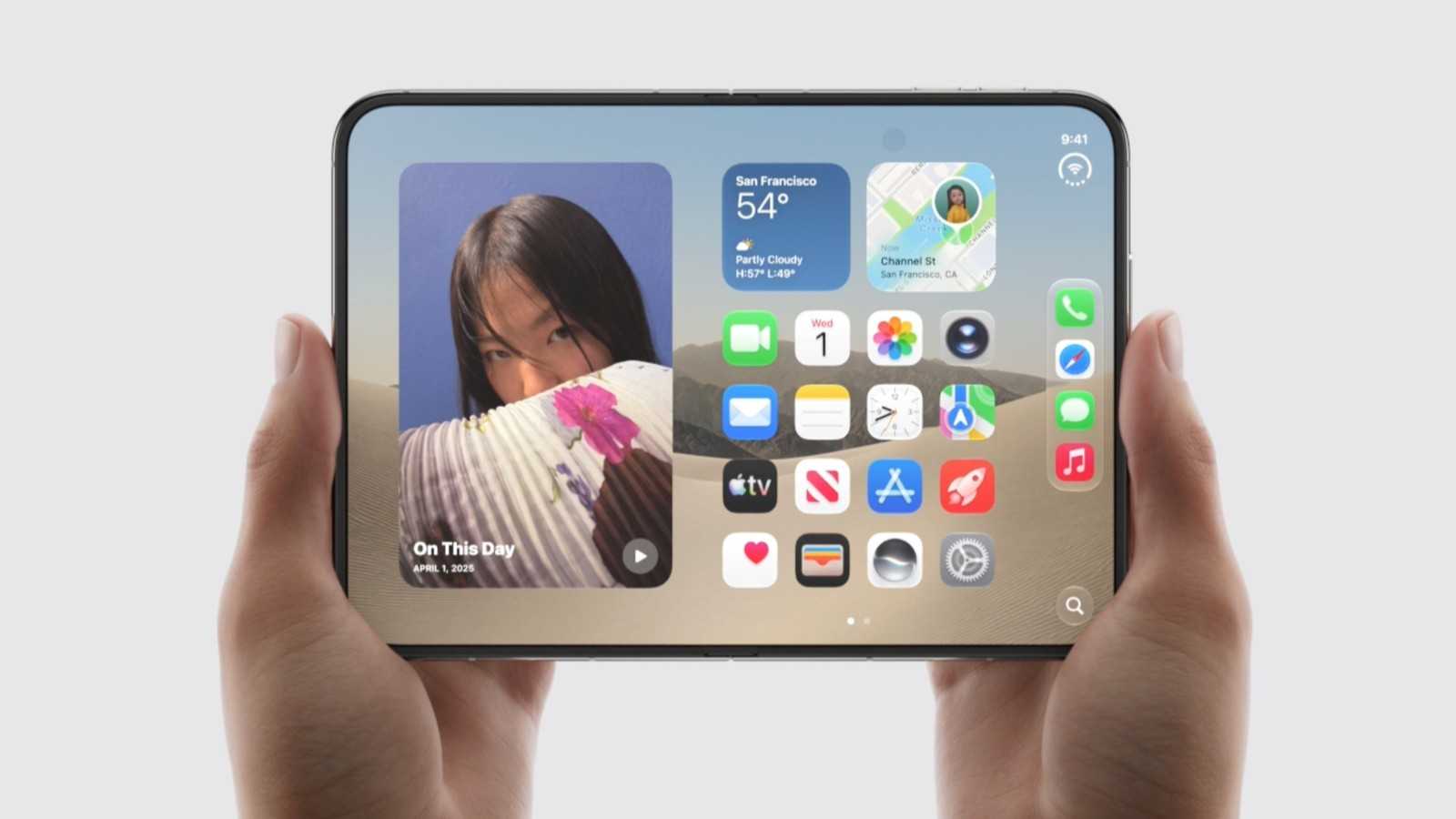
2027 will be the year of the curved-screen phone
Ice Universe posted a video to X yesterday, showing what the leaker claims is the curved display glass for the iPhone 20 Pro, due to be released next year.
The model in question is being referred to as iPhone 20 – instead of the iPhone 19 – as its projected launch date will be 20 years on from the first iPhone. As such, the Pro and Pro Max models are expected to get a huge redesign in honour of the anniversary.
If Ice Universe’s leak is true, it adds more credence to the growing belief that the anniversary iPhone Pro will feature a quad-curved screen, designed to maximise display space and minimise bezel.
Among other evidence is tipster Fixed Focus Digital’s 14 November Weibo post: “It’s been officially confirmed. It uses the same glass as the iPhone Air series […] but with a higher curvature, creating a quad-curved effect.” (Translated)
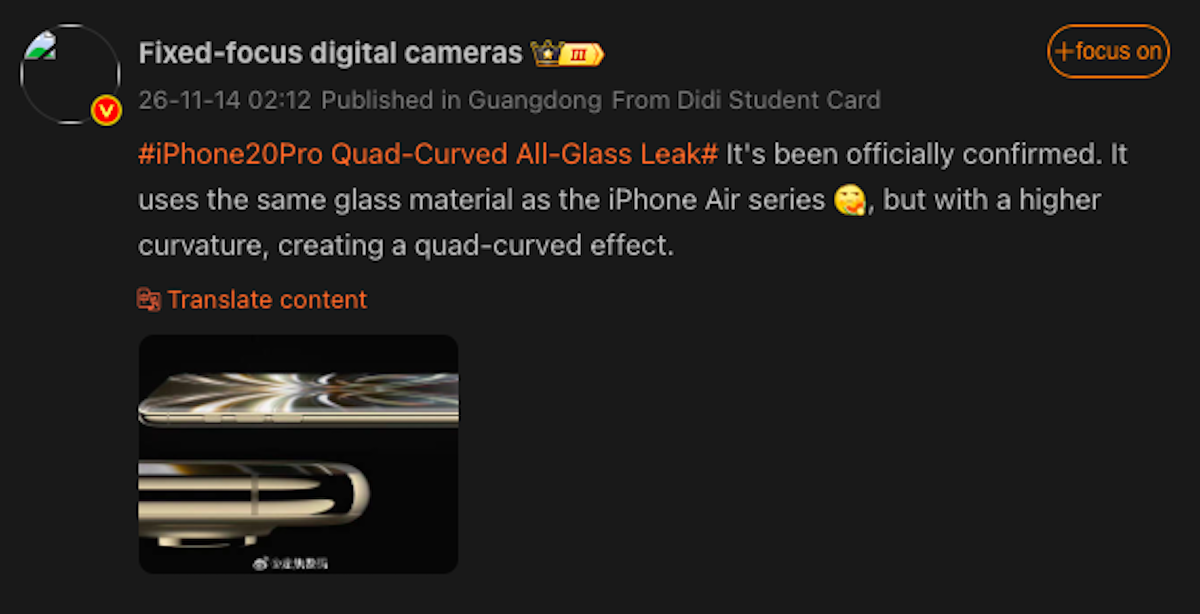
Fixed Focus Digital
Once Android makers are assured that’s the direction Apple is heading, we can expect this trend to take off in a big way. It’ll be like the plague of burgundy phones we saw this year.
What’s old is new again
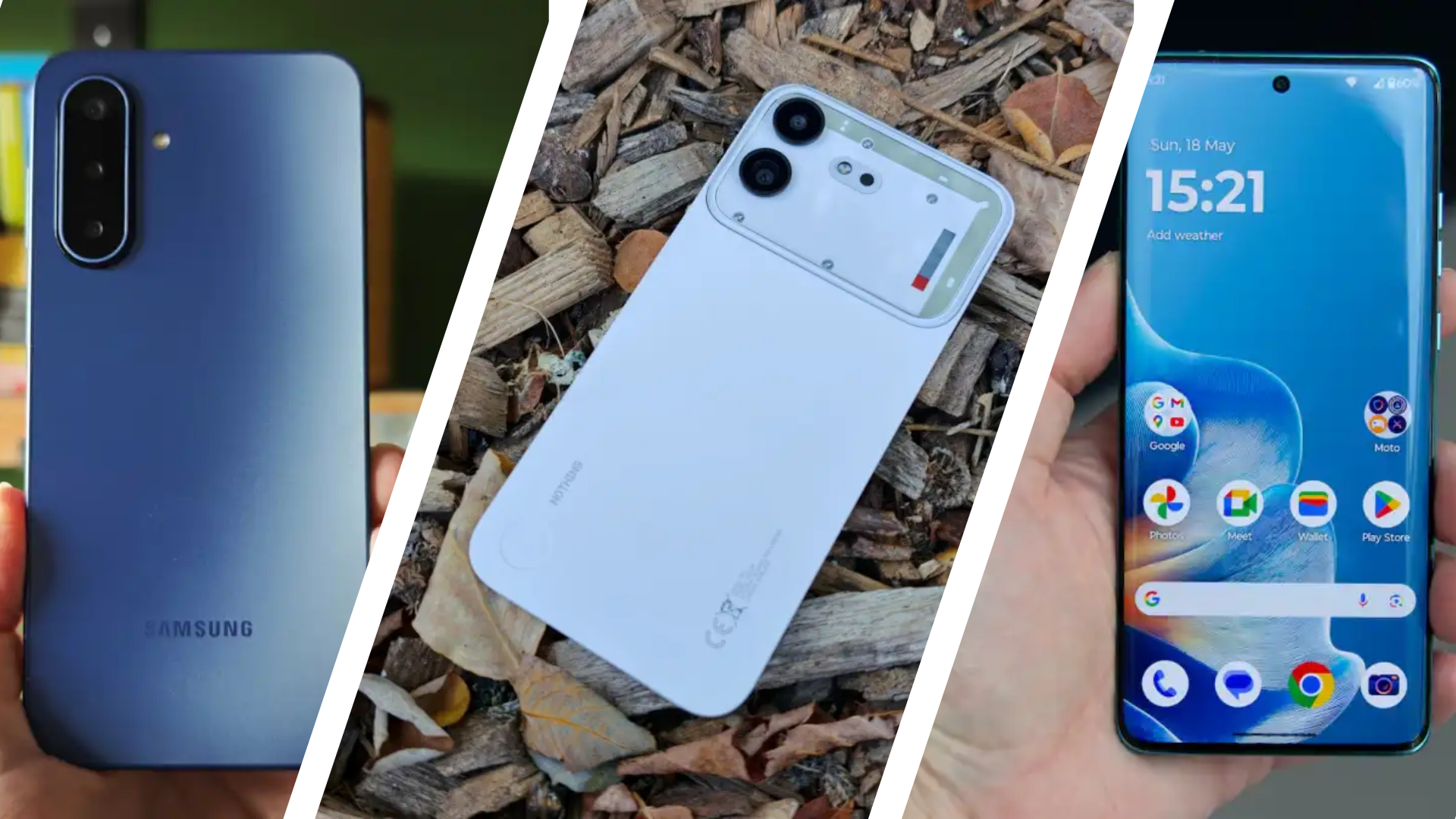
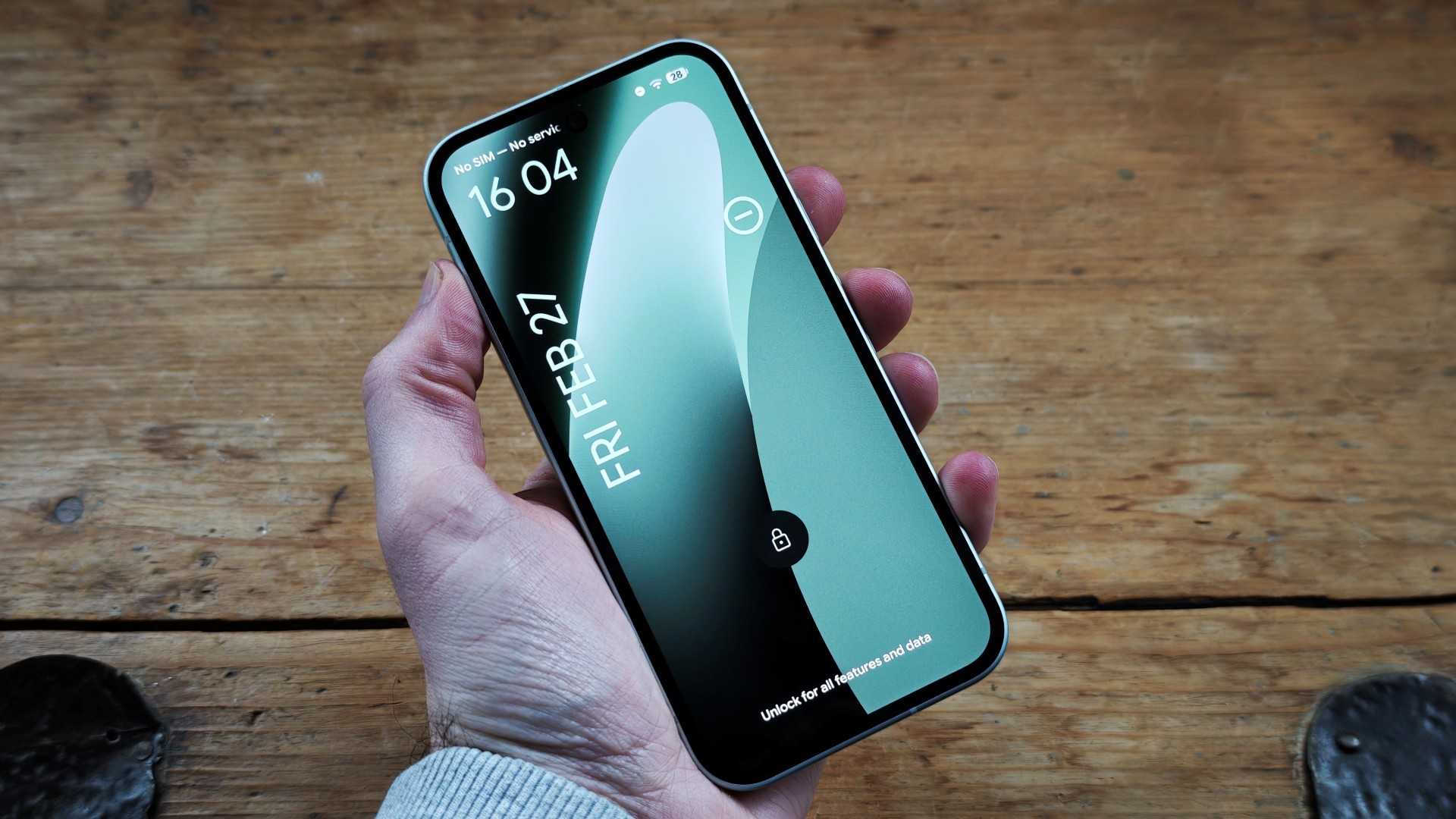
Let’s be clear. Apple won’t be the first to make a handset with a quad-curved display. There are tons of Android examples: the Huawei P40 Pro pioneered the design commercially, and it was followed by the Honor Magic 6 Pro, the Vivo X200 Pro, the Motorola Edge 60 and Edge 60 Fusion, among others.
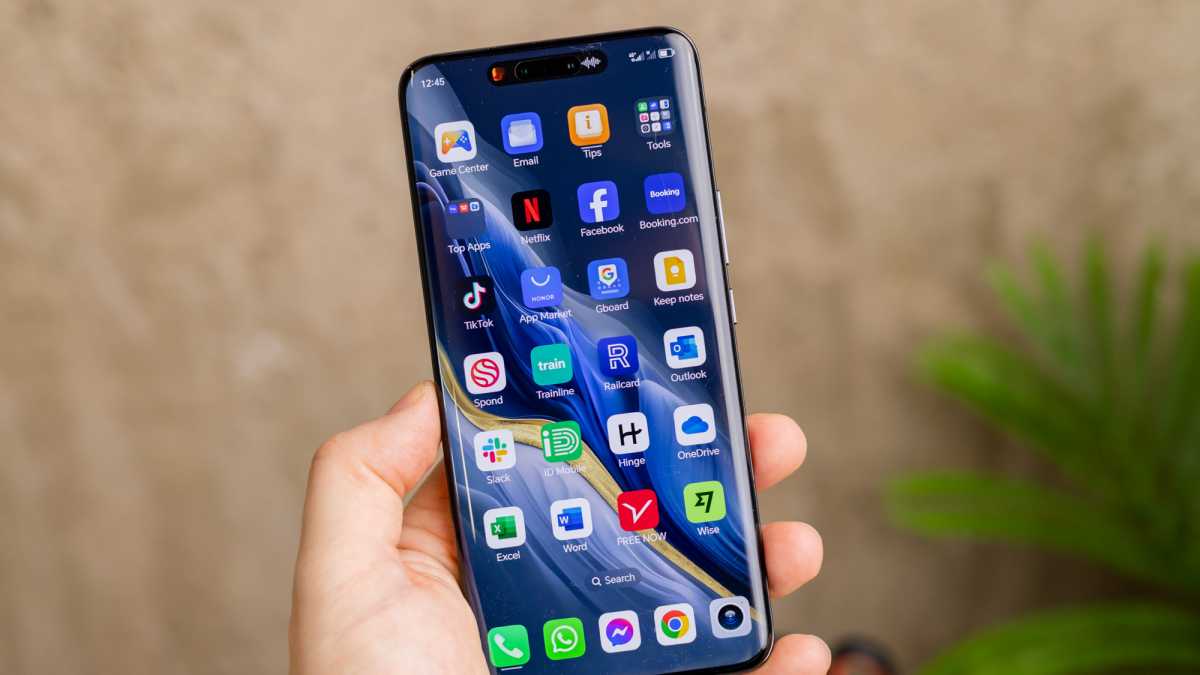
Dominik_Tomaszewski / Foundry
But it’s never been a hugely mainstream feature. Love it or hate it, while Android phones often introduce a feature first, it’s not until it debuts on iPhone that people start talking. (Hearing people coo over a brand-new iPhone feature that’s been around for ages on Android is a major phone journalist bugbear.)
Here’s an example. The big upgrade this year for the otherwise iterative iPhone 18 Pro and Pro Max models was variable aperture technology for their main camera lenses. To be honest, it’s not an unmissable feature. But that doesn’t matter. iPhone did it, and now buyers will expect it.
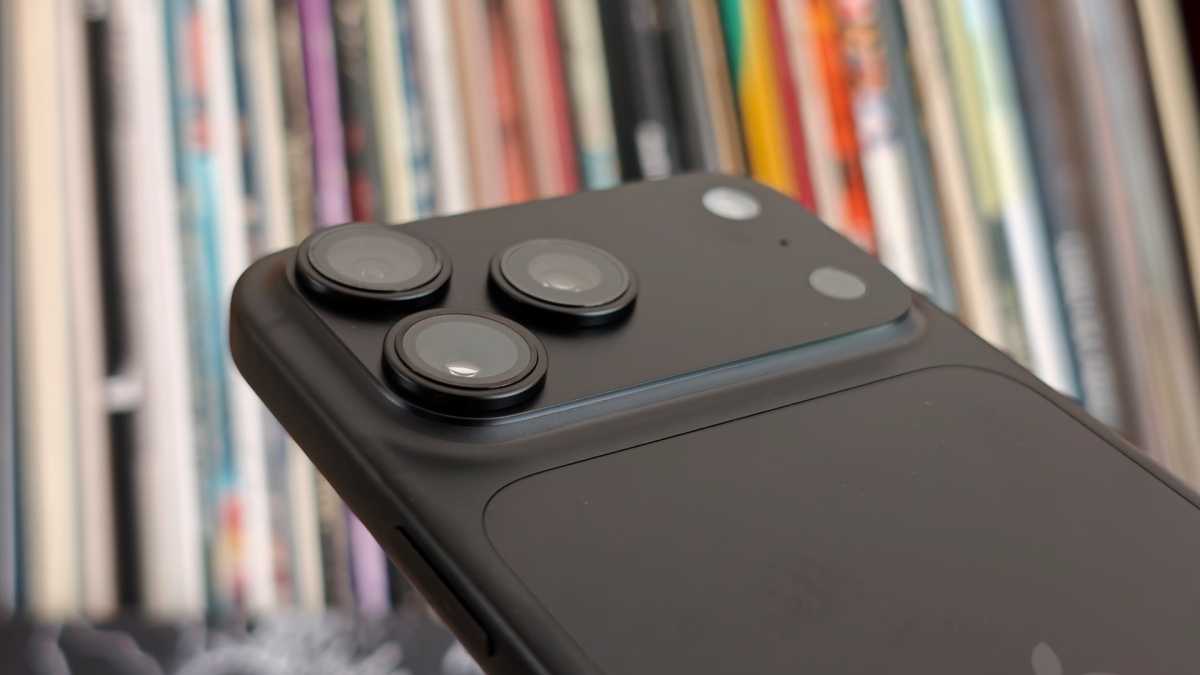
Chris Martin / Foundry
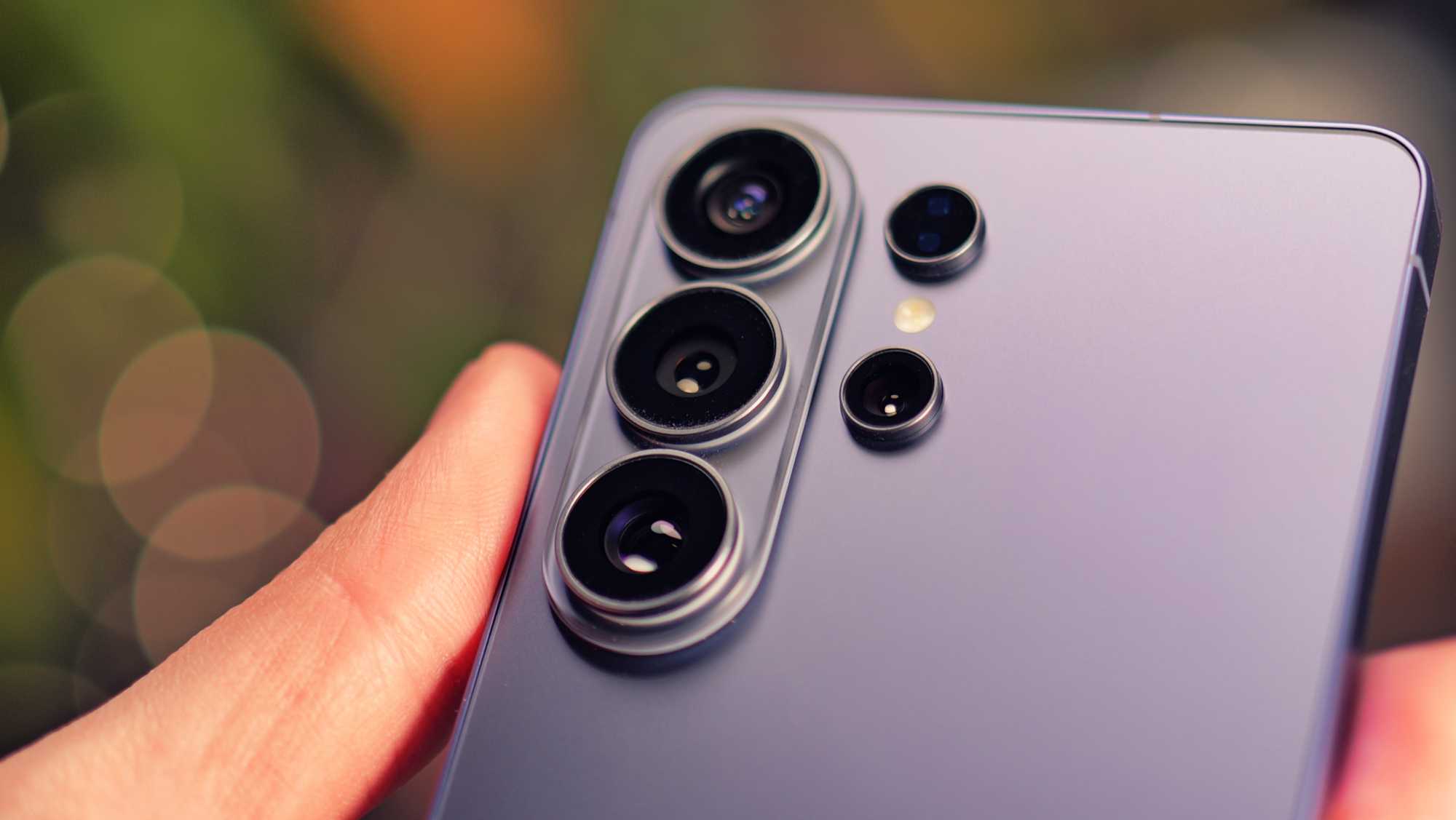
Samsung is now apparently considering adding the feature to its Galaxy S28 Ultra and S28 Pro in early 2028, despite the fact that its Galaxy S9 and S9+ debuted in 2018 with variable aperture technology. By 2020, Samsung had dumped the feature.
In the meantime, plenty of other Android phone cameras have had variable aperture technology, including the Huawei Mate 50 Pro and P60 Pro, the Xiaomi 13 Ultra and 14 Ultra and the Honor Magic 6 Pro. It’s always been pretty niche… until Apple did it.
The iPhone 20 Pro and Pro Max are expected to launch in September next year. Some Android makers will beat Apple to the punch (just like Samsung did with its wide foldable), and some will follow, so we can expect next summer to be the season of curved-screen phones.