What to Know About 4/13—Celebrating Chrysler’s Bracket-Busting 413 Max Wedge
In the history of Mopar performance, the Hemi hogs the spotlight—but Chrysler selected the 413 Max Wedge for their first foray into Super Stock and Factory Experimental drag racing. The “B” engine, with its wedge-shaped combustion chambers, phased out the first-generation FirePower and FireDome hemis in the late 1950s, and as the horsepower wars heated up in the early years of the 1960s, a new high-deck, high-compression version known as the RB (Raised Block) “Max Wedge” was introduced to power the factory Eliminator entries.

The 413ci version of the Max Wedge was a one-year design, fitted with high-compression aluminum pistons (11:1 or 13.5:1), free-flowing heads with larger passages and valves (and heavy-duty springs and rockers), a forged crank with hardened journals and magnafluxed connecting rods, small-diameter drive pulleys to reduce parasitic power loss, dual Carter AFB four-barrels on a slab-shaped “short ram” intake manifold, and a cavernous 3″ exhaust.

Image: racingjunk.com
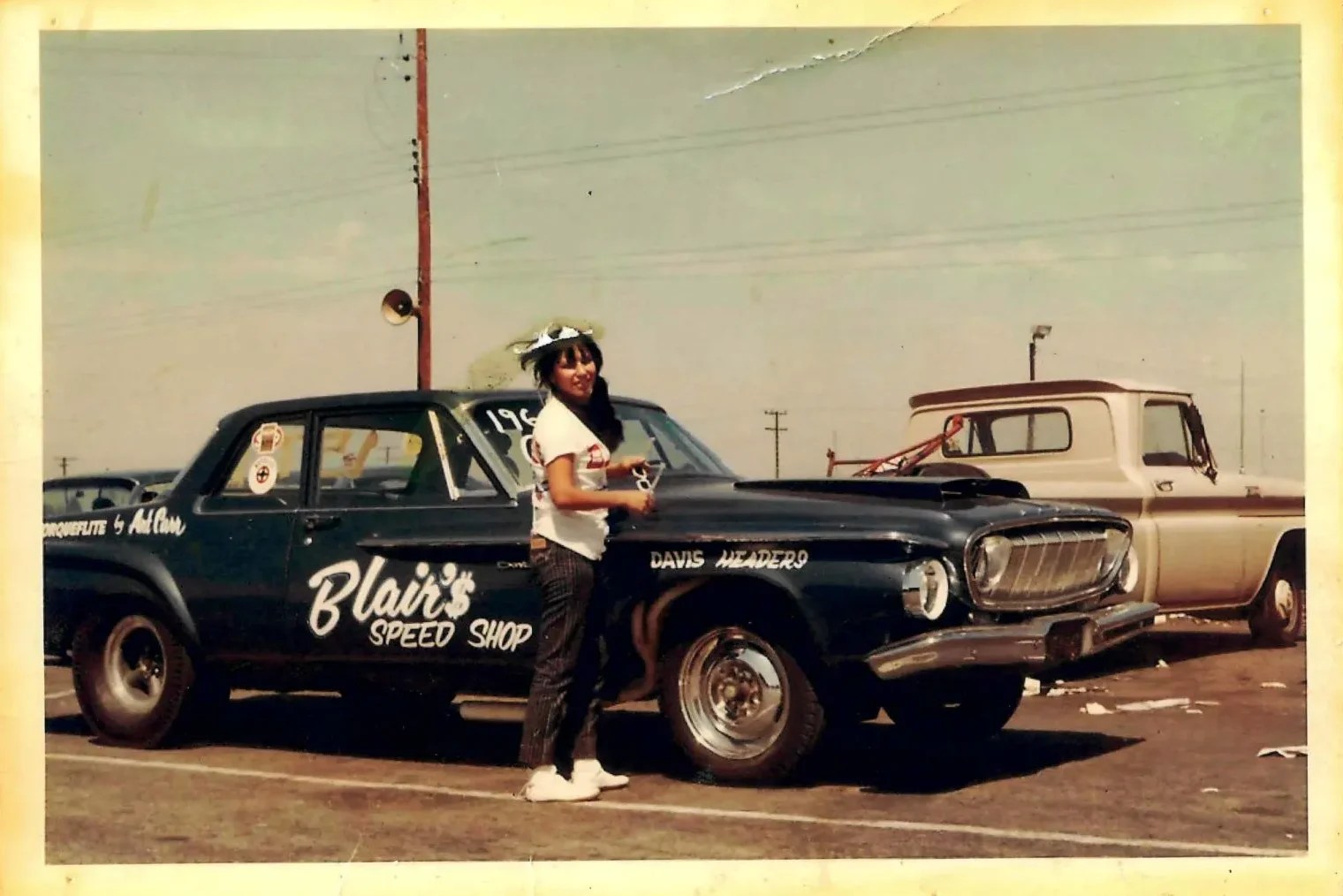
While factory lightweights from Ford and Pontiac were based on full-size vehicles, Chrysler offered the Max Wedge in the mid-size Dodge Polara/Dart and Plymouth Belvedere/Sport Fury. One of these Darts was delivered to drag racer Don Garlits, who fielded the car in the Super Stock classes and set it loose in “powder puff” exhibition races with his wife Pat at the wheel (she usually won).
Garlits’ collaboration with Chrysler led him to put a blown 413 in the fourth iteration of his Swamp Rat slingshot dragster, which proceeded to take him all the way to the Top Eliminator final at the NHRA US Nationals at Indianapolis in 1962. We’ve cued the video above to the matchup. The Swamp Rat performed below its potential and in the end, he was edged out by Jack Christman in a Pontiac-powered Mickey Thompson dragster. In its best run that season, Garlits drove Swamp Rat IV through the quarter-mile in 7.82 seconds at 185 mph.

Image: ramchargers.com
But keep the video rolling—following Garlits was a whole phalanx of Super Stock-class Darts and Furies run by the factory-supported Ramchargers team: drivers like Bill “Maverick” Golden, teams from large dealer networks, and even a car fielded by Hot Rod magazine and driven by its editor, Ray Brock. All of them were more than competitive, capable of posting quarter-mile times in the 12-second range with little extra tuning. In fact, Golden’s car won the earlier Pomona divisional with a 12.50 time, and Brock posted a best run of 12.37 at Indianapolis, though he faltered off the line in a later round.

While the cars may have won on Sunday, Virgil Exner’s controversial (and rushed) styling job hurt sales on Monday—even today, the Super Stock Plymouth and Ram Charger Dodge specials don’t fetch quite the same premiums as their Galaxie, Impala, and Catalina counterparts. Furthermore, they’re often overshadowed by the more conventionally attractive 426 Hemi-powered cars that came out of Chrysler just two years later. But at the dawn of the Horsepower Wars, the funky silhouette of a Max Wedge car on the other side of the Armco was something to be feared.