74magnitude quake hits
|

7.4-magnitude quake hits Colombia, killing 26

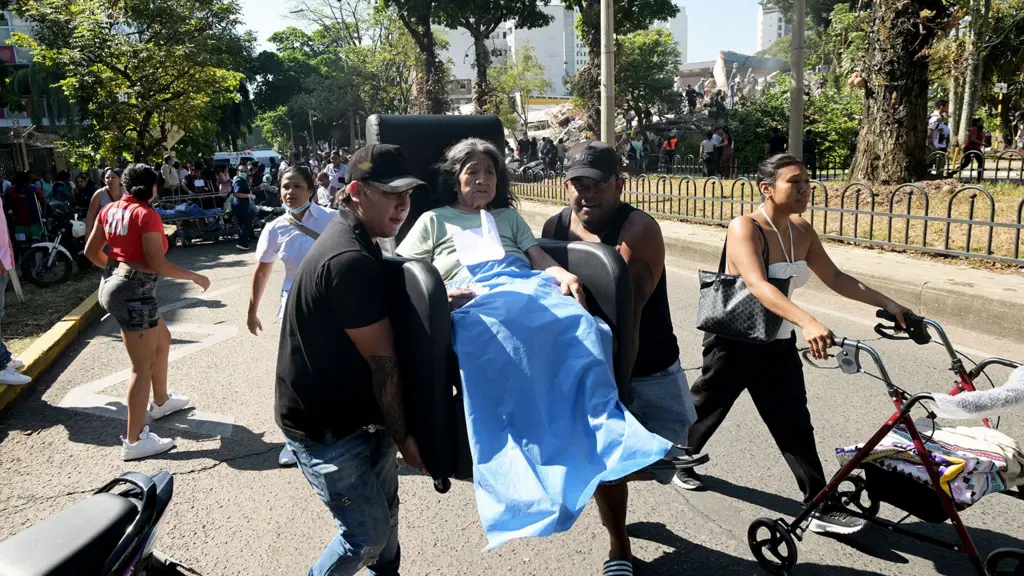
A powerful earthquake struck western Colombia on Monday, leaving at least 26 people dead and causing widespread damage across several cities.

The United States Geological Survey recorded the earthquake at magnitude 7.4. It struck at around 7:34am local time, with its epicentre near San José del Palmar in the Chocó region at a depth of about 107 kilometres.

The tremor was felt across much of Colombia and in neighbouring Venezuela, Ecuador and Panama. Authorities warned residents to remain alert as aftershocks were recorded following the main earthquake.

Local officials reported deaths in several parts of the country. Three children were among those killed in Calima El Darién after a wall collapsed. Other fatalities were reported in Zarzal, Buenaventura, Manizales and Pereira.

Pereira officials reported 18 deaths, while authorities in Manizales confirmed additional fatalities. Rescue teams continued assessing the situation as reports of casualties and damage were updated.

Cali was among the worst-affected cities. Mayor Alejandro Eder said at least 20 buildings had collapsed, with people reportedly trapped under the rubble. He requested additional rescue personnel from Bogotá and Medellín to assist emergency teams.

Residents were urged to leave buildings if they noticed major cracks or believed the structures were unsafe.

Serious damage was also reported in Quibdó, the capital of Chocó. Regional authorities said several people were injured and buildings were damaged. Rescue workers were deployed to assess affected areas and search for people who may be trapped.

Manizales also suffered significant structural damage. Images and videos showed part of the Cathedral Basilica’s clocktower leaning dangerously. A five-storey building was also seen collapsing as people evacuated nearby areas.

The earthquake caused panic in Bogotá, where residents rushed out of homes and workplaces. Emergency sirens sounded across parts of the capital. People gathered in streets as buildings and traffic lights shook during the tremor.

Bogotá authorities initially reported cracks in some structures but said there was no immediate indication of major infrastructure damage.

The earthquake also disrupted air travel. Colombia’s civil aviation authority suspended operations at several airports after damage was reported at facilities in Pereira, Manizales, Quibdó, Armenia, Cartago and Buenaventura. Operations at Popayán airport were also suspended because of volcanic ash.

Officials said the Colombian Geological Service recorded two aftershocks, measuring 2.8 and 4.8. The stronger aftershock was widely felt.

Colombian authorities described the earthquake as the strongest recorded in the country in roughly a decade. Emergency agencies continued damage assessments while rescue operations remained underway.

President Abelardo De La Espriella said he had taken direct charge of the emergency response. He ordered the creation of a unified command centre to coordinate rescue and relief efforts and said he would travel to Pereira to monitor the situation.

The disaster comes less than two months after powerful earthquakes struck Venezuela on June 24. Those quakes killed more than 6,100 people and caused extensive destruction.

Similar Posts

  • |

    Google DeepMind exec admits AI extinction risk is “not zero

    Lila Ibrahim, Google DeepMind’s Chief AI Readiness Officer, will not put a number on the odds of AI wiping out humanity. She is not dismissing the possibility either. Speaking to Fortune, she said the risk is “not zero,” admitting that anything more specific would just be guesswork on her part. Ibrahim was among those who signed the Center for AI Safety’s 2023 statement, alongside co-founders of Anthropic and OpenAI. That statement argued AI extinction risk deserves the same global priority as nuclear war and pandemics. Three years on, she still believes staying silent on existential risk would be irresponsible. She feels this way especially now, given how far the technology has advanced since then. Some of her peers sound even more alarmed. Geoffrey Hinton, often called the “godfather of AI,” estimates a 10% to 20% chance of extinction within the next three decades. Anthropic’s Dario Amodei has gone further, putting the odds of things going “really, really badly” at around 25%. These warnings are not new either. Physicist Stephen Hawking, who used AI tools himself, raised similar concerns long before ChatGPT even existed. Ibrahim compares the situation to the pandemic, pointing out that the worst risks rarely arrive the way people expect. She noted that entire industries failed to properly weigh risk during earlier tech shifts, including the rise of the internet and social media. She is just as sceptical of the optimistic predictions floating around. Elon Musk recently told The Economist that money will stop mattering by 2036, imagining a future of cheap abundance and universal high income once robots take over most jobs. Jeff Bezos has predicted millions of people living in space by 2045. Sam Altman, meanwhile, envisions new job opportunities specifically for graduates working in space. Ibrahim isn’t convinced by either scenario, arguing that AI simply is not developing fast enough to make these predictions realistic anytime soon. Rather than debating far-off futures, Ibrahim says she is more focused on using AI to tackle problems happening right now. She pointed to climate change and industrial pollution as areas where the technology could make a real difference. She was also clear that AI’s benefits should not be limited to a handful of powerful companies. For her, that is just as important as managing the risks.

  • | |

    Wedding joy turns to mourning, Rickshaw falls into…

    Muzaffargarh: A wedding celebration turned into a tragedy after an overloaded rickshaw carrying members of a wedding party plunged into a canal on Monday evening, leaving at least seven people dead and several others missing. According to rescue officials, the incident occurred when the rickshaw, which was carrying a large number of passengers including women and children, reportedly lost control while travelling along the canal-side road. The vehicle skidded off the road and fell into the water. Local residents and rescue divers immediately launched an operation to search for the passengers. Nine people were rescued alive and shifted to a nearby hospital for medical treatment. Some of those rescued were reported to be in critical condition. Rescue teams have so far recovered the bodies of seven people. The deceased have been identified as 14-year-old Dilawar, son of Abdul Rasheed; seven-year-old Muneeb, son of Rashid; 58-year-old Sakina Bibi, wife of Allah Ditta; 15-year-old Sameera Bibi, daughter of M Shafiq; M Saim, son of M Iqbal; seven-year-old M Sabtain, son of Musharraf; and nine-year-old Raju, son of M Iqbal. Several passengers are still believed to be missing. Those reported missing include M Bilal, son of M Iqbal; M Yasir, son of Fida Hussain; M Ali, son of M Shafiq; Usman, son of Ghulam Fareed; Shakir, son of Ashiq Hussain; Hassnain, son of Musharraf Ali; Iqbal Bibi, daughter of Fida Hussain; Kaleem Ullah, son of Basheer Ahmad; and Zareef, son of Wazeer Ahmad. The rickshaw was reportedly carrying far more passengers than its permitted capacity, raising concerns about dangerous overloading. Rescue teams continued their search operation on Tuesday as authorities feared the death toll could increase. The incident has cast a pall of grief over the families of the wedding party, with relatives anxiously awaiting information about their loved ones as the recovery operation continues.

  • |

    Meghan Markle’s ring-free appearance sparks ‘deliberate message’ claim

    Meghan Markle has reportedly sent a subtle but pointed message to husband Prince Harry through a calculated public appearance. Royal insiders claim the gesture was far from accidental. Sources told Closer that Meghan wanted to remind Harry she remains the same independent, self-assured woman he originally fell for. The message, they suggest, came through a solo public outing. Meghan recently made a solo appearance at a screening for “Cookie Queens,” a documentary about the Girl Scouts on which she serves as executive producer. Eagle-eyed fans quickly noticed one key detail from the event. She was not wearing her engagement ring during the appearance. According to insiders, that absence was not accidental at all. A close source explained that Meghan is far too media-savvy to step out without her ring by mistake. They suggested the move was designed to send a clear signal, both publicly and to Harry directly. The insider described it as a reminder that Meghan remains the driven, independent woman Harry originally fell in love with. They added that anyone choosing to take her for granted would do so at their own risk. This latest development adds to ongoing speculation about how separately Harry and Meghan have been living their day-to-day lives. Sources claim the couple’s schedules have grown increasingly divided in recent months. According to the source, Meghan has been taking frequent meetings in Los Angeles while handling much of the negotiation work tied to their Netflix deal. Harry, meanwhile, is said to be focused on his charitable work and repairing his relationship with his father. The insider suggested Meghan has taken on a larger share of responsibility for bringing in income for the family. Despite their busy, separate schedules, the source said the couple still comes together for meals and family time. Even so, the source acknowledged that their days often pass quickly, with each of them pulled in different directions. The latest appearance has only added fuel to ongoing speculation about the dynamics within their marriage.

  • | |

    NYC mayor Zohran Mamdani puts Shamoon Ismail on his playlist

    New York City Mayor Zohran Mamdani is not your average politician, and the playlist he shared with Rolling Stone makes that abundantly clear. In a candid and wide-ranging interview with the magazine, the newly elected mayor opened up about his love of music, name-dropping artists from Uganda, Pakistan and the United States in a conversation that has since generated considerable excitement, particularly in Pakistan. The moment that caught Pakistani audiences off guard was Mamdani’s mention of Shamoon Ismail, the Pakistani rapper and singer who has built a substantial following through his distinctive blend of pop, R&B and Urdu and English lyrics. “I’ve also been listening to a Pakistani rapper named Shamoon Ismail, who I’ve listened to for a few years, but I’m also listening to a little bit more of his music,” Mamdani said. The acknowledgement from the mayor of one of the world’s most powerful cities landed with particular warmth among Pakistani fans, who were clearly delighted to see a homegrown artist reach the playlist of such a prominent international figure. Mamdani was candid about what music means to him beyond casual listening. “It’s part of how I understand the world and how I understand my place in the world,” he said, framing music not as entertainment but as a tool for making sense of life and identity. The interview also offered a window into how his relationship with music began, rooted in the particular atmosphere of early 2000s New York. “I used to love going to Tower Records. They would have just floors of an incredible number of CDs, and for some reason, I loved The Offspring at the time,” he recalled, describing the kind of music discovery that now feels like it belongs to a different era entirely. His memories of finding music in the city carried the texture of street-level New York. “There were three to four albums. The first version I was given was the clean version of Jay-Z’s The Blueprint. The funny thing was that they used to sell bootleg CDs right outside of Tower Records, and that’s where I bought Eiffel 65’s Europop,” he said, the detail of the bootleg seller outside Tower Records painting a vivid picture of the city he grew up in. His Ugandan roots also appeared in his playlist. “I’ve been listening to a lot of Radio & Weasel, who are a duo from Uganda, who were running the charts for a long, long time,” he said. And for quieter, more reflective moments, he reached for country music. “And, you know, if I’m feeling reflective, throw on some Kacey Musgraves,” he added. Mamdani, who is of South Asian and East African descent, became a cultural talking point when he wrapped up his 2025 electoral victory speech to the Bollywood track Dhoom Machale as his family walked onto the stage. That moment went viral and signalled from the very beginning that this was a politician with a different kind of cultural identity from those typically associated with New York’s highest office. In a previous interview, he had also spoken warmly about Indian-American rapper Himanshu Suri, known as Heems, describing him as one of his favourite artists well before he entered politics. For Shamoon Ismail, the mention by a sitting mayor is the kind of international visibility that cannot be manufactured or bought. For Pakistani music more broadly, it is a reminder that the country’s artists are being heard in places and by people that might surprise even their most devoted local fans.

  • |

    England on track to eliminate hepatitis C by 2030

    More than 100,000 people in England have received potentially life-saving treatment for hepatitis C in the past decade, as the NHS steps up efforts to eliminate the virus as a public health threat by 2030. New NHS figures show that more than 100,000 people have been diagnosed and treated since pioneering antiviral medicines were introduced in 2015, putting England among a handful of countries that have already exceeded the World Health Organisation benchmark of treating 80% of known hepatitis C cases. (NHS England) Hepatitis C is a viral infection that can damage the liver and, if left untreated, can lead to serious and potentially life-threatening conditions including cirrhosis, liver failure and liver cancer. The infection can remain undetected for years because many people experience no noticeable symptoms until significant liver damage has already occurred. However, modern treatment has transformed the disease. A free course of antiviral tablets lasting between eight and 12 weeks can cure more than 95% of cases. The NHS says effective treatment could reduce the number of people requiring liver transplants by 80% over the next decade, while also reducing cases of liver cancer and cirrhosis. Deaths from hepatitis C have already fallen by 36% over the past ten years. (NHS England) NHS urges people at risk to get tested The latest figures have prompted the NHS to urge people who may be at greater risk of having undiagnosed hepatitis C to order a free and confidential home-testing kit. Those particularly encouraged to test include people who have moved to England from certain Eastern European countries, anyone who has had a tattoo abroad, and people who currently use or have previously used injectable drugs. Adults born in Ukraine, Romania, Estonia, Latvia, Poland, Albania, Lithuania, Bulgaria, Czechia and Slovakia are also being urged to test. The NHS says some people from these countries may have been exposed to the virus through medical or dental procedures before 1991, when modern sterilisation standards were introduced. The free home-testing service is designed to reach people who may not otherwise come into contact with drug and alcohol services, sexual health services, GPs or A&E departments. Thousands of hidden cases identified The NHS has significantly expanded hepatitis C testing over the past five years. A first-of-its-kind programme offering hepatitis C testing to patients having blood tests in participating A&E departments has identified around 1,900 previously undiagnosed cases since 2022. GP practices are also asking new patients whether they received a blood transfusion before 1996, helping identify people who may have been infected through the contaminated blood scandal. The treatment programme was made possible on a large scale following a landmark 2019 agreement between the NHS and pharmaceutical companies Gilead Sciences, MSD and AbbVie, which enabled access to modern curative treatments. (NHS England) ‘Determined to finish the job’ Professor Frankie Swords, NHS national medical director, said hepatitis C could cause serious harm including liver failure and cancer, while many people could remain unaware they have the virus. He said treating more than 100,000 people in a decade was a major achievement but stressed that the NHS would continue looking for people with undiagnosed infections. “England is now leading the world in the mission to eliminate this disease and on course to beat the WHO’s 2030 target,” Professor Swords said. He added that the NHS was “determined to keep up the momentum and finish the job”. “With hepatitis C curable in more than nine out of ten cases, we are committed to finding and treating everyone who needs support,” he said. (NHS England). Patient urges others to take the test Among those treated is 65-year-old Paul Eatwell from Blackburn, Lancashire, who discovered he had hepatitis C after routine liver-function tests following a change of GP. His new doctor ordered additional tests, including screening for hepatitis C. Paul said he initially could not believe the result because he had no symptoms and could not understand how he might have contracted the virus. The precise source of his infection was never established, although possible risk factors included surgery in South Africa several decades ago. He said the specialist team helped answer his questions and reassured him about the condition. Paul said treatment was far less difficult than he had imagined, involving one tablet a day for 12 weeks and several blood tests. He urged anyone who believes they may have been exposed to hepatitis C to get tested, saying that knowing their status could provide peace of mind. ‘Leading the world’ Health and Social Care Secretary Yvette Cooper said the progress demonstrated the impact of NHS treatment and prevention programmes. She said hepatitis C was now curable in the vast majority of cases and described the UK’s progress as part of efforts to “wipe out this disease for good”. “This is exactly the kind of preventative, forward-looking healthcare that we want the NHS to deliver across the board – catching illness earlier, easing pressure on hospitals, and giving people the chance to live longer, healthier lives,” Cooper said. (NHS England. Dr Sema Mandal, deputy director of Blood Safety, Hepatitis, STIs and HIV at the UK Health Security Agency, said the sharp fall in cases since 2015 demonstrated the impact of expanded testing and access to modern treatments. She said treating more than 100,000 people in ten years had brought England closer than ever to eliminating hepatitis C as a public health threat. The Hepatitis C Trust also called for continued long-term investment to maintain the progress made by the national programme, particularly among marginalised communities that can face barriers to healthcare. Rachel Halford, chief executive of The Hepatitis C Trust, said continued funding would be essential to ensure people at greatest risk were not left behind. Hepatitis B remains a challenge While England’s progress against hepatitis C is described as world-leading, health authorities stress that elimination of viral hepatitis as a whole also includes hepatitis B. Further work is therefore required to improve diagnosis and access to treatment for people living with hepatitis B. A national

Leave a Reply

Your email address will not be published. Required fields are marked *