| |

COVID-19 legal battle against Anthony Fauci

On August 6, 2026, the Senate Homeland Security and Governmental Affairs Committee hold Dr. Anthony Fauci in contempt of Congress. The resolution, driven by the committee’s Republican Chairman, Senator Rand Paul of Kentucky, recommends referring the 85-year-old retired public health official to the U.S. Department of Justice for potential criminal prosecution.

The panel’s decision follows a contentious appearance by Fauci during an investigation into the government’s COVID-19 response and the origins of the coronavirus. Throughout the session, Fauci repeatedly invoked his Fifth Amendment constitutional protection against self-incrimination, refusing to answer key questions from lawmakers more than 100 times.

A Long-Standing Feud Escalates

The bitter confrontation represents the latest chapter in a multi-year rivalry between Rand Paul and Anthony Fauci, who served as the prominent face of the federal government’s pandemic response until his retirement in 2022. For years, Paul and conservative lawmakers have accused Fauci of misrepresenting information regarding the origins of the virus, public health guidance, and funding for viral research. Shortly before the hearing, Paul released over 1,000 pages of Fauci’s personal diary entries, claiming they demonstrated hidden doubts about the origins of the outbreak.

During his opening statement at the hearing, Fauci delivered a rebuke of the proceedings, characterizing the hearing as a political trap. He accused Senator Paul of harboring an unhinged obsession with sending him to prison, arguing that the true purpose was to force him into a procedural error or perjury. Citing legal advice from his counsel, Fauci stated that pleading the Fifth Amendment was his only prudent option to protect against politically motivated prosecution, despite his history of testifying before Congress across multiple presidential administrations.

The Legal Dilemma Over Clemency and Constitutional Rights

At the center of the contempt vote lies a unprecedented constitutional debate involving executive clemency and Fifth Amendment rights. Before leaving office in January 2025, former President Joe Biden issued a preemptive pardon to Fauci covering his official actions between 2014 and early 2025, intending to insulate the scientist from what the former administration deemed politically motivated retributive investigations.

Senator Paul argued that because Fauci holds presidential immunity for his past government conduct, he no longer faces real legal exposure for those events, rendering his Fifth Amendment claims invalid.

“Holding a witness in contempt is a serious thing, and it should be rare,” Paul remarked prior to the vote. “But the contempt power exists for precisely this circumstance.”

Conversely, Democratic members of the committee and legal experts contend that because current lawmakers and political figures have repeatedly threatened Fauci with new criminal proceedings, his apprehension regarding self-incrimination remains legally legitimate. Democrats tried to stall the contempt measure by introducing five procedural motions to table or delay the vote, but the Republican majority defeated every motion along party lines.

Potential Next Steps

With the committee’s approval, the contempt resolution moves forward, though its future path remains uncertain. Typically, a contempt of Congress resolution requires a full vote on the Senate floor, where it would need a 60-vote threshold to clear procedural hurdles, an unlikely outcome given solid Democratic opposition. However, Chairman Paul indicated he may attempt to bypass a full floor vote by referring the resolution directly to the Department of Justice.

Whether the Justice Department chooses to take up the referral and pursue criminal charges against the veteran public health official remains to be seen. Regardless of the legal outcome, today’s vote underscores the persistent political divide in Washington over the scientific, social, and policy decisions made during the COVID-19 pandemic.


Similar Posts

  • | | |

    Uganda backs sending troops to planned Gaza peace …

    Uganda’s Parliament has approved a government proposal to deploy troops to a planned international peace and stabilisation force for Gaza, marking the country’s first commitment to the proposed multinational mission. The resolution was introduced by Uganda’s Minister of Defence and received parliamentary approval following debate among lawmakers. With the decision, Uganda joins Morocco, which has also announced its willingness to contribute troops to the proposed force. The Ugandan government has not publicly disclosed the diplomatic discussions or political considerations behind its decision. However, the move sparked debate in Parliament, with opposition members expressing concerns about the potential implications for Uganda’s foreign policy and regional relationships. Opposition lawmaker Hassan Kiromera questioned the mission’s objectives, asking which parties Ugandan troops would ultimately be expected to confront if deployed. He argued that the government should provide greater clarity regarding the mandate of the proposed force before committing military personnel. Defence Minister Jacob Oboth-Oboth defended the proposal, stating that the Uganda People’s Defence Forces (UPDF) possess extensive experience in international peacekeeping operations, including missions in Somalia and other conflict zones. He said that this experience would enable Ugandan troops to contribute effectively to efforts aimed at restoring peace and stability in Gaza. According to the report, the proposed Gaza International Stabilisation Force is expected to consist of approximately 20,000 personnel from multiple countries. The force is reportedly planned under a proposal associated with US President Donald Trump’s Board of Peace and would be commanded by US Major General Jasper Jeffers. The mission is intended to help maintain law and order in Gaza following the end of hostilities between Israel and Hamas. Reports indicate that the proposal was first introduced earlier this year as part of broader discussions on post-conflict governance and security arrangements in the territory. The development follows recent announcements regarding a reported agreement under which Hamas would disarm and Israel would gradually withdraw its military forces from Gaza. Under the reported framework, the international stabilisation force would be deployed after the phased Israeli withdrawal. However, uncertainty remains over the implementation of the proposed arrangement. Israeli officials have reportedly expressed serious security concerns after reviewing the reported agreement, arguing that certain provisions could pose risks to national security. As a result, questions remain about the timeline and conditions for the deployment of the multinational peace force despite Uganda’s parliamentary approval.

  • |

    Man arrested over US Consulate bomb threat

    A man has been arrested in Halifax, Canada, after allegedly threatening to blow up the US Consulate, triggering a major security operation in the area. According to US media reports, Canadian authorities found flammable materials inside the suspect’s vehicle near the consulate. Police responded quickly to the bomb threat and evacuated several blocks surrounding the diplomatic facility as a precaution. The security operation continued for more than five hours as police and emergency teams searched the area and assessed the potential threat. Authorities later cleared the site and confirmed that there was no longer any danger to the public. Canadian police said they had taken a man into custody in connection with the incident. However, authorities have not yet filed criminal charges against him, and investigators are continuing to examine the circumstances surrounding the threat. The incident prompted heightened security measures around the US diplomatic facility and temporarily disrupted activity in the surrounding area. The security scare comes amid increased concern over attacks targeting US diplomatic facilities in Canada. US media reports that the American Consulate in Toronto has come under gunfire twice this year, although the Halifax incident has not been publicly linked to those attacks. Canadian authorities are expected to continue their investigation to determine the suspect’s motive and whether he intended to carry out an actual attack.

  • Thailand Launches ‘Wellness Sandbox’ to Boost Global Medical Tourism

    BANGKOK – The Thai government and private sectors are launching a “Wellness Sandbox” pilot program in 2026 to establish new Wellness Special Economic Zones. Aimed at bypassing complex legal hurdles, this initiative introduces a unified “Super Licence.” This permit combines hotel and medical services, attracting foreign investment and driving economic growth nationwide. Thailand is forging […]

  • Health Officials Monitor Arsenic Exposure Risks in Chiang Rai Waterways

    CHIANG RAI – Thailand’s Department of Disease Control (DDC) is expanding its health surveillance program to protect residents living near arsenic-contaminated waterways in Chiang Rai province. Health officials are focusing on individuals facing moderate to high risks of chemical exposure along the Kok, Sai, Ruak, and tributary rivers. This second-year campaign now spans 18 districts […]

  • | | | |

    Mohsin Naqvi begins official visit to Iran

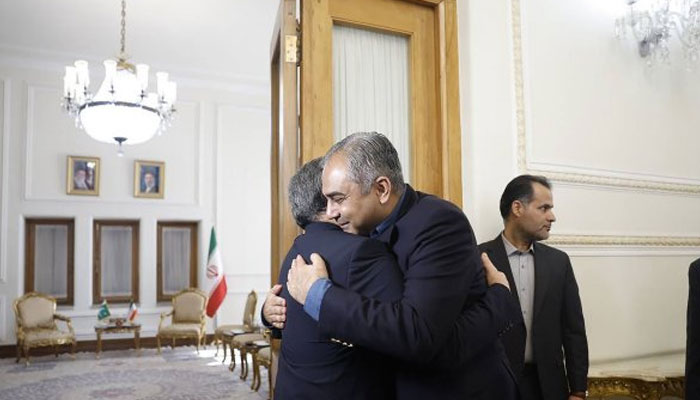
      Federal Interior Minister Mohsin Naqvi has arrived in Iran on an official visit, where he is set to hold meetings with senior Iranian officials, according to Iranian media reports. Naqvi’s visit is expected to focus on strengthening relations between Pakistan and Iran and improving coordination on issues of mutual interest. During his stay, the interior minister will meet high-ranking Iranian officials and exchange views on matters concerning the two neighbouring countries. The visit comes amid continued diplomatic engagement between Islamabad and Tehran, with both sides seeking to enhance cooperation and maintain regular contact at the leadership and ministerial levels. Discussions during Naqvi’s meetings are likely to cover bilateral relations as well as regional developments that have implications for both Pakistan and Iran. The two countries share a long border and have close historical, cultural and economic ties, making regular coordination between their governments important. Pakistan and Iran have also been working to improve cooperation on border management and other issues affecting communities along their shared frontier. High-level visits and official meetings provide an opportunity for both sides to review progress, address outstanding concerns and explore new areas of cooperation. Iranian media said Naqvi will meet senior officials during his visit, although further details about his schedule and the specific issues to be discussed were not immediately disclosed. The minister’s visit is part of Pakistan’s broader efforts to maintain engagement with neighbouring countries and strengthen bilateral ties through diplomatic and official channels. His meetings in Tehran are expected to contribute to continued dialogue between the two countries and provide a platform for discussing matters of shared concern.

  • |

    Over 800,000 Lebanese return home amid ongoing border tensions

    More than 800,000 people displaced by the war in Lebanon have started returning to their hometowns and villages as security conditions improve in parts of the country. However, the humanitarian situation remains severe, with hundreds of thousands still unable to go back because of widespread destruction and ongoing instability. According to the United Nations, more than 360,000 people remain displaced across Lebanon. Around 26,000 of them continue to live in government-run shelters, while many others stay with relatives or in temporary accommodation as they wait for conditions to improve. The UN’s humanitarian agency says the conflict has devastated essential infrastructure, particularly in southern Lebanon. Damage to water supply systems and electricity networks has left more than 700,000 people without reliable access to clean drinking water, raising concerns about public health and increasing the need for humanitarian assistance. The war has taken a heavy human toll. Israeli military operations have killed more than 4,300 people and forced over one million residents to flee their homes since the conflict escalated. Entire neighborhoods and villages in southern Lebanon have suffered extensive destruction, making it difficult for many returning families to rebuild their lives. Large areas in southern Lebanon remain under Israeli military control, and residents in several border communities continue to face uncertainty despite the gradual return of displaced families. Meanwhile, diplomatic efforts to reduce tensions have resumed. A new round of US-led talks between Lebanese and Israeli officials began in Rome yesterday and will continue through tomorrow. Negotiators hope the discussions will help strengthen the ceasefire, address security concerns along the border, and create conditions for a broader and more lasting peace.

Leave a Reply

Your email address will not be published. Required fields are marked *