uganda backs sending
| | |

Uganda backs sending troops to planned Gaza peace …

Uganda’s Parliament has approved a government proposal to deploy troops to a planned international peace and stabilisation force for Gaza, marking the country’s first commitment to the proposed multinational mission.

The resolution was introduced by Uganda’s Minister of Defence and received parliamentary approval following debate among lawmakers. With the decision, Uganda joins Morocco, which has also announced its willingness to contribute troops to the proposed force.

The Ugandan government has not publicly disclosed the diplomatic discussions or political considerations behind its decision. However, the move sparked debate in Parliament, with opposition members expressing concerns about the potential implications for Uganda’s foreign policy and regional relationships.

Opposition lawmaker Hassan Kiromera questioned the mission’s objectives, asking which parties Ugandan troops would ultimately be expected to confront if deployed. He argued that the government should provide greater clarity regarding the mandate of the proposed force before committing military personnel.

Defence Minister Jacob Oboth-Oboth defended the proposal, stating that the Uganda People’s Defence Forces (UPDF) possess extensive experience in international peacekeeping operations, including missions in Somalia and other conflict zones. He said that this experience would enable Ugandan troops to contribute effectively to efforts aimed at restoring peace and stability in Gaza.

According to the report, the proposed Gaza International Stabilisation Force is expected to consist of approximately 20,000 personnel from multiple countries. The force is reportedly planned under a proposal associated with US President Donald Trump’s Board of Peace and would be commanded by US Major General Jasper Jeffers.

The mission is intended to help maintain law and order in Gaza following the end of hostilities between Israel and Hamas. Reports indicate that the proposal was first introduced earlier this year as part of broader discussions on post-conflict governance and security arrangements in the territory.

The development follows recent announcements regarding a reported agreement under which Hamas would disarm and Israel would gradually withdraw its military forces from Gaza. Under the reported framework, the international stabilisation force would be deployed after the phased Israeli withdrawal.

However, uncertainty remains over the implementation of the proposed arrangement. Israeli officials have reportedly expressed serious security concerns after reviewing the reported agreement, arguing that certain provisions could pose risks to national security. As a result, questions remain about the timeline and conditions for the deployment of the multinational peace force despite Uganda’s parliamentary approval.

Similar Posts

  • | |

    Belgium’s largest wildfire in decades double…

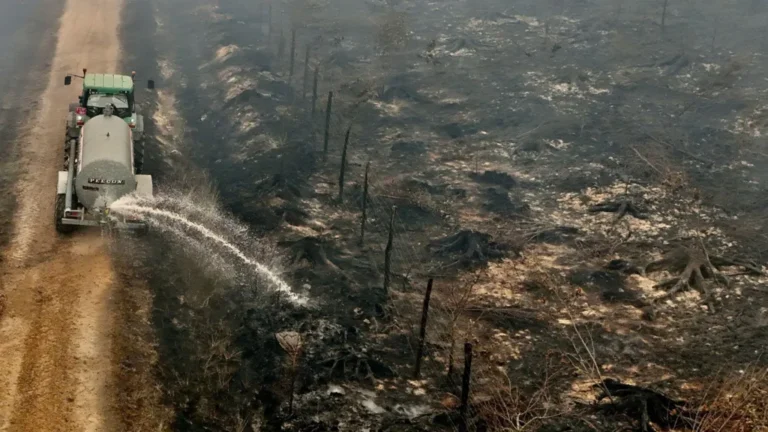
    A wildfire officials describe as the largest in Belgium’s recent history more than doubled in size within 24 hours, local authorities said Sunday, as hundreds of firefighters entered a third day battling flames tearing through the country’s largest nature reserve. The blaze has forced the evacuation of two villages near Hautes Fagnes, a protected reserve close to Belgium’s eastern border with Germany. Local farmers have hauled water tankers toward the park to assist firefighting crews, while water bombing aircraft and helicopters sent from Sweden and the Netherlands have joined the effort from the air. The Belgian fire is one of several burning across Europe this weekend. At least two people died in forest fires on a Greek island off the coast of Athens on Sunday, part of a broader pattern of blazes spreading across the continent. Belgian officials said intense heat combined with the reserve’s difficult terrain, a mix of bog like wetlands, moorland and forest, has made the fire especially hard to contain. According to figures reported by a French news agency citing local officials, the fire grew from 80 hectares, or about 200 acres, on Friday to 850 hectares by Saturday morning, before expanding further to 3,000 hectares by early Sunday. Belgian Interior Minister Bernard Quintin said two fronts of the fire, one advancing toward Jalhay and the other toward Monschau, have now been brought under control. Authorities said conditions remain difficult overall and that they continue to rely heavily on aerial support to bring the fire under control, though no homes have been damaged so far. Two water bombing aircraft arrived from Sweden on Sunday afternoon to reinforce four helicopters, two Belgian and two Dutch, already working the fire. Nicolas Yernaux, a spokesman for regional authorities in Wallonia, said Saturday that the blaze ranks as the largest the country has seen in recent history. He said firefighters have allowed portions of the heathland to burn because those areas are extremely difficult to reach. Rescue teams have been unable to access the location where the fire started, leaving its cause unknown for now. Additional forest fires have broken out in Croatia, Spain and Serbia since Friday, following a summer of extreme heat that has left large parts of Europe either burning or scorched brown. In southwestern France, local officials in the Landes region said a separate wildfire forced the evacuation of 650 residents on Saturday. That fire first broke out Thursday and reignited Saturday, prompting authorities to deploy more than 500 firefighters to bring it under control. The EU’s climate monitoring service, Copernicus, has confirmed that western Europe just experienced its hottest June to July period on record, a finding that aligns with the wave of wildfires now spreading across multiple countries on the continent.

  • | |

    Former Queen bassist Barry Mitchell dies at 80, le…

    The Queen family is mourning the loss of Barry Mitchell, an early bassist who played an important role during the legendary rock band’s formative years. Mitchell died on August 17, 2026, according to reports, prompting tributes from fans and people connected to Queen. (The Sun⁠) Although Mitchell was not part of Queen’s classic lineup, his contribution came during a crucial period when the band was still finding its sound. He joined Queen in 1970 after original bassist Mike Grose left. The official Queen live archive confirms that Mitchell played the next 11 shows during the band’s earliest performing days. (Queen Online⁠) At the time, Queen consisted of Freddie Mercury, Brian May, Roger Taylor and Mitchell on bass. The group had not yet become the worldwide rock phenomenon fans know today. John Deacon would join later in 1971 and complete the classic lineup. Mitchell’s time with Queen was brief. He remained with the band for around six months before leaving in early 1971. Reports say he played approximately 13 performances, mostly in the United Kingdom. (The Sun⁠) Even though his time in the group was short, Mitchell was present while some of Queen’s earliest songs were being developed. His period with the band included work around tracks such as “Liar,” “Son and Daughter” and “Keep Yourself Alive,” giving him a unique connection to the band’s beginnings. (Queen Vault⁠) Queen’s official archivist Greg Brooks confirmed the sad news and remembered Mitchell warmly. He described the former bassist’s stories about Queen’s early years as fascinating and said he would be greatly missed. (Edinburgh Live⁠) For longtime Queen fans, Mitchell represented a piece of the band’s history that is often overlooked. Before Queen filled stadiums and produced some of rock’s most famous albums, the group was a young band playing small venues and experimenting with its musical identity. Mitchell later returned to music after spending some time away from the industry. He also remained connected with the Queen fan community, attending conventions and sharing memories from his time alongside Mercury, May and Taylor. (The Sun⁠) His death marks another poignant moment for fans looking back at Queen’s remarkable journey. While Barry Mitchell may not have been part of the lineup that eventually conquered the world, he was there when the story was only beginning. His contribution lasted just months, but his place in Queen’s history will remain part of the band’s extraordinary early chapter.

  • | | |

    Dar targets $20bn Pakistan-US trade

    Deputy Prime Minister and Foreign Minister Ishaq Dar has expressed confidence that Pakistan and the United States can increase bilateral trade in goods to $20 billion within the next five years. Dar said Pakistan’s trade in goods with the US stood at $9.4 billion during the last fiscal year. He described the US as Pakistan’s largest single-country export market. Addressing a US Congressional Delegation and American business representatives, Dar said stronger trade and investment ties could create new opportunities for companies in both countries. He said closer economic cooperation could also generate employment, encourage innovation and support long-term economic growth. Dar highlighted several areas where Pakistan and the US could expand commercial cooperation. These include information technology, artificial intelligence, energy, manufacturing, agriculture and critical minerals. He said Pakistan is already an important buyer of American cotton and soybeans. The country is also becoming a growing market for US hydrocarbons. At the same time, Pakistan’s increasing demand for advanced machinery, technology and capital goods could create opportunities for American manufacturers, he added. Dar said the presence of more than 80 US companies in Pakistan demonstrated growing confidence in the country’s market and economic potential. He welcomed the interest shown by American companies in Pakistan’s technology, energy, critical minerals and defence sectors. The foreign minister also pointed to the US Exim Bank’s $1.25 billion financing for the Reko Diq project as an indication of increasing US confidence in Pakistan’s investment prospects. Dar encouraged American businesses to establish partnerships with Pakistani companies and explore long-term investment opportunities. He said Pakistan had improved its infrastructure over the past decade through modern highways, ports and logistics networks. These developments, he added, had strengthened the country’s position as a potential trade and investment gateway. The government is also working to make the business environment more investor-friendly. Dar said regulatory procedures had been simplified to reduce bureaucratic delays and make licensing and approvals easier. He said Pakistan wanted to deepen cooperation with the US across both goods and services. Technology, AI, energy, manufacturing, critical minerals and agriculture were among the sectors identified for greater collaboration. Dar also highlighted the broader improvement in Pakistan-US relations. He said frequent high-level contacts under Prime Minister Shehbaz Sharif and US President Donald Trump had helped strengthen bilateral engagement. He said his meetings with US Secretary of State Marco Rubio had also focused on strengthening relations and discussing regional developments. The foreign minister stressed that parliamentary engagement was equally important. He said regular interaction between lawmakers could improve mutual understanding and strengthen institutional ties. Dar said Pakistan’s engagement with the US Congress had increased significantly over the past year. The interaction has included lawmakers from both political parties and key congressional committees. The two countries also discussed regional security and stability. Dar said stronger Pakistan-US relations could contribute to peace and stability in the wider region. He also recalled Pakistan’s role in facilitating dialogue between the US and Iran. Dar said Islamabad remained committed to dialogue, diplomacy and peaceful solutions to regional disputes. The foreign minister separately received a US congressional delegation comprising Representatives Ryan Zinke and Michael James Baumgartner. During the meeting, both sides discussed ways to expand cooperation in trade, investment, IT, energy and other areas. The US lawmakers acknowledged the contribution of the Pakistani community to American society and economy. They described the diaspora as an important link between the two countries.

  • |

    Hina Khan reveals cancer battle tested her marriage deeply

    Indian television actress Hina Khan has opened up about the difficult impact her cancer diagnosis had on her relationship with longtime partner Rocky Jaiswal, revealing that her health battle made her reconsider their future together. Hina and Rocky had known each other for nearly 13 years before taking their relationship to the next level. The couple eventually married in an intimate ceremony in June 2025, during a particularly challenging period in Hina’s life as she was undergoing treatment for stage 3 breast cancer. Speaking about their relationship, Hina admitted that her diagnosis brought an enormous amount of uncertainty into their lives. Rather than questioning Rocky’s commitment, she found herself worrying about whether she could still give him the life and happiness he deserved. The actress revealed that she even encouraged Rocky to move on and consider marrying someone else. According to Hina, she made the suggestion several times because she feared that her illness could permanently change different aspects of their lives. “We are not in that space where we fight; we have been in real-life crises,” Hina explained while discussing their relationship. She recalled telling Rocky that he should marry someone else, believing that he should not feel obligated to stay with her because of her health struggles. For Hina, the decision was not an attempt to test Rocky’s love or loyalty. Instead, she said it came from a genuine desire to ensure that he could have the future he wanted, even if that future did not include her. Her cancer journey brought emotional and physical challenges, but Rocky remained a constant source of support. Hina acknowledged that his presence played a major role in helping her cope with one of the most difficult periods of her life. “Anyone who was around me then knew that I was able to get through that time only because of him,” she shared, adding that Rocky made the difficult circumstances appear much easier than they actually were. Despite Hina’s repeated attempts to convince him to move forward without her, Rocky chose to remain by her side. He supported her throughout her cancer treatment and stood with her through the uncertainty surrounding her health. The couple ultimately married while Hina was still battling cancer, turning their relationship into a story of commitment and resilience during an exceptionally challenging chapter. Hina’s revelations offer a deeply personal look at how serious illness can affect not only an individual but also the relationships surrounding them. While she feared that her condition might prevent Rocky from experiencing the life he deserved, his decision to stay demonstrated his willingness to face the difficult circumstances alongside her. Their journey highlights the strength of a relationship when both partners choose to stand together during moments of uncertainty. For Hina, Rocky’s unwavering support became an important part of her ability to navigate her cancer battle, while their marriage marked another significant chapter in their 13-year journey together.

  • |

    US fuel opens a capitalist crack in Cuba

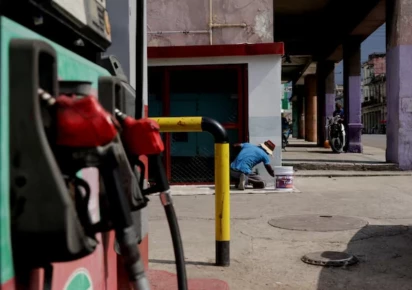
    HAVANA: Gasoline selling for as much as $38 a gallon, diesel advertised on social media and fuel stored inside cramped apartments are offering an unusual glimpse of private enterprise in communist Cuba, where the energy sector has long remained firmly under state control. A US policy allowing American companies to export fuel to private Cuban businesses has triggered an unexpected transformation. As Cuba struggles with shortages, blackouts and a weakened public transport system, imported fuel is creating a growing private market — while also exposing a sharp divide between those who can afford it and millions who cannot. The change follows the collapse of Cuba’s traditional fuel supplies from Venezuela and Mexico after the United States removed Venezuelan President Nicolas Maduro in January. With sanctions discouraging tankers from sailing toward the island, fuel shortages have increasingly affected transport, hospitals, schools and other essential services. Under an exception to Washington’s oil restrictions, however, private Cuban restaurants, retailers, taxi operators and other businesses have been allowed to import fuel. The impact has been striking. Between February and May, around 900,000 barrels of US fuel entered Cuba — enough to meet only about nine days of the country’s energy requirements. Yet those relatively small shipments have helped create a new network of legal wholesalers, private buyers and illegal resellers. Gasoline becomes a luxury For ordinary Cubans, the new fuel market has often brought frustration rather than relief. On a July afternoon in Havana, 53-year-old Amarilis Sanchez waited for hours at a bus stop after attending her daughter’s birthday celebration. Public buses, which normally cost only two pesos, were unreliable. Nearby, taxi drivers offered rides in vintage cars, but one driver quoted Sanchez 1,000 pesos for the journey — roughly 500 times the price of a bus ride. Unable to afford it, Sanchez considered spending the night at her daughter’s home and trying again for a bus the following day. Her experience illustrates how Cuba’s fuel crisis is creating two very different realities: one for people with access to private vehicles and imported fuel, and another for those dependent on the country’s struggling public transport network. Black-market gasoline prices reportedly reached $10 per litre, or about $38 per gallon, during the spring before falling as imports increased. Social media fuels a new market The emerging trade is increasingly visible online. WhatsApp groups and Facebook pages advertise gasoline and diesel, while some sellers store fuel in apartments and small shops despite the dangers posed by fire, explosions and toxic fumes. At one Havana convenience store, a shopkeeper reportedly kept around a dozen 20-litre fuel containers in a backroom, selling gasoline for approximately $5 per litre. Private companies are also moving into the newly emerging legal wholesale market. By late July, almost 200 Cuban businesses had received permission to distribute fuel wholesale to other private companies. One company, A Granel, advertises diesel through social media and charges $2.50 per litre for a 940-litre tank. The promotion reportedly features a model walking through a warehouse of diesel containers while Daddy Yankee’s famous song Gasolina plays in the background — an unusually flashy image for a country where the energy industry has historically been dominated by the state. Are Cuban gas stations next? The transformation could go further. Cuban lawmakers approved a broad package of economic reforms in June aimed at opening the energy sector to private and foreign investment. Prime Minister Manuel Marrero Cruz later announced that Cuba had approved its first foreign investment project focused on importing and selling fuel, although he did not name the company. The reforms have raised the possibility that private operators could eventually take control of some of Cuba’s familiar state-run Cupet petrol stations. For now, however, retail fuel sales remain largely under state control. Some state-owned stations are storing imported fuel but can distribute it only to vehicles belonging to authorised private businesses. Cuban authorities have defended the reforms while rejecting the idea that they represent a move toward large-scale privatisation. President Miguel Diaz-Canel has accused Washington of imposing a “genocidal siege” on Cuba and said economic changes were not being introduced to satisfy the United States. A lifeline with a heavy price The new fuel market has helped prevent some businesses from shutting down completely. During recent power outages, restaurants and shops with generators powered by imported fuel remained illuminated while much of Havana was plunged into darkness. But experts warn that the emerging system could deepen inequality. With the average government salary reportedly around $10 a month, imported gasoline remains unaffordable for most of Cuba’s roughly nine million residents. Cuban sociologist Mayra Espina said the limited fuel supplies had helped prevent “complete paralysis” but warned that the benefits were overwhelmingly concentrated among those able to pay. The result is an extraordinary contradiction: a small opening toward private enterprise is helping Cuba keep parts of its economy running, while simultaneously making access to basic mobility and energy increasingly dependent on wealth. For a country that has spent decades keeping fuel firmly within the state system, Cuba’s new gasoline economy may therefore prove to be more than a temporary response to shortage. It could become an early test of how far Havana is prepared to let capitalism into one of its most tightly controlled sectors.

  • |

    Yemen’s Ansarullah movement claims attack on two Saudi oil tankers

    Yemen’s Houthi-aligned Ansarullah movement has claimed responsibility for targeting two Saudi oil tankers in the Red Sea, alleging that the vessels violated a newly declared naval blockade imposed by the group against Saudi Arabia. According to Saudi state media, a Saudi-owned tanker, identified as the Encelia, was struck while transiting the Red Sea, resulting in a fire at the vessel’s bow. Saudi authorities confirmed that the crew managed to contain the fire safely and that no casualties or environmental damage were reported. The United Kingdom Maritime Trade Operations (UKMTO) and maritime security group Vanguard had earlier reported a missile strike on a tanker approximately 70 nautical miles southwest of Al Shuqaiq, Saudi Arabia. The vessel’s captain reported that the fire was caused by an incoming projectile. The strike follows Ansarullah’s formal declaration of a naval blockade targeting vessels bound for or operating near Saudi ports. An Ansarullah spokesperson stated that the blockade was enacted in direct response to the siege on Yemen, specifically citing the ongoing closure of Sanaa International Airport, and warned that maritime restrictions would match those imposed on Yemeni airspace.

Leave a Reply

Your email address will not be published. Required fields are marked *