women left waiting

Women Left Waiting at NADRA Office, Turbat

By Baloch Khan

Through the columns of your esteemed newspaper, I wish to draw the attention of the concerned authorities to the poor treatment of women at the NADRA office in Turbat. Many women, including elderly applicants and mothers with children, are forced to wait for long hours while some staff members fail to deal with them efficiently and respectfully.
Every citizen deserves equal treatment and timely service, especially in a government office that provides essential identity documents. Delays, mismanagement, and a lack of proper assistance cause unnecessary hardship for women.
I request the authorities to investigate the matter, ensure respectful behavior by the staff, and improve services so that women can complete their work without unnecessary delays and inconvenience.

Similar Posts

  • Preserving Balochi Traditions

    By Aamina Asghar The Baloch are an ancient people with a rich culture that is distinct from many other cultures around the world. Whether it is their weddings or their way of life, everything about their culture is unique. Most particularly, Balochi weddings have their own beautiful traditions but many modern trends influenced by social media and other cultures are gradually replacing them. It is good to enjoy modern trends, but we should not forget our own traditions that identifies us in the world. The below I mention some of the keen factors affecting the culture: Our Culture Is Our Identity Baloch wedding traditions have been passed down by our ancestors. They tell the story of who we are and remind us of our rich cultural heritage. Culture is what identify us from any part of the world and make us look different from the native of that particular area. Traditional Balochi Dress Balochi brides and grooms wear beautiful traditional dresses with fine embroidery done by Baloch women’s hand. They are hand-made cloths. Nowadays, many people prefer modern designer clothes instead of traditional Balochi attire. The trend has been influenced from social media and is adopted by the living persons in their daily life. Wedding Customs Many families now arrange Mehndi ceremonies, Dholki events, dance performances, bridal shows, and other celebrations that were not traditionally part of Baloch weddings. As a result, our original customs are becoming less common. As a result, few young people know the traditional practices of Balochi Culture. Decoration Traditional Baloch weddings had simple decorations that focused on family, culture, and tradition. Today, expensive stage decorations, flower walls, and modern themes are becoming very popular, making the marriage more expensive. Upon seeing such things, everyone around the society expects such marriages to take place in future, badly affecting the poor people who cannot afford them and thus ends up insulting them in others’ eyes. Social Media Influence Many people copy what they see on social media without thinking about their own culture. It is good to know about other’s culture, but killing your own culture for others is never beneficial for the generation to come. Our culture should be preserved. Music and Celebration Traditional Balochi music and cultural celebrations should be encouraged because they keep our heritage alive. Sadly, very few people are well aware of Balochi singers. We respect other singers when it comes to our own Balochi singers who are preserving the language are never valued or recognized by majority of us. Thus, modern trends are not bad, but we should not allow them to replace our beautiful traditions. Baloch wedding traditions are an important part of our culture. Our dresses, music, customs, and celebrations reflect our identity, and we should respect and preserve them. This will help future generations understand the value of Balochi culture. Let us take pride in being Baloch, promote our traditions and show the world the beauty of our culture.

  • Safe Playgrounds, Safer Communities

    Due to the lack of proper playgrounds, children and young people often use the grounds of nearby government schools for recreation and physical activity. There is nothing inherently wrong with this. In fact, physical activity is essential for children’s physical and mental health, fitness, and overall development. However, the absence of caretakers and other Class-IV staff in schools during the evening raises serious concerns about safety, discipline, and the protection of school property. Children and young people of different ages regularly gather in these playgrounds. To prevent any untoward incidents, the presence of responsible adults is essential. Having Class-IV staff or other designated personnel available during evening hours would not only reassure children and their parents, but also help to maintain discipline and safeguard school buildings, furniture, and other educational resources. A practical solution can be introduced to address this. The school administration should establish a sports committee comprising responsible members of the local community. The names, designations, and contact details of committee members should be properly recorded at the school, with a copy shared with the local police station. This would enable prompt communication with responsible committee members in the event of an emergency or any untoward situation. The matter requires immediate attention from both the district administration and the education department. Rather than discouraging children from using school playgrounds, the authorities should put in place a proper system of evening supervision at government schools. Such an arrangement would allow children to take part in healthy physical activities in a safe and disciplined environment, while also ensuring the protection of public property. Government school playgrounds are valuable community assets. With a modest and well-organised supervisory system, they can serve not only as spaces for physical activity but also as safe and constructive environments for the younger generation. Protecting these spaces and ensuring their safe use should therefore be a shared responsibility of the administration, schools, and the local community. Muhammad Iqbal Awan (Namal) Mianwali, Punjab (Educationist, Writer, Motivational Speaker)

  • Save Jamia Masjid Lakhi Dar, Shikarpur

    Jamia Masjid Lakhi Dar is one of the few surviving ancient buildings in Shikarpur and a masterpiece of historical architecture. Located in the city’s famous Lakhi Dar area, it is popularly known by that very name. This noble mosque stands as an unparalleled testament to the architectural, artistic, and cultural heritage of Sindh, and of Shikarpur in particular. Today, though, it awaits the attention needed to ensure its very survival. The mosque has two entrances. The main one faces east, towards the Clock Tower (Ghanta Ghar), while the second lies on the north side. Passing through the eastern door leads into a spacious courtyard, followed by a veranda with a wooden ceiling. From this veranda, three doorways open into the mosque’s inner sanctum. In earlier times, the mosque’s interior was adorned with beautiful fresco work. Over the years, however, haphazard and amateur renovation and repainting have nearly erased this original ornamentation. Fortunately, traces of the exquisite artwork survive on the ceiling of the central dome, rendered in soft, pastel tones. The mosque comprises three domes, the central one larger than the other two. Handsome turrets rise from its corners, while two smaller minarets stand on the front parapet wall facing the central dome — a further showcase of its architectural mastery. Its most distinctive feature is the ornamental lantern crowning the central dome, a fine example of Sindh’s Islamic architectural artistry. It was arguably the first mosque in Shikarpur to feature such a decorative lantern atop its dome. But alas — today, this history is breathing its last. To look upon Jamia Masjid Lakhi Dar now is to feel the eyes fill with tears and the heart sink with sorrow. Centuries of history, this rare architectural specimen, its exquisite frescoes, the beauty of its domes, and its ornamental lantern are all slowly decaying under the weight of time, weathering, and sheer neglect. If this monument is not preserved on scientific principles today, future generations may know it only through the pages of history books. We strongly appeal to the Culture, Tourism, Antiquities & Archives Department of the Government of Sindh, archaeology experts, the district administration of Shikarpur, elected representatives, and all responsible authorities to take these measures without fail. First, immediately conduct a technical survey of Jamia Masjid Lakhi Dar. Second, carry out scientific restoration that preserves its original architectural beauty. Third, conserve the remaining fresco work and intricate motifs. Four, take emergency measures to protect the ornamental lantern, domes, and minarets. And last but not least, manage the mosque more effectively as a protected cultural heritage site of Sindh. Jamia Masjid Lakhi Dar is not merely a structure of brick, mortar, and lime — it is a living document of Shikarpur’s civilization, history, religious legacy, and the artistic grandeur of Sindh. If we fail to save it today, history will never forgive us.


  • Bridging the Education Gap

    By Baloch Khan The education gap is one of the biggest challenges facing Pakistan. Students in cities often have better schools, qualified teachers, and modern facilities, while many students in rural and remote areas study without basic classrooms, libraries, laboratories, or even enough teachers. This unequal system denies many children the opportunity to achieve their full potential. Every child deserves access to quality education regardless of where they live or how much their family earns. The government should improve public schools, appoint qualified teachers on merit, provide learning materials, and ensure equal educational opportunities for all students. Investing in education is investing in the country’s future. Unless this gap is reduced, social and economic inequality will continue to grow. It is time for the authorities to take practical steps to ensure that every child receives the education they deserve

  • Ali Raza’s Murder: A Wake-Up Call for Justice and Safety in Karachi

    By Nazaink Majid I am writing this letter to seek justice for the tragic and heartbreaking murder of Ali Raza. Mirza Raza Ali, a famous Wafflix food grand owner from Gulistan -e-Johar and who was murdered in Gulistan -e- Johar, Karachi. According to a Pakistan today on the police investigation, Mir Ali Raza was in contact with his fiance until 11:30 PM, after which he returned to his home in PECHS. At around 3:00 AM on July 28, his fiance attempted to reach him again. Over a span of roughly 20 minutes, she made more than 40 panic calls and sent multiple text messages expressing immediate concern for his safety, none of which were answered. Police Sources confirmed that before leaving his PECHS house, Mir Ali Raza had abruptly deleted his social media accounts and disconnected his whatsapp. And he sent some amount of money to his father’s account. On 28 July at 4:12, Ali Raza went to his home. The following days, on the night of 29 July, his body was left at a location, and people discovered it on the morning of 30 July. The painful death of Ali Raza shows that people’s lives are not safe. No family should have to suffer the loss of a loved one in a such a way. Ali Raza’s death is a reminder that every life matters and every citizen deserves safety. We demand justice for Ali Raza and safety for every citizen of Karachi. No one should live in fear. Every person deserves justice, Safety and the chance to live without danger. The Ali Raza’s death should not become just another incident forgotten with time. It should be a wake-up call for stronger action, and safety for everyone. We appeal to the authorities to stand with the victim’s family, investigate this matter with honesty, and ensure that justice is served. No family should have to suffer such a loss, and no one life should be taken without accountability.

  • Virat kholi and 2027 ODI World cup

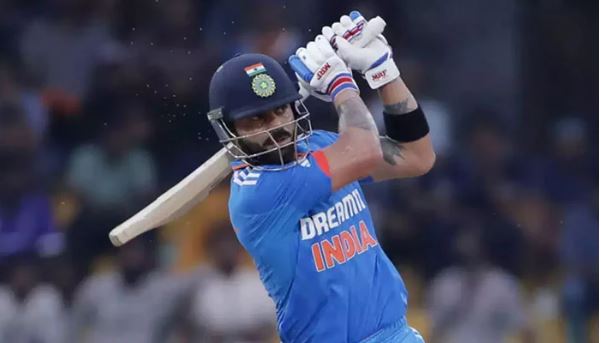
    By Muhammad Naseer Virat Kohli’s possible presence in the 2027 ODI World Cup has already created excitement among cricket fans. After years of remarkable performances, Kohli has become one of the most respected ODI batters of his generation. He has openly reaffirmed his commitment to playing in the 2027 World Cup, giving fans hope that they may see him represent India in another major tournament. The 2027 World Cup will be especially important because it could be one of the final major international tournaments of his career. Kohli has already experienced the pressure and excitement of World Cups on several occasions. He was part of India’s 2011 World Cup-winning team and later became one of the tournament’s most consistent performers. His extraordinary ability to chase difficult targets has made him particularly valuable in ODI cricket. His experience could also provide important guidance to younger players entering their first World Cup. However, reaching 2027 will require maintaining fitness, form, and consistency over the coming years. Cricket is an unpredictable sport, and no player can guarantee what the future will bring. Nevertheless, Kohli’s determination suggests that he still has ambitions left to fulfil in the 50-over format. For millions of supporters, watching him in another World Cup would be an emotional experience. His presence could also add enormous attention to the tournament. More importantly, the younger generation could learn from his preparation, discipline, and approach to the game. Kohli has already achieved numerous individual milestones, but another World Cup triumph would add another memorable chapter to his career. India will have many talented players by 2027, so the final team selection will depend on form and fitness at that time. If Kohli remains at his best, his experience could be extremely valuable in a high-pressure tournament. The 2027 World Cup may therefore become not only a competition for India but also another stage in the remarkable story of one of cricket’s modern greats. Fans will undoubtedly hope to see his familiar number on the Indian jersey when the tournament begins. Whether he produces another unforgettable innings or simply guides younger teammates, his contribution could be significant. For now, the possibility of Virat Kohli playing in the 2027 ODI World Cup is enough to keep cricket lovers eagerly waiting for what could be another memorable chapter in his extraordinary career.

Leave a Reply

Your email address will not be published. Required fields are marked *