Letters to the Editor

  • Safe Playgrounds, Safer Communities

    Due to the lack of proper playgrounds, children and young people often use the grounds of nearby government schools for recreation and physical activity. There is nothing inherently wrong with this. In fact, physical activity is essential for children’s physical and mental health, fitness, and overall development. However, the absence of caretakers and other Class-IV staff in schools during the evening raises serious concerns about safety, discipline, and the protection of school property. Children and young people of different ages regularly gather in these playgrounds. To prevent any untoward incidents, the presence of responsible adults is essential. Having Class-IV staff or other designated personnel available during evening hours would not only reassure children and their parents, but also help to maintain discipline and safeguard school buildings, furniture, and other educational resources. A practical solution can be introduced to address this. The school administration should establish a sports committee comprising responsible members of the local community. The names, designations, and contact details of committee members should be properly recorded at the school, with a copy shared with the local police station. This would enable prompt communication with responsible committee members in the event of an emergency or any untoward situation. The matter requires immediate attention from both the district administration and the education department. Rather than discouraging children from using school playgrounds, the authorities should put in place a proper system of evening supervision at government schools. Such an arrangement would allow children to take part in healthy physical activities in a safe and disciplined environment, while also ensuring the protection of public property. Government school playgrounds are valuable community assets. With a modest and well-organised supervisory system, they can serve not only as spaces for physical activity but also as safe and constructive environments for the younger generation. Protecting these spaces and ensuring their safe use should therefore be a shared responsibility of the administration, schools, and the local community. Muhammad Iqbal Awan (Namal) Mianwali, Punjab (Educationist, Writer, Motivational Speaker)
  • Deforestation must be discouraged

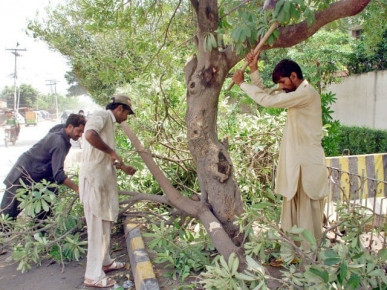
      By: Shahnoor Haroon I am writing this letter to share my thoughts about deforestation. In my opinion, deforestation is a very serious problem. It means cutting down many trees from forests and other places. I think trees are one of the most important gifts of nature. They give us oxygen, fruits, wood, medicine, and shade. They also make our surroundings green and beautiful. I feel that our lives would be very difficult if there were no trees around us. Nowadays, many trees are being cut down for different reasons. People need land to build houses, roads, schools, factories, and shops. Trees are also cut down to get wood and to make land available for farming. I think some people do not think about the bad results of cutting down trees. They only think about their needs today and forget about the future. Deforestation has many harmful effects. When there are fewer trees, the air becomes dirty because trees help to clean the air. They also keep the weather cool. I have noticed that places with more trees are usually cooler and fresher. When trees are cut down, the temperature can become higher. Cutting down trees can also cause floods and soil erosion. During heavy rain, tree roots help to hold the soil, but without trees, the soil can easily be washed away. I also feel sorry for animals and birds that lose their homes because of deforestation. Forests are their natural homes, where they find food and shelter. When people cut down forests, many animals have to move to other places. Some animals even die because they cannot find enough food or a safe place to live. This is very sad and unfair to them. I believe that every person can help in a small way. We can plant a tree near our home or school and take care of it. We can also ask our friends and family to plant trees.

  • Poverty and Unemployment in Balochistan

    By Shadri Amanullah I am writing this letter for the people of Balochistan who are facing extreme poverty and unemployment. Most of the people in Balochistan can’t buy basic things like food, clothes, or shelter because they don’t have enough money. It is no longer a small problem, as we all know Balochistan is a land full of valuable resources like gas, gold, and copper. But the government is selling all these resources to other countries, while the local people remain poor. Many people grow crops or raise animals to survive. Due to the lack of rainfall, the soil has been converted into dust. The lakes and rivers have completely dried up. Because of this, farmers cannot grow crops. Everything like rice, flour, sugar, and all these things is too expensive, so poor families can’t afford them. These things are brought from other cities, so the transportation costs make everything too expensive. These are some of the reasons why the people of Balochistan remain poor. Many people in Balochistan are unemployed because there are no big factories, offices, or companies in Balochistan. People can only get government jobs, and the problem is that the government does not have enough jobs. Many people feed their families by buying and selling goods with Iran and Afghanistan. Now the government has closed the borders. Due to this, they can’t feed their families. Most of the universities in Balochistan don’t teach modern skills; they just teach the old lessons. If they teach modern skills to the students, it will be easier for them to find jobs. All the time of the government is spent on the military; due to this, the government forgets to build factories or provide ways for people to earn daily wages. Many young people who have university degrees are still unemployed. Because of frustration and hopelessness, some young people lose hope despite their efforts. The smart people leave the province and go to other cities and countries to study and get proper jobs. When young people don’t get jobs, they may turn to illegal activities such as drug abuse or smuggling. To fix this problem, the government must take three steps. We request the authorities to spend the money made from the valuable resources of Balochistan on building local businesses, roads, and water infrastructure. The government should open markets on the borders so that people could trade and earn some money for themselves. And we want the government to open centers for young people where they could learn useful skills like mobile repairing and other useful skills so they could start their own businesses and earn some money.

  • Load-Shedding in Our Area

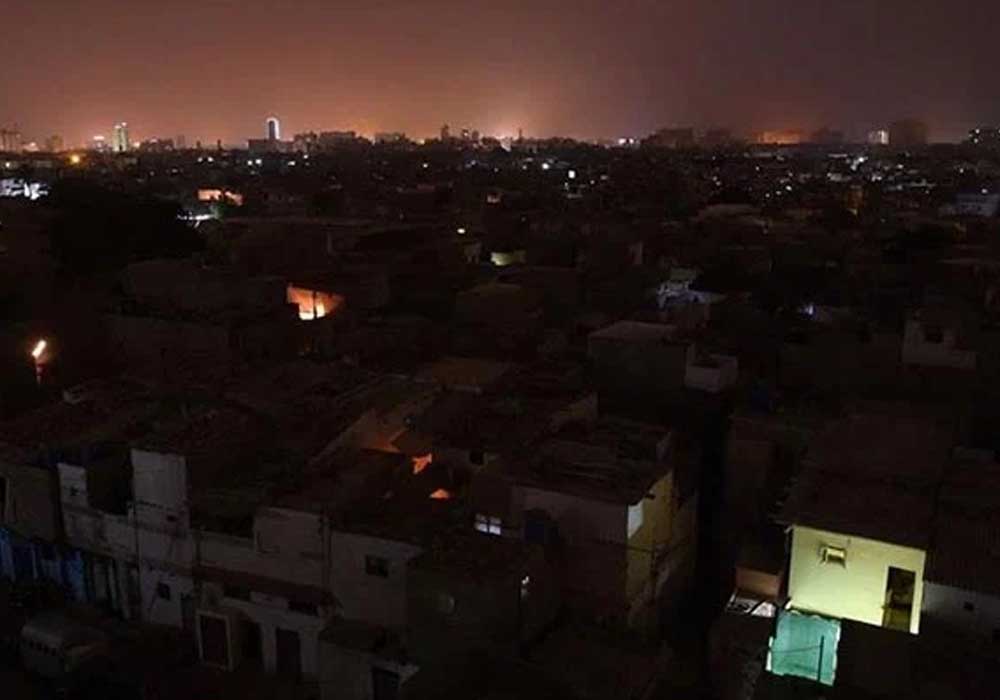
    By Asiya Fazal Karim I want to use the space in your newspaper to tell the authorities about the problem of load-shedding in our area. We have been facing frequent power cuts for many weeks. Sometimes, the electricity goes away for several hours, and it becomes very difficult for people to continue their normal activities. Electricity is very important in our daily lives. We need it for studying, cooking, working, using fans, and many other things. Students suffer a lot because they cannot study properly without electricity. During power cuts, they wait for the electricity to come back before they complete their homework. The hot weather makes the problem even worse. When they cannot use fans or other cooling appliances, children and old people have to suffer because of the heat. At night, the streets also become dark, which can make people feel unsafe when they go outside. Load-shedding also causes problems for shopkeepers and small businesses. Many shops depend on electricity for their work. When the power goes out, they cannot work properly and sometimes lose customers. This can cause financial problems for people who depend on their daily business. Hospitals and clinics may also face difficulties because some medical equipment needs electricity. Internet services and mobile charging are also affected. People may not be able to contact their family members easily during long power cuts. These problems make everyday life stressful. Another problem is the sudden return of electricity. Sometimes, the voltage changes when the electricity comes back, and this can damage electrical appliances. Many families cannot afford to repair or replace expensive appliances. The people of our area have complained about the problem many times, but we have not seen any permanent improvement. We understand that electricity demand can be high, but the authorities should take steps to provide a better and more regular supply. I request the concerned authorities to look into this matter as soon as possible. A proper load-shedding schedule should be given to the public so that people can plan their work and students can plan their studies. The electricity system should also be improved, and faults should be repaired quickly.

  • The Waste and Garbage Problem in Pakistan

    By Durhum I am writing this letter to draw your kind attention and that of the concerned authorities toward one of the most serious and ignored problems in our country today: the waste and garbage problem in Pakistan. We see garbage on the roads near our homes, schools, and other areas. This problem is getting worse day by day, especially in the big cities of Pakistan like Lahore, Islamabad, etc. When we go out, we see that the dustbins are full, and still no one comes to empty them. Plastic is flying in the air. Because of the garbage, the roads smell very bad and are dirty. If it rains, the drains get blocked because of the plastic. This is not just making the roads dirty; it is also affecting people and making them ill. In some areas, garbage trucks do not come regularly, and there is also a shortage of dustbins. People throw everything on the roads, such as food and plastic, and many people do not care that throwing waste makes our roads dirty. Throwing garbage causes numerous problems. Because of this waste, mosquitoes, rats, and other pests come out, spreading diseases like malaria and dengue. Children are mostly getting sick because of this garbage. Also, water is becoming polluted because garbage is thrown near rivers or seas, making the water dirty. This waste can also cause drains to become blocked. In Karachi, especially in Lyari, garbage is thrown everywhere, and the area is full of waste. This problem can be solved if there is regular garbage collection, more dustbins, and clean rivers and roads. The government cannot solve this problem alone; we must also avoid throwing plastic, paper, and other waste on the streets. Schools should teach students not to throw garbage on the roads. Many countries have solved this problem because citizens do not litter. In Dubai and Turkey, the roads are clean and look beautiful because they regularly sweep the roads and dispose of waste properly. Throwing garbage and waste is not a small problem; it is affecting our bodies, health, and environment. Ultimately, this problem can be solved if we change our habits. Pakistan will become like other beautiful countries if we all work together. If we keep ignoring it, our surroundings will become even dirtier. If a country has a clean environment, it means it has a clean nation. There is a saying that “Cleanliness is half of faith.” Islam also teaches us to keep our country, cities, and roads clean. There is another saying that “Small litter makes a big problem.” This means that waste and garbage may seem like a small issue, but they can affect a person’s entire life.

  • |

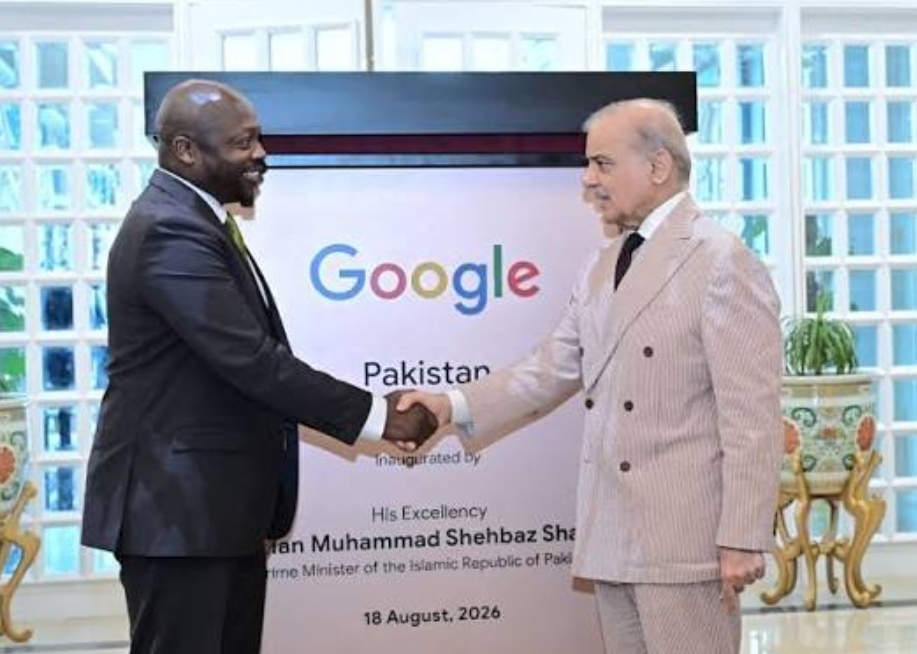
    Pakistan, google sign “historic” MOU

    By Umar Mujtaba Islamabad: Pakistan and Google have signed a memorandum of understanding (MoU) to expand cooperation in artificial intelligence, digital skills, IT exports and innovation, with Pakistani students set to receive free one year access to advanced AI tools including Gemini. The agreement was signed on Friday during a reception hosted by Prime Minister Shehbaz Sharif in honour of the Google team, according to a statement issued by the Prime Minister’s Office. Under the agreement, an Artificial Intelligence (AI) centre of excellence will be established in Islamabad for the training of young people and professionals to align their skills with global market requirements. This news comes days after Google opened its first office in Pakistan, which signals the company’s interest in Pakistan’s technology sector. Pakistani students will also receive one year of free google AI tools access, including gemini and google AI plus.  Both sides have agreed to expand google certificate to 150,000 in 2026, helping Pakistani youth with market oriented skills.  A joint taskforce will also be established to increase the country’s IT exports and improve the country’s competitiveness in the global technology sector.  The agreement also covers efforts to improve the global competitiveness of Pakistan’s mobile application and gaming industries, while promoting digital payments and expanding digital commerce. One of the areas identified for cooperation is the Federal Board of Revenue’s digitization program, where AI powered data analytics could be used to improve tax administration and public-sector efficiency. In agriculture, Pakistan and Google will explore AI applications for crop monitoring, forecasting and sustainable farming practices. The agreement also aims to use digital platforms to help Pakistani small and medium sized enterprises access international markets and expand their exports. The Prime Minister of Pakistan Shahbaz Sharif described the collaboration as a stepping stone toward contributing to a field that is “very attractive” and “the call of the day.”  Mr Sharif noted that the delegation’s arrival was “a sheer coincidence” because it comes precisely as the country is undergoing a major digital transformation of governance under the government’s “Digital Nation Pakistan” initiative.  Wilson L. White (Vice President for Government Affairs and Public Policy) described the $30 Billion Export Target by stating “Your ambition of making Pakistan a 30-billion-dollar IT export hub aligns with the goals that we have at Google.” 

  • Thank You for Giving Millions of Ordinary People an Extraordinary Voice

    By Syed Anwar Wasti For most of my life, I carried countless ideas, experiences, and stories within me. I wanted to write, share, and contribute—but I struggled to express myself. English was not my strongest language, I couldn’t type in Urdu, and many of my thoughts remained locked inside my mind. After living in the United States for more than four decades, I have witnessed many remarkable technological advances. Yet, in my personal opinion, few have transformed my life as profoundly as Artificial Intelligence—especially ChatGPT. Today, I can write articles, create blog posts, prepare speeches, develop video scripts, organize research, manage my website, and share my experiences with people around the world. Whether I am writing about my travels, my community, my business, or my personal reflections, AI has helped me turn ideas into words and words into meaningful conversations. What once required a team of writers, editors, and researchers can now be accomplished by one determined individual with the right tools. That is not just innovation—it is empowerment. Technology is most powerful when it gives ordinary people the opportunity to do extraordinary things. For me, AI has done exactly that. It has given me confidence, creativity, and, most importantly, a voice. Thank you for giving millions of ordinary people an extraordinary voice. Hats off to the brilliant minds behind ChatGPT and AI. May God bless you all, and may your work continue to benefit humanity for generations to come.

  • Youth Empowerment in Pakistan

    By Asma Qayyum Youth empowerment is the process of providing young people with the education, skills, opportunities, and confidence they need to contribute positively to society. Pakistan has one of the largest youth populations in the world. According to the Pakistan Bureau of Statistics (2023 Census), the country’s population is approximately 241.49 million, and around 64% of Pakistanis are under the age of 30. This large youth population has the potential to become Pakistan’s greatest strength if it is properly educated, skilled, and employed. Young people play a vital role in the social, economic, and political development of a country. Empowered youth become skilled professionals, innovators, entrepreneurs, and responsible citizens. Their energy, creativity, and ideas can boost productivity, reduce poverty, encourage innovation, and strengthen national development. However, Pakistan faces several challenges in empowering its youth. According to the Pakistan Bureau of Statistics, the national literacy rate is approximately 63%, while millions of children remain out of school. Furthermore, the Labour Force Survey (2024–25) reported an unemployment rate of 7.1%, making job creation one of the country’s greatest challenges. The United Nations Development Programme (UNDP) reports that nearly four million young Pakistanis reach working age each year, but only around one million new jobs are created annually. It also notes that many young people are neither in education, employment, nor training (NEET), limiting their ability to contribute to the country’s growth. The major challenges facing Pakistani youth include limited access to quality education, unemployment and underemployment, a shortage of technical and vocational training opportunities, poverty, unequal opportunities in rural areas, and limited support for entrepreneurship and innovation. To address these challenges, the government should invest more in education, technical and vocational training, and modern skill development. It should also create more employment opportunities, support youth entrepreneurship through training programs and financial assistance, and encourage young people to participate in community service, leadership initiatives, and civic engagement. At the same time, educational institutions and the private sector should work together to equip young people with the skills required for the modern job market. Youth empowerment is essential for Pakistan’s future. With millions of young people entering the workforce each year, investing in education, skills, innovation, and employment is not merely an option—it is a necessity. Empowering young people will strengthen Pakistan’s economy, reduce poverty, promote social stability, and build a more prosperous and peaceful nation. As the saying goes, “The youth of today are the leaders of tomorrow.”

  • Traffic road Awareness

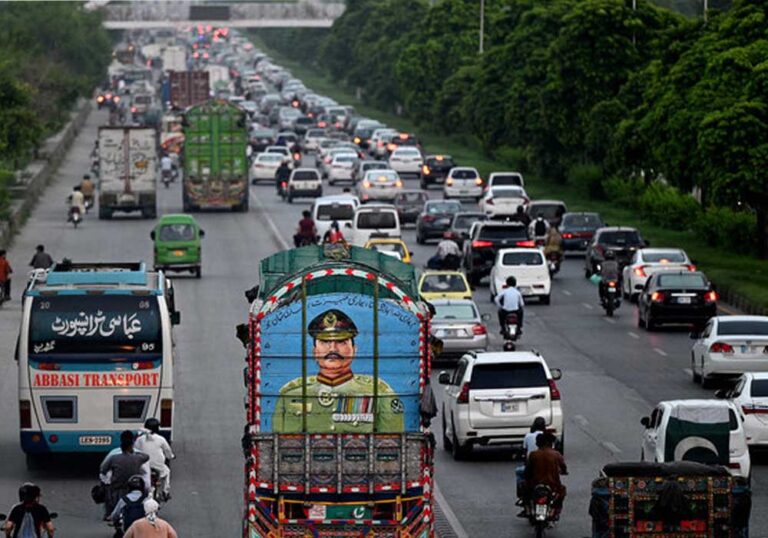
    By Zubaida Khan I am writing to highlight the pressing issue of road safety in our area and to emphasize the urgent need for strict adherence to traffic regulations. Navigating our streets safely has become a major challenge for both pedestrians and drivers. In busy commercial and residential areas, pedestrians face severe risks while attempting to cross the road due to reckless driving and high vehicle speeds. Simple safety measures such as wearing helmets on two-wheelers and fastening seatbelts in cars are frequently ignored. This widespread disregard for basic traffic rules has led to a alarming surge in avoidable road accidents. These mishaps result not only in life-threatening injuries and tragic loss of life, but also place immense emotional and financial strains on families who must cope with sudden hospitalizations and long-term recovery. Prioritizing road safety is vital to protecting precious human lives and ensuring smooth, secure commutes for everyone. To achieve a safer environment, I respectfully suggest the following steps: Traffic Enforcement & Infrastructure: Install clear traffic signals, designated zebra crossings, and speed humps in high-density areas. Road Maintenance: Ensure regular upkeep by cleaning debris, repairing potholes, and maintaining clear visibility along key routes. Awareness Campaigns: Conduct public safety campaigns in local schools and community centers to promote responsible driving habits. I urge the local authorities to take swift action by improving road maintenance and strictly enforcing traffic rules. Together, we can make our roads safer for every citizen.

  • Save Jamia Masjid Lakhi Dar, Shikarpur

    Jamia Masjid Lakhi Dar is one of the few surviving ancient buildings in Shikarpur and a masterpiece of historical architecture. Located in the city’s famous Lakhi Dar area, it is popularly known by that very name. This noble mosque stands as an unparalleled testament to the architectural, artistic, and cultural heritage of Sindh, and of Shikarpur in particular. Today, though, it awaits the attention needed to ensure its very survival. The mosque has two entrances. The main one faces east, towards the Clock Tower (Ghanta Ghar), while the second lies on the north side. Passing through the eastern door leads into a spacious courtyard, followed by a veranda with a wooden ceiling. From this veranda, three doorways open into the mosque’s inner sanctum. In earlier times, the mosque’s interior was adorned with beautiful fresco work. Over the years, however, haphazard and amateur renovation and repainting have nearly erased this original ornamentation. Fortunately, traces of the exquisite artwork survive on the ceiling of the central dome, rendered in soft, pastel tones. The mosque comprises three domes, the central one larger than the other two. Handsome turrets rise from its corners, while two smaller minarets stand on the front parapet wall facing the central dome — a further showcase of its architectural mastery. Its most distinctive feature is the ornamental lantern crowning the central dome, a fine example of Sindh’s Islamic architectural artistry. It was arguably the first mosque in Shikarpur to feature such a decorative lantern atop its dome. But alas — today, this history is breathing its last. To look upon Jamia Masjid Lakhi Dar now is to feel the eyes fill with tears and the heart sink with sorrow. Centuries of history, this rare architectural specimen, its exquisite frescoes, the beauty of its domes, and its ornamental lantern are all slowly decaying under the weight of time, weathering, and sheer neglect. If this monument is not preserved on scientific principles today, future generations may know it only through the pages of history books. We strongly appeal to the Culture, Tourism, Antiquities & Archives Department of the Government of Sindh, archaeology experts, the district administration of Shikarpur, elected representatives, and all responsible authorities to take these measures without fail. First, immediately conduct a technical survey of Jamia Masjid Lakhi Dar. Second, carry out scientific restoration that preserves its original architectural beauty. Third, conserve the remaining fresco work and intricate motifs. Four, take emergency measures to protect the ornamental lantern, domes, and minarets. And last but not least, manage the mosque more effectively as a protected cultural heritage site of Sindh. Jamia Masjid Lakhi Dar is not merely a structure of brick, mortar, and lime — it is a living document of Shikarpur’s civilization, history, religious legacy, and the artistic grandeur of Sindh. If we fail to save it today, history will never forgive us.